Albert Nipon
Philadelphia-based dressmaker known for romantic mid-priced dresses. The 'Albert Nipon' serif and the later 'Boutique'/'Evening' sub-labels date the tag.
- Origin
- USA
- Founded
- 1972
- Category
- Designer & Casual
- Documented eras
- 3
How Albert Nipon labels evolved over time. Match the markers below against the tag in hand to place a garment in its era.
1970–1979
Plain Serif Tags
Bold serif 'Albert Nipon' on simple tags, no sub-labels yet — focused on the core brand name.
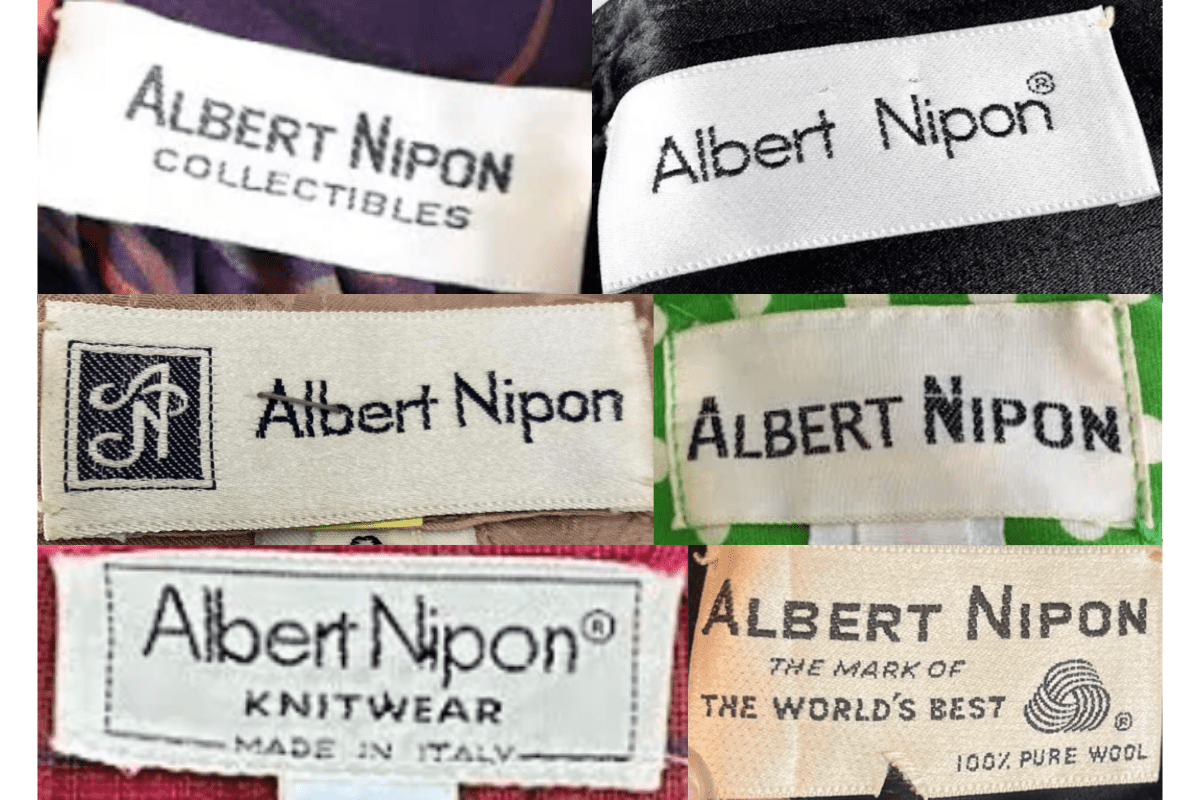
- Simple, bold “Albert Nipon” text in serif font, without extra design elements.
- The brand focused on showcasing its core identity without additional descriptors.
- Tags were straightforward, often without sub-labels like “Evening” or “Boutique.”
How to spot it
Plain bold serif, no sub-line.
Value signal
Strong; 70s Albert Nipon dresses have a steady following.
1980–1989
'Boutique' & 'Evening' Tags
Sub-labels appear — 'Boutique', 'Evening' — with 'Made in Italy' on some pieces, the stylised 'AN' monogram adding a luxury note.
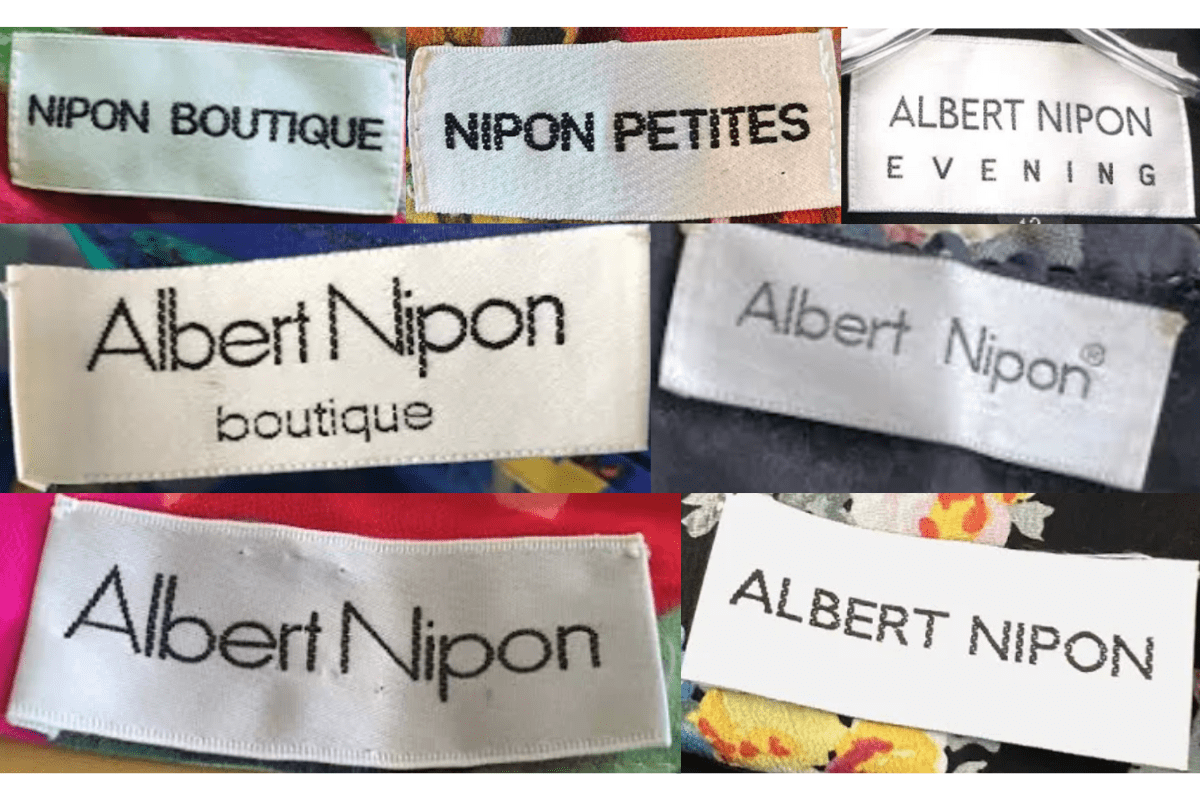
- Introduction of sub-labels like “Boutique” and “Evening,” marking the expansion of their lines.
- Tags often featured more detailed text such as “Made in Italy” and other material descriptors like “100% Pure Wool.”
- The font remained bold, but some labels included intricate logos like the stylized “AN” monogram, adding a luxury feel.
How to spot it
'Boutique' or 'Evening' on the tag.
Value signal
Solid; 80s Albert Nipon eveningwear sells well.
1990–1999
Minimalist 'Studio' Tags
Thinner sans-serif fonts on minimalist tags, with specialty labels like 'Studio' and 'Suits' marking the tailored lines.
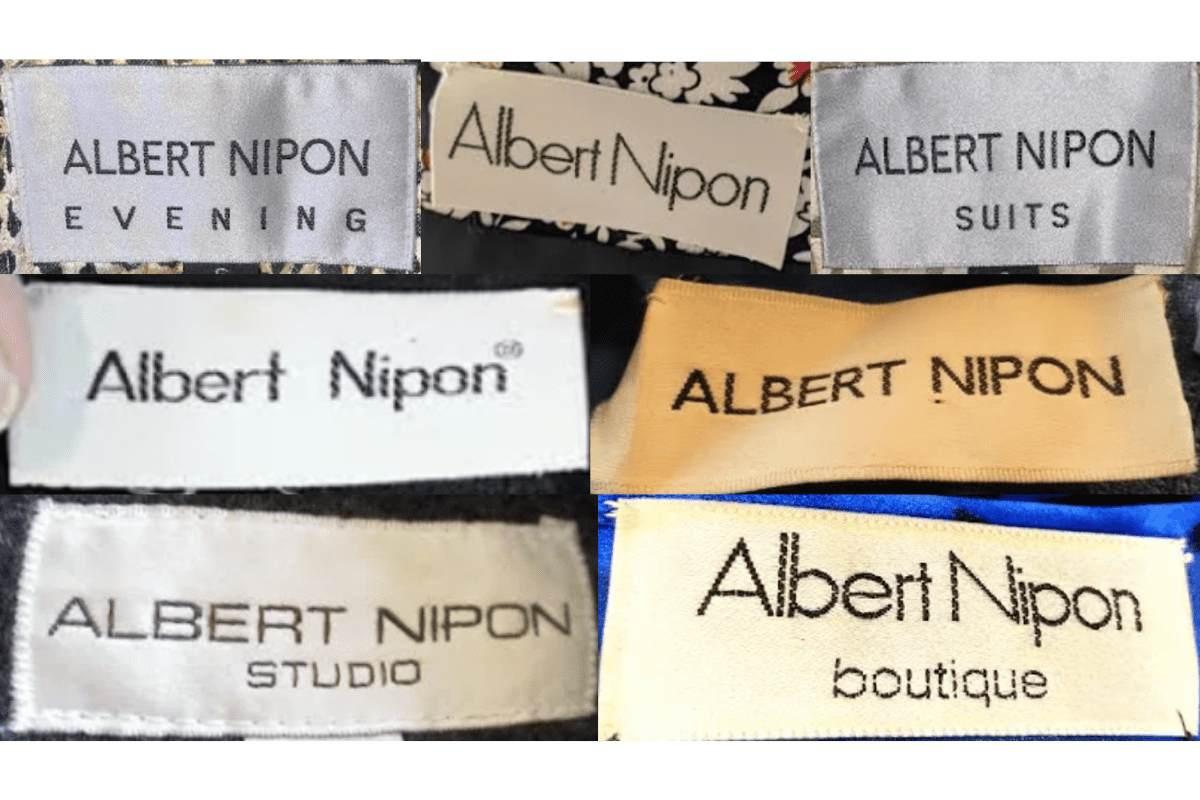
- Tag designs became more minimalist, with thin, sans-serif fonts dominating the layout.
- Specialty labels like “Studio” and “Suits” were introduced, showcasing the brand’s tailored collections.
- Subtle shifts in fabric color and texture were common, reflecting the fashion trends of the time.
How to spot it
Thin sans-serif tag, sometimes 'Studio'.
Value signal
Common; modest resale.