The Directory
Brand Label Archive
Every brand here carries a documented label history. Open one to trace how its tags, logos, and construction changed across the decades.
362 brands
A Bathing Ape
BAPE — Nigo's Tokyo streetwear original. The ape-head logo and 'Ape Shall Never Kill Ape' slogan date its earliest, most coveted pieces.
Abe Schrader
The Seventh Avenue dressmaker behind decades of American mid-priced dresses and suits. The 'Abe' over 'Schrader' wordmark and union label date the piece.
Abercrombie & Fitch
The New York outfitter that began in expedition gear and became a 1990s–2000s teen-fashion juggernaut. The moose emblem and 'Est. 1892' wording date the modern era.
Adele Simpson
The American designer dressed first ladies from Mamie Eisenhower to Barbara Bush. The cursive signature with a small star beside the 'S' is the constant tag marker.
Adidas
The three-stripe giant out of Herzogenaurach. Adidas tags swing between the Trefoil and the Mountain (Equipment) logo, and product codes beginning 'F1' are the community shorthand for genuine vintage.
Adolph Schuman
Founder of San Francisco's Lilli Ann, the post-war suiting house. The red embroidered 'Adolph Schuman for Lilli Ann' script is the unmistakable marker.
Aéropostale
The New York mall brand built on a French aviation name. 'Compagnie Générale', then 'Designed in NYC', then 'Established 1987' wording date its tags.

Air Jordan
Nike's Michael Jordan signature line, the foundation of modern sneaker culture. The Jumpman silhouette anchors every tag; production country and Nike pairing date the piece.

AJD
American mid-century mesh-cap and licensed sports-headwear maker. The connected 'AJD' monogram with a horizontal bar through the letters marks its caps.
Albert Nipon
Philadelphia-based dressmaker known for romantic mid-priced dresses. The 'Albert Nipon' serif and the later 'Boutique'/'Evening' sub-labels date the tag.

Alberta Ferretti
The Romagna designer known for ethereal silk eveningwear. The bold uppercase wordmark holds steady; 'Philosophy di Alberta Ferretti' marks the diffusion line.

Alcott
Italian casualwear chain trading on a 'Los Angeles' image. The bold 'ALCOTT' wordmark over 'LOS ANGELES' is the constant marker.
Alex Colman
Mid-century California sportswear maker. The lowercase 'alex colman' over a smaller spaced-out 'CALIFORNIA' is the unmistakable marker.
Alexander McQueen
Lee McQueen's British couture house, now under Sarah Burton. The serif wordmark and the 'MCQ' diffusion line date the piece; the 2018 logo refresh is the cut-off.
AllSaints
East London alternative-aesthetic brand built on washed leather and ram-skull branding. The circular ram-skull emblem and 'Spitalfields' wording mark the early years.

Alpha Industries
Knoxville military contractor behind the MA-1 bomber. Black-and-yellow contract tags and 'official U.S. Defense Department contractor' wording mark genuine pieces.
American Eagle
The American casualwear chain, 'American Eagle Outfitters'. The eagle emblem and the shift from ornate to minimalist wordmarks date its tags.

And1
Philadelphia basketball brand born from trash-talk t-shirts and grown via the streetball Mixtape Tour. The blocky wordmark and basketball-player graphic date its tags.

Ann Demeulemeester
The Antwerp Six founding member, known for asymmetric black-and-white tailoring. The black tag with bold white serif lettering is the constant marker.

Ann Summers
British lingerie chain that turned the high street raunchy. The apple-and-heart 'A' replacing the initial letter is the unmistakable tag marker.

Anna Sui
NYC designer with a rock-and-roll, slightly gothic-romantic aesthetic. The bold uppercase 'ANNA SUI' wordmark with the slightly oversized 'SUI' is the constant marker.
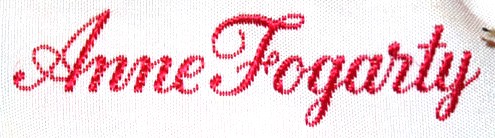
Anne Fogarty
Mid-century American designer known for full-skirted 'paper-doll' dresses. The slanted cursive 'Anne Fogarty' signature is the constant marker; 'Margot Inc.' wording dates it.

Anne Klein
The American sportswear pioneer behind menswear-inspired tailoring for women. The lion's-head emblem is the constant marker; sub-lines like 'Anne Klein II' and 'AK' date the tag.
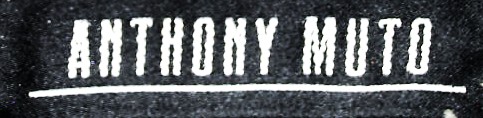
Anthony Muto
Mid-century American womenswear designer, often partnered with Maurice Marciano. The 'A.M./P.M' boxed label is the unmistakable signature of his 70s work.

Anvil
Long-running American blank-tee maker, the canvas behind decades of band merch and graphic tees. The 'Anvil' wordmark, with or without the early anvil graphic, dates the blank.

Aquascutum
London heritage outerwear house, the original makers of waterproof wool gabardine. The crest, the 'Aquascutum of London' wording and the Queen Mother royal warrant date the tag.

Arc'teryx
Vancouver-area technical-outerwear maker named after Archaeopteryx. The bird-skeleton emblem and bold all-caps wordmark are the constant tag markers.
Armani
Giorgio Armani's Milanese empire. The sub-line — Emporio, Jeans, Collezioni, Couture — printed beneath the logo narrows the era as much as the tag.
Arrow
The American dress-shirt maker behind the early-20th-century 'Arrow Collar Man'. The arrow-and-text logo and 'Sanforized'/'Perma-Iron' wording date its shirts.
Asics
Japanese running brand born from Onitsuka Tiger. The serif 'Made in Japan' tag, then the looping italic wordmark, and finally the 'Sound Mind Sound Body' line date its garments.

Athleta
Gap-owned women's activewear brand built around yoga and performance pieces. The floral-emblem-and-wordmark logo and 'Designed in San Francisco' wording date the tag.

Avirex
American maker of licensed military flight jackets. 'Type A-2' references, 'Est. 1975', and the wings-and-star motif run through its tags.

Balenciaga
Cristóbal Balenciaga's couture house, founded in Spain. The double-B emblem marks pre-2013 pieces; the modern streetwear era uses a plain elongated wordmark.
Balmain
Pierre Balmain's Paris couture house. The 'PIERRE BALMAIN PARIS' wordmark with the distinctively-angled 'A's, and the boxed 'PB' monogram, anchor the dating.
Banana Republic
The safari-themed retailer turned Gap-owned upscale-casual brand. The whimsical travel-themed early logo, then the minimalist 'BR', date the tag.
Barbour
South Shields maker of waxed-cotton country jackets. Tag grounds shift from coloured to black-and-gold, and royal warrants appear, across the decades.

Bebe
Los Angeles fashion-forward womenswear brand. The all-lowercase 'bebe' logo in minimalist sans-serif on black or white tags, with 'Made in USA' on early pieces, marks the brand's 1990s heyday.
Belstaff
British maker of waxed motorcycle and aviation jackets. 'The Original Since 1924', the winged emblem, and shifting country of make date its outerwear.
Ben Sherman
The British mod shirtmaker. The flowing blue script logo and the 'Original Ben Sherman' slogan date its tags.

Bench
Manchester streetwear brand defined by its distinctive 'Bench.' wordmark — the full stop at the end is the signature tell. Red accent panels and the 'Bench.' period-logo mark its 1990s peak.
Benetton
Treviso knitwear house turned global casual-fashion giant. The shift from lowercase 'benetton' to 'United Colors of Benetton' in uppercase on a green ground is the definitive dating split.
Berghaus
Newcastle outdoor brand and early Gore-Tex licensee. The red-and-blue panel emblem and 'Made in Gt. Britain' wording mark its vintage shells.
Bernhard Altmann
Viennese knitwear house famed for luxury cashmere. Tags reading 'Made in Austria' or 'Shetland Spun in Scotland' with crown embroidery in gold or silver thread date its mid-century output.
Bershka
Inditex's youth-focused fast-fashion chain. The clean bold 'Bershka' sans-serif wordmark, consistent since 1998, means country of manufacture and decade of production do the dating.

Best Company
Padua streetwear brand built on the pine-tree logo and 'designer Olmes Carretti' wording. Navy or black rectangular tags with 'Since 1986' and 'Surf Team' mark its 1990s peak.
Betsey Johnson
New York's pink-and-punk design icon. Tags range from the 1960s 'Designed by Betsey Johnson for Paraphernalia' to the 1970s 'Alley Cat' cat-illustration label to the signature hot-pink handwritten script of the 1980s–90s.
Beverly Hills Polo Club
American sportswear brand trading on California glamour. The polo-player-on-horseback emblem in bright colours with 'SPORT' branding marks the 1980s; a darker, cleaner version takes over in the 1990s.
BHS
British Home Stores, a high-street institution operating 1928–2016. Tags evolve from the full 'British Home Stores' serif wordmark through the bold blue 'BHS' to the multicoloured ribbon logo of 1986, making the logo the primary dating tool.
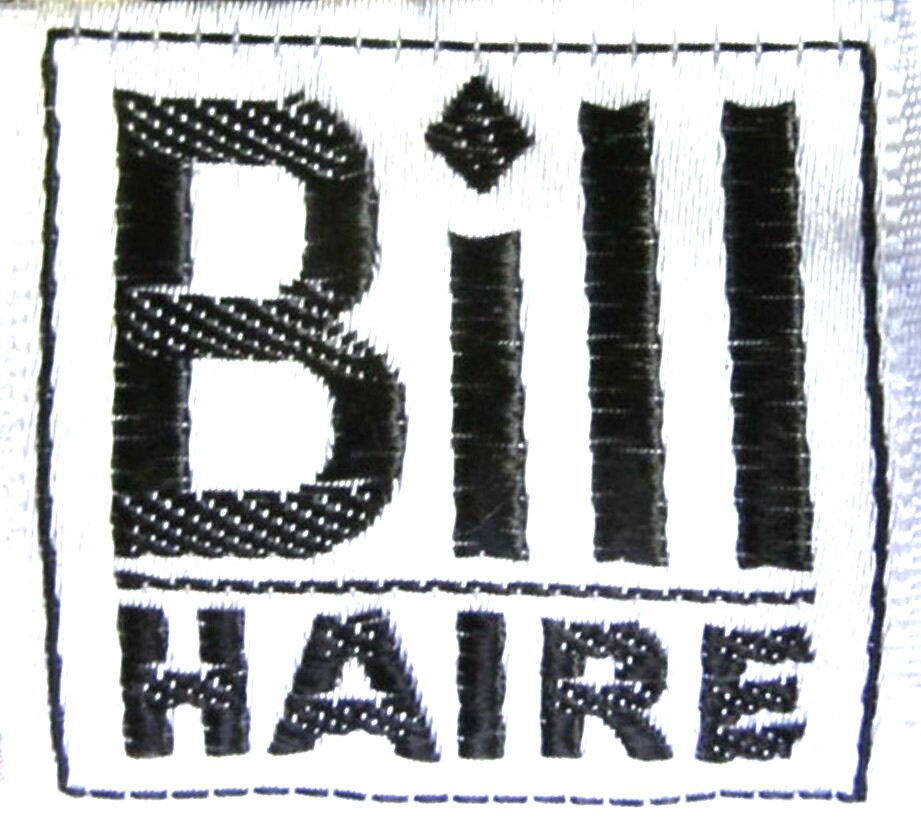
Bill Haire
American womenswear designer known for his work with Friedricks. Tags reading 'Bill Haire for Friedricks' in blocky capitals mark the 1970s; 'Friedricks Sport' branding arrives in the 1980s.
Billabong
Gold Coast surf brand founded in 1973. The gothic wordmark and wave logo, with 'Since 1973' wording, date its vintage.

Bloomingdale's
New York City luxury department store founded in 1861 by brothers Joseph and Lyman Bloomingdale, evolving from a European fashions shop into one of America's most iconic retail institutions. Early 20th-century store labels display an elegant script 'Bloomingdale's'; the mid-century shift to a bolder modernist wordmark with 'New York' location text helps date private-label garments to their decade.
Bonmarché
British value womenswear chain. Simple plain-text tags with minimal design characterise the 1980s; 'Essentials' line wording and multilingual care instructions arrive later.
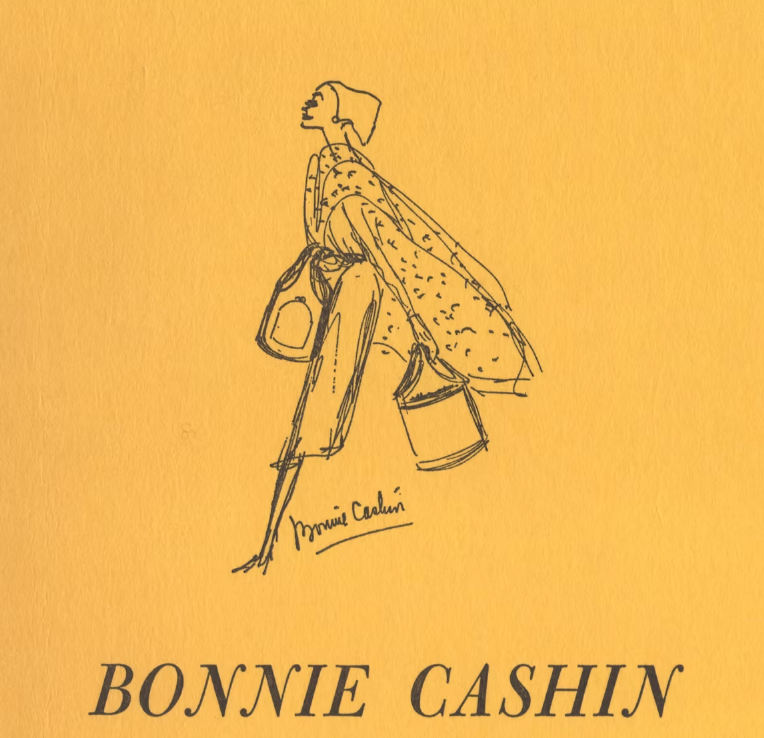
Bonnie Cashin
The American pioneer of layered sportswear and the toggle closure. Tags reading 'Bonnie Cashin Design' for Russ Taylor or 'a Bonnie Cashin Design' for Sills and Coach date the collaboration and decade.
Bottega Veneta
The Veneto leather house, 'when your own initials are enough'. The understated serif wordmark and embossed-leather tags date its pieces.

Brioni
Rome's ultimate men's tailoring house. Tags progressing from 'Brioni ROMAN STYLE' through 'Tailored in Italy by Brioni' to the cursive red-on-black logo date the decade; retailer names like Neiman Marcus appear on bespoke commissions.

Brooks Brothers
America's oldest clothier, founded 1818 in New York. The Golden Fleece crest and 'Est. 1818' script are constants; the progression from woven blue-on-white to bolder printed tags, and the arrival of care labels, date its pieces.
Brooks Sports
Philadelphia running-shoe brand turned technical-apparel maker. The angular arrow-and-wordmark logo, usually in bold red, marks its 1980s–90s activewear; a more streamlined version follows.
Burberry
British outerwear house behind the trench coat and Nova Check. The plural 'Burberrys' label, dropped around 1999, is a definitive vintage marker.

C.P. Company
Italian avant-garde sportswear label founded in 1971 by Massimo Osti in Bologna as Chester Perry, rebranded C.P. Company in 1978 after legal disputes with established British labels. Labels and tags reading 'Chester Perry' identify pre-1978 pieces; 'C.P. Company' with garment-dye numbering and goggle-detail hardware marks the 1980s–90s output most sought by collectors.
C&A
The Dutch-German fashion chain founded by the Brenninkmeyer brothers. The scalloped-edge oval logo evolves from ornate Victorian lettering through blue-and-white to the red-outlined modern version; tag language and care symbols date the decade.

Cacharel
Parisian ready-to-wear house known for printed florals and the Anaïs Anaïs fragrance. The lowercase 'cacharel' logo in rounded sans-serif, usually on colourful ground tags with 'Made in France', marks its 1970s–80s peak.

Calvin Klein
Minimalist American designer house. The thin monochrome wordmark barely changes for decades, so the 'cK' emblem and size tabs do most of the dating.

Camaïeu
French mass-market womenswear chain. The gradient-hued 'Camaieu' logo with orange-tipped 'i' dots marks the 1990s–2000s; the simplified red sans-serif wordmark identifies the 2010s.
Camel
The cigarette brand whose adventure-lifestyle licensing produced a stream of 1980s–90s casual and outdoor clothing. The realistic camel illustration and 'Adventure Wear' or 'Camel Trophy' wording mark its licensed apparel.
Canada Goose
Toronto down-fill outerwear maker. Tags progress from the 'Snow Goose by Metro Sportswear' goose-in-flight emblem of the 1980s–90s, through the 'Expedition Clothing Outfitters' phase, to the iconic circular Arctic Program crest.

Capezio
New York dancewear institution founded by Salvatore Capezio. Tags move from bold all-caps serif and 'Made in U.S.A.' through 'Dancing Since 1887' and lowercase sans-serif to the dancer-silhouette logo of the 1990s.

Carhartt
Detroit workwear that's been a thrift-store staple forever. The quick tells for vintage: a union label, a 'Made in U.S.A.' stamp, and heavy duck canvas. Once production moved overseas around 2000 the union tag disappears — that's your line between vintage and modern.
Carlo Colucci
Milan-born sportswear brand with a loyal terrace following. The winged-figure emblem with 'Carlo Colucci Milano 1978' in cursive, the 'Leisure Wear' wording, and later rainbow-stripe motifs date its tags.
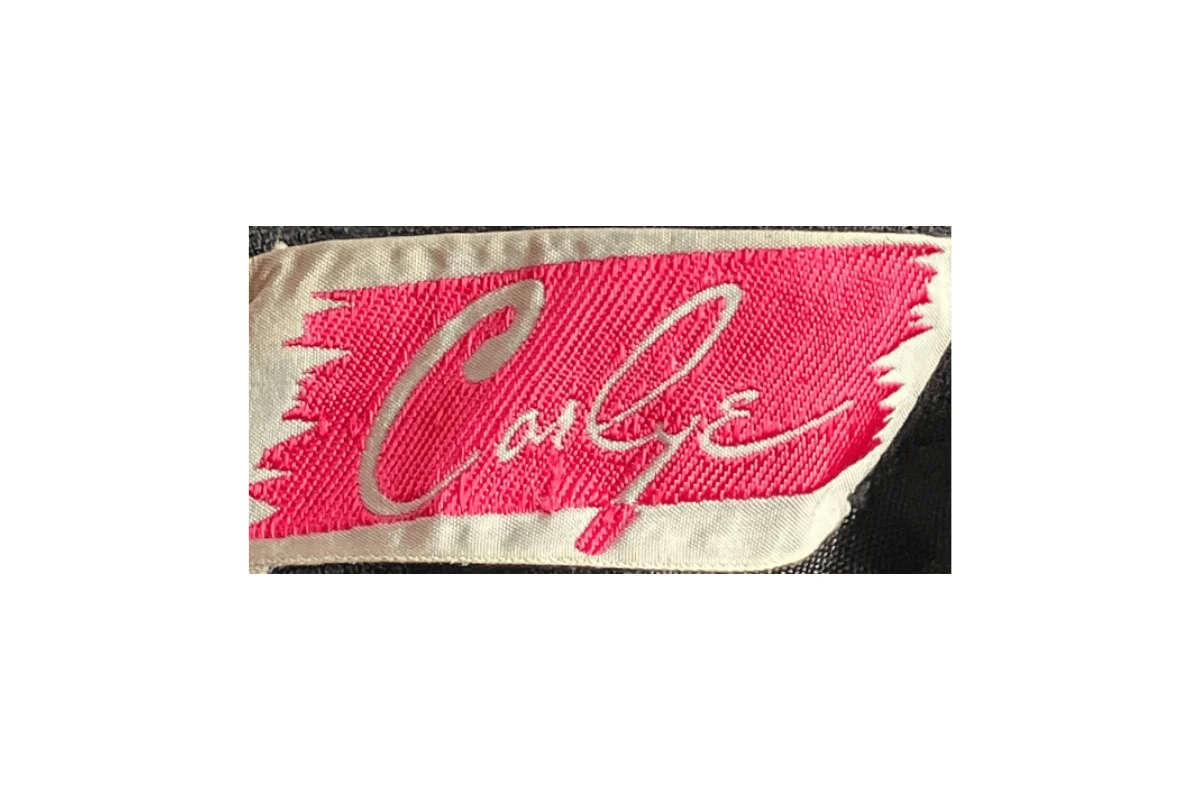
Carlye
Mid-century American womenswear label. The vibrant pink or red cursive 'Carlye' script on a white background is the constant; a shadow effect and country-of-manufacture details arrive in the 1960s–70s.
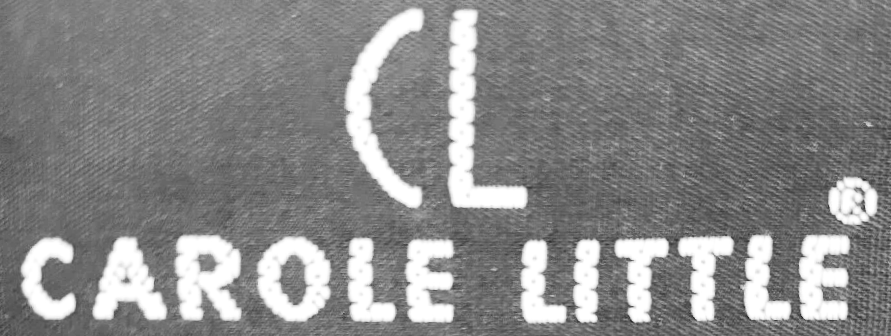
Carole Little
Los Angeles womenswear brand behind the 'CL' monogram. Tags reading 'Carole Little for Saint-Tropez West' mark the 1970s–80s; the black rectangular tag with the stacked 'CL' above 'Carole Little' in bold sans-serif defines the 1990s.

Carolina Herrera
Venezuelan-American couture house founded in New York. The white rectangular tag with bold serif 'CAROLINA HERRERA' marks the 1980s–90s; the interlocking 'CH' monogram on red identifies the 2000s.
Carrera Jeans
Italian denim brand with motorsport heritage. The oval red-background 'CARRERA' tag in bold white caps marks the 1970s–80s; a rectangular red tag with bolder lettering and 'Registered 28th October' identifies later output.

Carven
Parisian couture house founded by Marie-Louise Carven. Tags bearing the full address '6, Rond Point des Champs-Elysees, Paris' date 1960s–70s pieces; tags reading simply 'Carven Paris' in modern serif mark the 1980s–90s.

Castelli
Italian cycling apparel brand from Varese. The iconic red scorpion emblem in a circular format is the key identifier; its presence on bold black serif tags marks the 1990s, while cleaner circular formats define the 2000s.
Cathy Hardwick
Korean-American designer known for easy sportswear. Bold red or black serif 'Cathy Hardwick' on white tags marks the 1980s; all-caps tags with simpler black lettering identify the 1990s.

Celine
Parisian luxury house. The horse-drawn carriage logo with 'Marque Deposee' dates pieces to before 1997; tags reading 'CELINE PARIS' in serif without the carriage mark the late 1990s–2010s; all-caps sans-serif identifies post-2018.

Celio
French men's fashion chain. 1980s tags use serif caps 'CELIO' with 'Natural Leader' text; the red star asterisk logo appears in the 2000s; 2010s tags carry bold slogans like 'be normal*'.
Cerruti
Biella textile dynasty turned Paris fashion house. Tags reading 'Nino Cerruti' in full serif mark the 1970s–80s; 'Cerruti 1881' in clean sans-serif defines the 1990s–2000s; the year '1881' is the key dating anchor.
Chalk Line
American licensed sports-apparel brand. Bold 'CHALK LINE' in caps with a star-inset letter marks all eras; 1980s tags add the slogan 'Winning With Style'; 1990s tags incorporate major college and pro sports logos.
Champion
Inventor of Reverse Weave. Champion's Running Man logo, woven tags, and single-stitch construction date its sweatshirts across the athletic era.
Chanel
The Parisian couture house of Gabrielle 'Coco' Chanel. Script-versus-block wordmarks and the interlocking-CC emblem, introduced on tags in the 1970s, frame its vintage.
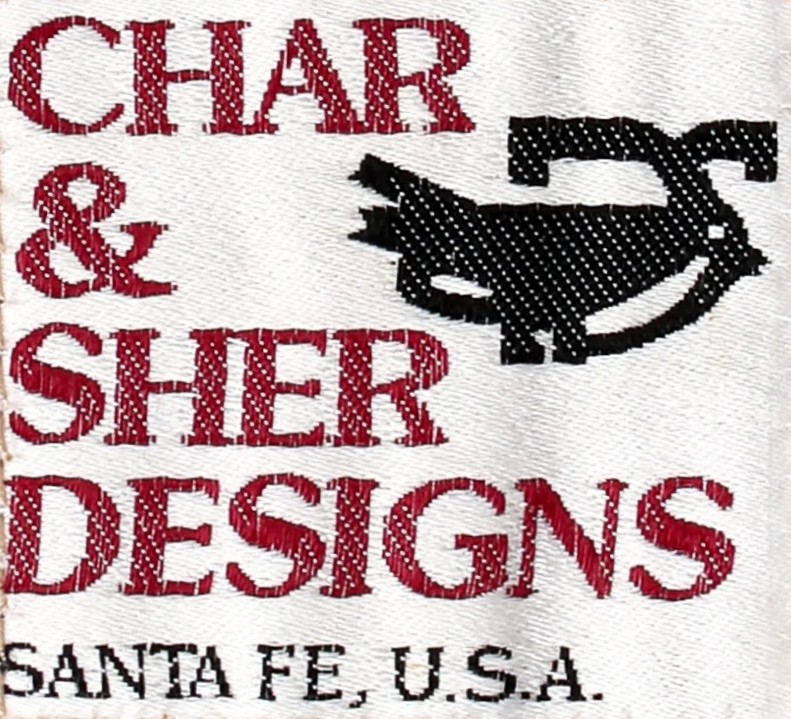
Char
Santa Fe artisan label sold under 'Char & Sher Designs'. 1970s tags show simple hand-drawn bird motifs in blue or red; 1980s–90s tags add 'Santa Fe, U.S.A.' and bold serif lettering alongside the stylized bird emblem.

Charles Jourdan
French couture shoe and ready-to-wear house. Tags with 'Charles Jourdan Paris' in classic serif and 'Made in France' date the 1970s–80s; a modern sans-serif 'Charles Jourdan Paris' marks the sleeker 1990s output.

Charles Tyrwhitt
Jermyn Street shirtmaker. Tags with 'Charles Tyrwhitt' in classic serif and 'Jermyn Street London' underneath mark the 1990s; bolder fonts with the street address identify the 2000s; sans-serif marks the 2010s.
Chase Authentics
Official NASCAR licensed apparel brand. Tags feature a bold stylized 'C' with checkered-flag elements and 'CHASE AUTHENTICS' in caps; red-and-black racing-flag motifs on rectangular tags mark the 1990s.
Chloe
Parisian ready-to-wear house founded by Gaby Aghion. Simple italic 'Chloe' script in serif marks the 1970s–80s; a cleaner modern serif with 'Paris' marks the 1990s–2000s; the accent-free logo identifies post-2010 pieces.
Christian Dior
Parisian couture maison. Decades of near-unchanging serif wordmark mean sub-lines (Miss Dior, Dior Boutique) and the arrival of sizing in the 1990s do the dating.

Christian Lacroix
Arles-born Parisian couturier of spectacle and colour. Bright pink-and-black tags with 'Made in France' date the late 1980s; blue tags with 'Jeans de Christian Lacroix' mark the 1990s sub-lines; black 'Homme' tags identify menswear.
Claude Montana
Paris power-dressing designer of the 1980s. Tags reading 'Claude Montana Paris' in bold or handwritten script mark the 1980s; 'Montana Blu' sub-line tags with blue detailing identify the 1990s; 'Made in Italy' appears on 2000s output.
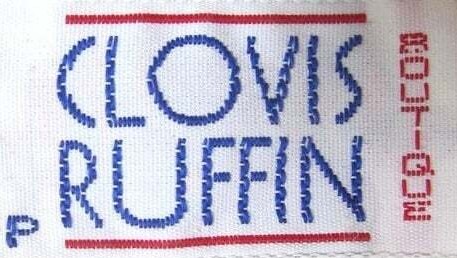
Clovis Ruffin
New York designer known for jersey knits. Tall, thin rounded lettering marks the 1970s tags; bold blocky fonts identify the 1980s; sub-labels like 'Clovis Ruffin Sport' in bold red-and-black distinguish the sportswear line.
Coca-Cola
Branded apparel carrying the iconic Spencerian script. Red-and-white tags with the classic Coca-Cola script logo and slogans like 'Always Coca-Cola' mark the 1980s–90s; embroidered variants and darker palette identify later decades.

Coldwater Creek
Idaho women's catalog retailer. Tags with 'Coldwater Creek' in serif and a wavy underline swoosh mark the 1990s; off-white or beige tags with an embroidered top edge define the 2000s.
Cole of California
Los Angeles swimwear house. 1940s–50s tags use cursive 'Cole' in brown with blocky 'of California' beneath; 1960s–70s tags adopt bold modern fonts; 1980s–90s tags use a red 'Cole' with clean sans-serif 'of California'.

Colmar
Italian ski and sportswear brand from Monza. Bright colorful tags with the star emblem and bold lettering mark the 1980s; streamlined bold serif with the Colmar logo on darker backgrounds defines the 1990s–2000s.

Columbia Sportswear
Portland, Oregon outdoor brand started as Columbia Hat Company. Tags reading 'Columbia Hat Company' or early 'Columbia Sportswear Company' date pre-1970s; 'Made in U.S.A.' marks the 1980s; 'Made in Taiwan' with bold 1990s logo identifies the key vintage decade.
Comme des Garçons
Rei Kawakubo's avant-garde Tokyo house. The all-caps wordmark is constant, so tag shape and the ubiquitous PLAY heart line do the dating.
Conte of Florence
Italian sportswear brand. The red 'C' with a fleur-de-lis symbol is the signature logo; navy tags with white cursive lettering mark the 1990s; black or navy backgrounds with bolder contemporary fonts identify the 2000s.
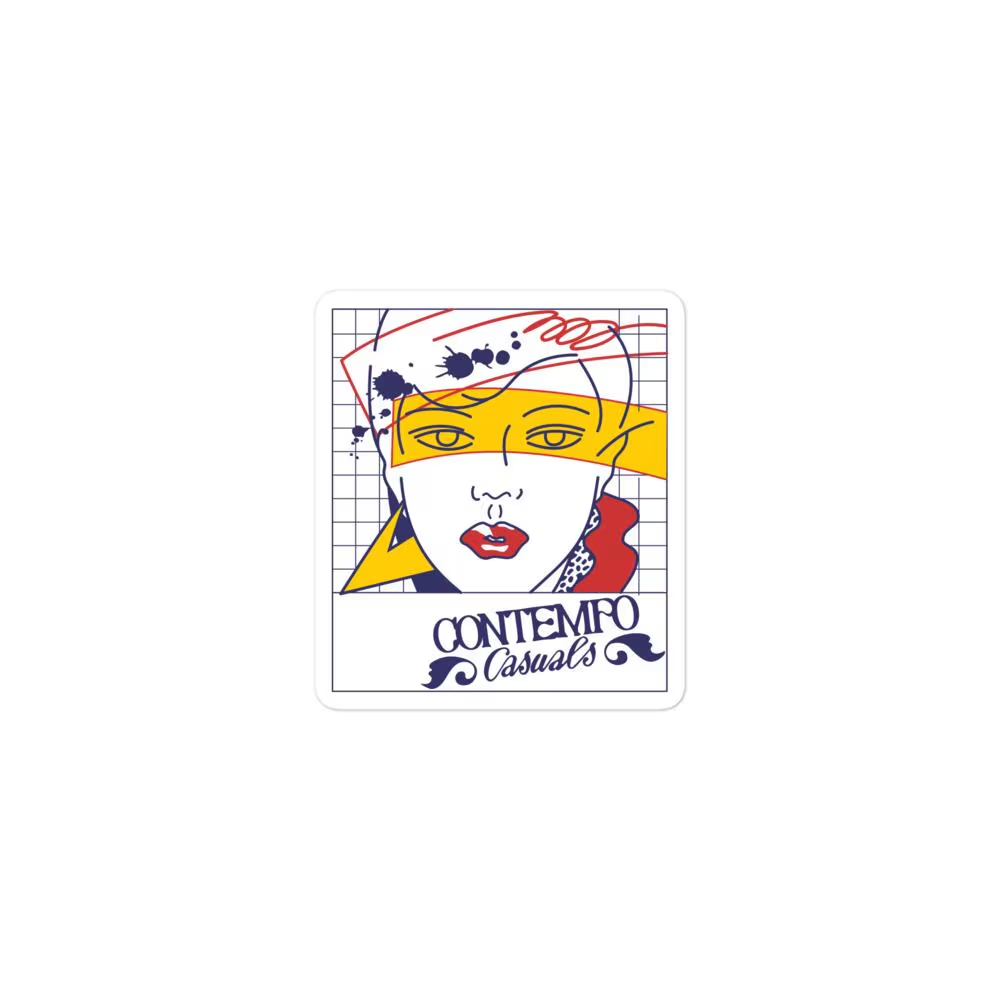
Contempo Casuals
American teen specialty retailer. Bold colorful tags with stylized face graphics and whimsical fonts mark the 1970s–80s; a shift to simple bold lettering in sans-serif or modern serif defines the 1990s.

Converse
American sneaker institution behind the Chuck Taylor All Star. The licence shifts — and the move of production out of the USA in the 2000s — anchor its tag timeline.

Coogi
Australian knitwear brand made famous by hip-hop culture. 1980s tags show plain 'Coogi' block letters with 'Pure Wool' and 'Made in Australia'; 1990s tags use vibrant multicolored 'Coogi Australia' lettering matching the wild knit patterns.
Cornelia James
British luxury glove-maker with a Royal Warrant. 1960s tags carry elegant serif 'Cornelia James' with 'Made in England'; the Royal Warrant on 1970s–80s tags is the key provenance marker.

Cortefiel
Spanish menswear chain. 1970s tags read 'Craftsmen for Centuries' with a craftsman illustration; the 1980s–90s adopt the crown logo symbol in a cleaner serif; monochromatic crown-logo tags define the 1990s.

Cotton Traders
British rugby-heritage casual brand. Bold 'Cotton Traders' lettering on darker backgrounds with contrasting stitching marks the 1990s; patriotic flag designs and modernized fonts identify the 2010s.
Countess Mara
New York neckwear and accessories brand. 1950s–60s tags use elegant cursive with a crown logo on gold and white; 'NEW YORK' appears in the 1970s; block lettering with corporate co-branding like 'FOR JOHN L. ASHE' marks the 1980s–90s.

Courreges
Parisian space-age couturier. White tags with 'Courreges Paris' in bold typography and 'Made in France' date the 1960s–70s; size indicators like '00' or '0' are key dating markers; descriptors like 'hyperbole' or 'couture future' identify 1980s sub-lines.

Cyrillus
French children's and women's catalog brand. Bright red or orange tags with white lettering mark the 1990s; darker black tags with white text and 'Paris' below the brand name define the 2000s.
Daks
London tailoring house behind the self-supporting trouser waistband. 1940s tags use utilitarian fonts with 'Made in England'; 'Simpson Tailored' or 'Simpson London Tailored' identifies 1950s–80s pieces; 'London New York' marks the 1970s international era.
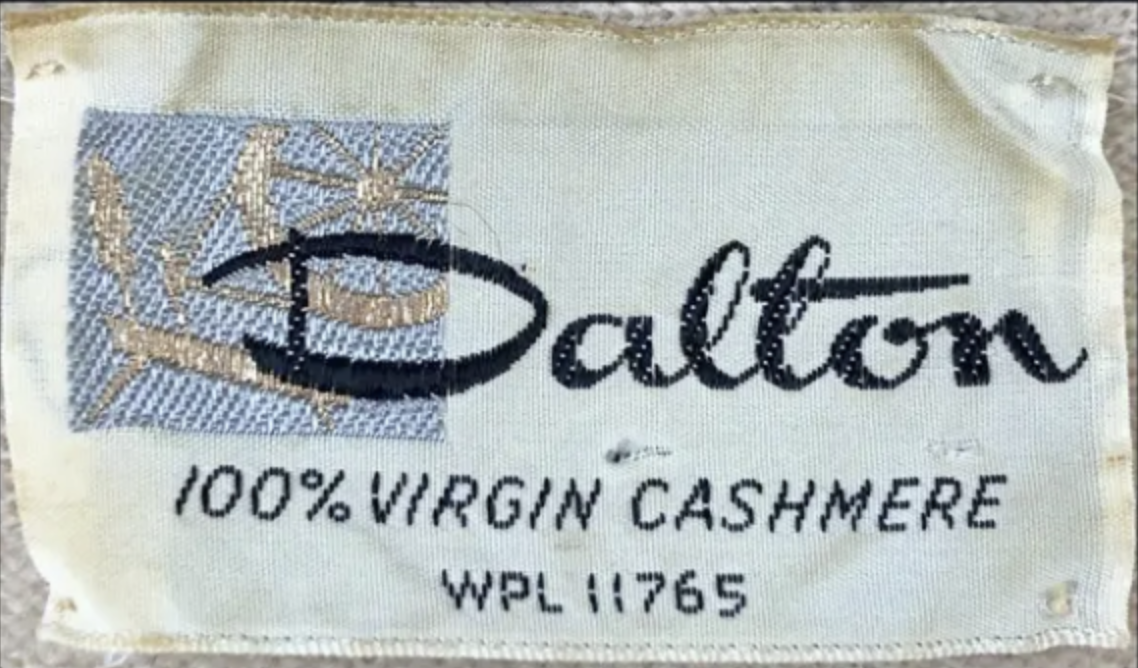
Dalton
American luxury cashmere knitwear brand. Tags with elegant script and '100% Virgin Cashmere' mark the 1950s–60s; 'Dalton of America' adds in the 1960s; 'Dalton Studio' and '365' sub-labels identify the 1980s; cashmere provenance text is always the key quality marker.
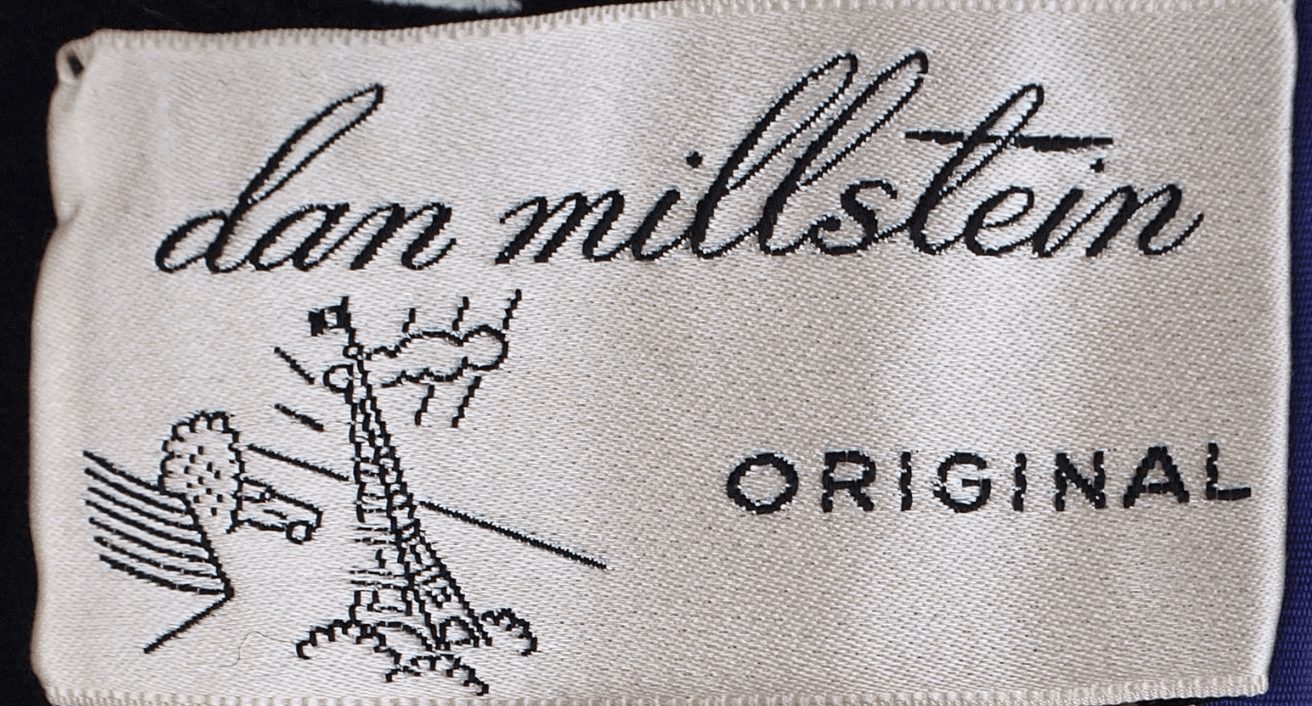
Dan Millstein
New York dress manufacturer with Parisian aspirations. Tags with cursive 'dan millstein' and an Eiffel Tower illustration are the signature; 1950s pieces add 'Adapted from Balenciaga' or similar Parisian collaboration text.

Dana Buchman
New York career-dressing brand spun off from Liz Claiborne. 1980s tags use neutral serif with 'DANA BUCHMAN' in caps; 1990s introduce italic fonts; 2000s add colorful backgrounds with variable font sizing; 2010s adopt softer modern pastels.

Debenhams
British department store chain. Tags with 'Debenham & Freebody' and cursive script date to the 1960s; transition to 'Debenhams' alone in bold modern font marks the 1970s; sub-brand tags like 'Debenhams Classics', '1778', and 'Black Tie' identify specific decades.

Decathlon
French mass-market sporting goods retailer. 1990s tags use simple minimalist Decathlon branding; 'Decathlon Creation' appears in the 2000s with more detailed size charts; 2010s tags have vibrant colors with multilingual comprehensive care information.

Desigual
Barcelona-born eclectic fashion brand. 1990s tags use bold colorful designs with intricate patterns mirroring the clothes; 2000s introduce standardized size formats; 2010s present a more sophisticated typographic approach while retaining the eclectic character.
Diadora
Italian sportswear and football brand from the Montebelluna shoe district. 'Made in Italy' and football-federation wording date its vintage tags.
Dickies
Texas workwear institution from Fort Worth. The 'Dickie's Best' script, the rope-border 'Guaranteed' logo, and the 2005 buckle wordmark date its pieces.
Diesel
Renzo Rosso's irreverent Italian denim brand. The 'Mohawk' head, 'Diesel Industry' and 'Since 1978' wording, and leather patches date its pieces.

Disney
Character apparel from the Walt Disney Company. 'Tropix Togs' branding dates pieces to the 1970s; 'Walt Disney Productions' marks the 1970s–80s; 'Disney Wear' and 'EPCOT Center' labels identify 1980s theme-park pieces; 'Mickey Inc.' and 'Disney Store' tags define the 1990s.

DKNY
Donna Karan's bridge line for New York urban style. Early tags read 'Donna Karan New York' alongside 'DKNY' with 'Made in Hong Kong'; 1990s sub-lines like 'DKNY Jeans' and 'DKNY Activewear' have distinct tags; 2000s–10s use minimalist bold 'DKNY' in black and white.

Dockers
Levi Strauss khaki brand that defined 1990s casual Friday. 1980s tags show visible 'Levi's' subsidiary text with bold branding; 1990s rectangular navy-and-black tags with the iconic wings logo are the key identifier; 2000s–10s tags become progressively more minimalist.
Dolce & Gabbana
Sicilian-inspired Milanese luxury house. 1980s tags show bold 'Dolce & Gabbana' with trademark symbol in simple black and white; 1990s add the 'D&G' sub-line and 'Made in Italy'; 2000s–10s use navy or black rectangular tags with multi-language care instructions.
Donnay
Belgian sporting goods brand. 1990s tags carry 'Donnay essentials' in bold modern fonts with size indicators; 2000s adopt loop tags and muted darker colors; 2010s use varied materials with a sleek contemporary logo.
Dorothy O'Hara
California sportswear designer with Parisian flair. Tags with 'Dorothy O'Hara' embroidered in yellow thread on cream fabric, often with 'California' designation, are the 1940s identifier; 1950s pieces add 'Fashion Forecast by Dorothy O'Hara' with a more stylized presentation.

Dorothy Perkins
British women's retailer founded 1909 as H.P. Newman, renamed Dorothy Perkins in 1919. Bold uppercase 'DOROTHY' with smaller 'PERKINS' below marks 1980s tags; colorful tags identify the 1990s; cleaner script defines the 2000s.

Dressbarn
Connecticut-based women's workwear retailer. 1980s tags are simple and utilitarian; 1990s tags add color and bolder lettering consistent with chain retail branding; 2000s modernize with a cleaner simplified logo.
Ed Hardy
Tattoo-inspired streetwear by Don Ed Hardy and Christian Audigier. Early 2000s tags show 'Ed Hardy by Christian Audigier' in gothic script with tiger and skull motifs; 'Genuine' in red gothic lettering and 'HOLLYWOOD' are the key 2000s identifiers.
Eddie Bauer
Seattle outdoor outfitter and patentee of the quilted down jacket. The founder's script signature and 'Since 1920' wording date its pieces.

Ellen Tracy
New York women's bridge brand. 1960s-70s tags feature intricate cursive script; 1980s add 'Linda Allard for Ellen Tracy'; 1990s-2000s adopt cleaner minimalist branding; the 'Linda Allard' addition is the definitive 1980s marker.
Ellesse
Perugia ski-and-tennis brand founded by Leonardo Servadio. The semi-palla 'half-ball' emblem and 'Made in Italy' wording carry its prized 1980s output.

Escada
Munich luxury brand by Margaretha and Wolfgang Ley. 1980s tags show the double-E emblem above bold 'ESCADA'; 1990s-2000s add 'Made in Germany' and diversify into sub-lines; 2010s adopt a streamlined wordmark.
Esprit
San Francisco casual brand founded by Doug and Susie Tompkins. The 1979 John Casado stencil-effect logo identifies early pieces; bold block-letter 'ESPRIT' on colorful 1980s tags is the classic era; 1990s sub-lines like 'Esprit Sport' have distinct tags.

Etam
French family-owned fashion group with German origins. 1950s-60s tags use a flowing cursive Etam script; 1980s-90s tags are bold with the brand name in a colored box; 2000s adopt a modern wordmark.
Evan Picone
American women's sportswear brand by Charles Evans and Joseph Picone. 1950s-60s tags show 'Evan-Picone' in classic serif with a triangular emblem; 1970s-80s become more graphic; 1990s-2000s adopt streamlined sans-serif.

Everlast
New York boxing-equipment maker, the 'Choice of Champions'. 'Made in U.S.A.' serif tags mark the pieces before global production.
Evisu
The Japanese selvedge-denim brand built on hand-painted pocket seagulls. The 'kamome' gull and 'Evisu Genes' wording date its jeans.

Farah
El Paso, Texas menswear brand by Mansour Farah. 1950s-60s tags use an elegant cursive 'F' script; 1970s-80s add 'Farah' in block lettering with the iconic waistband patch; 'Made in U.S.A.' is the vintage-era indicator.

Fendi
Roman fur-and-leather house famous for the Karl Lagerfeld 'Zucca' double-F. Tag colour and the shift to anti-counterfeit holograms date its pieces.
FILA
Italian sportswear house turned tennis and hip-hop icon. Wide white woven tags mark its 1990s peak; the modern White Line is the giveaway for a non-vintage piece.
Filson
Seattle outfitter of the Klondike era, known for Tin Cloth and Mackinaw wool. The diamond-shaped 'Union Made' label is the hallmark of its mid-century pieces.

Fiorucci
Milanese label that pioneered T-shirts and tight denim as fashion. 1970s tags are simple with the brand name; 1980s introduce the cherub angel logo; 1990s use bold 'FIORUCCI' text; the Raphael-cherub angel logo is the definitive vintage identifier.

Forever 21
Los Angeles fast-fashion retailer founded as 'Fashion 21'. 1990s tags show bold blocky lettering; 2000s are colorful with sub-lines; 2010s adopt a cleaner minimalist look; early 'Fashion 21' tags are the rarest finds.

Fossil
Texas-based retro-inspired accessories brand. 1990s oval logo with 'FOSSIL AUTHENTIC GENUINE' in blue, red, and white is the signature vintage look; 2000s simplify to a bold wordmark; 2010s modernize further.
Fred Perry
British tennis-and-terrace label built on the laurel wreath. 'Made in England' and the 'Sportswear' wording on bold green or blue tags point to its most collectible decades.

Frederick's of Hollywood
Hollywood lingerie pioneer by Frederick Mellinger. 1950s-60s tags show playful cursive script with a star over the 'f' in Frederick's; 1970s-80s add sub-categories; 1990s-2000s modernize while retaining the star logo.

French Connection
British brand by Stephen Marks, famous for the controversial FCUK marketing. 1970s-80s tags feature the tall narrow capitalized 'FRENCH CONNECTION' typeface; the 1990s FCUK branding is the brand's most iconic identifier; 2000s-10s modernize.
Fruit of the Loom
One of the oldest US textile brands and a workhorse graphic-tee blank. Its woven-to-printed tag evolution and stitch type date countless 80s and 90s tees.
FUBU
'For Us, By Us' — the Queens-born hip-hop label of the 1990s. 'Since 1992', USA manufacture, and the blocky logo mark its peak-era pieces.

G-Star Raw
Amsterdam denim brand founded as 'Gap Star', known for raw untreated denim. The stylized 'G' emblem with blocky 'G-STAR RAW' lettering is consistent since 1989; minor proportional adjustments between decades are the only tag evolution.
Gabicci
British menswear brand inspired by Italian elegance. The distinctive gold 'G' badge is the key identifier across all eras; 1970s founding tags show the original logo; 1980s Casuals-scene popularity makes that decade the most collectible.
Galanos
Los Angeles couture-quality ready-to-wear by James Galanos. 'GALANOS' in elegant embroidered serif is the consistent identifier; 1950s-60s founding pieces dressed Marilyn Monroe and Elizabeth Taylor; each earlier decade commands higher collector value.
GANT
Ivy League shirting brand founded in New Haven, Connecticut in 1949 by Ukrainian immigrant Bernard Gantmacher, credited with pioneering the locker loop and button-down Oxford shirt. Labels from the 1980s–90s feature a detailed shield emblem with three stars and vertical stripes above the bold 'GANT' wordmark; the shield detail and thread-back label style distinguish US-made pieces from later Swedish-ownership production.

GAP
San Francisco basics retailer. The lowercase 'the Gap' script, the navy Blue Box, and the one-week 2010 logo are clean decade markers.

Garfinckel's
Washington D.C. luxury department store founded by Julius Garfinckel. 1940s-50s tags use formal script with 'Washington' provenance; 1960s-70s modernize; 1980s final era before 1990 bankruptcy closure.
Gattinoni
Roman haute couture house by Fernanda Gattinoni, who dressed Audrey Hepburn and Ingrid Bergman. 1960s-70s tags are classic Italian couture; 1990s transition to pret-a-porter under Raniero Gattinoni; 2000s-10s modern era under Guillermo Mariotto.
Gay Gibson
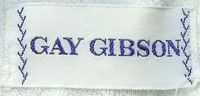
Kansas City mid-priced women's dress brand by the Gernes Garment Company. 1940s tags feature blue cursive script with quotation marks around the name; 1950s-60s refine the look; 1970s are the final era before Kansas City's garment industry decline.

Gianfranco Ferre
Milan luxury brand by the 'architect of fashion'. 1980s-90s tags use the full 'Gianfranco Ferre' in elegant serif; sub-line 'GFF' tags identify diffusion pieces; 2000s transition after IT Holdings acquisition; 2010s under Dubai ownership.
Giant
American music merchandise company founded in 1990 as a joint venture between rock manager Irving Azoff and Warner Bros., becoming the definitive source for licensed band t-shirts in the 1990s. Labels carry a bold blocky 'Giant' wordmark with a torch-bearing silhouette replacing the 'i'; the red-torch-on-white badge is the primary authenticity marker for vintage 1990s band tees.
Gildan
Montreal-based wholesale blank apparel maker by the Chamandy brothers. 1980s-90s tags show 'GILDAN' in bold blue sans-serif with an arching line through the 'A'; 2000s-10s modernize.

Givenchy
Parisian maison founded by Hubert de Givenchy. Tags using the founder's full name, and the emblem added only in 2003, are the clean vintage tells.

Gola
British sportswear brand founded in Northamptonshire. 1980s tags feature bold italicized 'Gola' on black background with contrasting colors; 1990s retain the logo; 2000s-10s retro revival with premium pricing.

Gore-Tex
W.L. Gore's waterproof breathable fabric membrane. 1970s tags introduce the circular mountain-peak 'G' logo; 1980s bold blocky text is the peak vintage identifier; 1990s refine after 1997 patent expiry allows competition.
Gossard
Lingerie brand by Henry Gossard inspired by Sarah Bernhardt's corsetry. 1940s-50s tags show American founding-era branding; 1960s-70s British company era with elegant cursive script; 1980s-90s Wonderbra collaboration era.
Gucci
Florentine leather house founded by Guccio Gucci. The logo's journey — crest, script, interlocking-G — and the shift from white to black tags do the dating.
Guess
Marciano-brothers denim label out of Los Angeles. The red-bordered triangle with the question mark, and early 'By Georges Marciano' wording, headline its vintage tags.
Gunne Sax
San Francisco romantic prairie-style brand by Jessica McClintock. 1970s-80s tags use a highly decorative ornate serif font matching the lace-and-ruffle Victorian aesthetic; 1990s-2000s simplify as popularity waned.
H Bar C
California Western wear brand that dressed John Wayne, Roy Rogers, and Elvis Presley. 1940s-50s tags feature multi-colored bold 'H' and 'C' with intricate embroidered patterns; each decade shows the brand's evolution from tailoring to Hollywood Western.
H&M
Swedish fast-fashion giant, originally 'Hennes'. Pre-1968 tags read 'Hennes' in elegant cursive; 1968+ 'Hennes & Mauritz' or 'H&M' marks the menswear addition; 1990s-2000s tags show the clean modern H&M wordmark after global expansion.

Halston
American minimalist fashion icon, the designer of Jackie Kennedy's pillbox hat. 1970s Studio 54 era tags are the peak collectible; 1980s post-Norton Simon sale; the 1983 J.C. Penney collaboration is a historically significant tag era.
Hanes
A dominant screen-printing blank for decades. The Fifty-Fifty and Beefy-T lines, and the move to tagless labels, track the t-shirt industry's shifts.

Hang Ten
Seal Beach, California surf brand by Duke Boyd and Doris Moore. The two bare footprints logo is the definitive identifier; 1970s-80s tags use the footprints in a bold rectangle with yellow and brown; 1990s-2000s modernize the footprint mark.
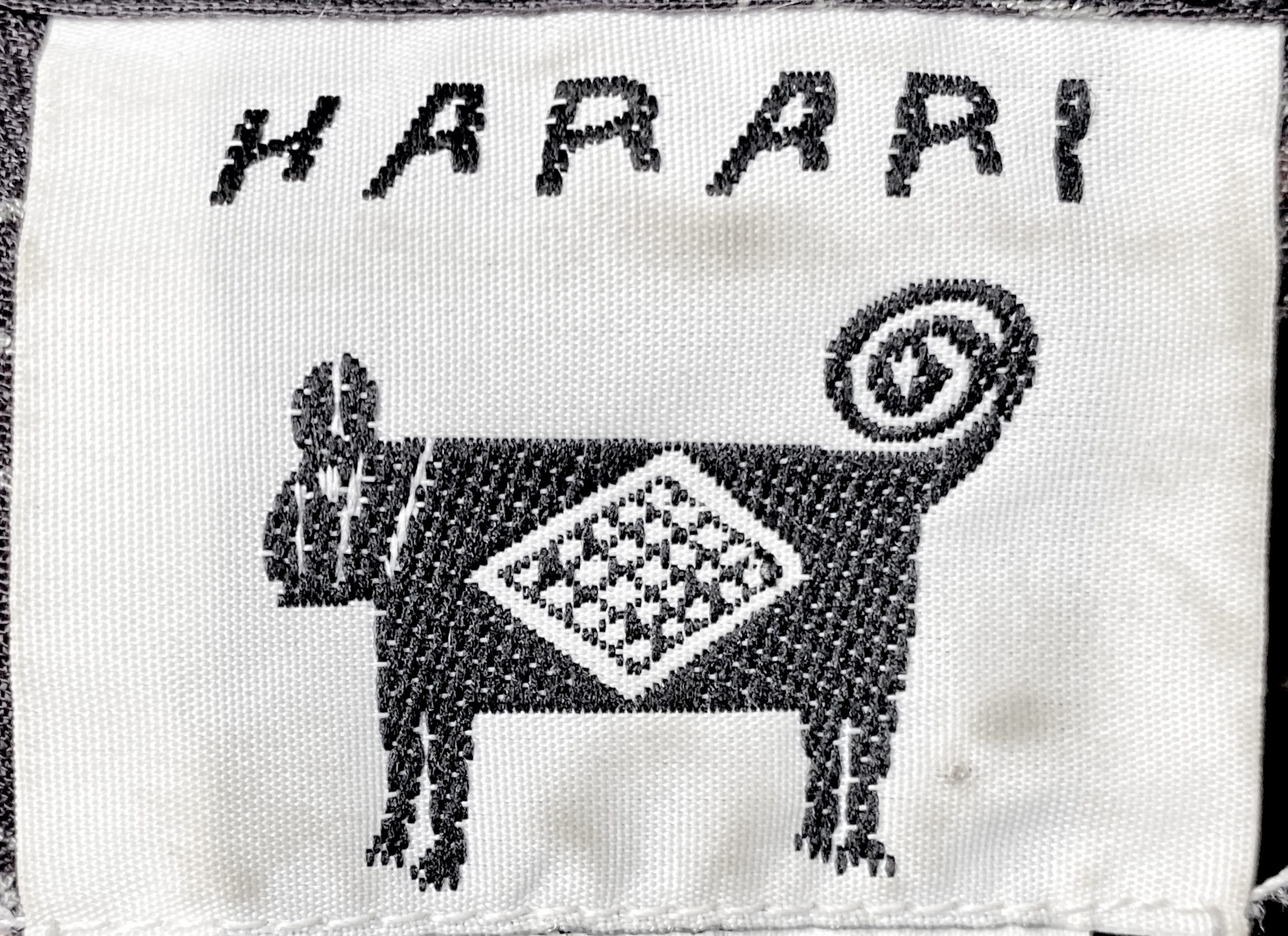
Harari
Boho chic brand by Barbara Keller and Dan Harari, inspired by global travel and vintage fashion. 1990s-2000s tags feature a unique stylized animal emblem with checkerboard stitching and the brand name in an artistic irregular font.
Hard Rock Cafe
The London-born restaurant chain whose city-name souvenir tees are vintage-graphic-tee staples. The 'Save the Planet' emblem and city print date the piece.

Hardy Amies
Savile Row tailoring house, dressmaker to Queen Elizabeth II. 1950s-60s tags carry the Royal Warrant with 'Hardy Amies London'; 1970s-80s add the 'By Appointment' royal cipher; the Royal Warrant cypher is the primary dating and authenticity marker.
Harella
London women's fashion brand by Lew Harris, founded 1919. 1950s-70s tags feature bold rounded 'Harella' lettering with a prominent 'H'; embroidered labels with textured look are the era markers.
Harley-Davidson
Motorcycle marque whose licensed graphic tees ran on 3D Emblem and Hanes blanks. The blank tag and copyright date authenticate 1980s Harley merchandise.
Harris Tweed
Hand-woven Scottish fabric from the Outer Hebrides, protected by Act of Parliament. The Orb and Cross logo has been the consistent certification mark since the Harris Tweed Authority's founding; any change in the Orb design indicates the era.

Harvey Nichols
London luxury department store founded in Knightsbridge in 1831. 1940s-60s tags use decorative cursive script in brown; 1970s-80s modernize; 1990s adopt the contemporary bold wordmark that followed the Dickson Poon acquisition.
Heatherette
New York club-kid fashion label by Richie Rich and Traver Rains. 2000s tags show the bold cursive 'Heatherette' script with a thick multi-layered border and star icons on each side; the stars and outlined script are the signature identifiers.
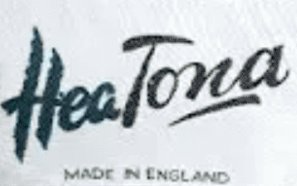
HeaTona
Leeds, West Yorkshire clothing brand by William Heaton. 1950s-60s tags feature a classic slanted italic cursive script with flowing connected letters, reflecting the brand's long-standing Leeds heritage.

Helly Hansen
Norwegian foul-weather brand founded in 1877. The cursive boxed wordmark gave way to the bold red 'H/H' slash in 1989 — the cleanest dating split.
Helmut Lang
Vienna-born minimalist fashion label. 1980s-90s founding era tags are the most collectable; the 1998 move to New York is a key milestone; 2005 sale to Prada marks the transition away from founder involvement; simple black sans-serif is consistent across all eras.

Henri Lloyd
Manchester sailing apparel brand by Henri Strzelecki and Angus Lloyd, pioneer of waterproof performance gear. 1980s-2004 tags show the brand name in bold uppercase with a laurel wreath; the laurel wreath is the primary era marker.
Herman Marcus
Dallas, Texas women's fashion brand by Herman Marcus. 1960s-80s tags feature elegant cursive with 'DALLAS' in clean sans-serif below; the 'DALLAS' provenance text is the key identifier.
Hermes
Parisian house born in saddlery, marked by the horse-and-carriage. The logo barely changes, so 'Fabriqué en France' wording and tag materials do the dating.
Hilo Hattie
Hawaiian lifestyle and aloha wear retailer named after comedian Clarissa Haili. 1970s-80s tags use a playful cursive script with rounded letters; the bright floral aloha fabric paired with the script logo dates the era.
Hollister
Abercrombie's SoCal-themed sister brand, launched in 2000. The seagull emblem over 'HOLLISTER' and 'CALIFORNIA' is the constant marker.
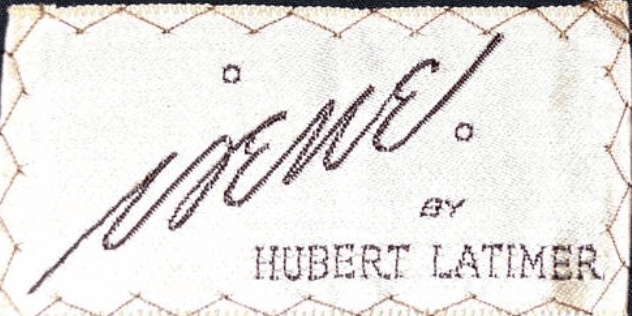
Hubert Latimer
California-based designer who continued Irene's legacy and led Lilli Ann. 1960s-80s tags use a classic elongated serif font with distinct serifs; the elegant serif wordmark is consistent across all decades.
Hugo Boss
German tailoring house from Metzingen, originally a workwear maker. The bold 'BOSS' wordmark over a small 'Hugo Boss' is the constant; tag material and sub-line wording date the piece.

Hummel
Sportswear brand built on the bumblebee and chevron. 'Made in...' wording and the chevron's colour treatment date its tags.

I. Magnin
San Francisco luxury department store founded by Mary Ann Magnin in 1876. 1950s tags use formal serif 'I. Magnin & Co.' with elegant spacing; each decade updates the presentation; closed in 1994 making 1990s tags the final era.

Iceberg
Italian luxury sportswear by Silvano Gerani and Giuliana Marchini. 1980s-90s tags show bold capitalized 'ICEBERG' reflecting the knit sportswear era; 1990s iconic cartoon graphics on knitwear are the defining collector identifier.

IKKS
French ready-to-wear brand by Gerard Le Goff, blending adult fashion codes with a playful spirit. 1990s-2000s tags feature the bold 'IKKS' wordmark; children's and adult lines have distinct sub-labels.
Invicta
Italian bag and backpack brand, Turin-based since 1921. 1990s-2000s tags show the bold red-and-blue emblem with the stylized 'N' shape and lowercase 'invicta' in a slanted modern font.

Isabel Marant
Parisian bohemian chic designer. 1990s founding tags use bold black sans-serif in a minimalist format; 2000s-10s refine the wordmark; the Etoile diffusion line has distinct tags.

ISC
Australian sportswear manufacturer founded in 1991 in Sydney's Rosebery suburb, specialising in team uniforms for Australian football, rugby league, rugby union, cricket, and basketball. Labels from the 1991–2000s carry an oval badge with streamlined 'ISC' lettering and an aerodynamic speed-line graphic; the oval badge shape and absence of offshore manufacture notes identify early Australian-made production.

Izod
American preppy sportswear brand formed from an Izod London-Lacoste partnership. Bold serifed 'IZOD' with a prominent slanted 'Z' is the classic tag; 1980s-90s 'Izod Lacoste' with the crocodile is the most collectible era.
J.Crew
The American preppy catalogue brand turned style staple. The blocky 1983–2012 wordmark anchors most vintage; 'Made in USA' marks the earliest.

Jack & Jones
Copenhagen-born menswear and denim brand founded in 1990. The 'CPNHGN' city abbreviation above the brand name and 'Originals by Jack & Jones' wording mark the earliest tags; the 'Jeans Intelligence' sub-label and loop tags track the 2000s era.

Jack Wills
British university fashion brand founded in Salcombe, Devon in 1999. The 'University Outfitters' wording with the full '22 Fore Street, Salcombe' address and the pheasant crest date the earliest tags; the simpler 'Est. Great Britain' wording marks the 2010s era.
Jacques Esterel
Parisian couture house founded by Charles Martin under the name Jacques Esterel. 'Création Jacques Esterel' on a detailed serif label with 'Paris' wording marks the 1950s–60s; the bold geometric 'JE' monogram in red is the unmistakable 1970s–80s marker.
Jacques Fath
Parisian couture house founded in 1937, a peer of Dior and Balenciaga. The coat-of-arms crest with two flanking lions, a crown, and 'JACQUES FATH PARIS' in serif script marks the mid-century tags; the simplified crown-and-scissors emblem arrives in the 1980s.

JCPenney
American department store chain founded in 1902 as the Golden Rule store. The house brand 'Penneys', then 'JCPenney', and sub-lines like 'Towncraft', 'Big Mac', and 'Brentwood' are the sharpest dating tools across seven decades of in-house garment labels.
Jean Paul Gaultier
The Parisian enfant terrible of fashion. The slanted 'GAULTIER' wordmark and sub-lines — JPG Jean's, Junior Gaultier, Femme, Maille — date the tag.

Jean-Charles de Castelbajac
Paris designer known as JC/DC for bold primary-colour graphics and art-world collaborations. 'Jean-Charles de Castelbajac' or 'KO and CO' on rectangular serif tags marks the 1970s; 'J.C. de Castelbajac' with bolder, looser script dates the 1980s–90s.

Jennyfer
French youth womenswear chain founded in Saint-Denis in 1984. The bubbly pink lowercase logo is the 1985–2011 era marker; the rebellious 'DON'T CALL ME' in handwritten script above the brand name arrives from 2011 — the cleanest split for dating any Jennyfer piece.

Jil Sander
The Hamburg minimalist fashion house founded by Jil Sander in 1968. Bold sans-serif 'JIL SANDER' on stark white or black tags, always with 'Made in Italy', is the constant marker — tag material and cut do the era dating rather than any logo change.

Jimmy Choo
London luxury footwear house co-founded by Jimmy Choo and Tamara Mellon. The classic serif 'JIMMY CHOO LONDON' on a rectangular tag marks the 1990s founding era; the slightly refined, thinner serif refresh of 2013 is the dividing line for the modern brand.

John Charles
British occasion-wear house founded by Cherry Price in 1958. Intricate floral designs and ornate serif fonts on embroidered labels mark the 1970s; bold lettering with 'Made in Great Britain' tracks the 1980s; cleaner minimalist fonts with 'England' wording date the 1990s.
John Galliano
The Gibraltar-born, London-trained couturier famous for theatrical runway spectacle. The ornate gothic-style 'John Galliano' font is the constant identifier across all eras; 'London' wording anchors 1980s pre-Paris pieces before the 1990s move to the French capital.

John Rocha
Hong Kong-born, Dublin-based designer known for textural and architectural womenswear. The minimalist 'ROCHA·JOHN ROCHA' dot-separated wordmark marks the 1990s founding era; bolder lettering and the 'Waterford Crystal' collaboration wording track the 2000s.

Joma
Spanish sportswear brand founded in Toledo in 1965 and named after the founder's son. The bold blue 'J' logo in classic serif with 'Joma' beneath dates the 1990s football kit era; the streamlined modern 'J' and darker colourways mark the 2000s.
Jonathan Logan
New York mid-century women's fashion empire founded by David Schwartz. The handwritten cursive logo on minimal tags marks the 1940s; the refined stitched oval with 'New York' dates the 1950s–60s; sub-lines like 'Act III', 'Villager', and 'Rose Marie Reid' do the later dating.
Jones New York
New York women's workwear label founded by Sidney Kimmel in 1975. A rectangular border around 'Jones New York' in bold serif marks the earliest tags; the borderless bold wordmark of the 1980s and the 'JNY' abbreviation on loop tags date the 2000s pieces.

Joop!
German designer label founded by Wolfgang Joop in 1986. Bold embroidered or printed 'JOOP!' in uppercase — always with the exclamation mark — is the constant identifier; woven textured labels and darker tag grounds track the 2000s era.
Jos. A. Bank
Baltimore menswear clothier founded in 1905. 'Clothiers' in serif font beneath the brand name marks the 1970s–80s heritage era; block-style fonts without the subtitle track the 1990s modernisation; the 'Stays Cool' and 'Traveler' sub-lines date 2000s-era pieces.
Juicy Couture
Los Angeles luxury velour-tracksuit label founded by Pamela Skaist-Levy and Gela Nash-Taylor. The two-dog crest with crown and shield is the constant identifier; pink or green label grounds and 'Made with Love G&P' wording date the 2000s peak; 1990s tags are the earliest and rarest.
K-Way
French inventor of the packable waterproof jacket, founded by Léon-Claude Duhamel in 1965. The bold 'K-Way' logo with country of manufacture marks the 1980s; 'K-Way International' and 'K-Way Plus' sub-branding track the 1990s–2000s.

Kangol
English hatmaker founded in 1938 and adopted by hip-hop culture in the 1980s. Union Jack motif tags mark the early brand; the kangaroo logo, 'Born British', and 'Bred in Britain' slogans run through the 1990s–2000s peak era.
Kappa
Turin knitwear maker turned football-kit powerhouse. The back-to-back 'Omini' figures and 'Robe di Kappa' branding run through its vintage tags.

Karen Millen
British women's fashion label founded in 1981. 'Karen Millen England' in elegant serif lettering on cream or black grounds marks the 1990s founding era; the stripped-back bold sans-serif of the 2010s signals the post-independent-era modernisation.

Karl Lagerfeld
The German fashion polymath who ran Chanel, Fendi, and his own label simultaneously. 'Karl Lagerfeld' in elegant script with 'Made in France' marks the 1980s; the shift to block lettering and darker, more subdued grounds tracks the 1990s–2000s.

Karrimor
Lancashire outdoor equipment maker founded in 1946 as the Karrimor Bag Company. Mountain-illustration tags and colourful outdoor-themed designs mark the 1990s British-made era; the bold British-flag emblem with 'Made in UK' was the pre-outsourcing quality signal.
Kelme
Valencian sportswear brand founded by the Quiles brothers in 1963. The paw-print logo with 'Kelme Fútbol' in bold block letters marks the 1990s football kit era; the modernised graphic paw and darker colourways track the 2000s.

Kenneth Cole
New York footwear and fashion brand founded by Kenneth Cole in 1982. 'Kenneth Cole' in bold rectangular tags marks the early years; the 'Reaction' diffusion-line sub-brand and loop tags date the 1990s–2000s expansion into ready-to-wear.
Kenzo
Paris fashion house founded by Kenzo Takada. The early 'Jungle Jap' name, then 'Kenzo Paris', and the striped 2013 logo chart its tags.
Kiabi
French value fashion chain founded by Patrick Mulliez in 1978 near Lille. Bold sans-serif 'Kiabi' on plain grounds marks the 1980s founding era; colourful dynamic designs and 'Winch Ligne Sport' sub-branding track the 1990s.
Kickers
Paris footwear brand launched in 1970, built on the iconic flower-emblem boot. The red, green, and blue colour scheme with flower-detail 'Kickers' tags marks the 1990s peak; the simplified monochrome version signals post-2000 production.

Kiton
The Neapolitan bespoke tailoring house founded in Arzano by Ciro Paone in 1968. The 'Kiton' wordmark with the distinctive red dot above the 'i' and 'cucito in Italia' wording are the constant markers; black tags with white lettering become the signature of the 1990s.
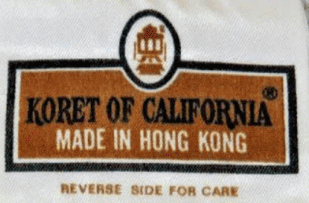
Koret of California
San Francisco sportswear innovator founded by Joe and Stephanie Koret in 1939. The elegant script 'Koret of California' with the bow illustration is the 1940s–50s hallmark; 'Pair-Offs' and 'Koratron' technology wording track the 1950s–60s modernisation.

L.L. Bean
Freeport, Maine outfitter. Its labels move from the founder's signature script to a serif wordmark and finally the 1987 'Sunrise over Katahdin' logo.

La Redoute
French fashion and home décor catalogue retailer founded in Roubaix in 1837. Simple bold 'La Redoute' lettering with 'La Redoute France' or catalogue-code wording marks the 1990s; the introduction of sub-collections and international sizing tracks the 2000s.
Lacoste
The French tennis house of René 'le Crocodile' Lacoste. The Izod co-brand on US-market pieces and the 'Chemise Lacoste' label are the sharpest pre-2000 dating tells.

Lambretta
London mod-culture clothing brand trading on Italian scooter heritage. 'Carnaby St' branding alongside the Lambretta wordmark and scooter iconography marks the 1990s founding era; 'Since 1947' heritage wording and darker colourways track later pieces.

Lands' End
Wisconsin catalogue outfitter founded as a yacht-equipment supplier in 1963. The 'Guaranteed. Period.' slogan and the ovoid logo mark the 1980s–90s heritage; 'Made in USA' on early pieces and the squall-jackets line are the vintage collecting anchors.

Lane Bryant
American plus-size fashion pioneer founded by Lena Bryant in 1904. The classic cursive 'Lane Bryant' script in red or maroon thread marks the 1950s–70s; the shift to modern sans-serif and sub-brands like 'Venezia' and 'Lane Bryant Woman' tracks the 1980s–90s.

Laura Ashley
Welsh-born designer whose romantic florals defined a generation of British womenswear. 'Made in Wales' on square serif-font tags marks the earliest and rarest pieces; the flowering-script logo with 'Made in Great Britain' tracks the 1970s–80s peak.
Le Coq Sportif
France's rooster-emblem sportswear house. The bird's posture — realistic, then geometric, then minimal — and 'Designed in France' wording chart its tags.
Le Tigre
American preppy sportswear brand launched in 1977 to rival Lacoste. The leaping tiger graphic above the wordmark is the constant identifier; square or rectangular tags with the tiger in a prominent bounding pose and bold lettering mark the 1980s–90s peak.
Lee
A Kansas workwear house behind the Union-Alls and the Storm Rider jacket. Lee's hair-on-hide patches and union-made woven labels mark its mid-century output.
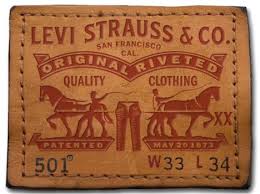
Levi's
The originator of the riveted waist overall. Levi's tags are among the most studied in vintage — the Red Tab, the capital-vs-lowercase 'E', and selvedge denim all anchor precise dating.
Lilly Daché
New York millinery queen who dressed Hollywood royalty from Marlene Dietrich to Carmen Miranda. The address '78 East 56th Street' on simple elegant-font tags marks the peak 1940s decade; the flowing cursive 'Lilly Daché' script with 'New York' is the constant marker.
Lilly Pulitzer
The Palm Beach socialite whose vivid tropical prints became a resort-wear institution. 'The Lilly' in script with 'Lilly Pulitzer Inc.' below marks the 1960s–70s; the shift to a simpler 'Lilly Pulitzer' script and monochromatic tags dates the 1980s.

Liu Jo
Italian fashion house founded by the Marchi brothers in Carpi in 1995. Bold 'LIU JO' in uppercase on black-and-white grounds marks the 1990s founding era; colourful textured tags and the introduction of the LJ monogram track the 2000s growth.

Liz Claiborne
New York working-woman's fashion empire founded by Liz Claiborne in 1976. Simple bold 'Liz Claiborne' in minimalist fonts marks the early years; the triangular logo introduced in the 1980s and sub-lines like 'LIZSPORT' and 'LIZWEAR' do the decade dating.

Loewe
Madrid luxury leather house founded in 1846. Bold 'LOEWE' with 'Made in Spain' marks the 1970s; 'Madrid 1846' heritage wording and the Anagram logo introduced alongside the wordmark track the 1980s–90s; LVMH acquisition in 1996 is a key era divider.
Lonsdale
London boxing brand long tied to terrace and subculture style. The lion crest above the arched wordmark dates the bulk of its vintage.

Looney Tunes
Warner Bros animation franchise whose licensed graphic apparel peaked in the 1990s. Bright multi-colour tags with character artwork mark the 1990s streetwear peak; the blank tag beneath (Screen Stars, Hanes, Delta Pro Weight) is the true dating key for any Looney Tunes tee.
Lotto
Italian sport brand from the Montebelluna district. 'Made in Italy' and the bold geometric wordmark mark its 1980s output.

Louis Féraud
The Cannes couturier who dressed Brigitte Bardot and became known for vivid colour and bold graphic prints. 'Louis Féraud Paris' in elegant serif lettering marks the 1960s–80s peak; 'Boutique Féraud' or 'Louis Féraud Femme' sub-labels do the finer era dating.
Louis Vuitton
Parisian malletier founded in 1854. On garments, embossed leather and embroidered 'Louis Vuitton Paris' tags — and the later ® mark — date the piece.
Lyle & Scott
The Scottish knitwear house, founded 1874, defined by its golden-eagle emblem and its golf-and-terrace heritage.

Macron
Bolognese sportswear and football kit manufacturer founded in 1971. The 'Macron' wordmark with team association wording marks the 1990s kit era; the hero swoosh-like logo and club crest embroidery track post-2000 production.
Mango
Barcelona fashion chain founded by the Andic brothers in 1984. Simple minimalist 'Mango' on black or white grounds marks the 1990s founding era; 'Mango Jeans', 'Mango Basics', and 'MNG' abbreviation wording track the 2000s expansion.
Marion Donaldson
Swinging London designer known for vibrant Carnaby Street-era fashion. The stylised ornate swirling-script logo in pink or purple on simple grounds marks the 1960s–70s; bolder darker colourways — black and deep purple — with the same ornate font track the 1980s.
Marks & Spencer
Britain's high-street institution. For decades its clothing carried the 'St Michael' house brand — the single sharpest vintage marker.
Marlboro
Tobacco-brand-licensed apparel line of the 1980s–90s. Bold serif Marlboro logo with 'Made in Italy' marks the earliest pieces; 'Adventure Team' branding is the 1990s identifier for the outdoor-themed graphic tees and denim most often found thrifting.

Massimo Dutti
Barcelona premium fashion brand founded in 1985, now part of the Inditex group. Black or white tags with clean elegant font and 'Made in Portugal' wording mark the 1990s founding era; leather patch labels and dark navy grounds track the 2000s upscale repositioning.

Max Mara
The Reggio Emilia luxury ready-to-wear house founded by Achille Maramotti in 1951. 'Pianoforte di MaxMara' with Woolmark certification and 'Made in Italy' in elegant script marks the 1980s; grey-on-grey or beige-ground tags with clean serif wordmark track the 1990s.

Mexx
Dutch fashion brand founded in 1986 from the merger of Moustache and Emanuelle. Simple minimalist sans-serif 'Mexx' on basic grounds marks the 1990s; 'Mexx Women', 'Mexx Men', and bold contrasting colourways track the 2000s brand expansion.

Michael Kors
New York luxury designer founded in 1981. 'MICHAEL KORS' in bold uppercase with 'MADE IN U.S.A.' marks the 1980s founding era; 'KORS MICHAEL KORS' as the diffusion-line wording dates 1990s pieces; loop tags in darker colours track the 2000s–10s expansion.
Missoni
The Italian knitwear house famous for zigzag patterns. The oval 'M' emblem and 'Missoni Dal 1953' wording run through its tags.
Mizuno
Osaka sporting-goods house founded in 1906. 'JASPO' size codes and Japan or USA manufacture mark its earlier athletic wear.
Moncler
Alpine down-jacket house founded near Grenoble. The rooster-and-mountain logo, the 'Grenoble' subtext, and the cartoon care guide run through its tags.
Mondi
Munich fashion house founded in 1967. 'Made in W. Germany' on a square label with the red Mondi block-square logo is the sharpest dating marker for pre-1990 pieces; the capital 'MONDI' wordmark in the same red square tracks the post-reunification era.
Monsoon
London fashion brand founded by Peter Simon in 1973, known for ethnic and exotic textiles. The hand-drawn 'Monsoon' logo in brown or red marks the 1980s founding era; the standardised bold wordmark and 'Accessorize' companion-brand wording track the 1990s.
Moschino
Franco Moschino's irreverent Italian house. The bold all-caps wordmark holds steady; 'Couture!', 'Cheap and Chic' and 'Jeans' line wording date the tag.
Naf Naf
French fashion house founded in 1973 by the Pariente brothers. Bold playful 'NAF NAF' in uppercase with a pig-mascot motif marks the 1980s founding era; the shift to black-and-white schemes and a more refined logo tracks the 1990s.

Napapijri
Italian outdoor brand with a Scandinavian name. The boxed geometric wordmark and the 'geographic' subtext date its tags.
Nautica
The American nautical-sportswear brand founded by David Chu. The side sailboat emblem, then the three-sail logo, and 'Nautica Competition' wording date its tags.
New Look
British high-street fashion retailer founded by Tom Singh in Taunton in 1969. Simple 'NEW LOOK' in bold capitals on white or navy tags marks the 1980s; a stylised graphic element alongside the wordmark and product-line wording track the 1990s expansion.

Next
British multinational fashion retailer launched in 1982. Simple serif 'NEXT' on clean white or cream tags marks the 1980s founding era; the move to bold minimalist fonts and 'NEXT Directory' catalogue sub-branding tracks the 1990s.
Nike
Oregon sportswear giant. The orange Swoosh, the 1989–1994 grey tag, and the later white tag give collectors a tight set of dating windows.
Nine West
New York accessible-luxury footwear and fashion brand founded in 1983. 'NINE WEST' in bold serif on white tags marks the 1980s; black-on-white and white-on-black tag variations and the 'NINE & CO.' sub-brand wording date the 1990s–2000s.
North Sails
San Diego sailing-equipment maker founded by Lowell North in 1957. The circular N/S logo divided by a horizontal line with 'Est. 1958' wording marks the 1990s sailing-lifestyle apparel era; loop tags with the same emblem track the 2000s.
Nutmeg
American licensed sports-merchandise maker founded by the Jacobson brothers in the early 1980s. 'Nutmeg Mills' on white tags with bold red lettering and 'Made in U.S.A.' marks the 1980s; 'NUTMEG' alone in large bold red letters is the 1990s sports graphic-tee identifier.

O'Neill
The California wetsuit pioneer founded by Jack O'Neill. The wave logo and 'Since 1952' wording run through its surfwear tags.
Old Navy
Gap Inc.'s affordable family fashion brand launched in 1994. The blue-oval 'OLD NAVY' logo on rectangular white tags marks the 1990s founding era; 'Classic' style tags in solid black or blue and specific line names like 'Pixie' track the 2000s–10s.

Oleg Cassini
Hollywood costume designer turned New York couturier, official designer to Jacqueline Kennedy. The cursive 'Oleg Cassini' signature with crown or crest embellishment marks the 1960s–70s; bolder lettering with a detailed coat-of-arms design tracks the 1980s.
Orsay
French women's fashion brand founded by the Mulliez Group in 1975. Bold 'Orsay' lettering on simple grounds marks the 1980s; the dynamic italicised logo with 'Collection' sub-text tracks the 1990s; contemporary fonts with varied background colours date the 2000s.
Oscar de la Renta
The Dominican-born couturier who dressed American society from the 1960s onward. The cursive 'Oscar de la Renta' signature with 'boutique' wording marks the 1970s; 'Oscar de la Renta Studio' and 'Excellence' collection labels date the 1980s–90s.
Ossie Clark
Swinging Sixties British couturier and central figure of the Chelsea Set. Bold serif 'Ossie Clark' with 'Made in London, England' marks the earliest pieces; 'Ossie Clark for Radley' with 'Designed in England' is the key 1970s collaboration label to know.

OVS
Italian clothing chain founded in 1972 as Oviesse. The lowercase 'oviesse' branding with Venice manufacturing information marks the 1990s; the rebrand to bold uppercase 'OVS' on black tags in the 2000s is the definitive era divider.

PacSun
Seal Beach surf-and-skate retailer founded in 1980 by Jack Hopkins and Tom Moore. Minimalist bold 'PACSUN' lettering marks the 2000s store-brand tags; the licensed surf-brand labels inside — Volcom, Quiksilver, Billabong — are the collectors' primary dating keys.
Patagonia
Ventura outdoor brand with a cult following. Subtle shifts in the mountain-skyline label — outline, fill, font weight — and the Synchilla line date its fleeces and shells.
Paul & Shark
Italian sailing-lifestyle brand launched in 1972, inspired by a clipper's sail. The white shark icon with 'yachting' in red cursive and 'Made in Italy' marks the 1980s; the gold 'Paul & Shark' wordmark on navy grounds with 'Est. 1972' wording tracks the 1990s–2000s.
Paul Smith
The Nottingham designer known for classic British tailoring with a twist. The handwritten signature logo and sub-labels date the tag.
Pelle Pelle
Urban leather outerwear brand founded by Marc Buchanan in Michigan in 1978. Bold 'Pelle' in sans-serif with 'New York' and 'Milan' location wording marks the 1980s; 'Marc Buchanan' branding alongside 'Pelle Pelle' and serialised leather patches date the 1990s–2000s.

Pendleton
Oregon woollen mills famous for board shirts and trade blankets. Label colour, border, and logo angle pinpoint the decade of any Pendleton piece.
Penfield
Massachusetts maker of down jackets and mountain parkas. The bear-in-a-P logo, then the mountain graphic, and 'Made in U.S.A.' wording date its pieces.
Penguin
Minneapolis sportswear label launched by Munsingwear in 1955. 'An original Penguin by Munsingwear' with the small penguin icon is the 1980s–90s key marker; 'Penguin Sport' and the penguin logo integrated into bold typography tracks the 1990s peak.
Pepe Jeans
London denim brand founded by the Shah brothers at Portobello Road Market in 1973. The distinctive cursive 'Pepe Jeans London' signature with 'London' descriptor marks the 1980s; the circular logo design and 'Technical Superior Products' wording track the 1990s.

Perry Ellis
New York designer label founded by Perry Ellis in 1978 under The Vera Companies. 'Perry Ellis America' with American flag motifs marks the 1970s–80s founding era; the refined minimalist 'Perry Ellis' sans-serif wording and loop tags track the 1990s–2000s.

Pierre Cardin
The Italian-born, Paris-based couturier who pioneered Space Age fashion. 'Pierre Cardin Paris' with both Paris and New York wording marks the 1960s; the swirl logo alongside the wordmark is the 1980s identifier; 'Boutique Paris' sub-label wording does the finer era dating.
Playboy
The Playboy Enterprises licensing brand. The classic bunny-head logo alongside bold 'PLAYBOY' text marks the 1990s era most commonly thrifted; the blank tag beneath (Delta Pro Weight, Fruit of the Loom) is the true dating key for any Playboy-branded graphic tee.

Polartec
The Massachusetts textile innovator that invented synthetic fleece, founded as Malden Mills in 1906. 'Polartec by Malden' with bold lettering marks the 1980s first-generation fleece; the triangle symbol and specific fabric-type numbers (200, 300) track the 1990s peak licensing era.
Prada
Milanese luxury house built on the rope-framed 'Dal 1913' crest. Plain 'PRADA / MADE IN ITALY' serif tags run remarkably consistent across decades.

Pringle of Scotland
The Scottish Borders knitwear house founded by Robert Pringle in 1815. 'Styled by Pringle' with detailed royal crests and Hawick location wording marks the 1950s; colourful crest tags track the 1960s; 'Pringle Golf' sub-label and minimalist lettering date the 1990s.

Pull&Bear
Inditex youth fashion brand founded in Narón, Galicia in 1991. Bold serif 'Pull&Bear' with 'Made in Turkey' marks the 1990s founding era; the mix of serif and sans-serif fonts on loop tags with EU sizing tracks the 2000s expansion.
Puma
Herzogenaurach's other sportswear house, founded by Rudolf Dassler. German-only text, 'hit union' woven tags, and the leaping-cat emblem date Puma across the post-war decades.
Quiksilver
Australian surf brand born in Torquay. The wave-and-mountain emblem and 'Made in USA' wording mark its early boardwear.

Rab
Sheffield climbing and outdoor brand founded by Rab Carrington in 1981. Bold serif 'Rab' with 'Hand Made in Sheffield, England' is the hallmark of the earliest tags; batch numbers and Pertex fabric-type details track the 1990s.
Ralph Lauren
Polo player, preppy empire. The sub-line — Polo, Polo Sport, Polo Jeans, Chaps, Denim & Supply — narrows the era as much as the tag itself.
Reebok
British-born athletic brand that exploded in the 1980s aerobics boom. The Union Jack emblem, the starburst 'vector' logo, and the kicked-down 'R' chart its tags decade by decade.

Reiss
London premium fashion brand founded by David Reiss in 1971 in Bishopsgate. Minimalist 'REISS' centred on clean white tags marks the 1990s; a slightly modernised font with London heritage wording tracks the 2000s.
Replay
The Italian denim brand from the Veneto. The bold red serif wordmark and 'Made in Italy' wording mark its 1980s output.

Rip Curl
Victorian surf brand, 'made by surfers for surfers'. The diamond-framed wave, then the rectangular red wave, date its tags.

River Island
London fashion brand founded by Bernard Lewis in 1948 as a market stall. Simple bold black-and-white lettering on rectangular tags marks the 1990s; loop tags with bold serif lettering and product-line wording track the 2000s.

Roberto Capucci
Roman couturier known as the 'Giotto of Fashion' for his architectural sculptural designs. 'Roberto Capucci' in serif lettering marks the 1970s; the 'RC' monogram logo introduced alongside the wordmark tracks the 1980s–90s.

Roberto Cavalli
Florentine designer known for exotic prints, patchwork denim, and animal-print excess. Embossed leather tags with lowercase 'roberto cavalli' mark the 1970s; bold 'Made in Italy' lettering tracks the 1980s; the 'Just Cavalli' diffusion-line wording dates 2000s pieces.

Rocawear
Jay-Z and Damon Dash's hip-hop fashion label co-founded in 1999. Bold Rocawear logo prominently displayed marks the 2000s peak; the early-2010s tags with updated fonts retain the core streetwear branding before the brand entered the licensing era.

Rockport
American comfort footwear and casual-apparel brand founded in 1971. Square tags with the Rockport logo in an oval border mark the 1990s; the rectangular modernised tag with bold wordmark and 'Dressport' line wording tracks the 2000s.

Rohan
British technical outdoor clothing brand founded in 1977. Bold sans-serif 'Rohan' on blue or grey grounds marks the 1990s walking-gear era; a more streamlined and minimalist tag with a simplified colour palette tracks the 2000s.
Russell Athletic
Alabama sportswear maker founded by Benjamin Russell in 1902. Simple letter-size-only tags with script writing mark the 1950s; the 'Eagle R' logo introduced in the 1970s is the community's primary dating tool; 'Made in USA' on dense cotton fleece anchors the 1980s–90s.
s.Oliver
German lifestyle fashion brand founded by Bernd Freier in 1969 near Würzburg. Vibrant colourful designs with the 's.Oliver' wordmark mark the 1990s; the more refined and polished look with bolder fonts tracks the 2000s.
Salvatore Ferragamo
The Florentine house founded by shoemaker Salvatore Ferragamo. The cursive 'Salvatore Ferragamo' script and 'Made in Italy' wording date its tags.
Sandro
Parisian fashion house founded by Évelyne Chetrite in 1984. Simple minimalist lowercase 'sandro' marks the 1990s founding era; the shift to bold uppercase 'SANDRO' wordmark and Marais-district heritage wording tracks the 2000s rebranding.
Schott
The NYC house that invented the Perfecto motorcycle jacket. 'Schott N.Y.C.' in red, 'Made in USA', and product names like Perfecto and Rancher date its leather and wool.

Screen Stars
A Fruit of the Loom blank-tee imprint and the screen-printer's staple of the 1980s. The Screen Stars tag is itself a vintage authenticity marker.

Sears
American retail giant founded by Richard Sears in 1886. 'Sears Roebuck' on serif tags marks the 1950s; house-brand lines like 'Perma-Prest', 'Towncraft', 'Big Mac', and 'Oakbrook Sportswear' are the specific era-dating tools across five decades of catalogue tags.

Sergio Tacchini
Italian tennis label and terrace-culture mainstay. Wide white navy-text rectangles with multi-country sizing mark genuine 1980s Tacchini.
Slazenger
British sporting goods maker founded by the Slazenger brothers in 1881 on London's Cannon Street. The leaping-panther logo in white or gold against darker backgrounds marks the 1990s sportswear; the minimalist monochrome panther on sleeker tags tracks the 2000s.
Spalding
Chicago sporting goods institution founded by Albert Spalding in 1876. Bold serif Spalding logo with 'Made in USA' marks the 1980s; vibrant purple-and-yellow colour schemes with a modernised logo track the 1990s.
Starter
The American maker of licensed pro-sports jackets and caps, huge in 1990s hip-hop. The 'S'-and-star logo and league licensing date its pieces.
Stone Island
Massimo Osti's Italian sportswear house, defined by the compass-rose badge. 'Made in Italy' woven tags and the serif wordmark date its earliest output.

Stradivarius
Barcelona youth fashion retailer founded by the Triquell family in 1994, now an Inditex label. Bold serif 'Stradivarius' lettering with detailed size information marks the 1990s founding era; specific fit descriptors and varied loop-tag designs track the 2000s.
Stussy
Shawn Stussy's surf-born streetwear original. The graffiti signature never changes, so the tag colour, the big-letter size circle, and country of make do the dating.
Sundek
San Francisco surfwear brand founded in 1958, known for vividly coloured boardshorts. The distinctive sun-and-waves logo in bright colours marks the 1970s–80s; a cleaner simplified sun-and-wave emblem alongside the wordmark tracks the 1990s–2000s.
Superdry
The British brand built on faux-Japanese graphics. The katakana script above the 'Superdry' wordmark is its signature tag marker.
Supreme
The Lafayette Street skate shop turned streetwear titan. The red box logo is constant; 'Made in U.S.A.' and 'Pre-Shrunk 100% Cotton' wording date the box-logo tees.

Talbots
Classic American women's clothing brand founded by Rudolf and Nancy Talbot in Hingham, Massachusetts in 1947. Minimalist text marks the 1960s early tags; the red underline beneath the 'T' in 'Talbots', introduced in the 1970s, is the hallmark dating marker.
Ted Baker
The British 'no ordinary designer label', founded in Glasgow. The clean 'TED BAKER LONDON' wordmark and elegant serif script date its tags.
The North Face
Bay Area outdoor outfitter. The black square jacket label, the USA-made rectangles, and the 2010 boxed logo are the core dating markers.

Timberland
New England outdoor footwear and apparel brand launched in 1973. 'Timberland Weathergear' with bold logos and 'Made in USA' marks the 1980s; 'Classic Denim Weathergear' and the embroidered tree emblem track the 1990s; 'Earthkeepers' and 'Crafted Since 1973' date the 2000s–10s.
TM Lewin
British Jermyn Street shirtmaker founded by Thomas Mayes Lewin in 1898. Clean bold 'T.M. Lewin' in classic serif on quality-fabric tags marks the 1990s; a slightly modernised aesthetic with Jermyn Street heritage references tracks the 2000s.

Tom Tailor
Hamburg lifestyle fashion brand founded in 1962. Colourful designs with ship imagery and 'SPORT' wording mark the 1980s; cleaner serif tags with the 'Tom Tailor' wordmark track the 1990s; a professional premium aesthetic with darker grounds dates the 2000s.
Tommy Hilfiger
American preppy-with-a-twist label that became a 1990s hip-hop staple. The flag logo as a full neck tag — versus the flag-as-spacer of the 2000s — is the key era split.
Topman
British men's fashion retailer established in 1978 as part of the Burton Group. Detailed brand-emphasis tags mark the 1980s; a slightly modernised serif aesthetic tracks the 1990s; loop tags with minimalist 'Topman' wordmark mark the 2000s streetwear era.

Topshop
British women's fashion brand launched in 1964 that defined high-street trend-led fashion. Simple bold serif 'Topshop' on rectangular tags marks the 1980s; a clean modern font with colourful varied designs tracks the 1990s; 'Kate Moss for Topshop' wording dates the 2007–10 era.

Tory Burch
New York bohemian-luxury brand founded by Tory Burch in 2004. The bold orange Tory Burch logo centred between 'TORY' and 'BURCH' marks the 2000s founding era; more varied colour and design treatments with the double-T emblem track the 2010s growth.

Trespass
Scottish outdoor apparel brand founded as Jacobs & Turner in 1938. Bold colourful designs reflecting outdoor culture mark the 1990s; the shift to a streamlined professional look with darker colours and clean 'Trespass' wordmark tracks the 2000s–10s.
True Religion
The Los Angeles premium-denim brand of the 2000s boom. The guitar-playing Buddha logo and horseshoe-stitched 'U' date its jeans.

Trussardi
The Bergamo leather-glove maker turned luxury fashion house, founded by Dante Trussardi in 1910. The greyhound emblem — adopted as the brand symbol in the 1970s — is the constant identifier; sport-specific colourful tags mark the 1980s; darker subdued grounds track the 2000s.
Tu
Sainsbury's in-house fashion label launched in 2004. The square 'TU' logo with a minimalist design marks the 2000s founding era; 'WOMAN', 'KIDS', and 'MAN' sub-descriptors track the evolving 2010s range.

Tultex
Virginia blank-activewear maker founded as the Pannill Knitting Company in 1926. Blue-and-white consistent-colour-scheme tags mark the mid-to-late 1980s; the white-rectangle with blue Tultex logo and border tracks the late 1980s–90s; the black-square logo variant is the mid-1990s identifier.
Umbro
Manchester football outfitter behind countless classic kits. The double-diamond emblem — sharp-cornered, then softened — and 'Made in England' wording date its tags.
Under Armour
Maryland performance-apparel brand founded in 1996 — too recent to be true vintage, but its 'HeatGear/ColdGear' tags chart its 2000s rise.

Uniqlo
Japanese casual-wear chain founded in Hiroshima in 1984 under the 'Unique Clothing Warehouse' banner before shortening to Uniqlo by the early 1990s. Early-era tags from 1984–1991 carry a two-stylized-figure logo and the full 'Unique Clothing Warehouse' wording; later 1990s labels switch to the compact red-box Uniqlo wordmark.

Valentino
Roman haute couture house founded in 1960 by Valentino Garavani and business partner Giancarlo Giammetti, synonymous with opulent gowns and a signature red palette. Pre-1980 labels read 'Valentino Garavani' in serif caps with a V-in-oval emblem; the simplified standalone 'Valentino' mark and 'Made in Italy' wording track 1980s–90s production.
Vans
Anaheim deck-shoe maker turned skate-and-surf staple. 'Since 1966' woven tags and the checkerboard motif separate genuine vintage from the modern 'Off The Wall' era.
Versace
Gianni Versace's Milanese house, defined by the Medusa head. Tags that still read 'Gianni Versace' and the motif-bordered black labels mark the pre-2000 era.
Victor Costa
American designer Victor Costa built his reputation from the 1960s making couture-inspired eveningwear accessible, earning the nickname 'King of Copycats' for his runway-faithful adaptations. Early labels from the 1960s–80s display a flowing script 'Victor Costa' on woven tags; a shift to cleaner printed typography and 'Dallas, Texas' origin wording marks later 1980s–90s pieces.

Victoria's Secret
American lingerie and lifestyle retailer founded in San Francisco in 1977 by Roy Raymond to offer an upscale boutique alternative to department-store intimate apparel. Labels from the late 1970s–1980s carry a classic serif uppercase 'Victoria's Secret' wordmark; the VS monogram tag and 'Limited Brands' ownership note identify 1990s–2000s production.
Vivienne Westwood
The British punk-turned-couture house, marked by the orb-and-cross. The orb logo and the 'Red Label' and 'Anglomania' line names date the tag.

Wallis
British women's fashion retailer founded in 1923 by Raphael Nat Wallis in Islington, growing into a high-street staple known for tailored coats and dresses. Woven labels with 'Made in England' wording identify pre-1980s production; 'Great Britain' and later offshore manufacture notes track the 1980s–90s shift.
Waltah Clarke's
Hawaiian-wear label founded by Walter Clarke in Honolulu in the 1940s, celebrated for high-quality aloha shirts and resort wear that brought Polynesian style to the mainland. Vintage 1960s–80s labels feature brown-thread embroidery in a flowing script reading 'Waltah Clarke's' with a Hawaii location line; thread color and script style narrow pieces to that two-decade window.

Warehouse
British contemporary women's fashion chain founded in 1976 in London as the Warehouse Utility Clothing Company, a pioneer of affordable trend-led high-street style. Bold block 'Warehouse' woven labels with 'Made in Great Britain' wording date pre-1990 production; offshore manufacture notes and updated label typography track the 1990s–2000s.
Weird Fish
British coastal-lifestyle brand founded in 1993 in Cornwall, known for casual outdoorwear built around a quirky fish-skeleton graphic and the 'Escape the ordinary' tagline. Labels from 1993 to the 2000s carry the detailed embroidered fish-skeleton motif in a hand-drawn style; graphic density and slogan placement help place pieces within the founding decade.

Wilson
American sporting-goods company founded in 1913 from a Sulzberger meatpacking subsidiary, originally using animal by-products to make tennis gut strings before becoming a global equipment leader. Early labels from 1914–1962 read 'Thos. E. Wilson & Co.' with a bold red W; the drop of the founder's name and shift to a standalone Wilson wordmark identifies mid-20th century and later vintage pieces.
Woolrich
Pennsylvania's oldest woollen mill, founded 1830. The sheep emblem's evolution and the 'Made in the USA' wording chart its tags.

Wrangler
Western denim launched under parent company Blue Bell and designed for rodeo riders. Early co-branded 'Blue Bell Wrangler' tags are the key dating marker.

Yessica
European womenswear sub-label of the C&A retail group, introduced in the 1980s to offer affordable contemporary fashion for women across the continent. Labels from the 1980s–90s carry a serif 'Yessica' wordmark in black on white; the addition of 'by C&A' alongside the name and a later shift to a lighter sans-serif track the late 1990s–2000s output.
Yves Saint Laurent
Parisian couture house. The cursive script label and the Rive Gauche ready-to-wear line frame the most collectible decades of vintage YSL.

Zara
Spanish fast-fashion retailer founded in 1975 in Arteixo, Galicia by Amancio Ortega as the flagship brand of the Inditex group, pioneering rapid-response trend manufacturing at high-street prices. The earliest labels read 'Zara Tiendas de Moda' in bold caps; the transition to a plain lowercase 'zara' wordmark without the subtitle marks the shift into global 1990s expansion.