Pringle of Scotland
The Scottish Borders knitwear house founded by Robert Pringle in 1815. 'Styled by Pringle' with detailed royal crests and Hawick location wording marks the 1950s; colourful crest tags track the 1960s; 'Pringle Golf' sub-label and minimalist lettering date the 1990s.

- Origin
- Scotland
- Founded
- 1815
- Category
- Designer & Casual
- Documented eras
- 6
How Pringle of Scotland labels evolved over time. Match the markers below against the tag in hand to place a garment in its era.
1950–1959
1950s vintage Pringle tags
Often features “Styled by Pringle” along with the location in Scotland Includes detailed crests or logos, often indicating royal appointments.
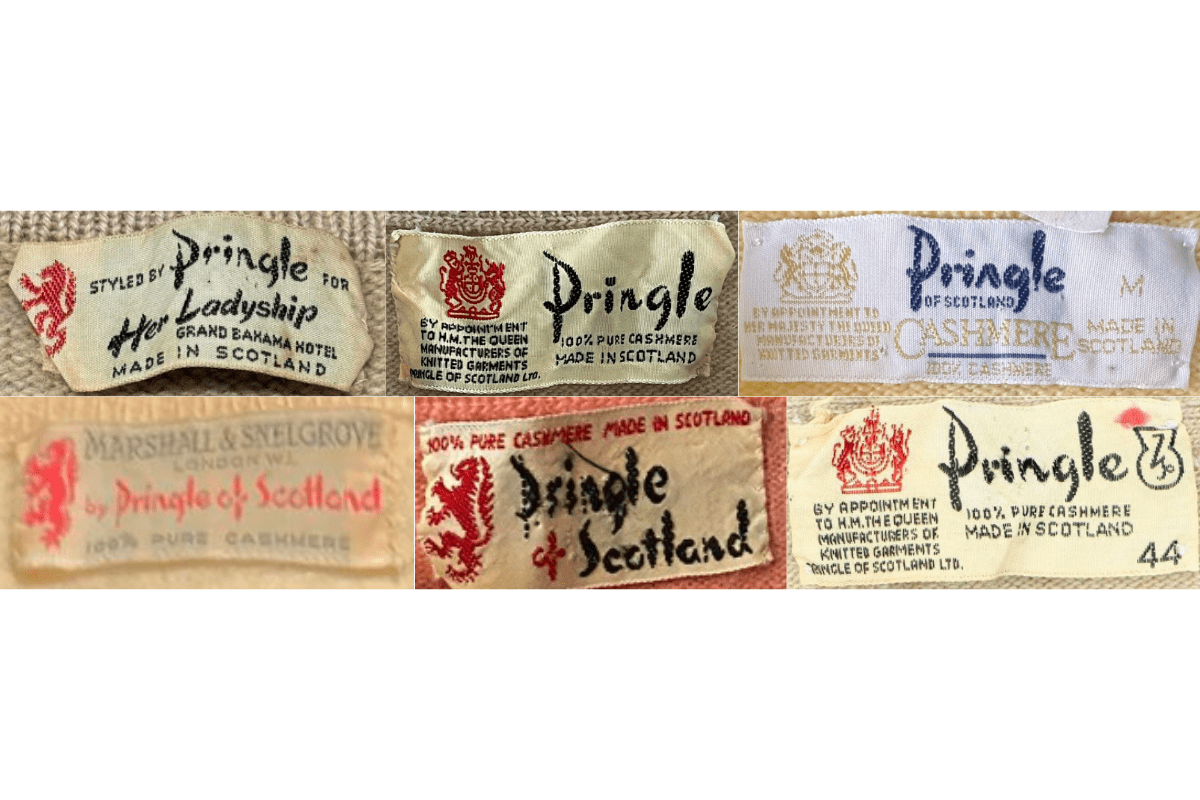
- Often features “Styled by Pringle” along with the location in Scotland.
- Includes detailed crests or logos, often indicating royal appointments.
- Typically made from durable materials with intricate embroidery.
How to spot it
Often features “Styled by Pringle” along with the location in Scotland — confirms this label era.
Value signal
Rare; pre-1960 examples are collector-grade and seldom surface.
1960–1969
1960s vintage Pringle tags
Continued use of royal crests and detailed logos Tags are generally more colorful, sometimes featuring red and gold tones.
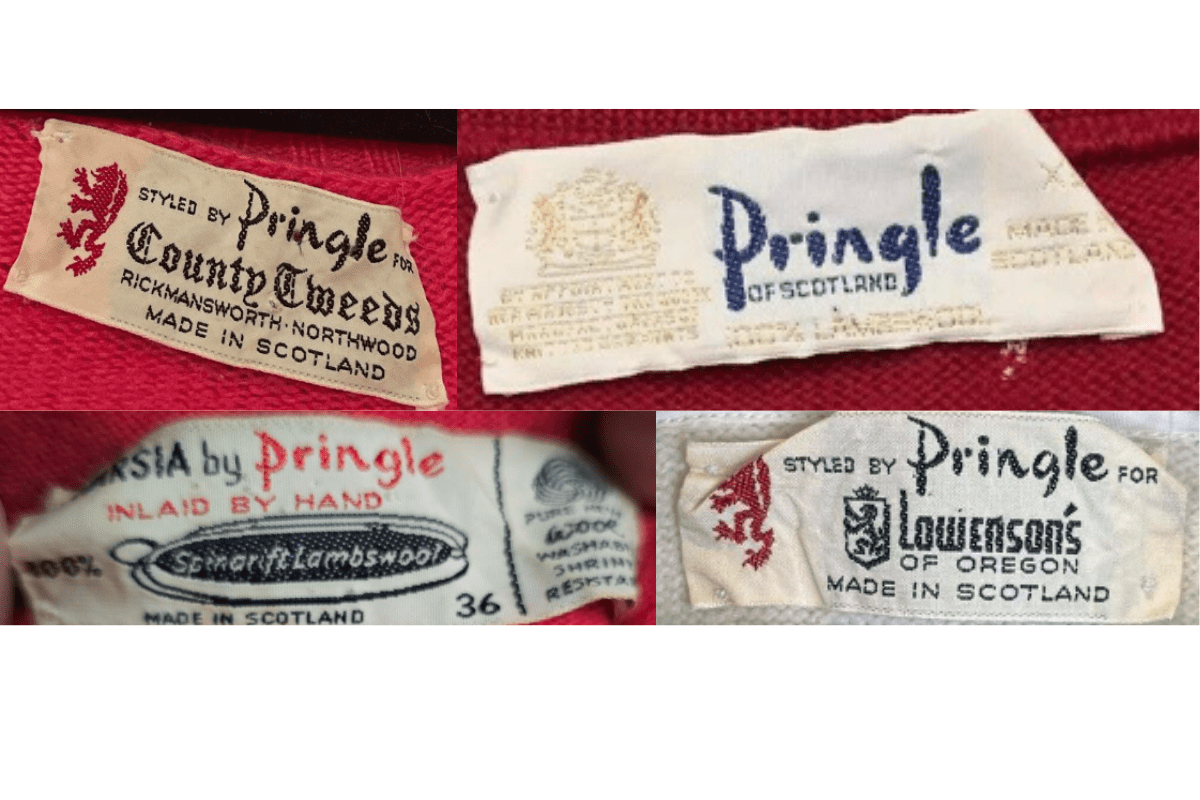
- Continued use of royal crests and detailed logos.
- Tags are generally more colorful, sometimes featuring red and gold tones.
- Text often includes “By Appointment to H.M. The Queen” and manufacturing details.
How to spot it
Continued use of royal crests and detailed logos — confirms this label era.
Value signal
Strong collector demand; 1960s examples command premiums in good condition.
1970–1979
1970s vintage Pringle tags
Tags may feature simplified logos compared to previous decades Introduction of different fonts, including both serif and sans-serif types.
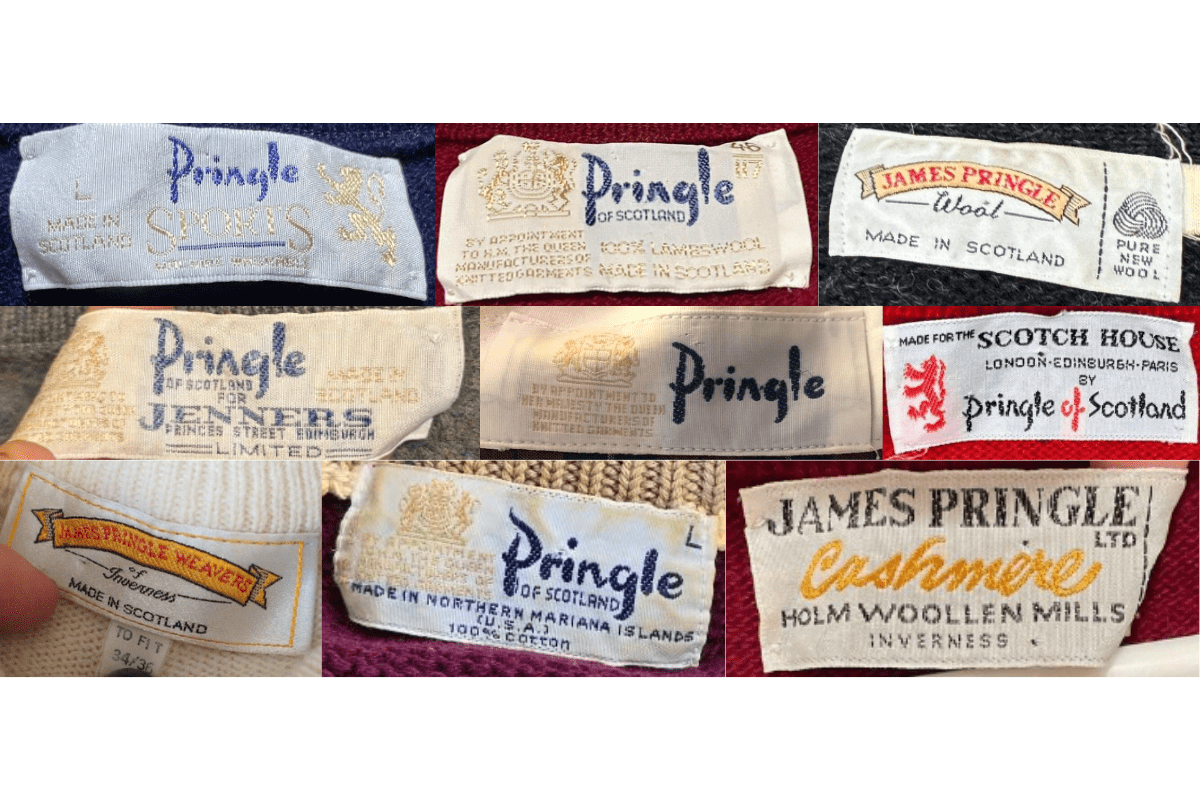
- Tags may feature simplified logos compared to previous decades.
- Introduction of different fonts, including both serif and sans-serif types.
- Often includes “Made in Scotland” prominently.
How to spot it
Tags may feature simplified logos compared to previous decades — confirms this label era.
Value signal
Solid vintage interest; 1970s pieces in clean condition attract steady demand.
1980–1989
1980s vintage Pringle tags
Variety of tag designs, including both rectangular and square shapes Use of both bold and cursive fonts, sometimes in combination.
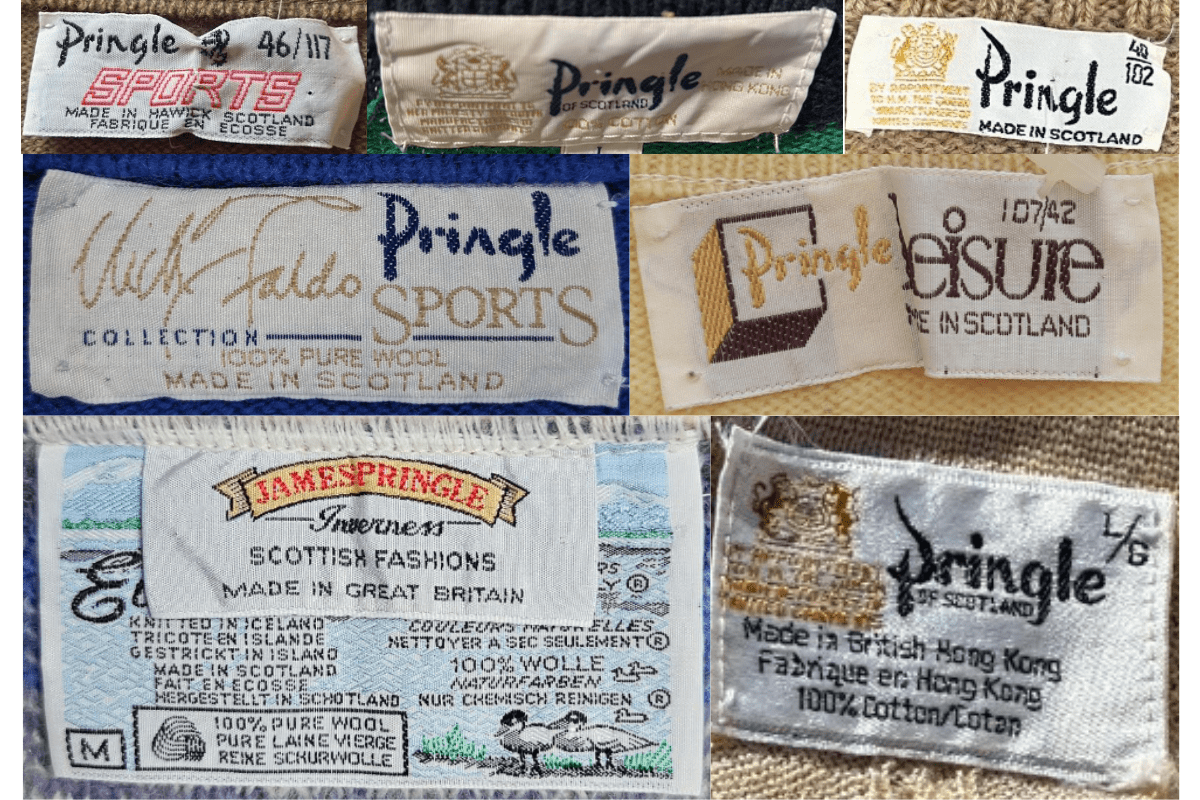
- Variety of tag designs, including both rectangular and square shapes.
- Use of both bold and cursive fonts, sometimes in combination.
- Tags often feature “100% Pure Cashmere” and other material details.
How to spot it
Variety of tag designs, including both rectangular and square shapes — confirms this label era.
Value signal
Good vintage demand; 1980s label detail is a key value driver.
1990–1999
1990s vintage Pringle tags
More modern, minimalistic designs compared to earlier decades Introduction of different lines such as “Pringle Golf” and “Faldo by Pringle.”.
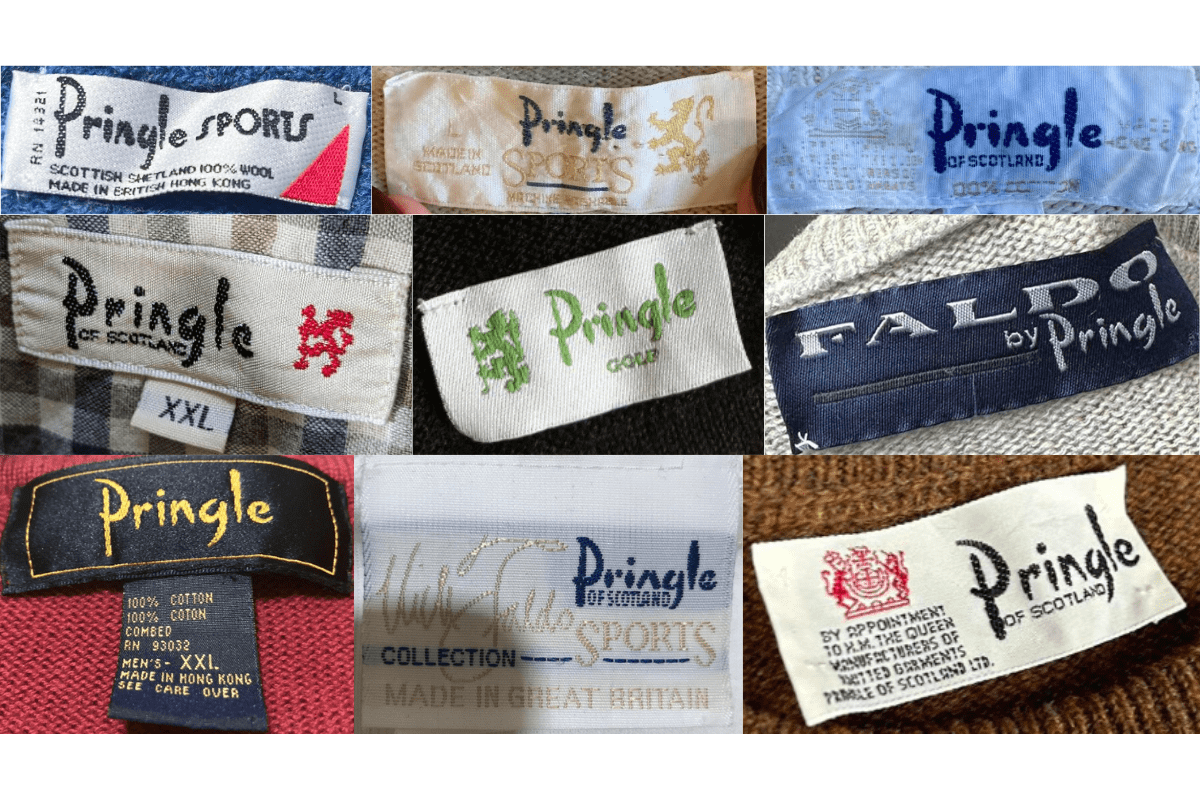
- More modern, minimalistic designs compared to earlier decades.
- Introduction of different lines such as “Pringle Golf” and “Faldo by Pringle.”.
- Tags often feature simpler color schemes and fonts.
How to spot it
More modern, minimalistic designs compared to earlier decades — confirms this label era.
Value signal
Moderate collector interest; condition and completeness determine value.
2000–2009
2000s vintage Pringle tags
Tags feature a more contemporary look with modern fonts and designs Use of loop tags becomes more common.
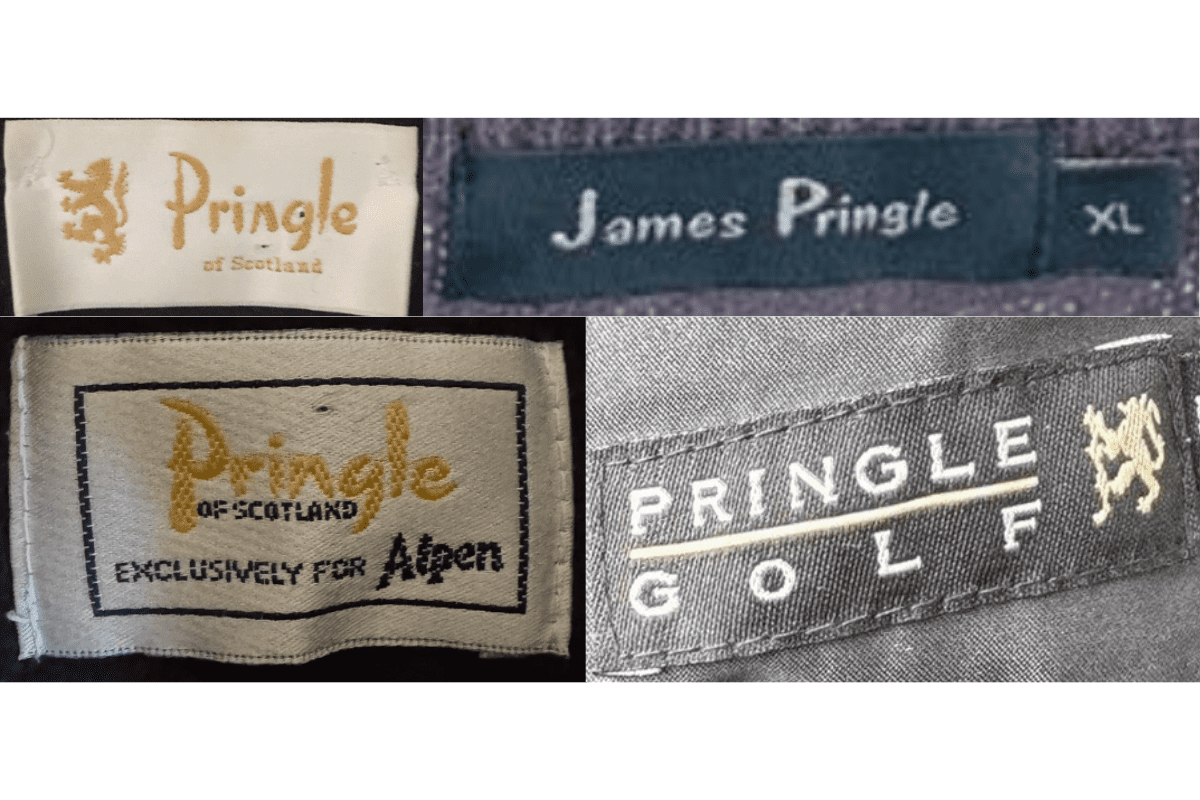
- Tags feature a more contemporary look with modern fonts and designs.
- Use of loop tags becomes more common.
- Introduction of new lines and collaborations, reflected in the tag designs.
How to spot it
Tags feature a more contemporary look with modern fonts and designs — confirms this label era.
Value signal
Entry-level vintage; value driven by brand recognition and condition.