GAP
San Francisco basics retailer. The lowercase 'the Gap' script, the navy Blue Box, and the one-week 2010 logo are clean decade markers.

- Origin
- USA
- Founded
- 1969
- Category
- Designer & Casual
- Documented eras
- 5
How GAP labels evolved over time. Match the markers below against the tag in hand to place a garment in its era.
1970–1979
Logo-Only Rectangle Tags
Original Gap tags were large rectangles carrying just the slightly pixelated sewn-in logo; sizing and fabric sat on a separate tag.
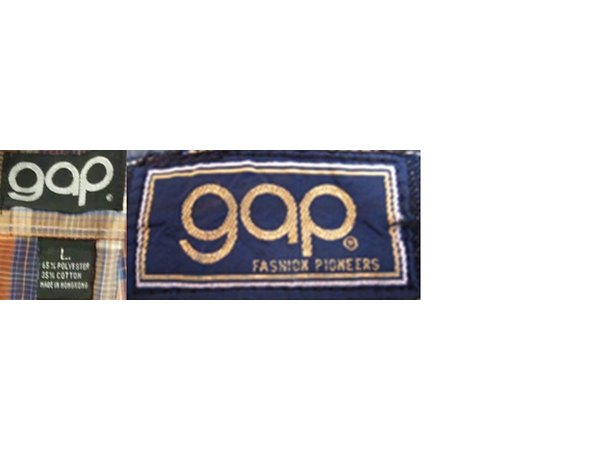
- The original Gap tags were large rectangles with just the logo
- Other information like sizing and composition would often be included on an extra tag
- The logo is sewn in and is slightly pixelated
- They were either completely sewn in or sewn in on the sides
How to spot it
A large rectangle tag with only the sewn-in logo.
Value signal
Rare; genuine 70s Gap is a collector find.
1980–1989
Blue Box Logo Tags
Tags turned rectangular with the new Blue Box logo, many of them blue, with multilingual text and offshore production (e.g. Hong Kong) beginning.
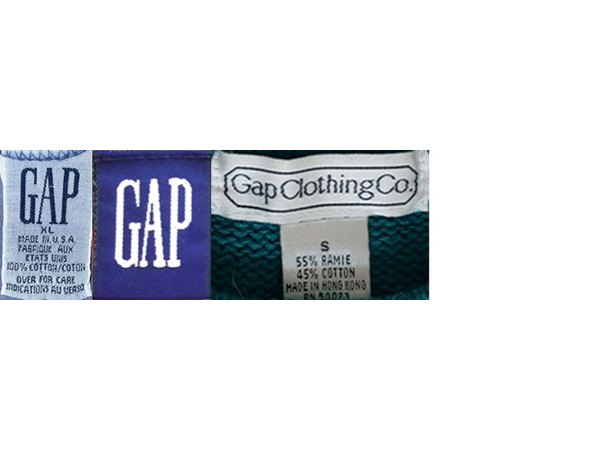
- The shaped became rectangular and would have the new Gap Blue Box logo
- Many of the tag were Blue
- Some of the tags started to include information in multiple languages as they internationally expanded
- And offshore production begun in countries like Hong Kong
How to spot it
The white-on-navy Blue Box logo.
Value signal
Desirable; 80s Gap basics have a steady following.
1990–1999
Square Fabric Blue Box
Logos became squares — fabric versions of the Blue Box — with sizing on a second tag; a mid-decade tweak slightly widened the letter spacing.
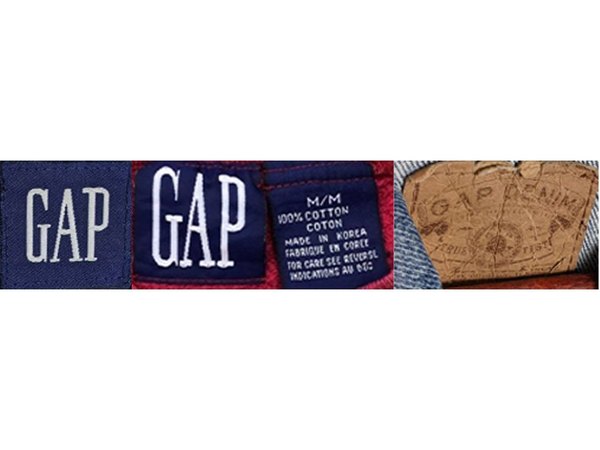
- Many of the Gap logos became squares, essentially being fabric versions of the Blue Box logo
- Product information like sizing and country of manufacture was included on an additional tag
- Lines like Gap denim would run in the 1990s
- Midway through the 1990s the tags were slightly updated, with the spacing between the lettering being slightly more spaced out, although this was not an officially logo update
How to spot it
A square fabric Blue Box tag with sizing on a second tag.
Value signal
Solid 90s vintage; value tracks the garment.
2000–2009
Double Tags & Sewn-In Tabs
A wide range of tags — early doubles (logo plus a sizing/fabric tag), later fully sewn-in tags with small size tabs.
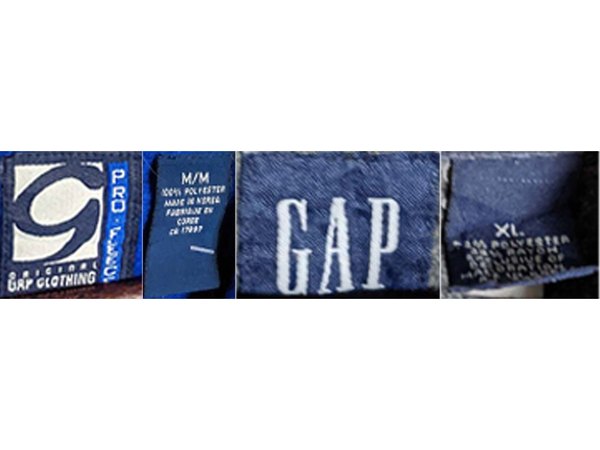
- A whole slew of different tags came out in the 2000s
- Early 2000s tags were often doubles, one which had the logo and a second next to it that has the sizing and composition information
- Later 2000s tags were often fully sewn in with small sizing tabs attached to them
How to spot it
Paired logo-plus-info tags, or a sewn-in tag with size tab.
Value signal
Common; modest resale.
2010–2019
2010 Logo & Loop Tags
The quickly rejected 2010 logo still ran on many tags; sewn-in tags with tiny multi-country size tabs and white printed loop tags became common.
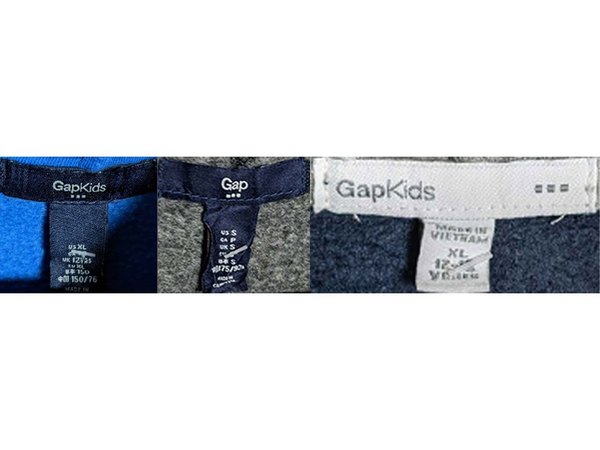
- Whilst the 2010 logo was quickly rejected and reverted, it was still used on many tags
- They would be fully sewn in, and have very small sizing tabs with information for multiple countries
- Some of the tags started to become white loop tags with the information printed on
- Some neck tags started to be printed on the inside of the top as well
How to spot it
The short-lived 2010 logo, or a printed white loop tag.
Value signal
Modern; priced on the piece.