s.Oliver
German lifestyle fashion brand founded by Bernd Freier in 1969 near Würzburg. Vibrant colourful designs with the 's.Oliver' wordmark mark the 1990s; the more refined and polished look with bolder fonts tracks the 2000s.
- Origin
- Germany
- Founded
- 1969
- Category
- Designer & Casual
- Documented eras
- 3
How s.Oliver labels evolved over time. Match the markers below against the tag in hand to place a garment in its era.
1990–1999
1990s vintage s.Oliver tags
The tags from the 1990s often feature vibrant colors and playful designs, reflecting the fashion trends of the decade Bright, multi-colored text is a common element, sometimes with additional decorative elements like patterns or logos.
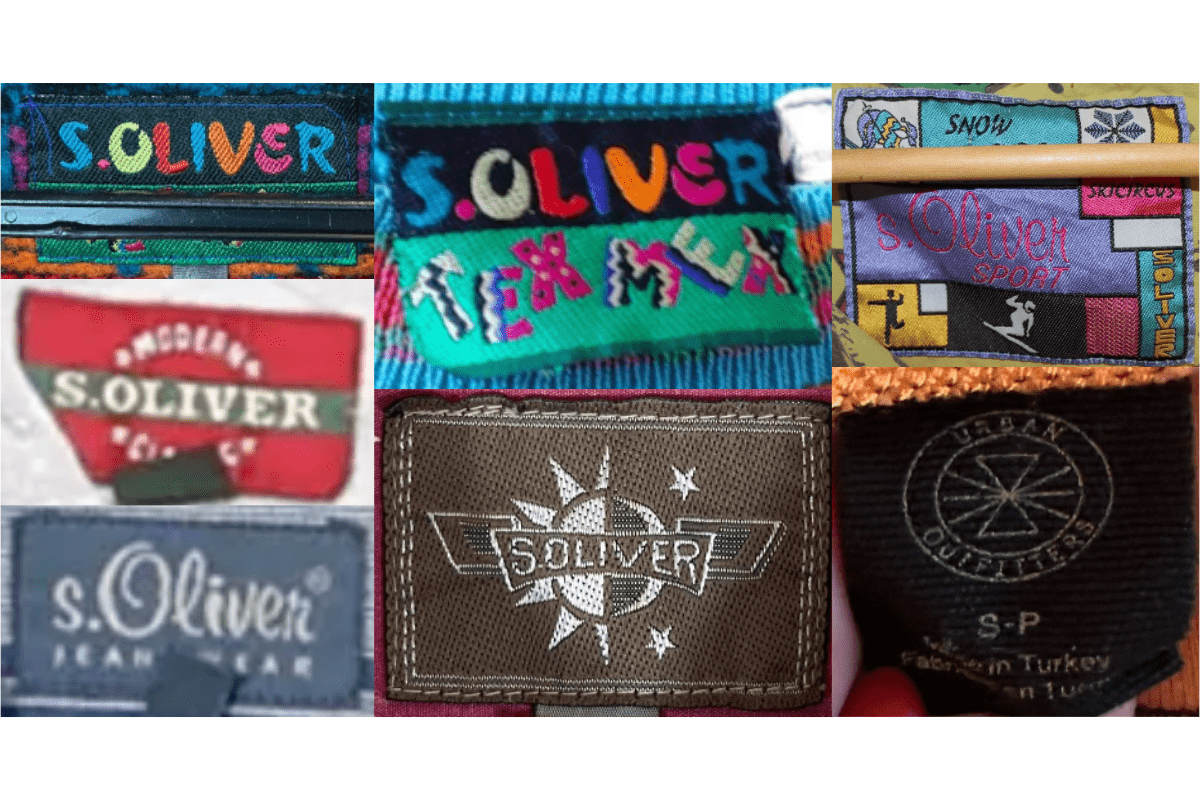
- The tags from the 1990s often feature vibrant colors and playful designs, reflecting the fashion trends of the decade.
- Bright, multi-colored text is a common element, sometimes with additional decorative elements like patterns or logos.
- Some tags also feature denim-inspired designs, emphasizing the casual and youthful vibe of the era.
How to spot it
The tags from the 1990s often feature vibrant colors and playful designs, reflecting the fashion trends of the decade — confirms this label era.
Value signal
Moderate collector interest; condition and completeness determine value.
2000–2009
2000s vintage s.Oliver tags
Tags from the 2000s generally have a more refined and polished look compared to the 1990s Branding is prominent, often featuring a mix of textures and materials like embroidered logos on fabric tags.
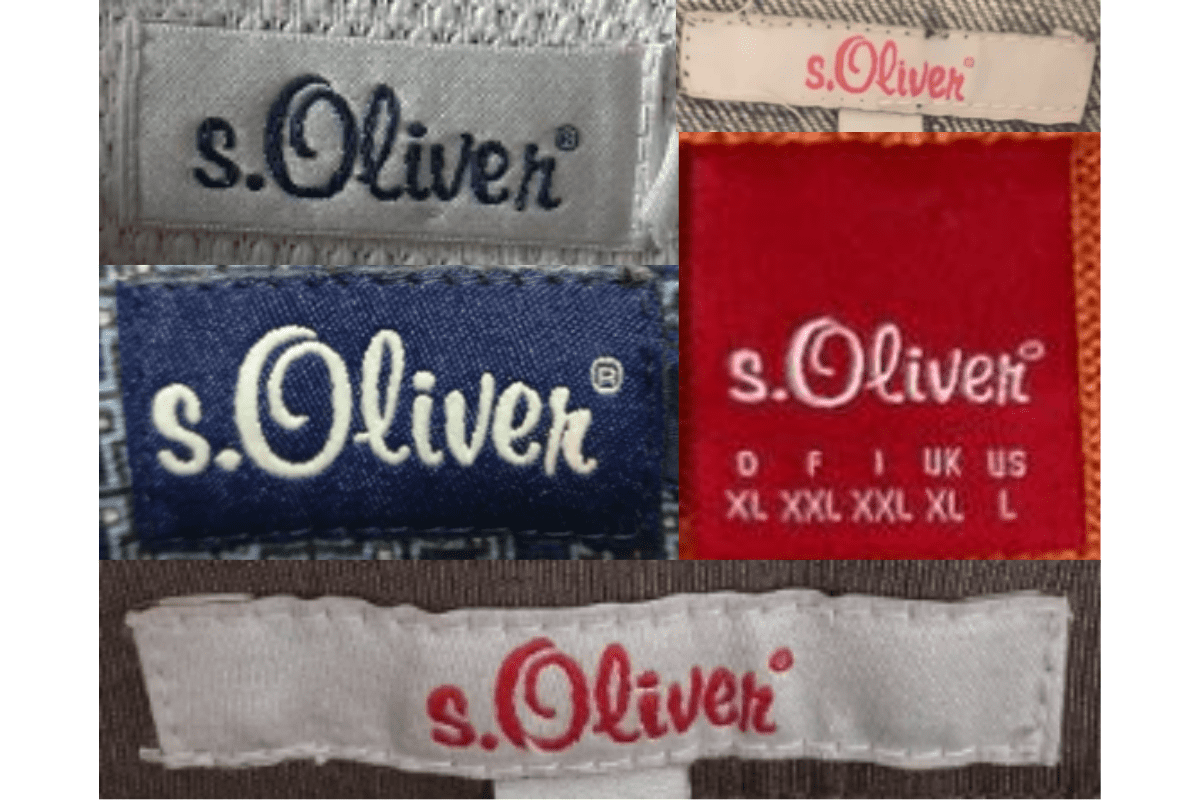
- Tags from the 2000s generally have a more refined and polished look compared to the 1990s.
- Branding is prominent, often featuring a mix of textures and materials like embroidered logos on fabric tags.
- Many tags during this period used a consistent color scheme with simple yet bold typography, emphasizing the brand’s established identity.
How to spot it
Tags from the 2000s generally have a more refined and polished look compared to the 1990s — confirms this label era.
Value signal
Entry-level vintage; value driven by brand recognition and condition.
2010–2019
2010s vintage s.Oliver tags
In the 2010s, s.Oliver tags adopted a more minimalist and modern approach, with cleaner designs and straightforward layouts Tags often include detailed product information, such as size and care instructions, presented in a clear and legible format.
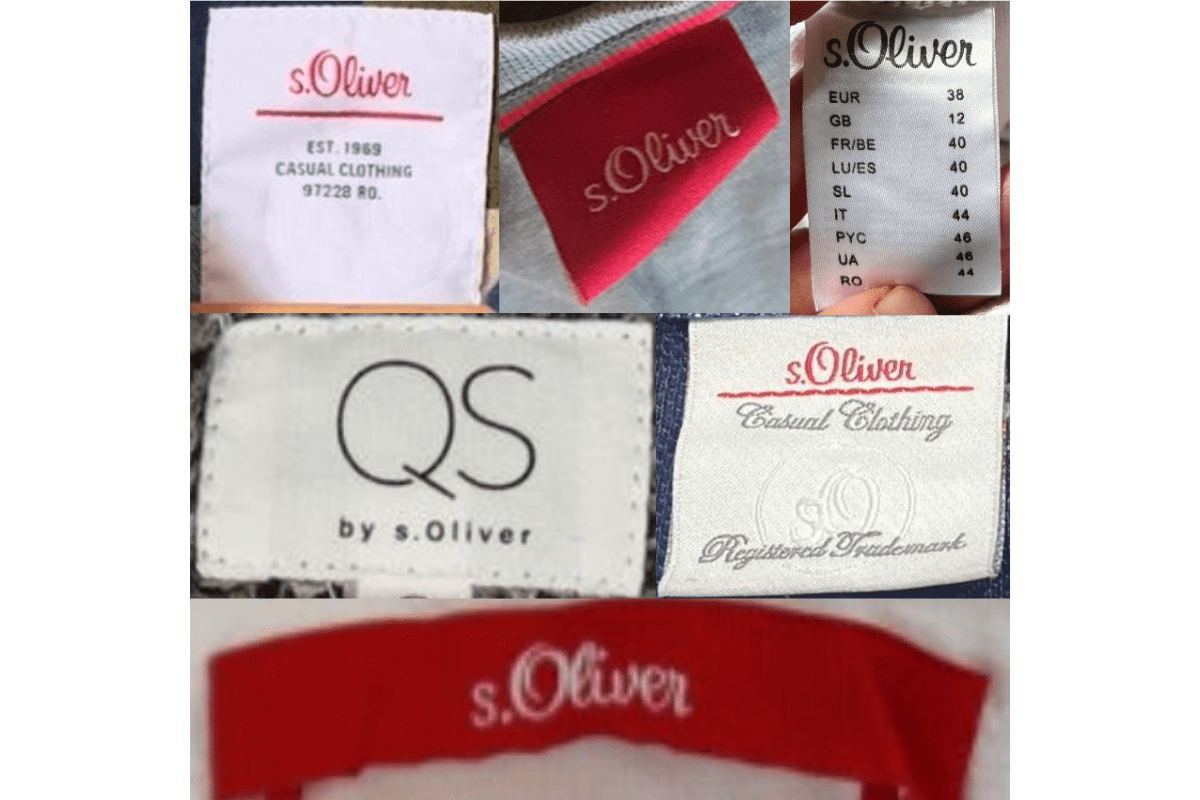
- In the 2010s, s.Oliver tags adopted a more minimalist and modern approach, with cleaner designs and straightforward layouts.
- Tags often include detailed product information, such as size and care instructions, presented in a clear and legible format.
- Some tags also emphasize the brand’s heritage with references to its founding year or classic slogans.
How to spot it
In the 2010s, s.Oliver tags adopted a more minimalist and modern approach, with cleaner designs and straightforward layouts — confirms this label era.
Value signal
Entry-level vintage; value driven by brand recognition and condition.