Victor Costa
American designer Victor Costa built his reputation from the 1960s making couture-inspired eveningwear accessible, earning the nickname 'King of Copycats' for his runway-faithful adaptations. Early labels from the 1960s–80s display a flowing script 'Victor Costa' on woven tags; a shift to cleaner printed typography and 'Dallas, Texas' origin wording marks later 1980s–90s pieces.

- Origin
- USA
- Founded
- 1965
- Category
- High Fashion
- Documented eras
- 5
How Victor Costa labels evolved over time. Match the markers below against the tag in hand to place a garment in its era.
1960–1969
1960s vintage Victor Costa tags
Features the early Victor Costa branding with a more script-like font Simple and elegant design, often with the brand name taking center stage.
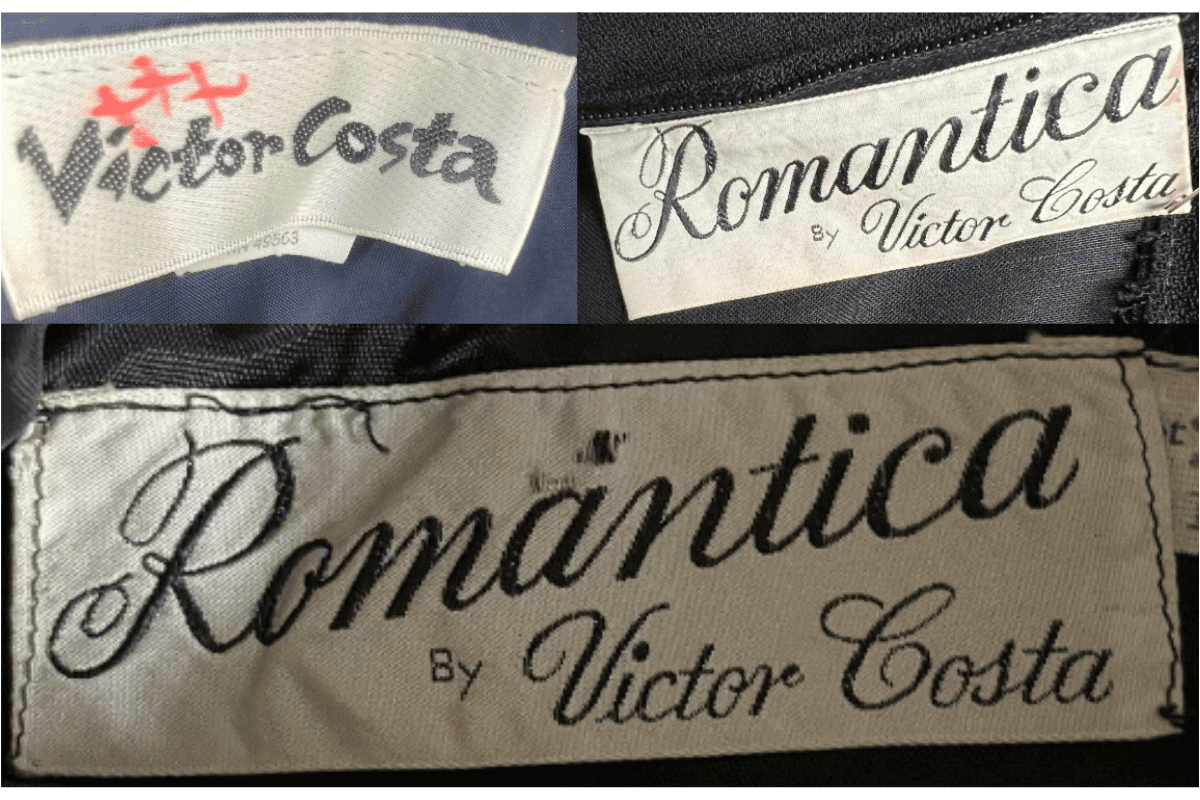
- Features the early Victor Costa branding with a more script-like font.
- Simple and elegant design, often with the brand name taking center stage.
- Tags are typically rectangular with minimal additional information.
How to spot it
Features the early Victor Costa branding with a more script-like font — confirms this label era.
Value signal
Strong collector demand; 1960s examples command premiums in good condition.
1970–1979
1970s vintage Victor Costa tags
The branding still showcases a script-like font, but the logo is more refined Tags may feature additional details like manufacturing information or retailer names.
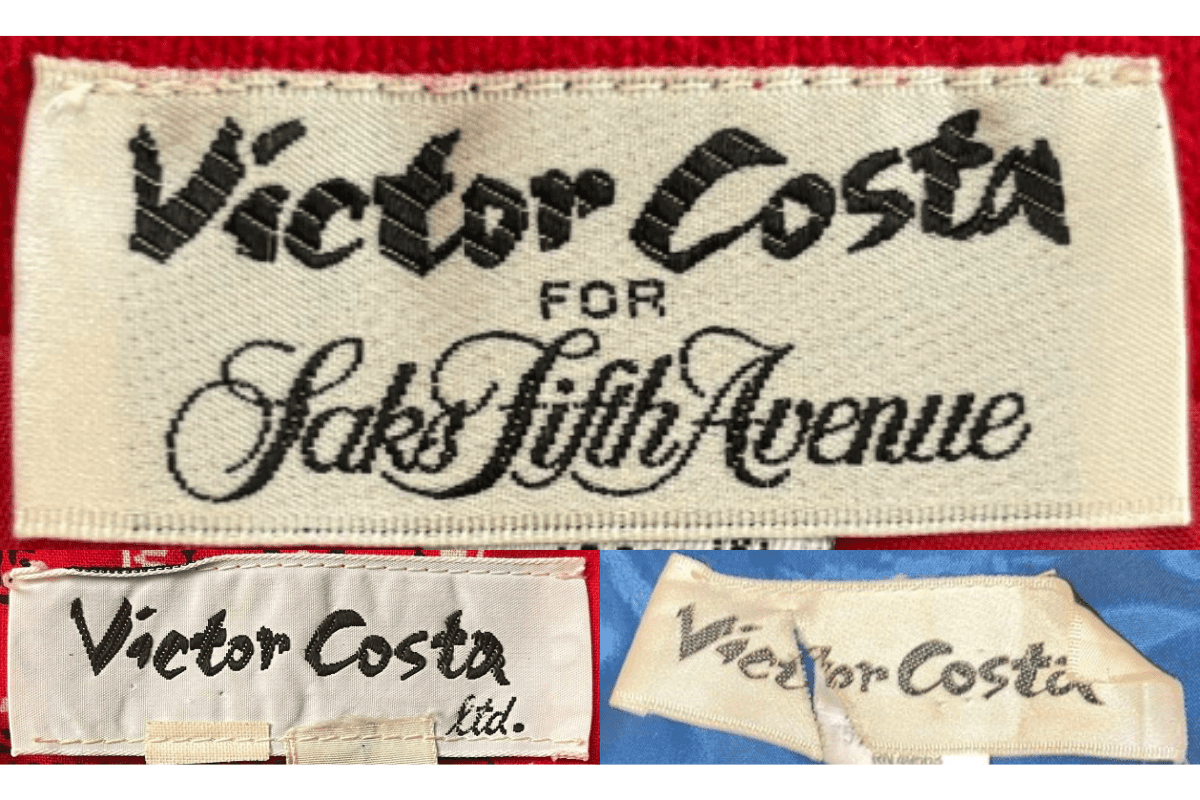
- The branding still showcases a script-like font, but the logo is more refined.
- Tags may feature additional details like manufacturing information or retailer names.
- Commonly found on Victor Costa pieces designed for high-end retailers.
How to spot it
The branding still showcases a script-like font, but the logo is more refined — confirms this label era.
Value signal
Solid vintage interest; 1970s pieces in clean condition attract steady demand.
1980–1989
1980s vintage Victor Costa tags
The font becomes bolder, with the brand name prominently displayed Tags often include more detailed information, such as the fabric content and care instructions.
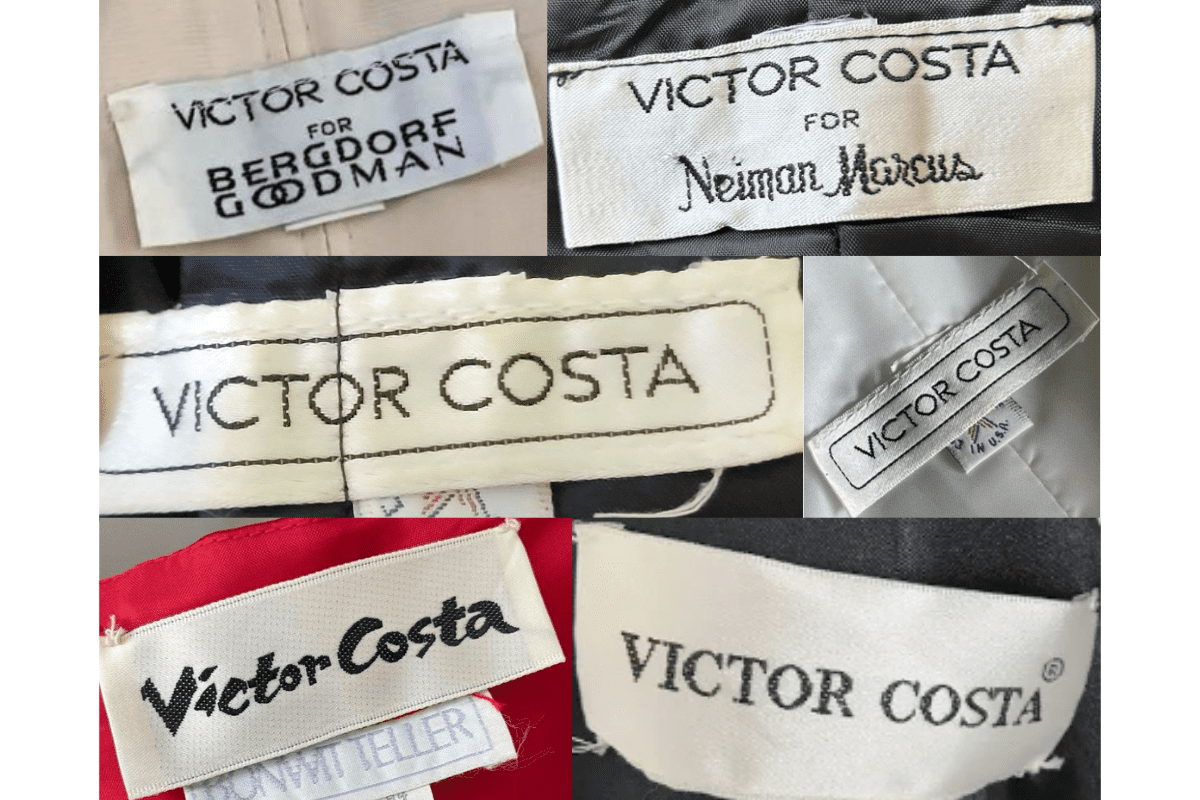
- The font becomes bolder, with the brand name prominently displayed.
- Tags often include more detailed information, such as the fabric content and care instructions.
- Some tags during this era were made specifically for collaborations with luxury retailers like Saks Fifth Avenue.
How to spot it
The font becomes bolder, with the brand name prominently displayed — confirms this label era.
Value signal
Good vintage demand; 1980s label detail is a key value driver.
1990–1999
1990s vintage Victor Costa tags
Tags in this era start to adopt a more modern look with sharper fonts The logo is often in all caps with a clean, straightforward design.
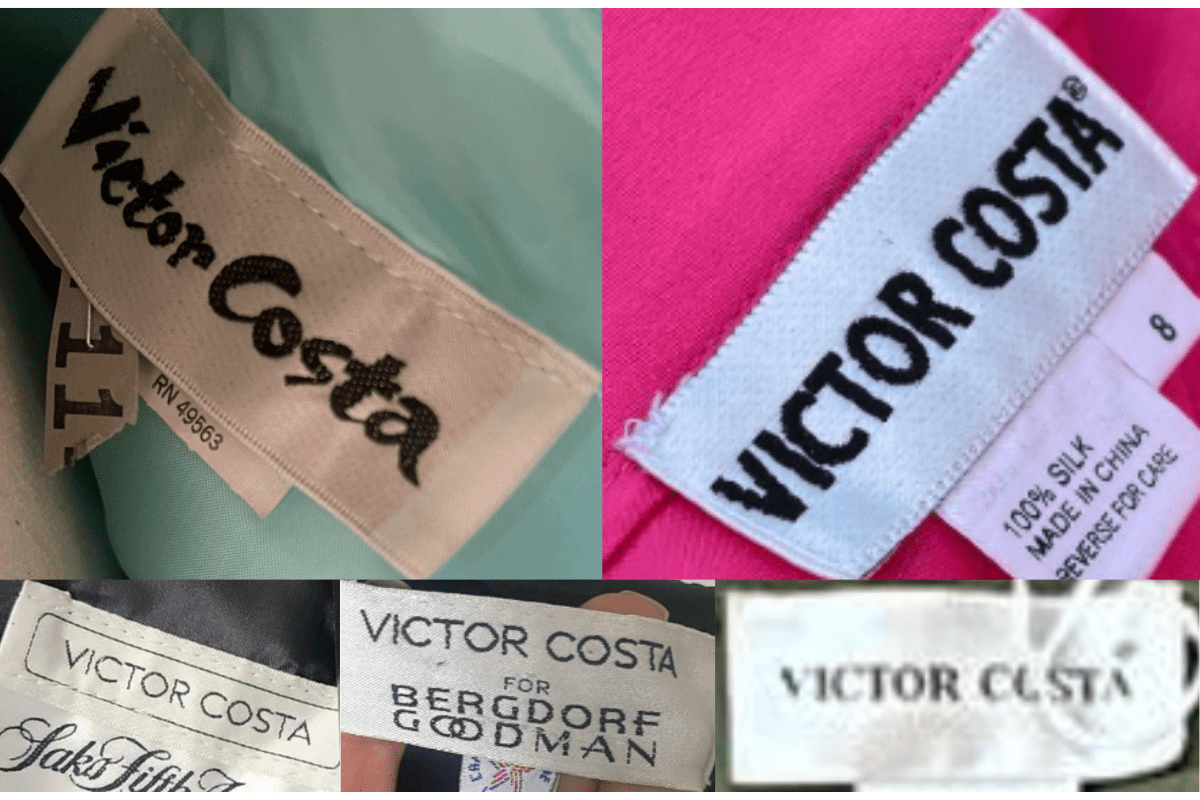
- Tags in this era start to adopt a more modern look with sharper fonts.
- The logo is often in all caps with a clean, straightforward design.
- Size and care instructions are typically included on separate tags attached to the main label.
How to spot it
Tags in this era start to adopt a more modern look with sharper fonts — confirms this label era.
Value signal
Moderate collector interest; condition and completeness determine value.
2000–2009
2000s vintage Victor Costa tags
The branding evolves to a sleeker, more minimalist style Tags are often looped, a common feature introduced in this era.

- The branding evolves to a sleeker, more minimalist style.
- Tags are often looped, a common feature introduced in this era.
- Color schemes may vary, but the overall design remains simple and elegant, with the brand name as the focal point.
How to spot it
The branding evolves to a sleeker, more minimalist style — confirms this label era.
Value signal
Entry-level vintage; value driven by brand recognition and condition.