Forever 21
Los Angeles fast-fashion retailer founded as 'Fashion 21'. 1990s tags show bold blocky lettering; 2000s are colorful with sub-lines; 2010s adopt a cleaner minimalist look; early 'Fashion 21' tags are the rarest finds.
- Origin
- USA
- Founded
- 1984
- Category
- Designer & Casual
- Documented eras
- 3
How Forever 21 labels evolved over time. Match the markers below against the tag in hand to place a garment in its era.
1984–1994
1984–1994 Fashion 21 & Early Tags
Founded as 'Fashion 21' in 1984 by Do Won and Jin Sook Chang in Los Angeles. The earliest tags may read 'Fashion 21'. The brand rebranded to Forever 21 as it grew beyond its original LA community.
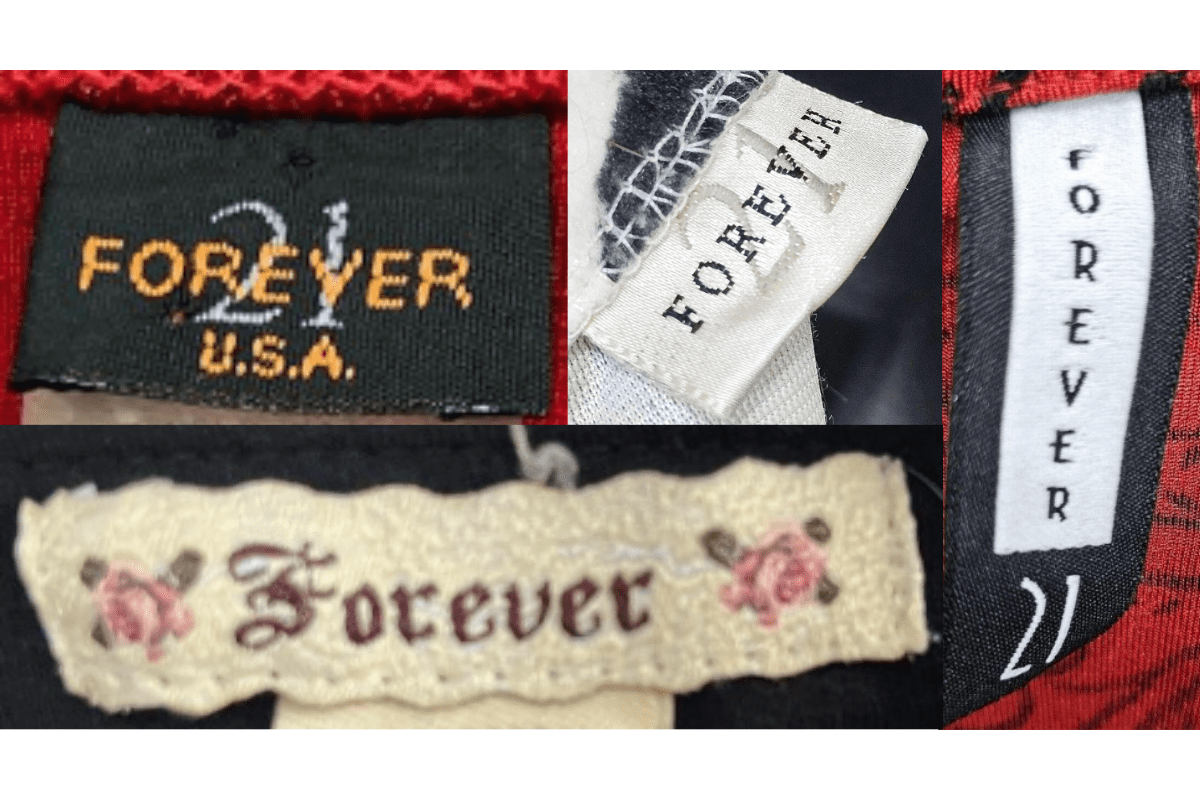
- 'Fashion 21' name on earliest tags.
- Bold blocky font from founding era.
- Los Angeles origin.
How to spot it
'Fashion 21' tag = founding 1984–early 1990s era — the rarest Forever 21 find.
Value signal
Very high — 'Fashion 21' branded pieces are extremely rare collector items.
1995–2004
1990s–Early 2000s Classic Tags
As Forever 21 grew nationally, its tags used bold blocky 'Forever 21' lettering consistent with the brand's youthful fast-fashion identity.
- Bold blocky 'Forever 21' lettering.
- Compact strong visual presence.
- Narrow letter spacing.
How to spot it
Bold blocky 'Forever 21' with narrow spacing = 1990s–early 2000s.
Value signal
Moderate — early national expansion era.
2005–2019
2000s–2010s Fast-Fashion Peak Tags
At its peak, Forever 21 had 800 stores globally. Tags became more colorful with sub-lines. The 2019 bankruptcy ended the original retail era.
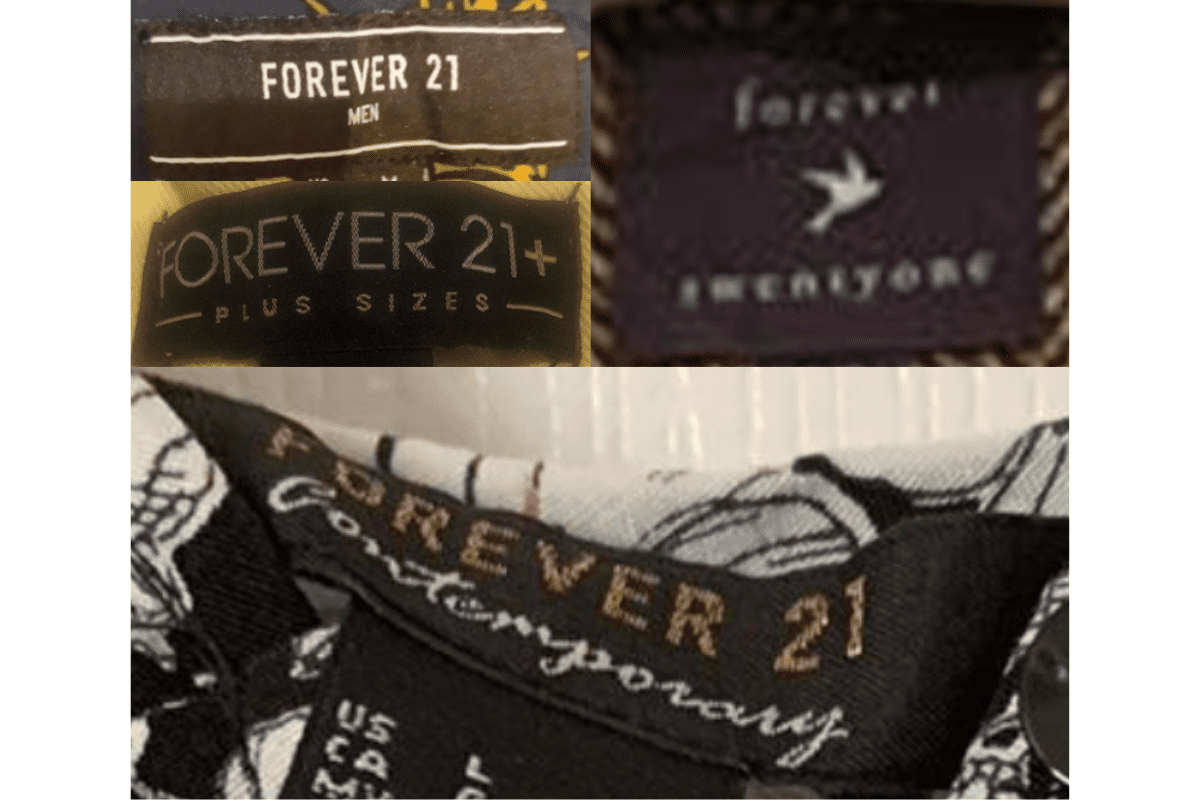
- Colorful updated tags.
- Sub-line labels for different collections.
- Global retail expansion format.
How to spot it
Colorful sub-line tags or updated logo = 2000s–2010s peak era.
Value signal
Low — mass fast-fashion.