Carlye
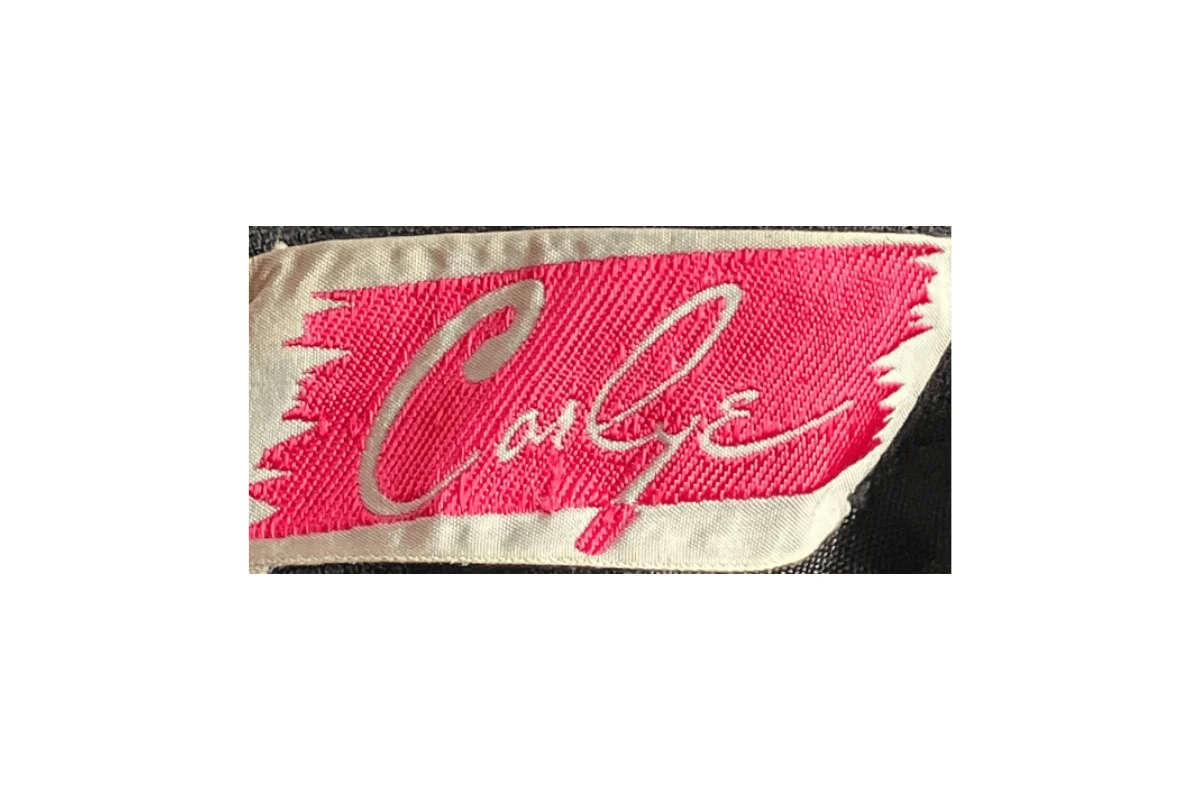
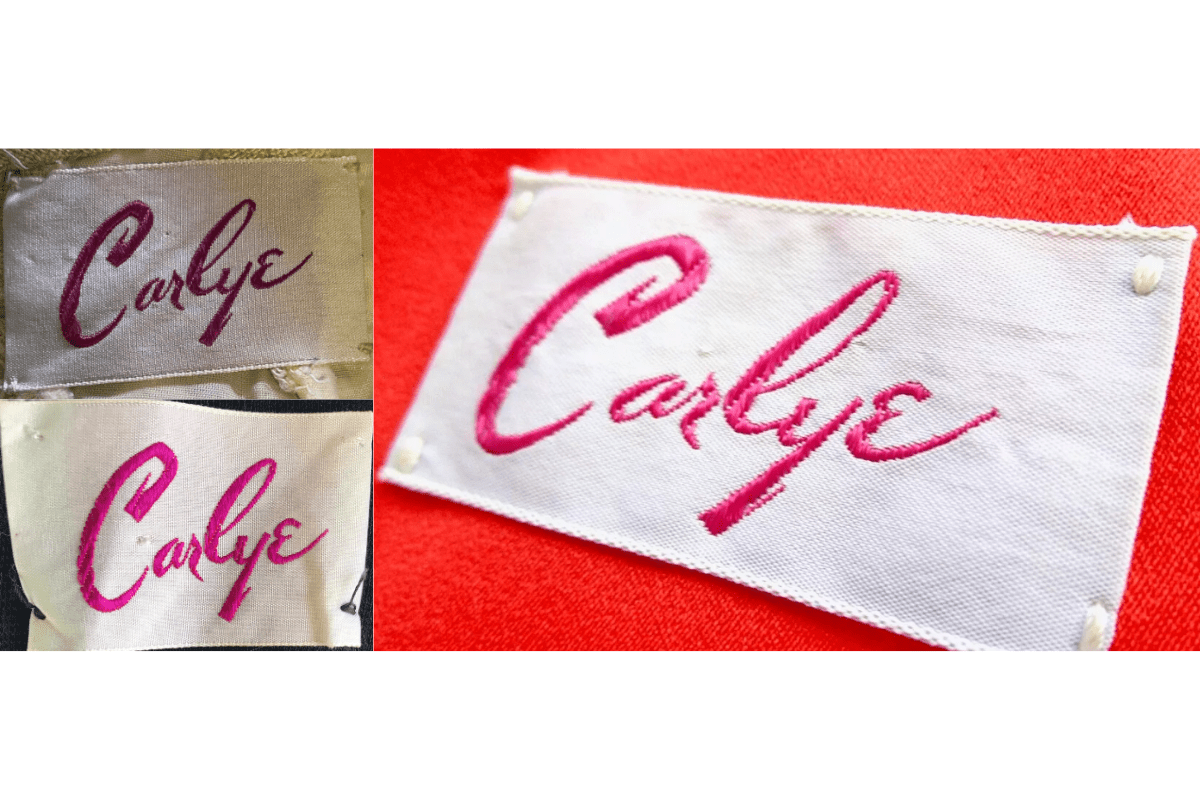
Mid-century American womenswear label. The vibrant pink or red cursive 'Carlye' script on a white background is the constant; a shadow effect and country-of-manufacture details arrive in the 1960s–70s.
- Origin
- USA
- Founded
- 1935
- Category
- Designer & Casual
- Documented eras
- 4
How Carlye labels evolved over time. Match the markers below against the tag in hand to place a garment in its era.
1940–1949
Early Vibrant Cursive Tags
Vibrant pink or red cursive 'Carlye' script on a white background; rectangular with stitched edges.
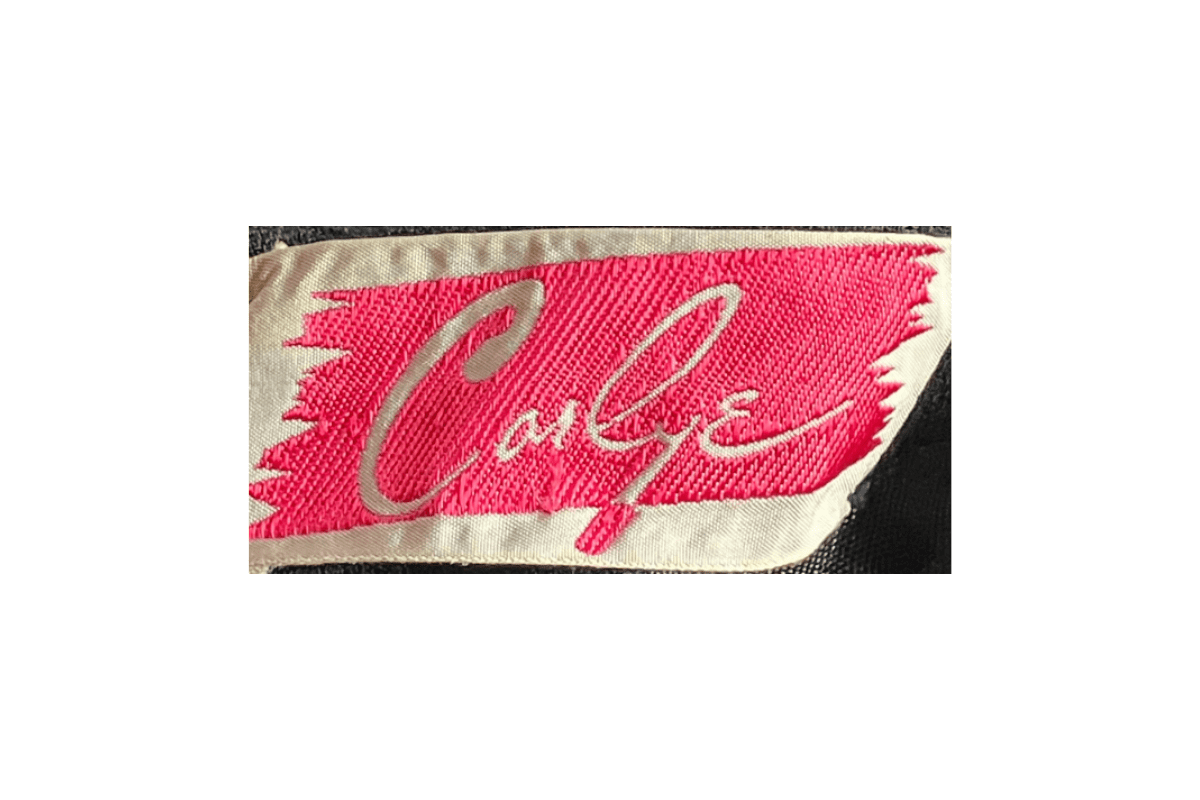
- Vibrant pink or red cursive script.
- White rectangular tag ground.
- Stitched edges.
How to spot it
Vivid pink or red cursive on white — the earliest Carlye tag.
Value signal
Strong; 1940s American womenswear labels are desirable.
1950–1959
Refined Cursive Tags
The cursive script continues in vibrant pink or red on white; tags grow slightly larger with more refined stitching.
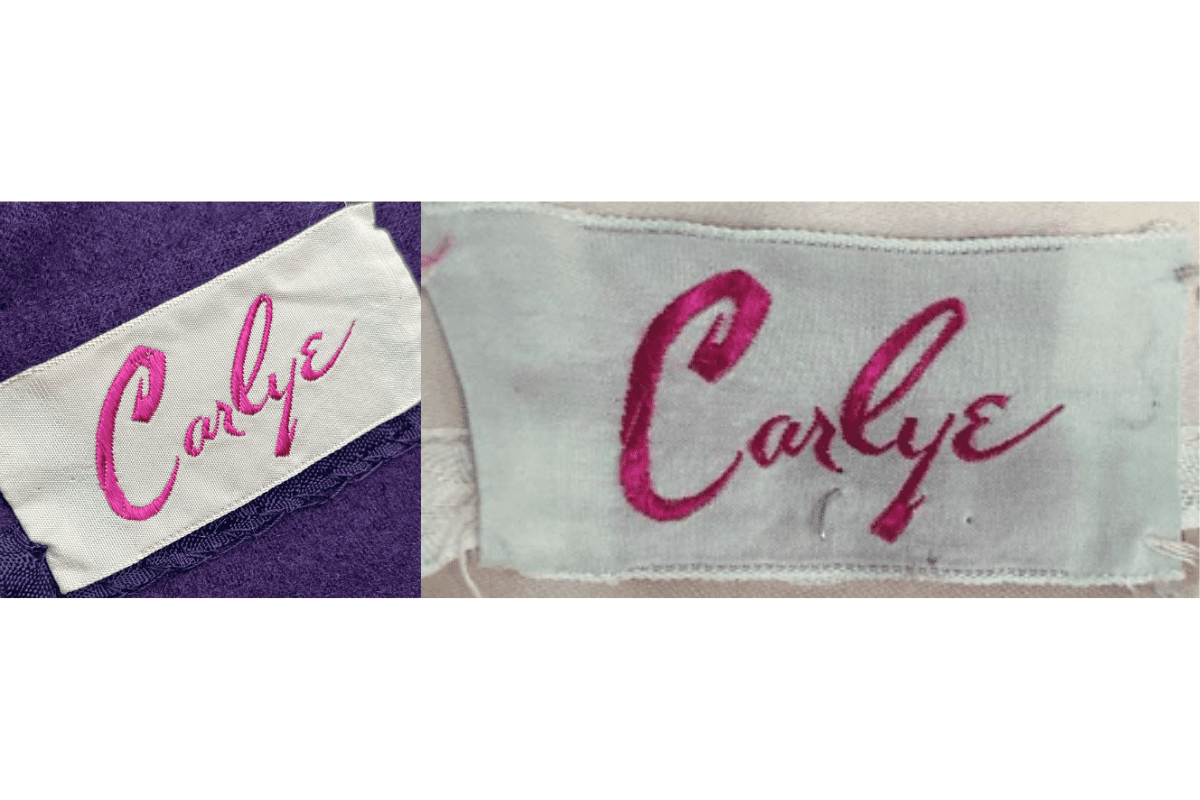
- Vibrant pink or red cursive maintained.
- Slightly larger tags with more refined stitching.
- Clean white background.
How to spot it
Refined large cursive tag — the 1950s version.
Value signal
Strong.
1960–1969
Shadow-Effect Care-Info Tags
Cursive 'Carlye' with a shadow effect; fabric content and care instructions begin appearing.
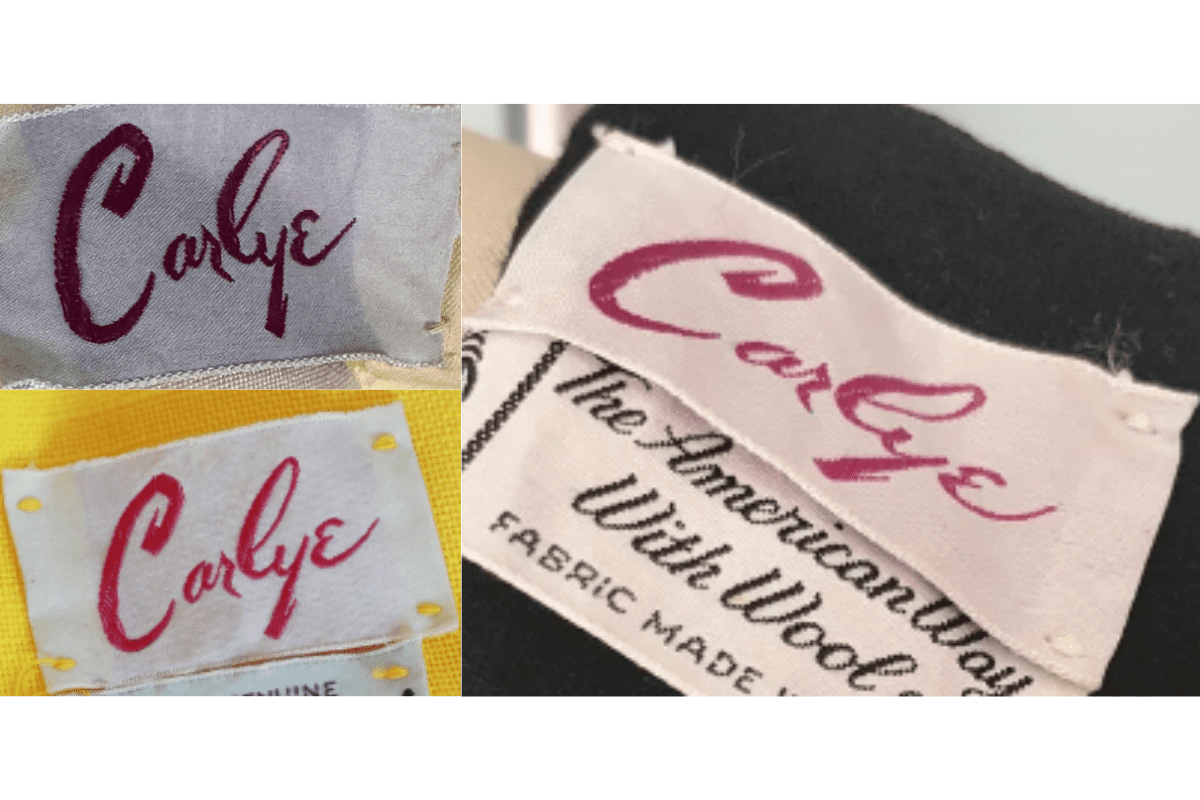
- Shadow effect added to the cursive script.
- Fabric content information introduced.
- Care instructions begin appearing.
How to spot it
Shadow-effect cursive with fabric content callout.
Value signal
Solid.
1970–present
Vibrant-Background Shadowed Tags
More vibrant and varied backgrounds including brighter colours; the signature shadowed Carlye script remains.
- Vibrant varied background colours.
- Shadowed Carlye cursive maintained.
- Manufacturing location or size details added.
How to spot it
Vibrant background with shadowed Carlye cursive.
Value signal
Moderate.