Bebe
Los Angeles fashion-forward womenswear brand. The all-lowercase 'bebe' logo in minimalist sans-serif on black or white tags, with 'Made in USA' on early pieces, marks the brand's 1990s heyday.

- Origin
- USA
- Founded
- 1976
- Category
- Designer & Casual
- Documented eras
- 3
How Bebe labels evolved over time. Match the markers below against the tag in hand to place a garment in its era.
1990–1999
Made-in-USA Minimalist Tags
The all-lowercase 'bebe' wordmark in bold sans-serif on black or white grounds, often with 'Made in USA' below.
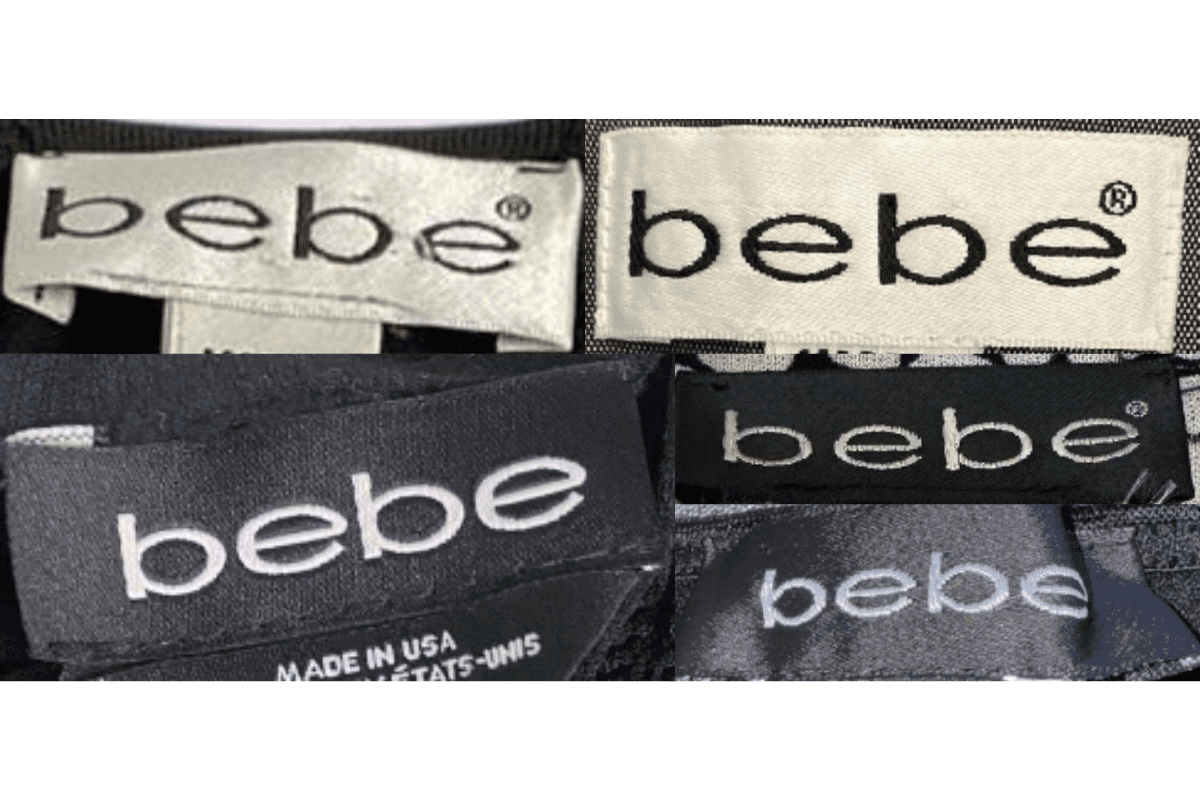
- Lowercase 'bebe' logo in bold minimalist font.
- Tags typically black or white.
- 'Made in USA' printed below the logo on early pieces.
- Size indicators displayed clearly on the tag.
How to spot it
Black or white tag, lowercase 'bebe', 'Made in USA'.
Value signal
Solid; 1990s USA-made bebe is the most collectible.
2000–2009
Satin-Finish Sleek Tags
The logo font grows sleeker and more refined; satin-like tag materials in black, white, or silver signal the shift to overseas production.
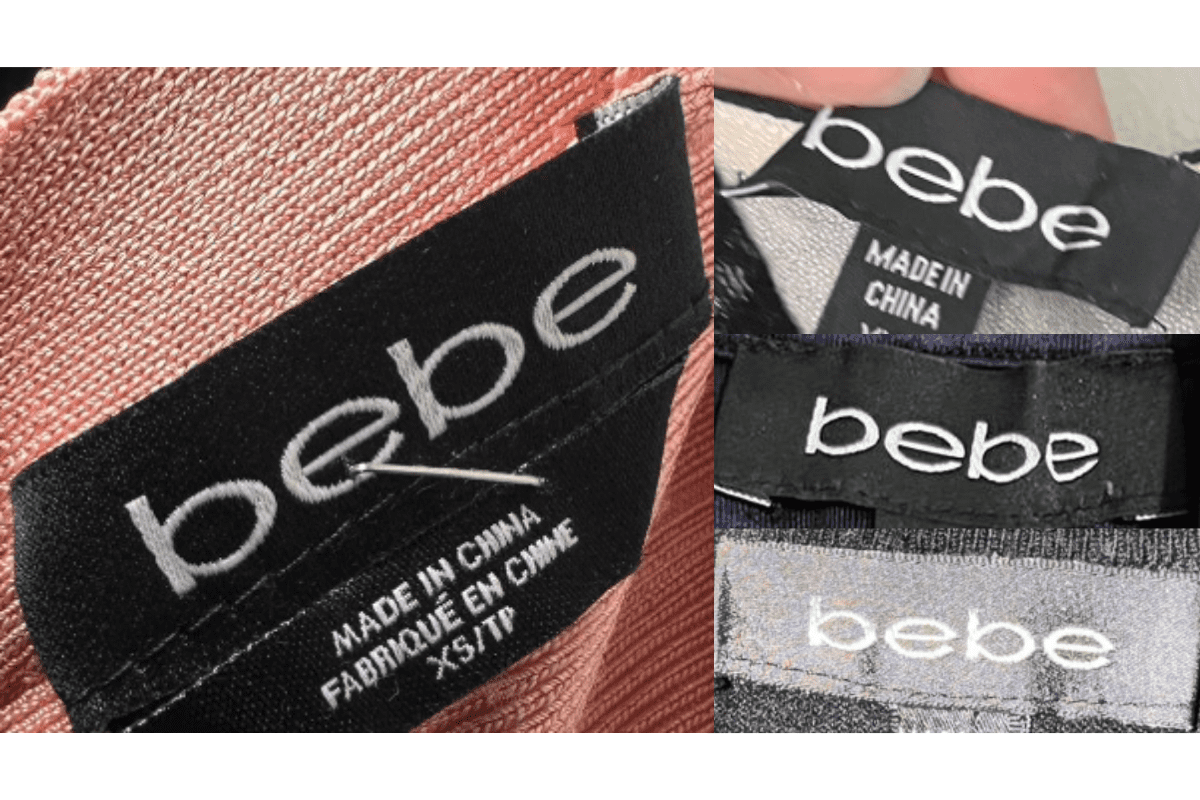
- Lowercase 'bebe' in a sleeker, more refined font style.
- Tags often have a satin-like texture in black, white, or silver.
- Production locations shift away from USA.
- More polished presentation overall.
How to spot it
Satin tag with refined 'bebe' wordmark; no 'Made in USA'.
Value signal
Common; modest resale unless the garment is exceptional.
2010–present
Diverse-Material Modern Tags
Consistent lowercase logo on a wider variety of tag materials and styles reflecting contemporary branding practices.
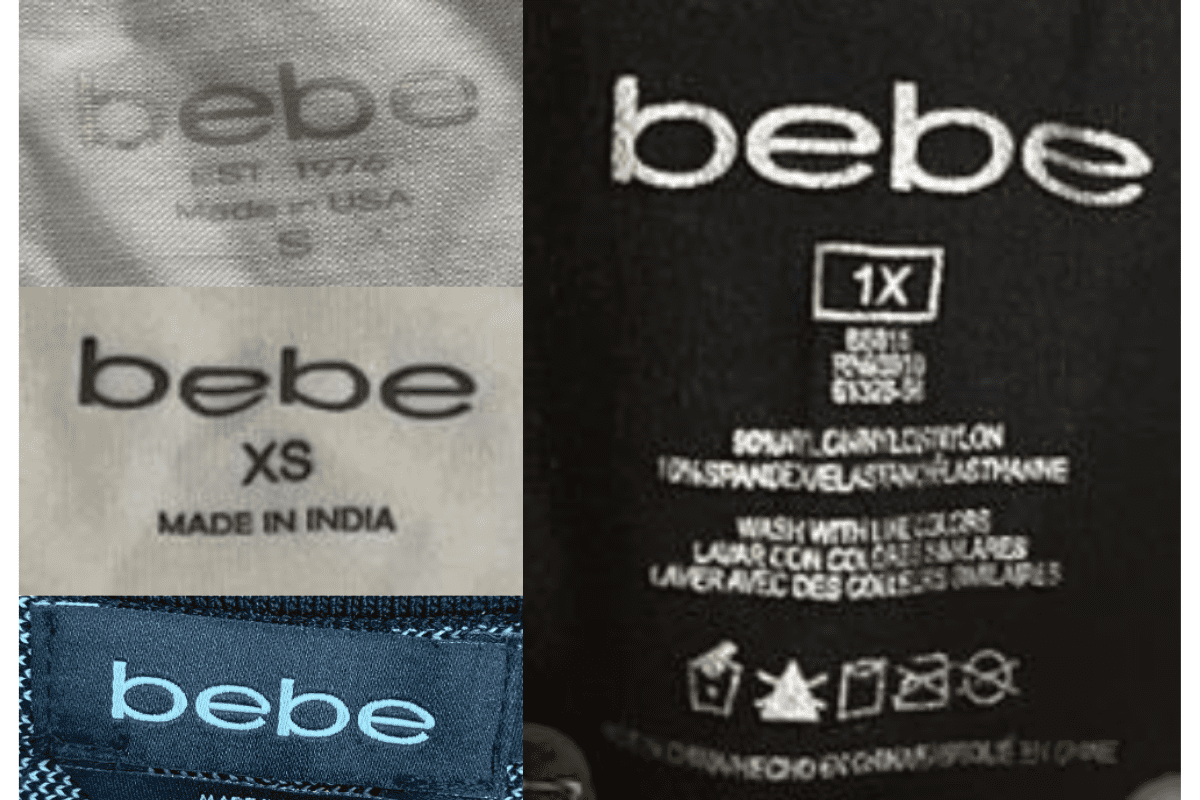
- The 'bebe' logo remains consistent in its modernised form.
- Greater variety of tag materials and construction.
- More attention to detail in stitching and finish.
How to spot it
Contemporary varied-material tag with the classic lowercase 'bebe'.
Value signal
Modern; little vintage premium.