Alberta Ferretti
The Romagna designer known for ethereal silk eveningwear. The bold uppercase wordmark holds steady; 'Philosophy di Alberta Ferretti' marks the diffusion line.

- Origin
- Italy
- Founded
- 1974
- Category
- High Fashion
- Documented eras
- 4
How Alberta Ferretti labels evolved over time. Match the markers below against the tag in hand to place a garment in its era.
1980–1989
'Philosophy' Made-in-Italy Tags
Tags often read 'Philosophy di Alberta Ferretti' in bold serif with 'Made in Italy', sewn into white or off-white grounds with visible stitching.
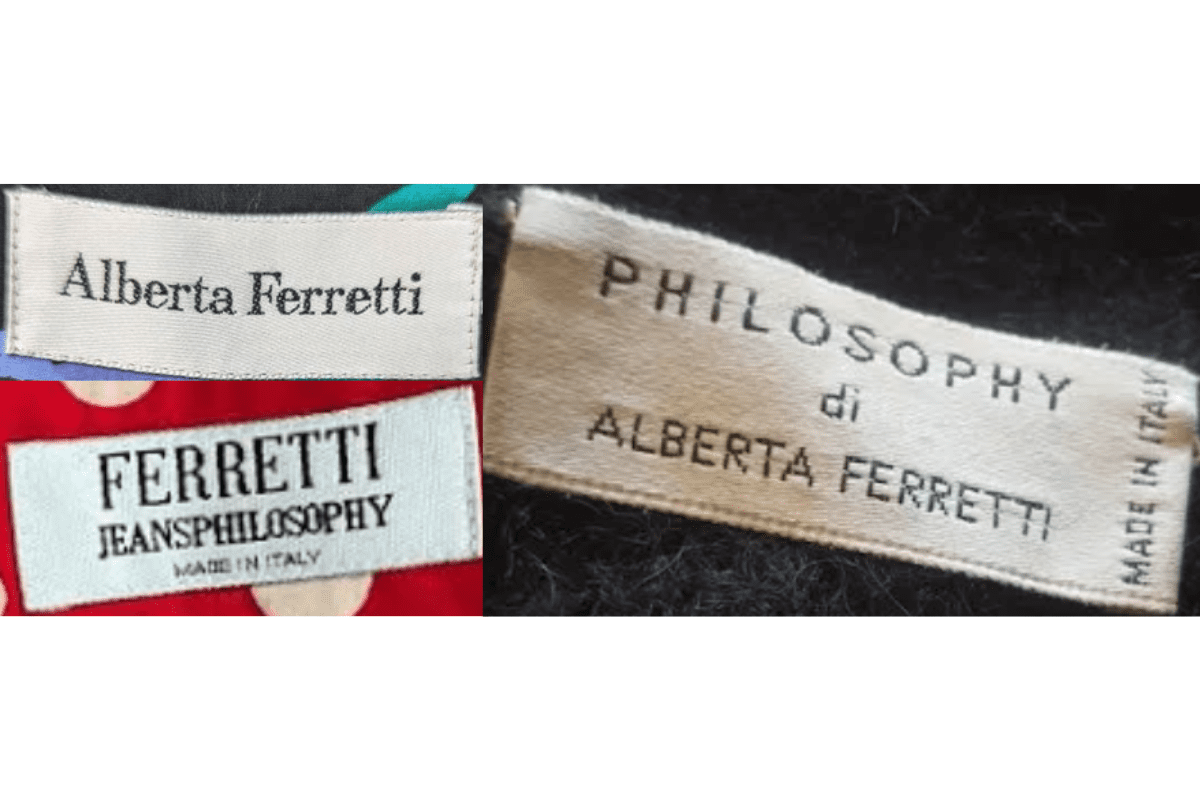
- Tags commonly feature “Philosophy di Alberta Ferretti,” reflecting the launch of the diffusion line.
- Made in Italy is consistently noted on the tag.
- Bold, serif lettering dominates the branding, lending a formal and classic touch.
- Tags are typically white or off-white with black text, often sewn directly into the fabric with visible stitching.
How to spot it
'Philosophy di Alberta Ferretti' on a white tag.
Value signal
Strong; 80s Ferretti has collector demand.
1990–1999
Updated 'Philosophy' Tags
The diffusion line continues with slightly more modern minimalist fonts, satin and heavier woven materials appearing, 'Made in Italy' at the edge.
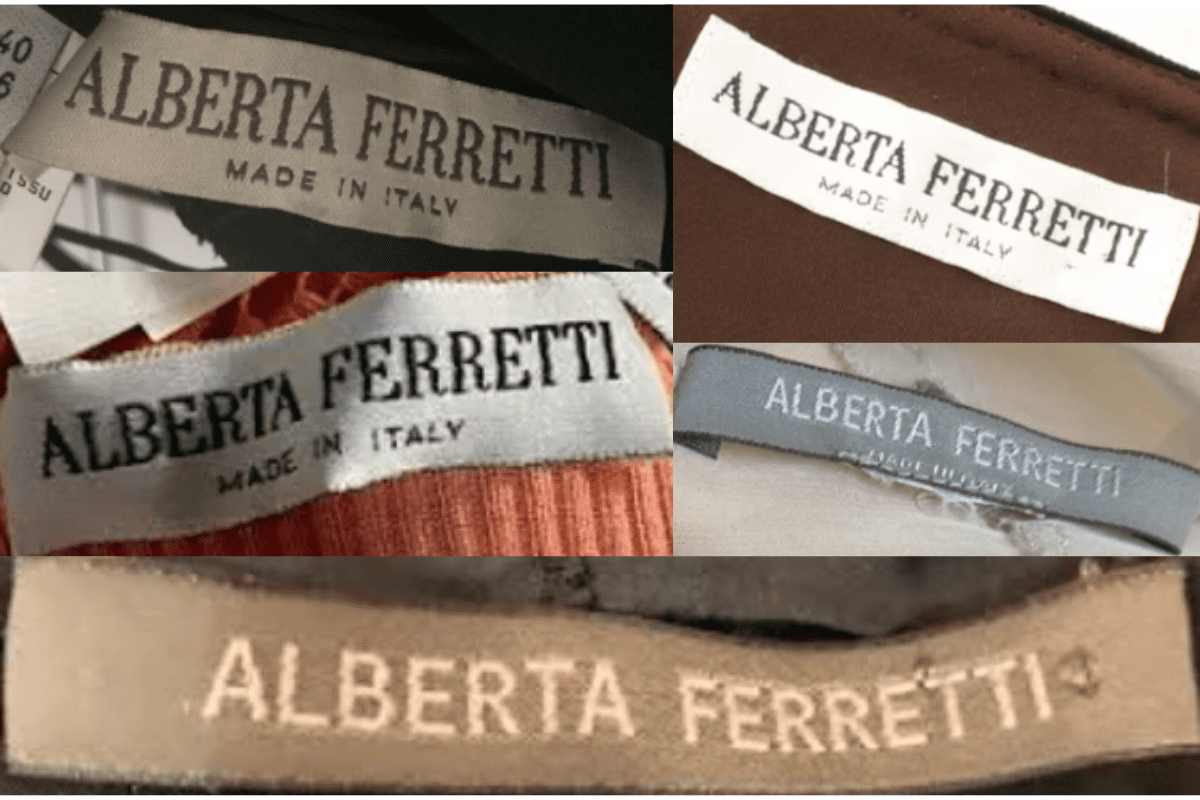
- Maintains the “Philosophy di Alberta Ferretti” branding but with updated fonts that are slightly more modern and minimalist.
- The placement of “Made in Italy” remains consistent, usually positioned at the edge of the tag.
- More variation in tag materials, including satin and thicker woven fabrics, reflecting the evolving fashion trends of the 1990s.
- Use of both all-caps and mixed-case fonts for “Alberta Ferretti,” offering a blend of formal and casual aesthetics.
How to spot it
Updated 'Philosophy' line on satin or woven tag.
Value signal
Solid; 90s Ferretti sells well.
2000–2009
Black-Ground Satin Tags
Darker color schemes — black or grey grounds with white or silver text — refined modern layouts, smooth satin grounds emphasising luxury.
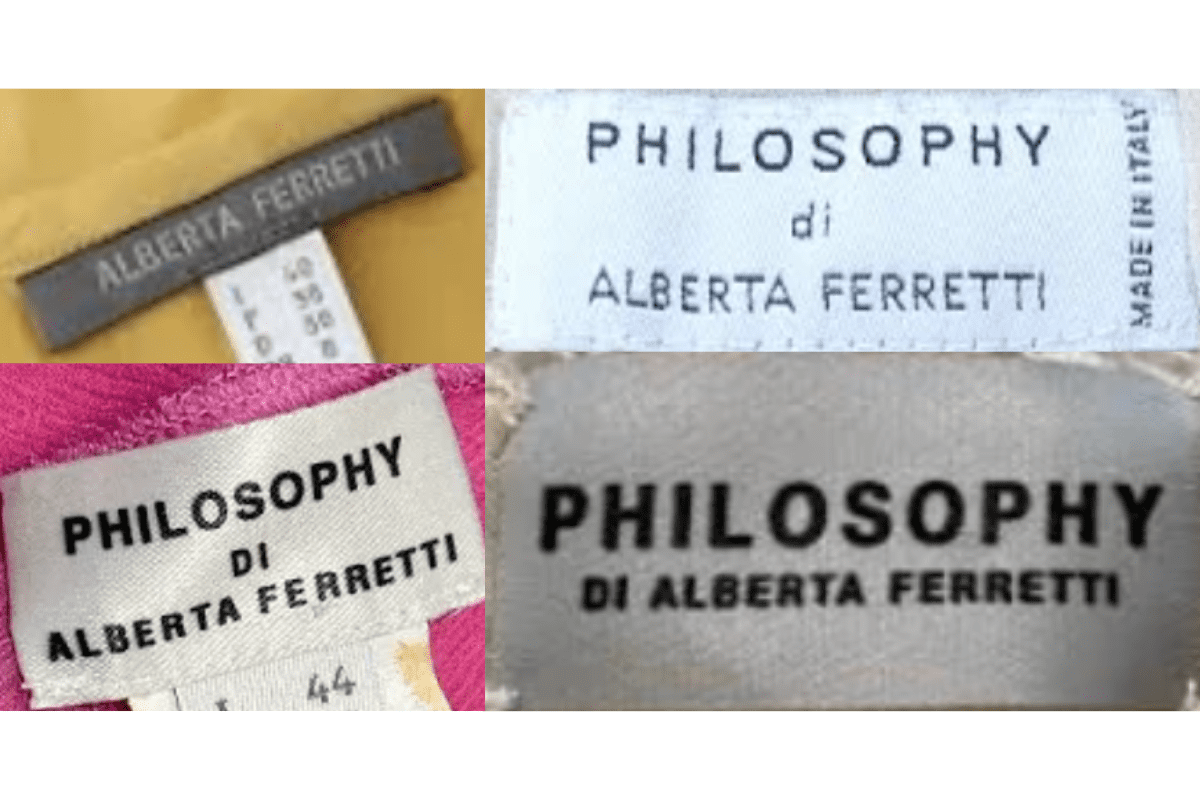
- Tags often feature darker color schemes, moving away from the traditional white tags to introduce black or grey backgrounds with contrasting white or silver text.
- More streamlined and modern design with less emphasis on serif fonts, reflecting a sleeker, more contemporary approach.
- Tag material is generally more refined, often made from smooth satin or glossy fabrics for a luxurious feel.
- Consistent use of “Made in Italy” continues to be a prominent feature, underscoring the brand’s commitment to quality production.
How to spot it
A black or grey satin tag.
Value signal
Solid; eveningwear-driven resale.
2010–2019
Minimalist 'Studio' Tags
Minimalist modern aesthetic with simple clean fonts, sub-lines like 'Alberta Ferretti Studio' appearing on more casual pieces, varied tag size and colour.
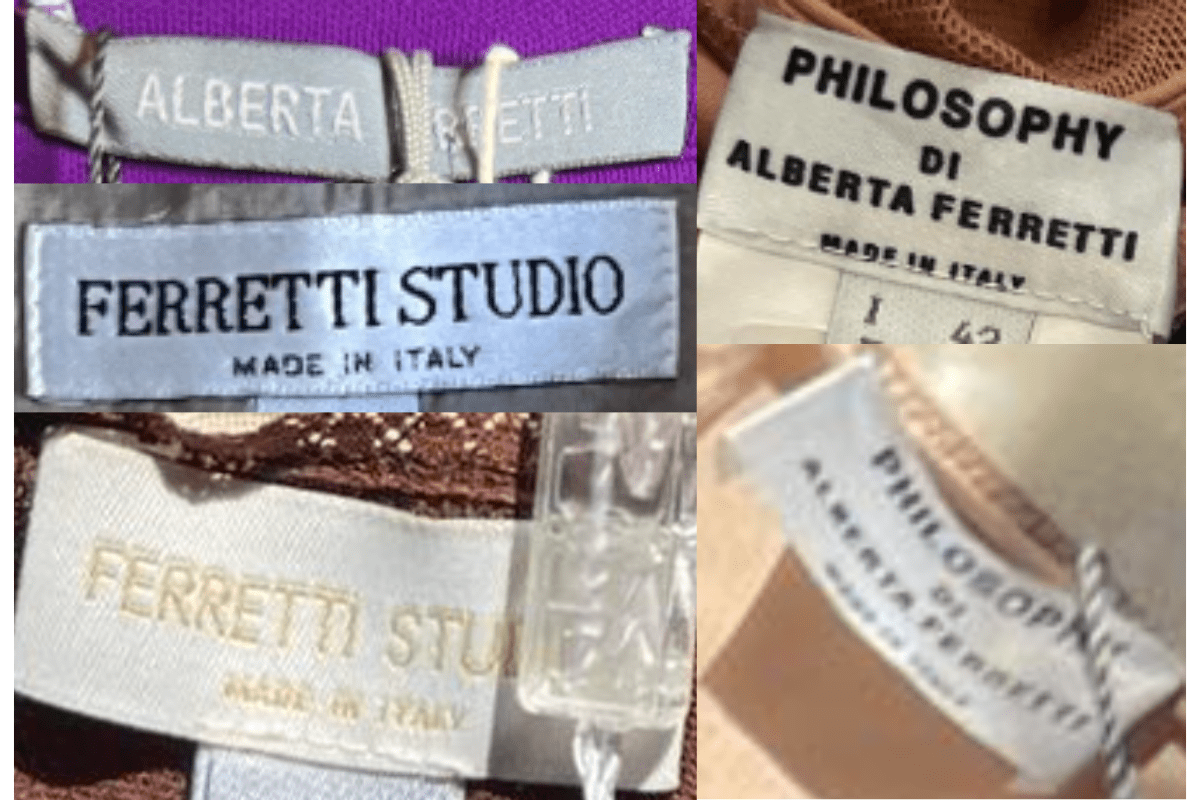
- The tags from this era feature a minimalist, modern aesthetic, with simple, clean fonts that often omit excessive detailing.
- Multiple lines of clothing might introduce subtle changes, such as “Alberta Ferretti Studio” for a more casual line, while retaining the elegance associated with the brand.
- Tags often vary in size and shape, from small, discreet rectangular tags to larger, more prominent ones.
- Material and color variations become more diverse, with some tags introducing bold, bright colors and unique materials.
How to spot it
Minimalist tag, sometimes 'Studio'.
Value signal
Modern; priced on the piece.