Armani
Giorgio Armani's Milanese empire. The sub-line — Emporio, Jeans, Collezioni, Couture — printed beneath the logo narrows the era as much as the tag.

- Origin
- Italy
- Founded
- 1975
- Category
- High Fashion
- Documented eras
- 4
How Armani labels evolved over time. Match the markers below against the tag in hand to place a garment in its era.
1980–1989
Standardised Logo Tags
Tags settled into a standard format — text-and-emblem logo centred, country of make to a side, the product line beneath the logo, a structure that would persist.
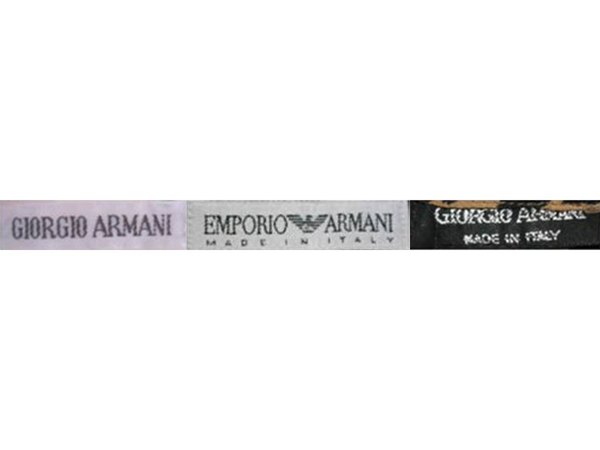
- At this time the tags would become a more standardized format.
- With the text and emblem logo in the middle.
- The country of manufacture on one of the sides.
- And the product line often beneath the logo, which became a common structure for future tags.
How to spot it
Centred logo, country to the side, line named below.
Value signal
Strong; 80s Armani is a sought designer era.
1990–1999
Dedicated Jeans & Roma Lines
A dedicated Armani Jeans line launched; Jeans and Miss V tags are fully sewn in, Boutique and Couture used thick fabric tags, and Armani Roma focused on womenswear.
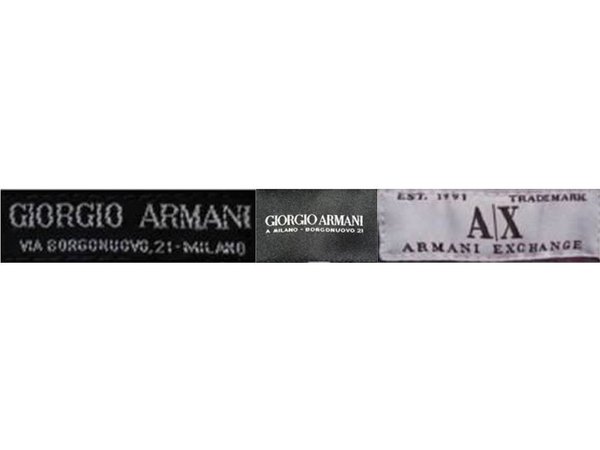
- Whilst jeans had previously been launched by Armani, a dedicated Jeans line was launched in the 1990s which was a collection of more casual Armani style clothing.
- Many of these and the Miss V tags are completely sewn in.
- Boutique and Couture tags were big thick bits of fabric usually found on dresses and gowns.
- Armani Roma was launched that focused on womenswear like skirts, blouses, and jackets.
How to spot it
A fully sewn-in tag naming the Armani sub-line.
Value signal
Solid 90s vintage; value tracks the sub-line and piece.
2000–2009
Chemise Line, Right-Side Make
Armani expanded into menswear with the Chemise shirt line; country of make settled on the tag's right side and tags were often fully sewn in.
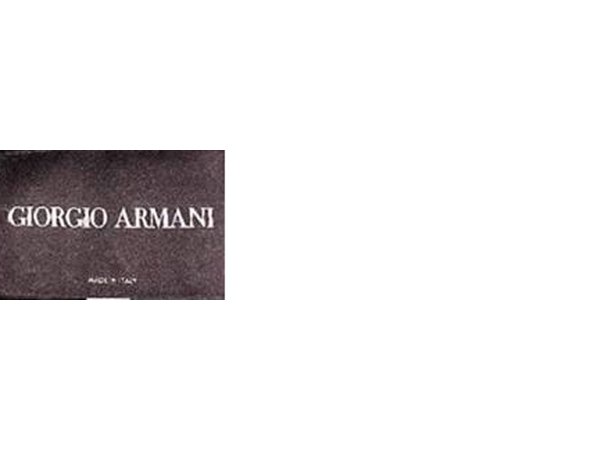
- In the 2000s Armani more aggressively expanded into menswear, launching the Chemise line which would create men’s shirts.
- It became common practice for the country of manufacture to be on the right side of the tag.
- Tags were often fully sewn in.
How to spot it
Country of make on the right, often fully sewn in.
Value signal
Common; priced on the piece.
2010–2019
Loop Tags, Small Sub-Line Text
Many tags became fabric loop tags rather than sewn-in, the sub-brand in very small text at the base, with multilingual wash tags.
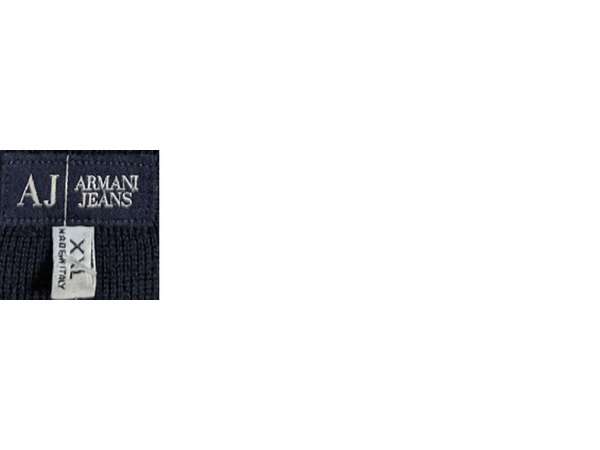
- Many of the tags transitioned to being fabric loop tags instead of being sewn in.
- They say the sub brand in very small writing at the bottom of the tag.
- Pieces from this era usually have wash tags that include a lot of extra information in multiple languages.
How to spot it
A loop tag with the sub-line in tiny text below.
Value signal
Modern; priced on the piece.