Etam
French family-owned fashion group with German origins. 1950s-60s tags use a flowing cursive Etam script; 1980s-90s tags are bold with the brand name in a colored box; 2000s adopt a modern wordmark.
- Origin
- France
- Founded
- 1916
- Category
- Designer & Casual
- Documented eras
- 3
How Etam labels evolved over time. Match the markers below against the tag in hand to place a garment in its era.
1950–1979
1950s–1970s Classic Script Tags
The merged Etam company launched Etam Pret-a-Porter in 1963. Tags from the 1950s–70s use the classic flowing Etam script that remained consistent for decades.
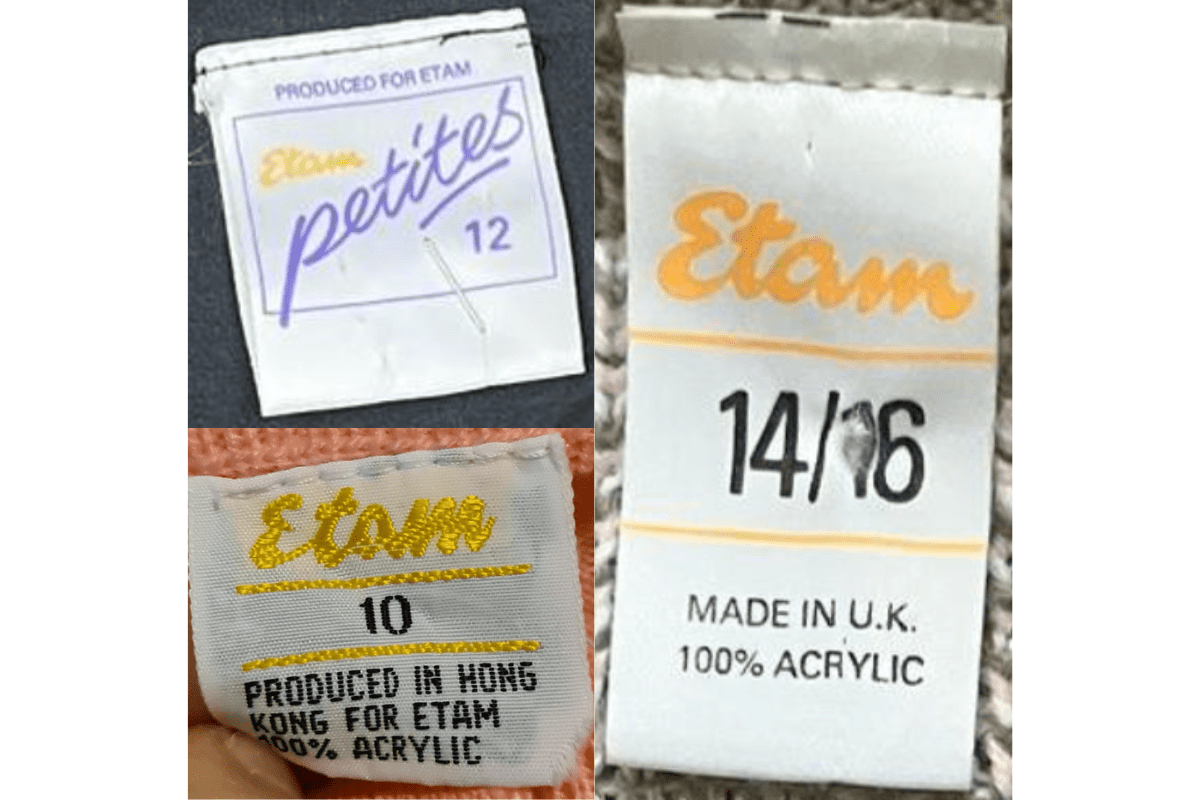
- Flowing, connected cursive 'Etam' script.
- Elegant and timeless lettering.
- Simple format without extensive sub-branding.
How to spot it
Flowing cursive Etam script = 1950s–1970s classic era.
Value signal
Moderate — early Etam pieces are uncommon outside France.
1980–1999
1980s–1990s Colored Box Tags
1980s–90s Etam tags placed the brand name in a colored box or rectangle, modernizing the identity for a rapidly expanding international retail chain.
- 'Etam' name in a bold colored box.
- Red, orange, or contrasting box background.
- Modern retail tag format.
How to spot it
Brand name in bold colored box = 1980s–1990s international expansion era.
Value signal
Low to moderate.
2000–2020
2000s–2010s Modern Wordmark
Contemporary Etam tags use a clean modern wordmark. The brand expanded into China and later the U.S. and Mexico markets.
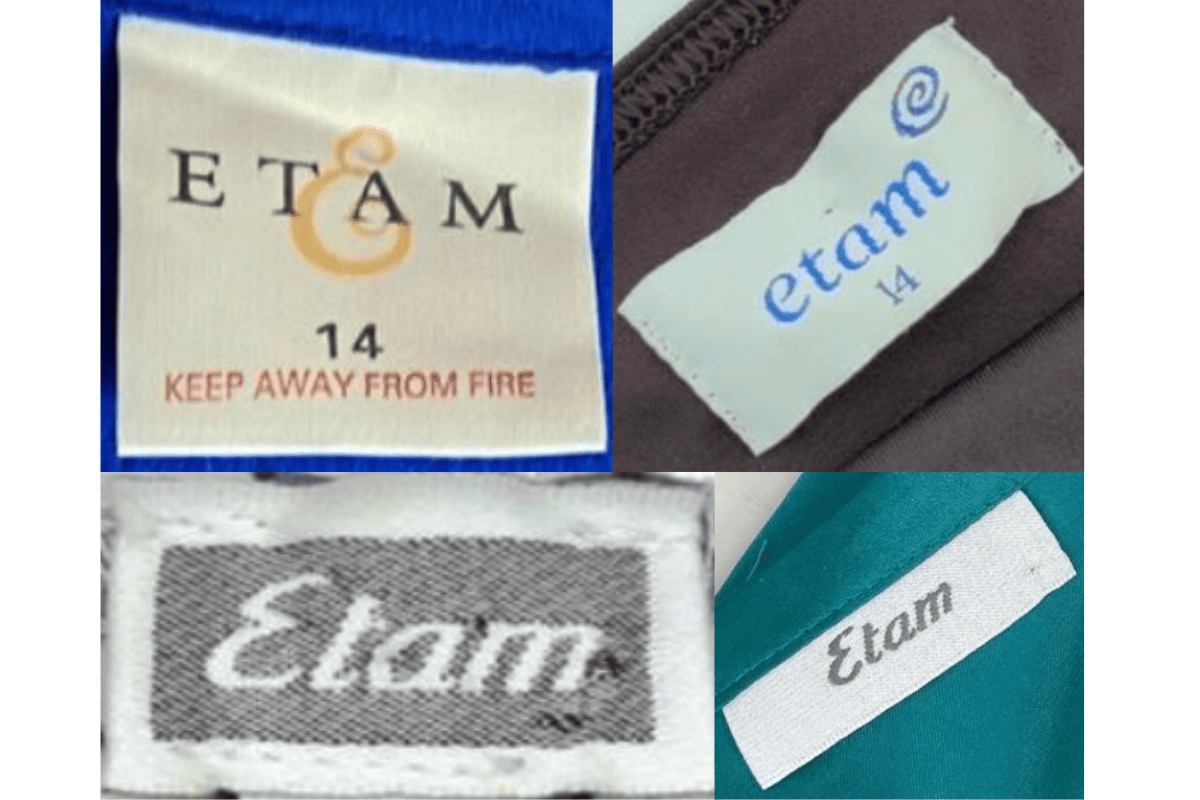
- Clean modern 'etam' or 'Etam' wordmark.
- Standard global care label.
- Multi-language instructions.
How to spot it
Modern minimal wordmark = 2000s–2010s global expansion.
Value signal
Low.