Jacques Fath
Parisian couture house founded in 1937, a peer of Dior and Balenciaga. The coat-of-arms crest with two flanking lions, a crown, and 'JACQUES FATH PARIS' in serif script marks the mid-century tags; the simplified crown-and-scissors emblem arrives in the 1980s.

- Origin
- France
- Founded
- 1937
- Category
- High Fashion
- Documented eras
- 7
How Jacques Fath labels evolved over time. Match the markers below against the tag in hand to place a garment in its era.
1940–1949
1940s vintage Jacques Fath tags
Tags often featured a simplistic, classic design Black or white backgrounds with “JACQUES FATH PARIS” in serif font.
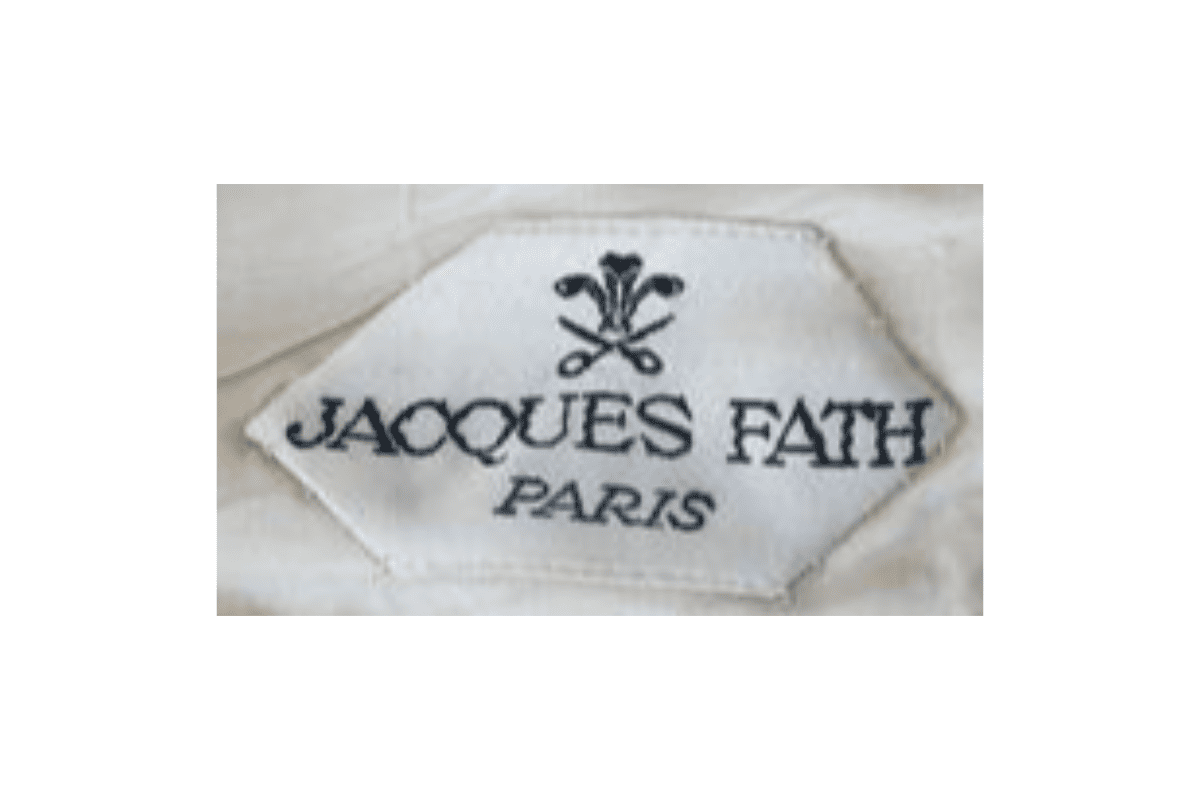
- Tags often featured a simplistic, classic design.
- Black or white backgrounds with “JACQUES FATH PARIS” in serif font.
- Occasionally accompanied by a small emblem or fleur-de-lis, typical of 1940s fashion branding.
How to spot it
Tags often featured a simplistic, classic design — confirms this label era.
Value signal
Rare; pre-1960 examples are collector-grade and seldom surface.
1950–1959
1950s vintage Jacques Fath tags
Elegant tags with “JACQUES FATH PARIS” prominently displayed Tags could be white or cream with gold or black lettering, giving them a luxurious feel.
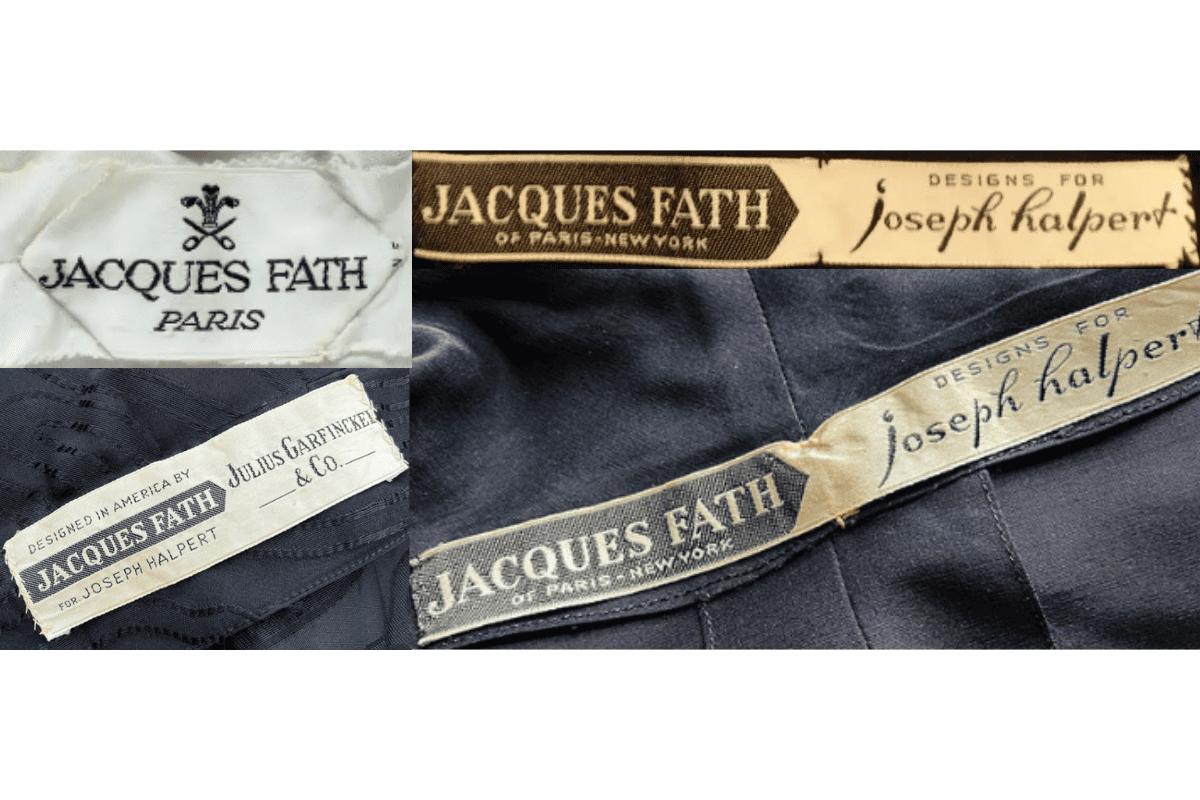
- Elegant tags with “JACQUES FATH PARIS” prominently displayed.
- Tags could be white or cream with gold or black lettering, giving them a luxurious feel.
- Some tags included additional information about the garment’s production or origin, especially for American markets.
How to spot it
Elegant tags with “JACQUES FATH PARIS” prominently displayed — confirms this label era.
Value signal
Rare; pre-1960 examples are collector-grade and seldom surface.
1960–1969
1960s vintage Jacques Fath tags
Modernized design with bold fonts, still maintaining the classic “JACQUES FATH PARIS” logo Introduction of more varied tag materials, including satin and silk-like fabrics.
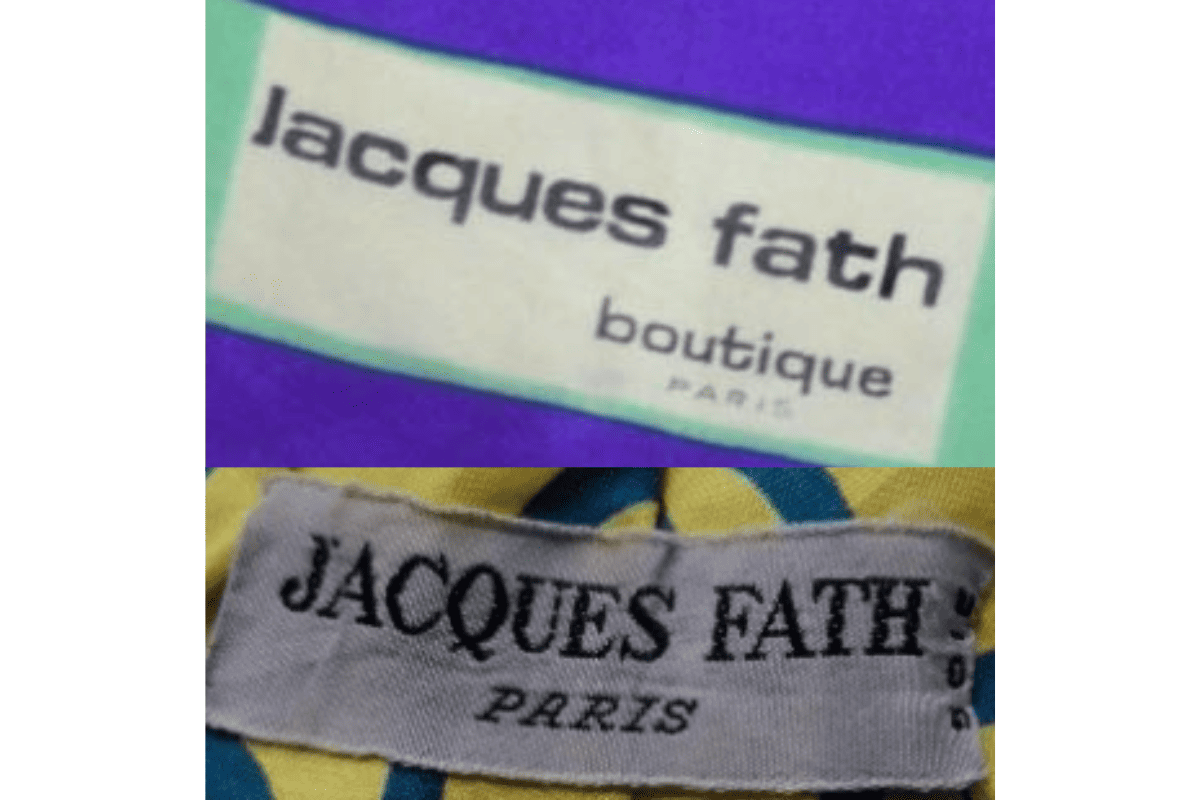
- Modernized design with bold fonts, still maintaining the classic “JACQUES FATH PARIS” logo.
- Introduction of more varied tag materials, including satin and silk-like fabrics.
- Occasionally, the tags would feature additional branding, such as “designed for” or collaborations with American designers or stores.
How to spot it
Modernized design with bold fonts, still maintaining the classic “JACQUES FATH PARIS” logo — confirms this label era.
Value signal
Strong collector demand; 1960s examples command premiums in good condition.
1970–1979
1970s vintage Jacques Fath tags
Tags often had a more minimalist approach, reflecting the era’s fashion trends Use of simple, sans-serif fonts for a modern appearance.

- Tags often had a more minimalist approach, reflecting the era’s fashion trends.
- Use of simple, sans-serif fonts for a modern appearance.
- Some tags from this era included the word “boutique” to signify a more exclusive line.
How to spot it
Tags often had a more minimalist approach, reflecting the era’s fashion trends — confirms this label era.
Value signal
Solid vintage interest; 1970s pieces in clean condition attract steady demand.
1980–1989
1980s vintage Jacques Fath tags
Return to bolder, more prominent logos, reflecting the 1980s’ love for statement branding Dark background tags with contrasting white or silver lettering were common.
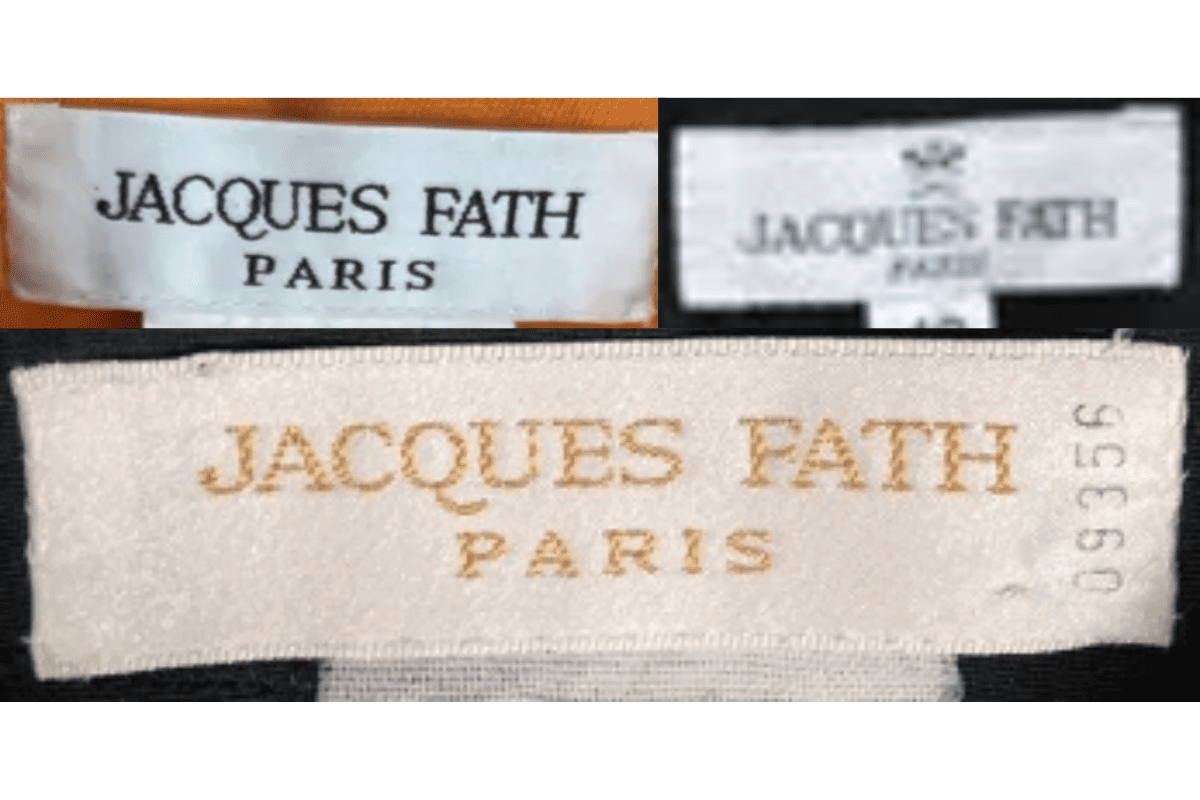
- Return to bolder, more prominent logos, reflecting the 1980s’ love for statement branding.
- Dark background tags with contrasting white or silver lettering were common.
- Tags often included additional details like fabric origin or care instructions.
How to spot it
Return to bolder, more prominent logos, reflecting the 1980s’ love for statement branding — confirms this label era.
Value signal
Good vintage demand; 1980s label detail is a key value driver.
1990–1999
1990s vintage Jacques Fath tags
Sleek, sophisticated designs with a focus on high-end materials for tags, like satin and silk Fonts became slimmer and more refined, with a return to simpler, classic branding.
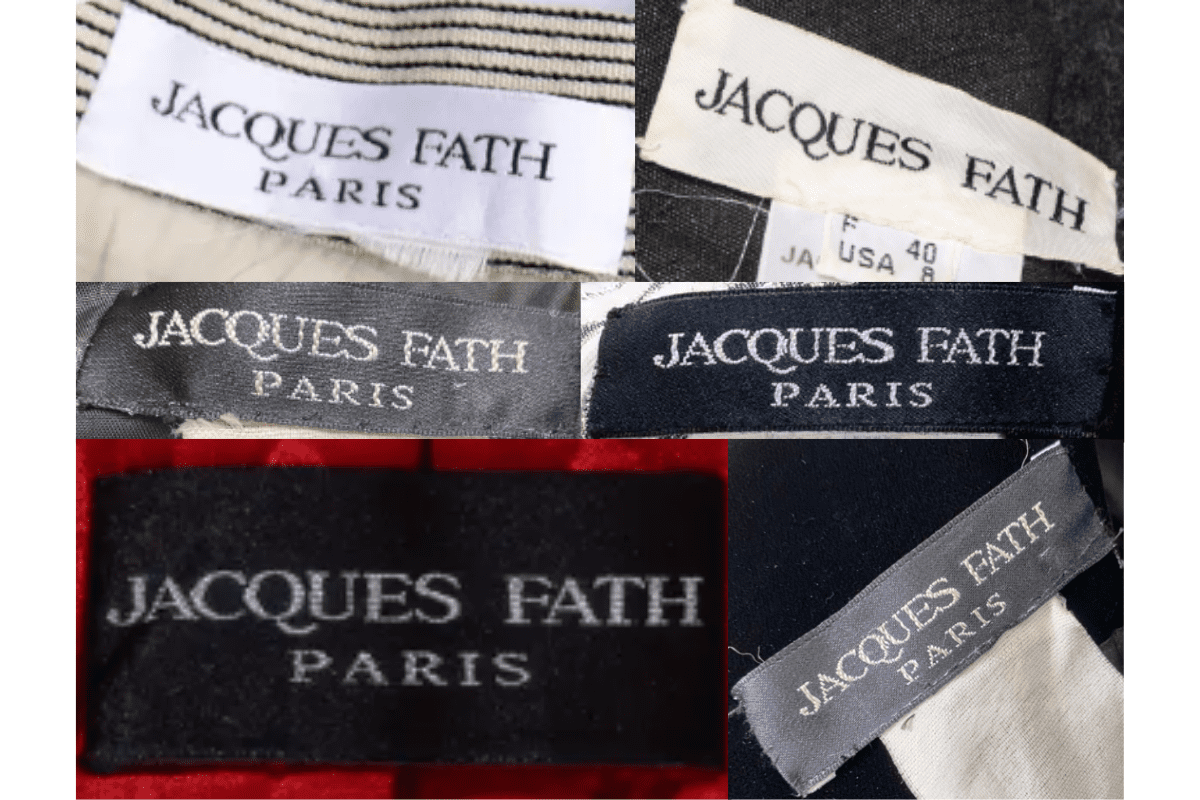
- Sleek, sophisticated designs with a focus on high-end materials for tags, like satin and silk.
- Fonts became slimmer and more refined, with a return to simpler, classic branding.
- Tags often featured minimalistic designs, sometimes just “JACQUES FATH PARIS” in an elegant serif font.
How to spot it
Sleek, sophisticated designs with a focus on high-end materials for tags, like satin and silk — confirms this label era.
Value signal
Moderate collector interest; condition and completeness determine value.
2000–2009
2000s vintage Jacques Fath tags
Modernized tags with various font styles, sometimes integrating contemporary design elements Tags could include metallic threads or embroidered details, adding a touch of luxury.
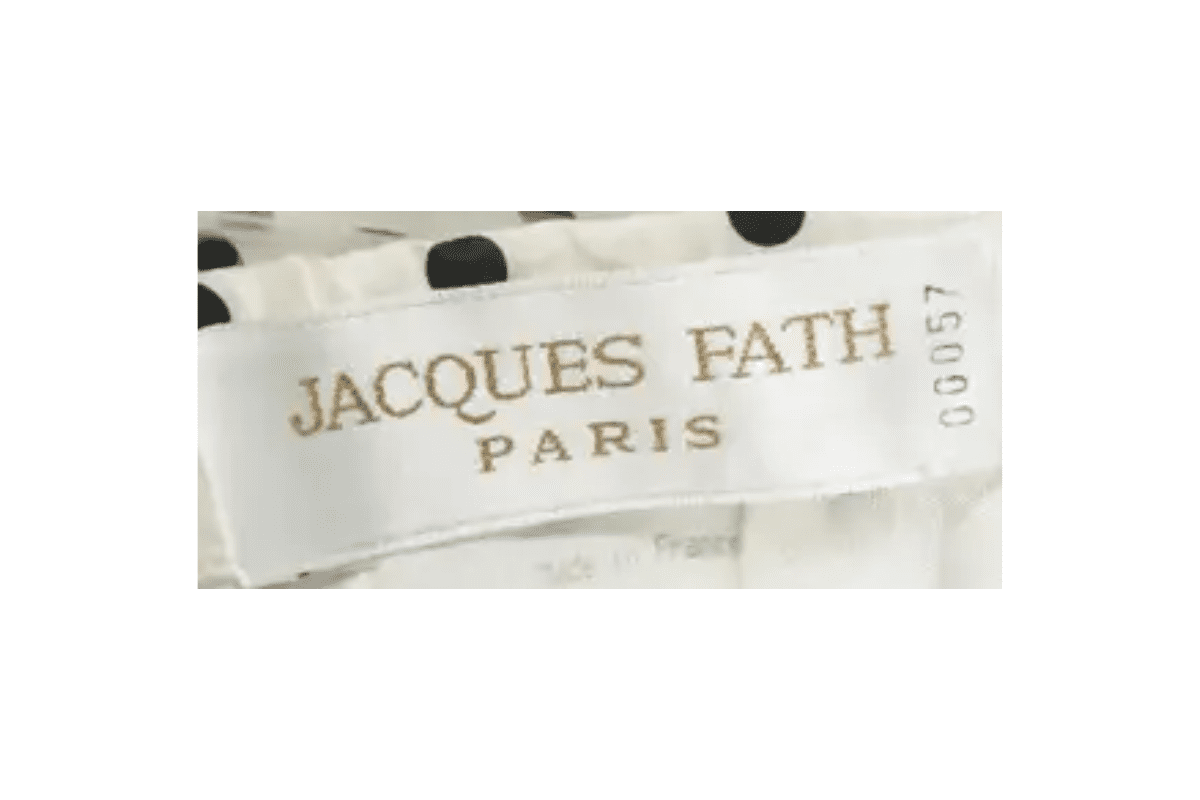
- Modernized tags with various font styles, sometimes integrating contemporary design elements.
- Tags could include metallic threads or embroidered details, adding a touch of luxury.
- Continued emphasis on the brand’s Parisian heritage, often highlighted by the inclusion of “PARIS” in the tag design.
How to spot it
Modernized tags with various font styles, sometimes integrating contemporary design elements — confirms this label era.
Value signal
Entry-level vintage; value driven by brand recognition and condition.