American Eagle
The American casualwear chain, 'American Eagle Outfitters'. The eagle emblem and the shift from ornate to minimalist wordmarks date its tags.
- Origin
- USA
- Founded
- 1977
- Category
- Designer & Casual
- Documented eras
- 4
How American Eagle labels evolved over time. Match the markers below against the tag in hand to place a garment in its era.
1980–1989
Bold Block-Letter Eagle Tags
Vibrant bold typography, often block letters, with a distinct eagle logo central; simple, less-detailed care info.
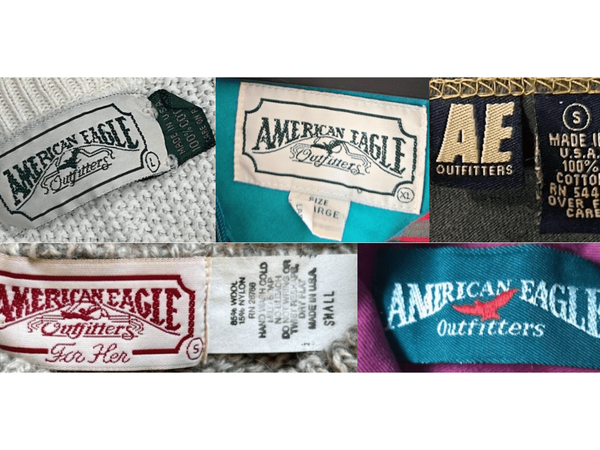
- Feature vibrant and bold typography often in block letters.
- Commonly use a distinct eagle logo as a central design element.
- Materials and care instructions are simple and less detailed compared to later tags.
How to spot it
Bold block lettering with a central eagle logo.
Value signal
Strong; 80s American Eagle is a sought early era.
1990–1999
Muted 'AE' Outfitters Tags
A more classic aesthetic — muted colours, refined fonts, fuller care and fabric detail, with 'AE' or the full 'American Eagle Outfitters'.
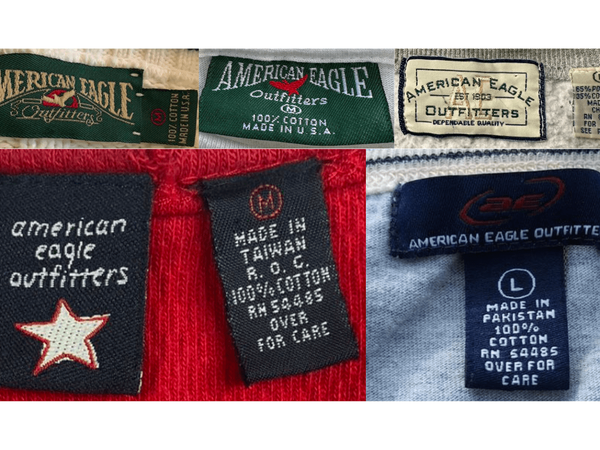
- Incorporate a more classic aesthetic with muted colors and refined fonts.
- Introduction of more detailed care instructions and fabric content.
- Tags may include additional branding elements like “AE” or “American Eagle Outfitters” in full.
How to spot it
Muted-colour tags with 'AE' or the full name.
Value signal
Solid 90s vintage; value tracks the garment.
2000–2009
Sleek Contemporary Tags
A modern look with sleeker designs and contemporary fonts, varied materials, and more global production locations.
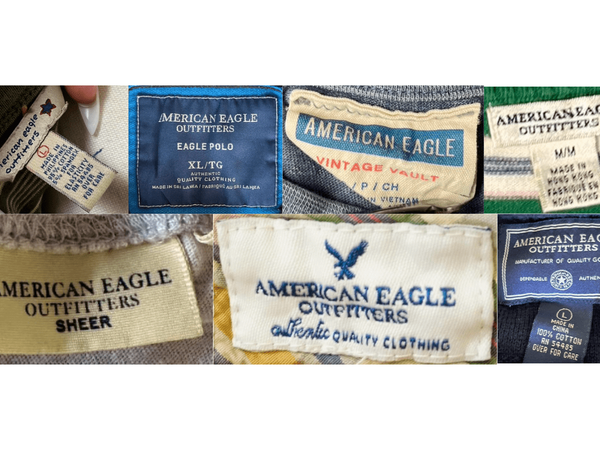
- Transition to a more modern look with sleeker designs and contemporary fonts.
- Usage of multiple materials, reflecting the brand’s expansion in product varieties.
- Manufacturing tags include more global production locations, indicating American Eagle’s expansion.
How to spot it
A sleek contemporary tag with global make.
Value signal
Common; modest resale.
2010–2019
Minimalist Clean-Line Tags
Minimalist designs with cleaner lines, more synthetic fibres, and diverse global manufacturing.
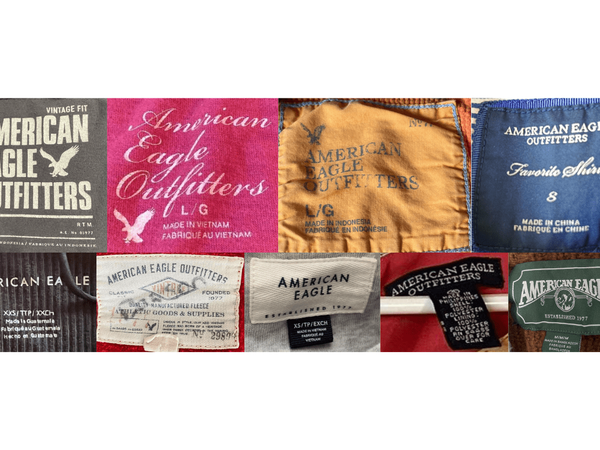
- Modern and minimalistic design with a focus on cleaner lines and less clutter.
- Increased use of synthetic fibers, reflecting changes in textile technology and sustainability practices.
- Diverse manufacturing locations, showcasing a truly global brand presence.
How to spot it
A minimalist clean-lined tag.
Value signal
Modern; priced on the piece.