Louis Féraud
The Cannes couturier who dressed Brigitte Bardot and became known for vivid colour and bold graphic prints. 'Louis Féraud Paris' in elegant serif lettering marks the 1960s–80s peak; 'Boutique Féraud' or 'Louis Féraud Femme' sub-labels do the finer era dating.

- Origin
- France
- Founded
- 1950
- Category
- High Fashion
- Documented eras
- 6
How Louis Féraud labels evolved over time. Match the markers below against the tag in hand to place a garment in its era.
1960–1969
1960s vintage Louis Féraud tags
Tags from this era often feature a simple, elegant design with “Louis Féraud” in serif lettering The color scheme is typically black text on a white or beige background.
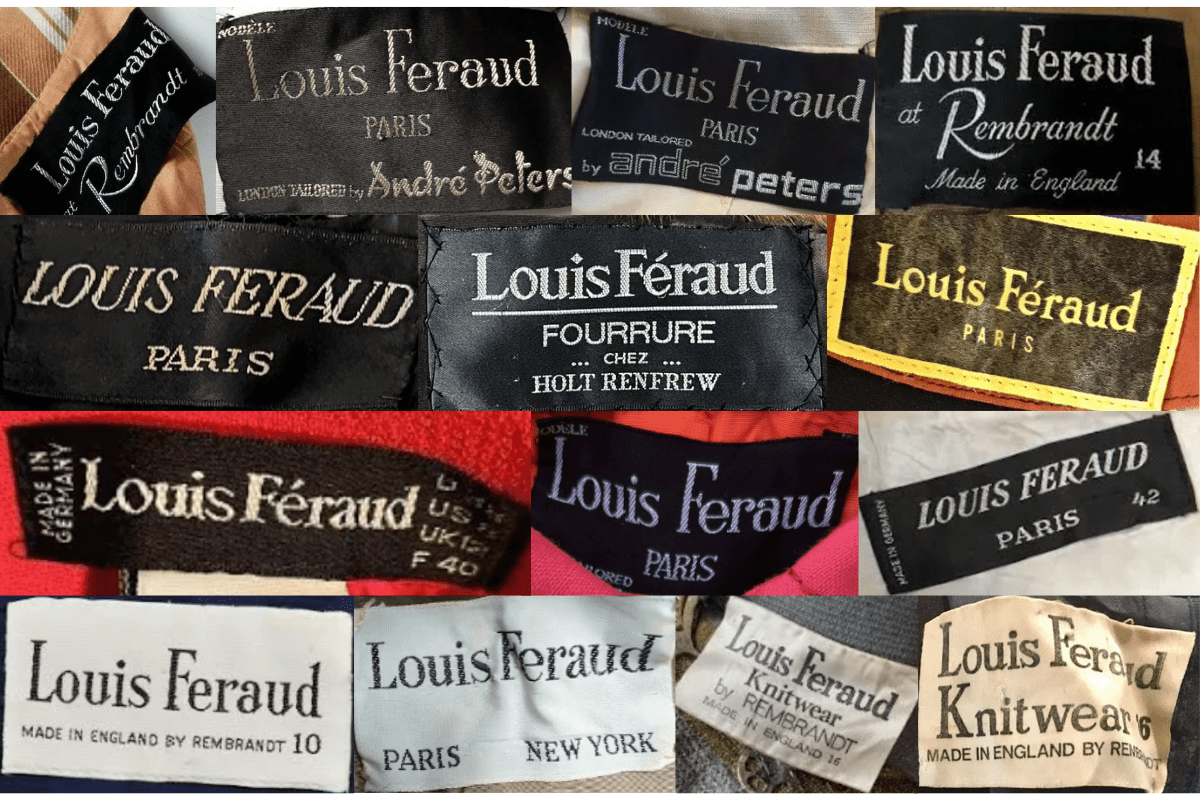
- Tags from this era often feature a simple, elegant design with “Louis Féraud” in serif lettering.
- The color scheme is typically black text on a white or beige background.
- Some tags may include additional information such as “Made in England” or size indicators, but the overall design remains minimalistic.
How to spot it
Tags from this era often feature a simple, elegant design with “Louis Féraud” in serif lettering — confirms this label era.
Value signal
Strong collector demand; 1960s examples command premiums in good condition.
1970–1979
1970s vintage Louis Féraud tags
Tags during the 1970s often continue the use of serif lettering but may feature additional branding elements like “at Rembrandt” or “Paris.” The color palette remains mostly subdued, with black or white text on contrasting backgrounds.
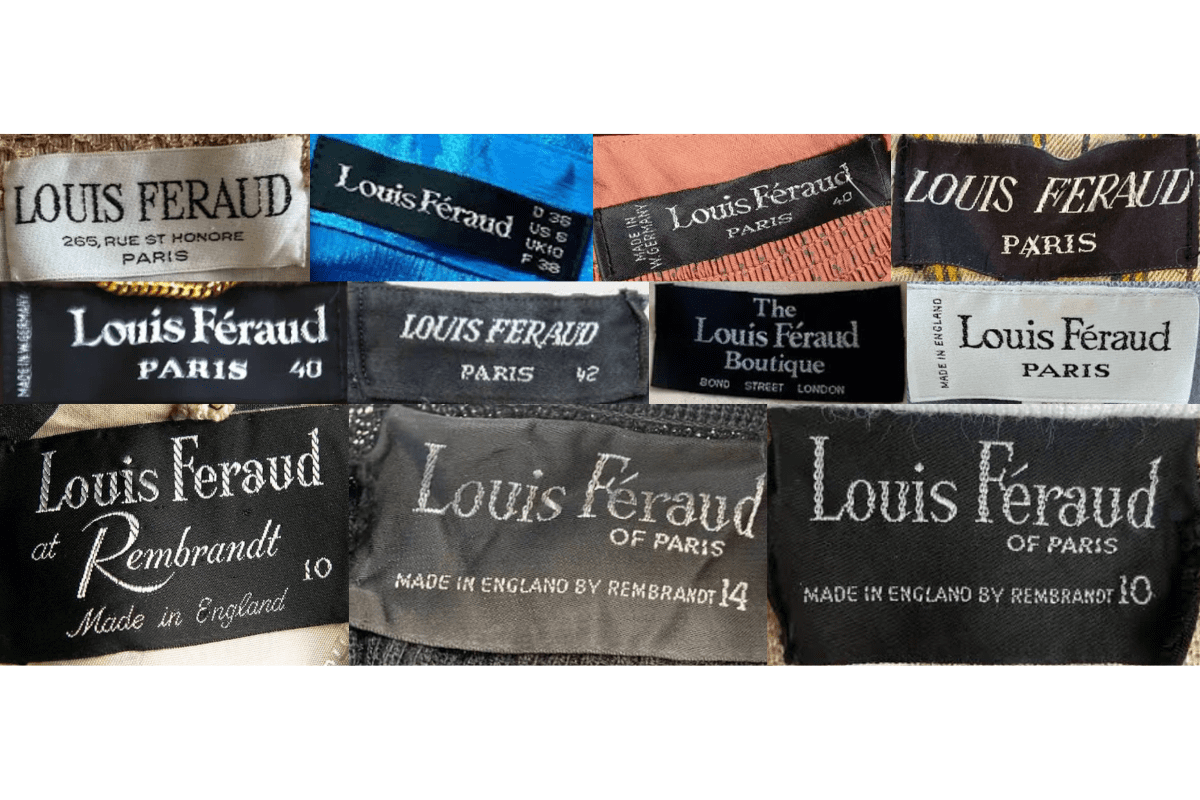
- Tags during the 1970s often continue the use of serif lettering but may feature additional branding elements like “at Rembrandt” or “Paris.”.
- The color palette remains mostly subdued, with black or white text on contrasting backgrounds.
- Size information is sometimes included on separate smaller tags, sewn adjacent to the main tag.
How to spot it
Tags during the 1970s often continue the use of serif lettering but may feature additional branding elements like “at Rembrandt” or “Paris.” — confirms this label era.
Value signal
Solid vintage interest; 1970s pieces in clean condition attract steady demand.
1980–1989
1980s vintage Louis Féraud tags
Tags in the 1980s maintain the use of serif fonts but begin to experiment with bolder layouts Some tags may include additional descriptors like “Fourrure” or “Modelle,” reflecting the specific collection or line.
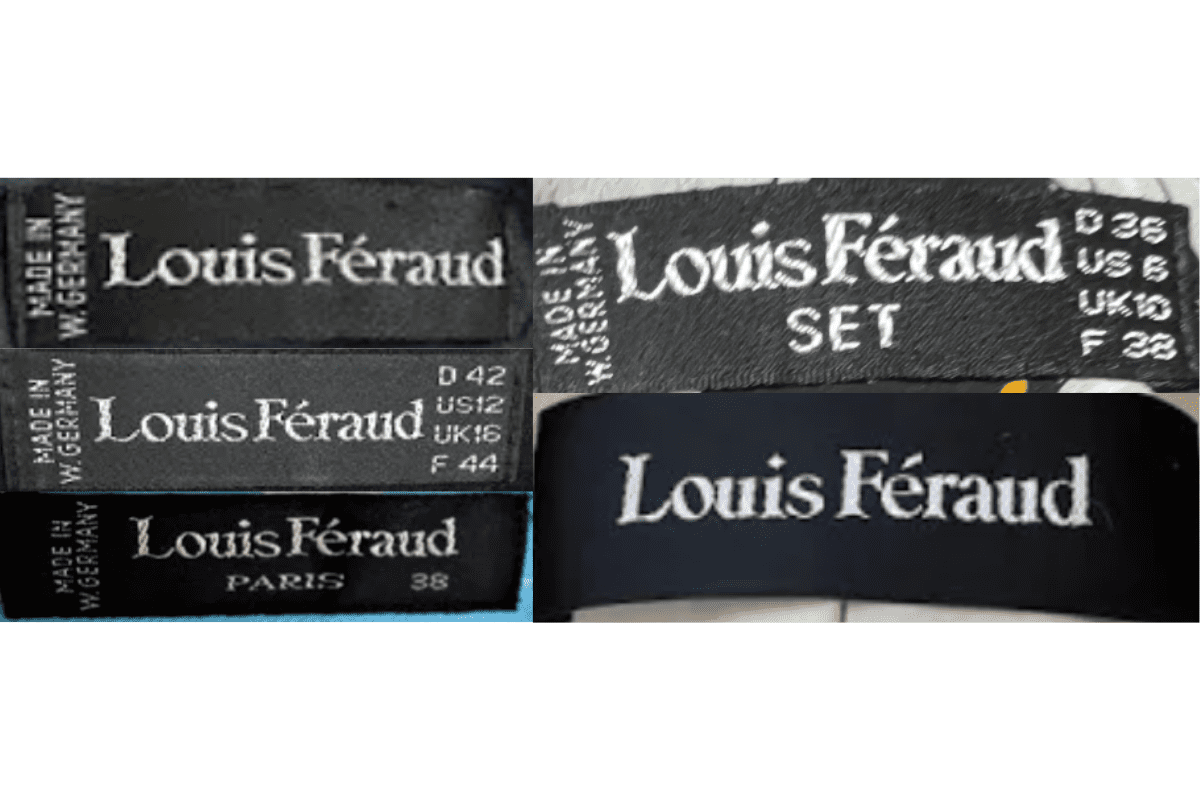
- Tags in the 1980s maintain the use of serif fonts but begin to experiment with bolder layouts.
- Some tags may include additional descriptors like “Fourrure” or “Modelle,” reflecting the specific collection or line.
- Tags often include “Made in England” or “Made in W. Germany” with a more luxurious appearance, indicating the brand’s international reach.
How to spot it
Tags in the 1980s maintain the use of serif fonts but begin to experiment with bolder layouts — confirms this label era.
Value signal
Good vintage demand; 1980s label detail is a key value driver.
1990–1999
1990s vintage Louis Féraud tags
The 1990s tags often feature the “Louis Féraud Paris” branding prominently, sometimes with additional text like “Boutique” or “Set.” Tags are usually rectangular with white or silver text on black backgrounds, reflecting a sleek, modern aesthetic.
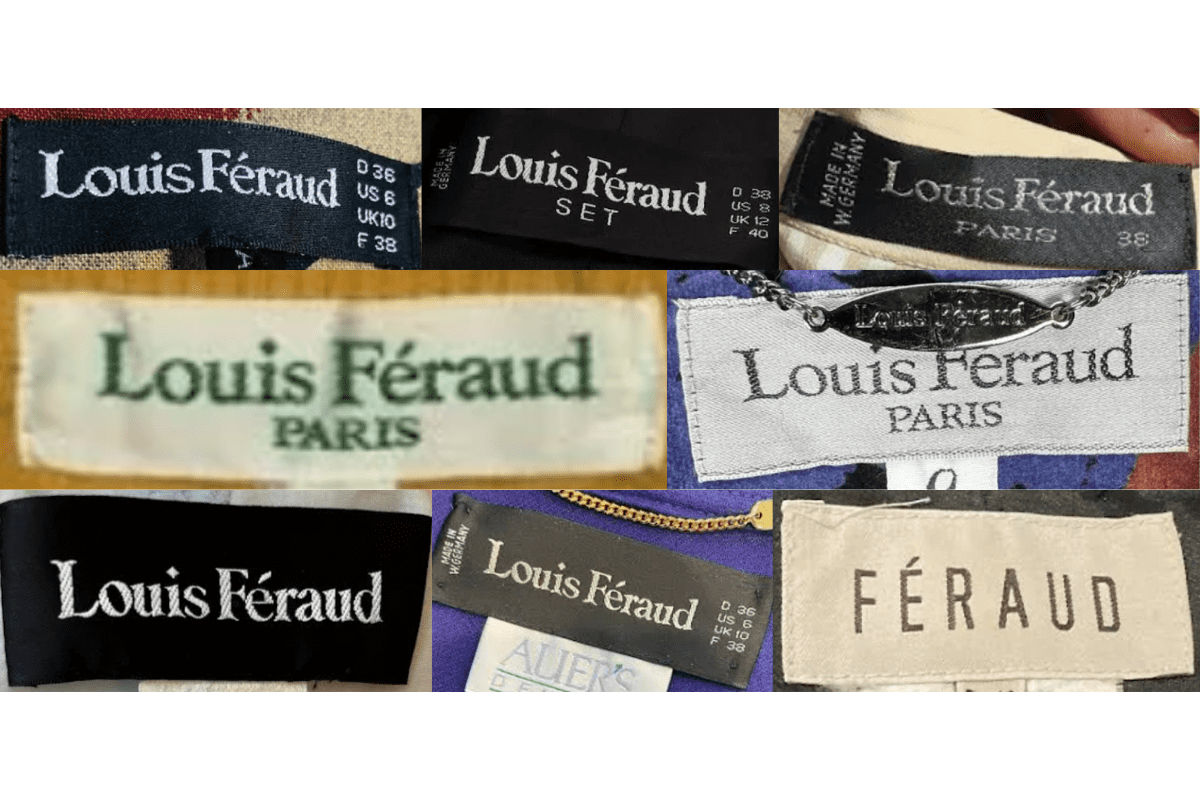
- The 1990s tags often feature the “Louis Féraud Paris” branding prominently, sometimes with additional text like “Boutique” or “Set.”.
- Tags are usually rectangular with white or silver text on black backgrounds, reflecting a sleek, modern aesthetic.
- Size information is frequently printed on the main tag, sometimes including multiple size conversions (e.g., US, UK, European sizes).
How to spot it
The 1990s tags often feature the “Louis Féraud Paris” branding prominently, sometimes with additional text like “Boutique” or “Set.” — confirms this label era.
Value signal
Moderate collector interest; condition and completeness determine value.
2000–2009
2000s vintage Louis Féraud tags
Tags from the 2000s often retain the classic serif font but may introduce new design elements like colored backgrounds or metallic finishes The “Louis Féraud” branding remains central, but there is a noticeable shift towards more compact and modern designs.
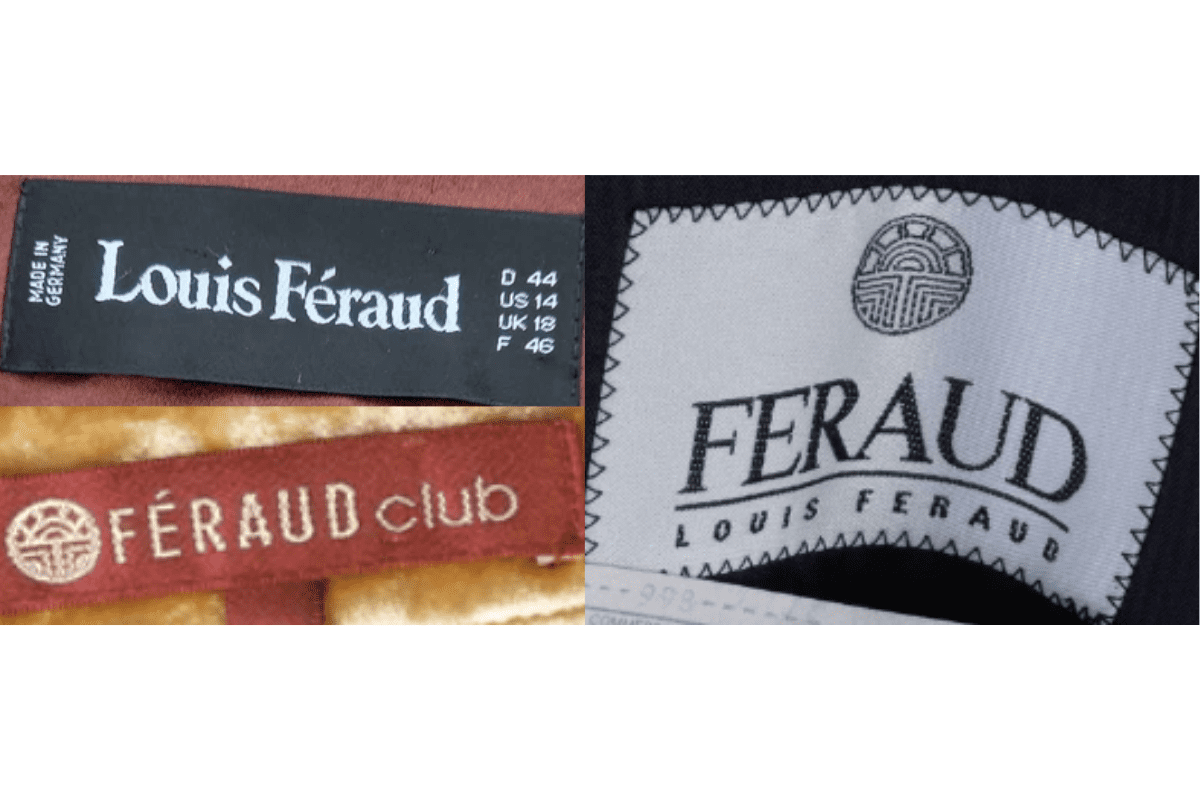
- Tags from the 2000s often retain the classic serif font but may introduce new design elements like colored backgrounds or metallic finishes.
- The “Louis Féraud” branding remains central, but there is a noticeable shift towards more compact and modern designs.
- Additional features like brand logos or symbols begin to appear, emphasizing the brand’s evolving identity.
How to spot it
Tags from the 2000s often retain the classic serif font but may introduce new design elements like colored backgrounds or metallic finishes — confirms this label era.
Value signal
Entry-level vintage; value driven by brand recognition and condition.
2010–2019
2010s vintage Louis Féraud tags
The 2010s tags are characterized by a minimalist aesthetic with bold, clean fonts The use of modern materials and colors is more prevalent, reflecting the contemporary fashion trends of the time.
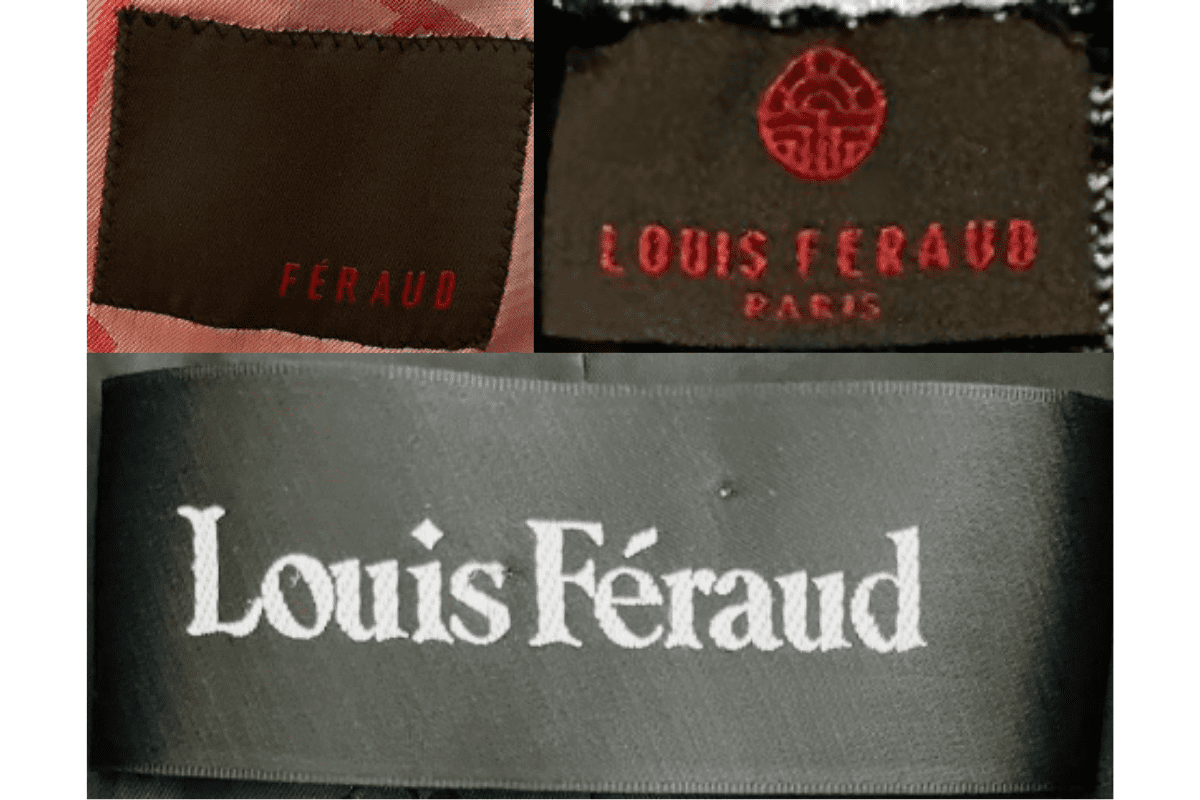
- The 2010s tags are characterized by a minimalist aesthetic with bold, clean fonts.
- The use of modern materials and colors is more prevalent, reflecting the contemporary fashion trends of the time.
- Logos and additional text may be embroidered or printed in contrasting colors, emphasizing brand recognition and quality.
How to spot it
The 2010s tags are characterized by a minimalist aesthetic with bold, clean fonts — confirms this label era.
Value signal
Entry-level vintage; value driven by brand recognition and condition.