Harris Tweed
Hand-woven Scottish fabric from the Outer Hebrides, protected by Act of Parliament. The Orb and Cross logo has been the consistent certification mark since the Harris Tweed Authority's founding; any change in the Orb design indicates the era.
- Origin
- Scotland
- Founded
- 1909
- Category
- Outdoor & Workwear
- Documented eras
- 6
How Harris Tweed labels evolved over time. Match the markers below against the tag in hand to place a garment in its era.
1940–1949
1940s vintage Harris Tweed tags
Tags from the 1940s often feature simple designs with a focus on functionality The text is typically in a serif font, with “Harris Tweed” prominently displayed at the top.
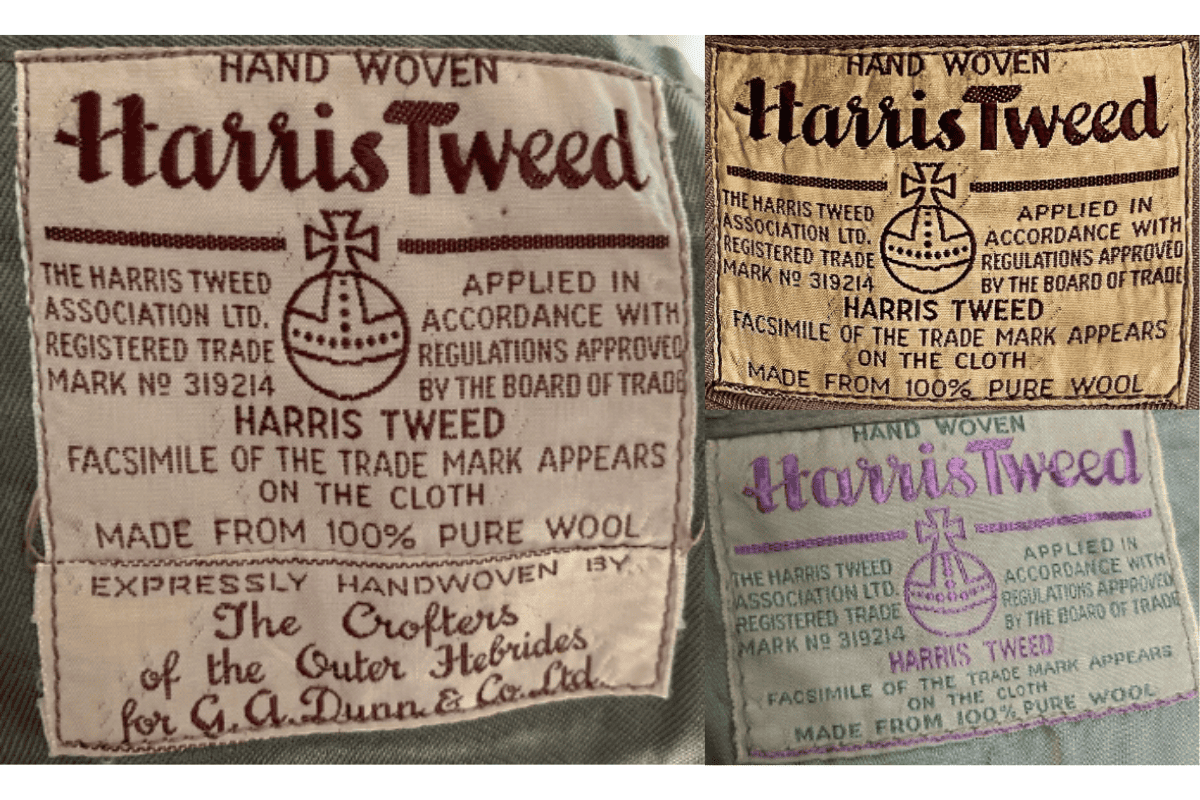
- Tags from the 1940s often feature simple designs with a focus on functionality.
- The text is typically in a serif font, with “Harris Tweed” prominently displayed at the top.
- The tag mentions that the fabric is handwoven and includes certification marks, usually with limited color use.
- Commonly, the label also states the registration number with the Harris Tweed Association and emphasizes the pure Scottish wool origin.
How to spot it
Tags from the 1940s often feature simple designs with a focus on functionality — confirms this label era.
Value signal
Rare; pre-1960 examples are collector-grade and seldom surface.
1950–1959
1950s vintage Harris Tweed tags
1950s tags continue the use of serif fonts but introduce more detailed information about the weaving process These tags may include the phrase “Handwoven in the Outer Hebrides” along with certification details.
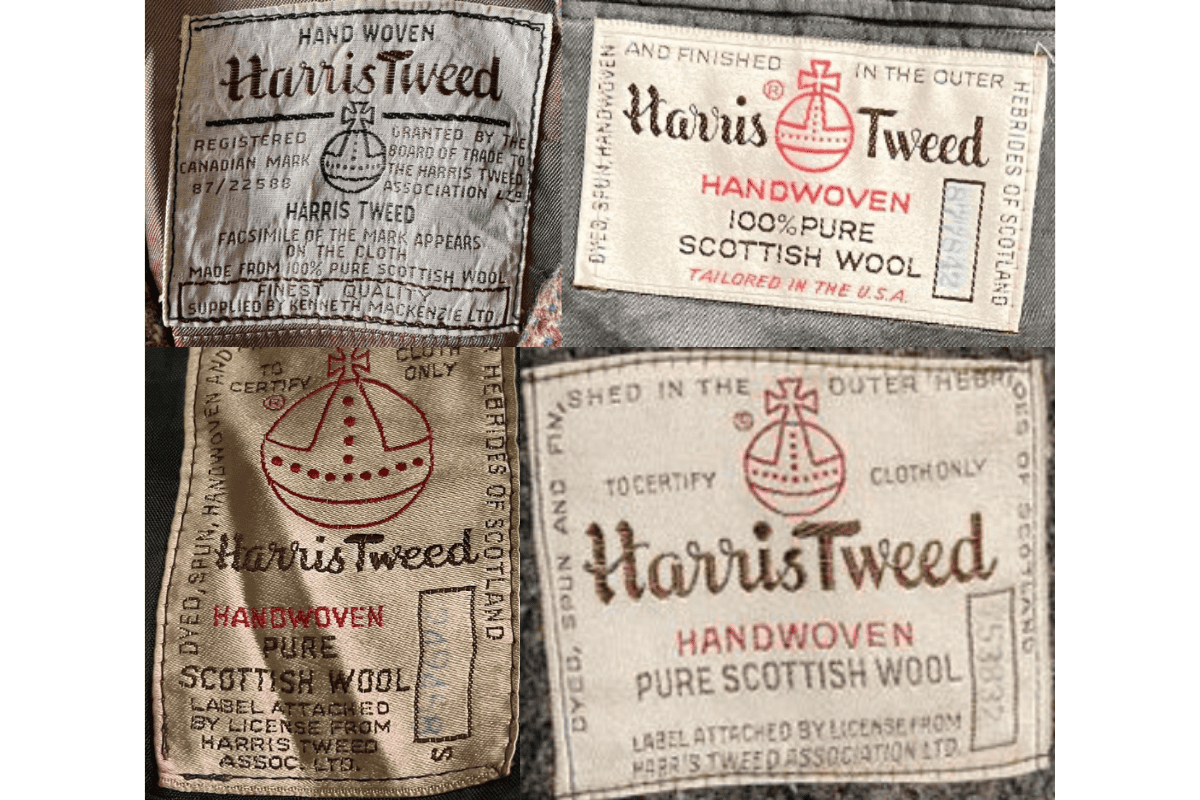
- 1950s tags continue the use of serif fonts but introduce more detailed information about the weaving process.
- These tags may include the phrase “Handwoven in the Outer Hebrides” along with certification details.
- The emblem of Harris Tweed, which is the orb and cross, is more prominently featured.
- Colors on the tag are generally muted, maintaining a classic, understated appearance.
How to spot it
1950s tags continue the use of serif fonts but introduce more detailed information about the weaving process — confirms this label era.
Value signal
Rare; pre-1960 examples are collector-grade and seldom surface.
1960–1969
1960s vintage Harris Tweed tags
The 1960s tags start to incorporate slightly more color, with red and green becoming more common The layout remains traditional, with the “Harris Tweed” name in bold at the top and detailed certification information below.
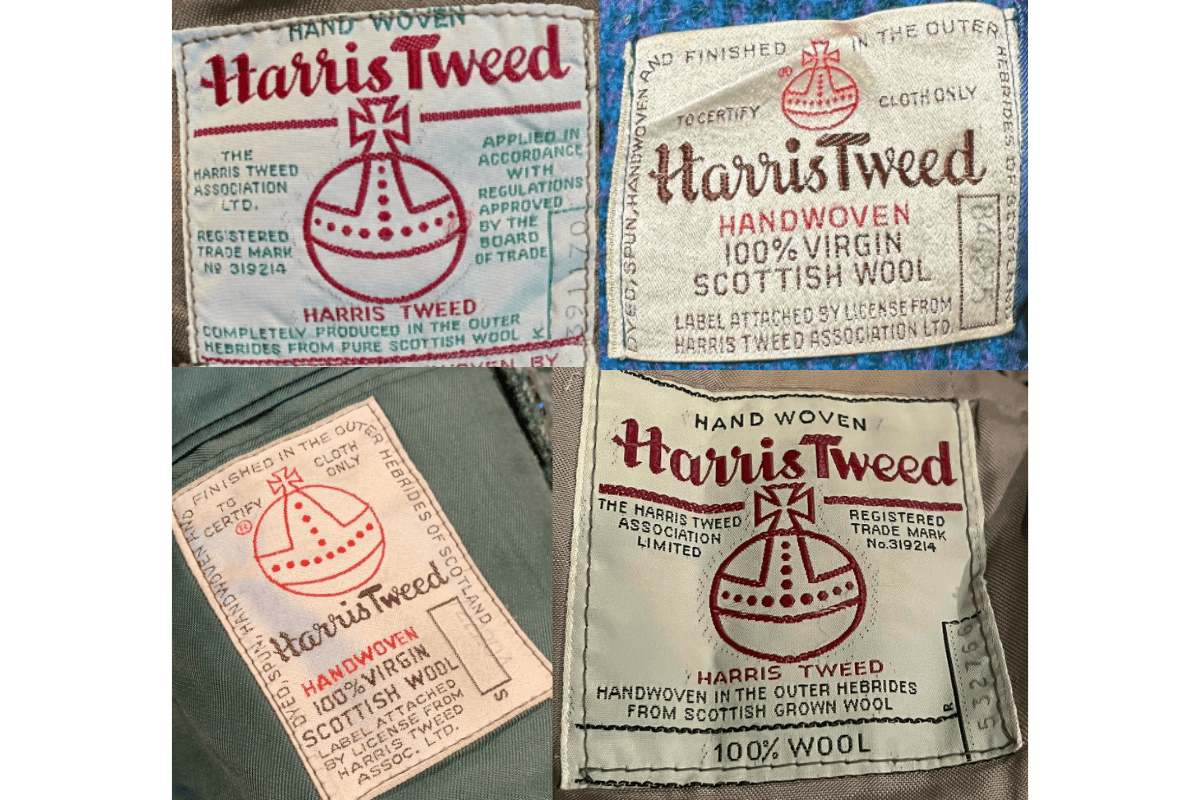
- The 1960s tags start to incorporate slightly more color, with red and green becoming more common.
- The layout remains traditional, with the “Harris Tweed” name in bold at the top and detailed certification information below.
- The orb and cross emblem is a central feature, often appearing larger than in previous decades.
- Tags may also include phrases like “Dye Spun, Handwoven, and Finished in the Outer Hebrides.”.
How to spot it
The 1960s tags start to incorporate slightly more color, with red and green becoming more common — confirms this label era.
Value signal
Strong collector demand; 1960s examples command premiums in good condition.
1970–1979
1970s vintage Harris Tweed tags
Tags from the 1970s feature more vibrant colors, including reds and purples, which stand out more than earlier decades The use of bold fonts continues, with the “Harris Tweed” name and certification mark prominently displayed.
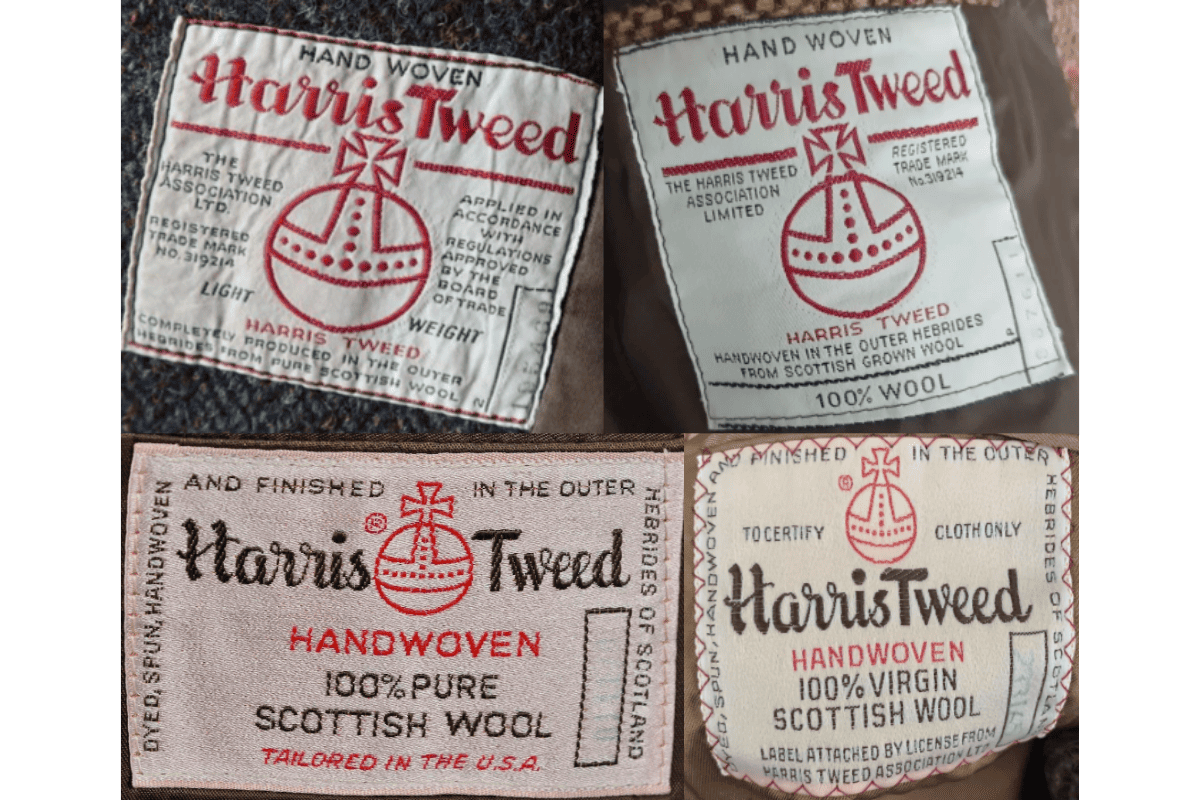
- Tags from the 1970s feature more vibrant colors, including reds and purples, which stand out more than earlier decades.
- The use of bold fonts continues, with the “Harris Tweed” name and certification mark prominently displayed.
- There is a consistent emphasis on the handwoven nature of the fabric, with specific mention of its origin in the Outer Hebrides.
- These tags may also include detailed descriptions of the wool quality, such as “100% Pure Wool.”.
How to spot it
Tags from the 1970s feature more vibrant colors, including reds and purples, which stand out more than earlier decades — confirms this label era.
Value signal
Solid vintage interest; 1970s pieces in clean condition attract steady demand.
1980–1989
1980s vintage Harris Tweed tags
In the 1980s, Harris Tweed tags became more standardized, with a consistent layout across different products Tags often include a combination of red and black text, with the “Harris Tweed” name prominently at the top.
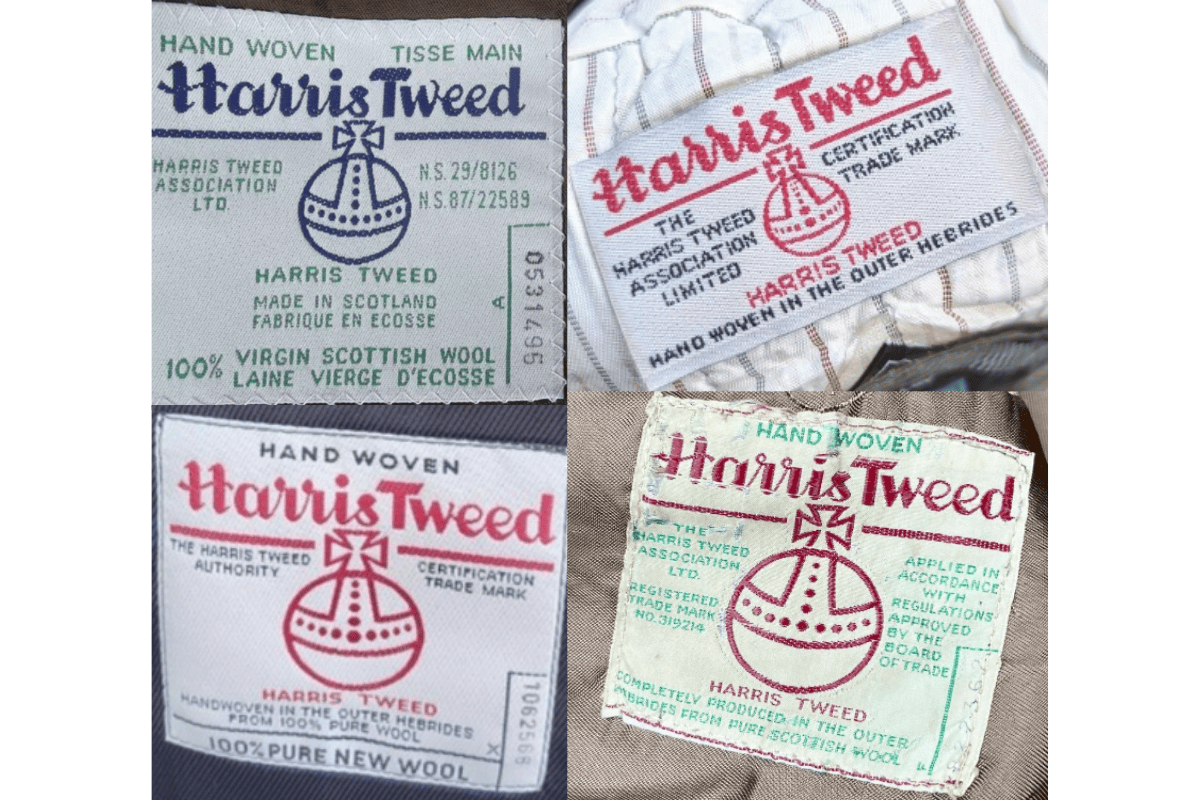
- In the 1980s, Harris Tweed tags became more standardized, with a consistent layout across different products.
- Tags often include a combination of red and black text, with the “Harris Tweed” name prominently at the top.
- Certification marks are clearly defined, with additional details about the wool’s origin and weaving process.
- The orb and cross emblem remains a focal point, with increasing size compared to earlier decades.
How to spot it
In the 1980s, Harris Tweed tags became more standardized, with a consistent layout across different products — confirms this label era.
Value signal
Good vintage demand; 1980s label detail is a key value driver.
1990–1999
1990s vintage Harris Tweed tags
Tags from the 1990s are marked by a modernized look, with a clean, streamlined design The Harris Tweed name is still bold, but the overall design is less cluttered compared to earlier tags.
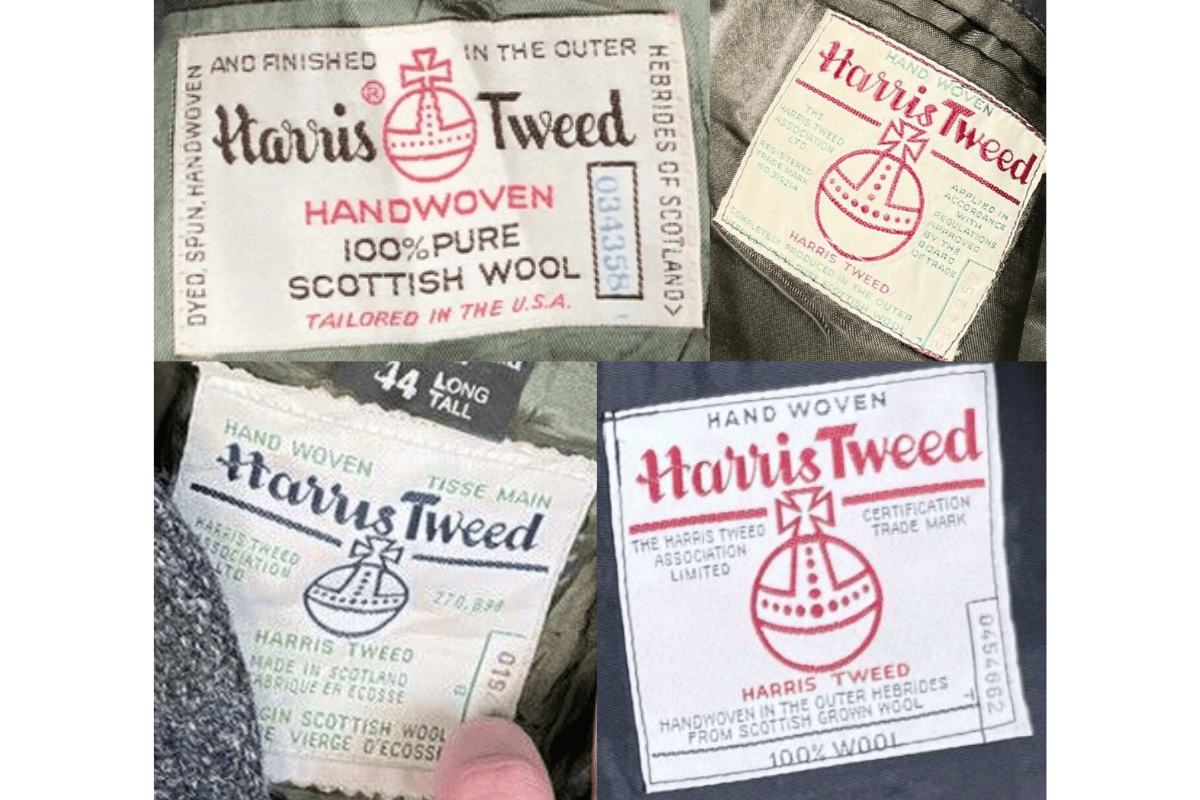
- Tags from the 1990s are marked by a modernized look, with a clean, streamlined design.
- The Harris Tweed name is still bold, but the overall design is less cluttered compared to earlier tags.
- Color use is minimalistic, often featuring just one or two colors, usually red and black.
- There is a continued emphasis on certification and origin, with some tags including detailed fabric care instructions.
How to spot it
Tags from the 1990s are marked by a modernized look, with a clean, streamlined design — confirms this label era.
Value signal
Moderate collector interest; condition and completeness determine value.