Harari
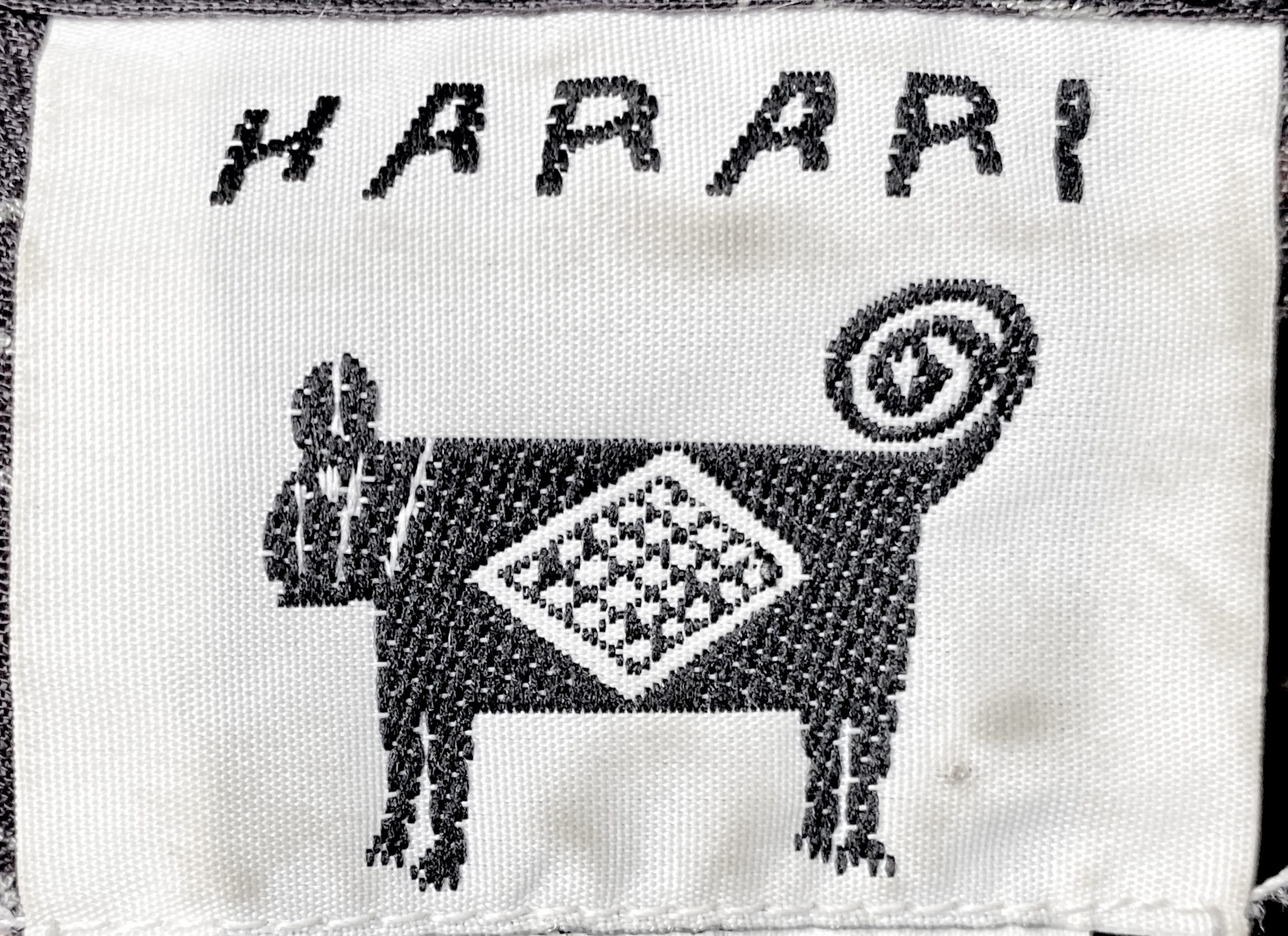
Boho chic brand by Barbara Keller and Dan Harari, inspired by global travel and vintage fashion. 1990s-2000s tags feature a unique stylized animal emblem with checkerboard stitching and the brand name in an artistic irregular font.
- Origin
- USA
- Founded
- 1979
- Category
- Designer & Casual
- Documented eras
- 2
How Harari labels evolved over time. Match the markers below against the tag in hand to place a garment in its era.
1990–1999
1990s vintage Harari tags
Bold “HARARI” lettering in an angular font style, characteristic of the era Neutral-colored fabric tags with white and beige backgrounds.
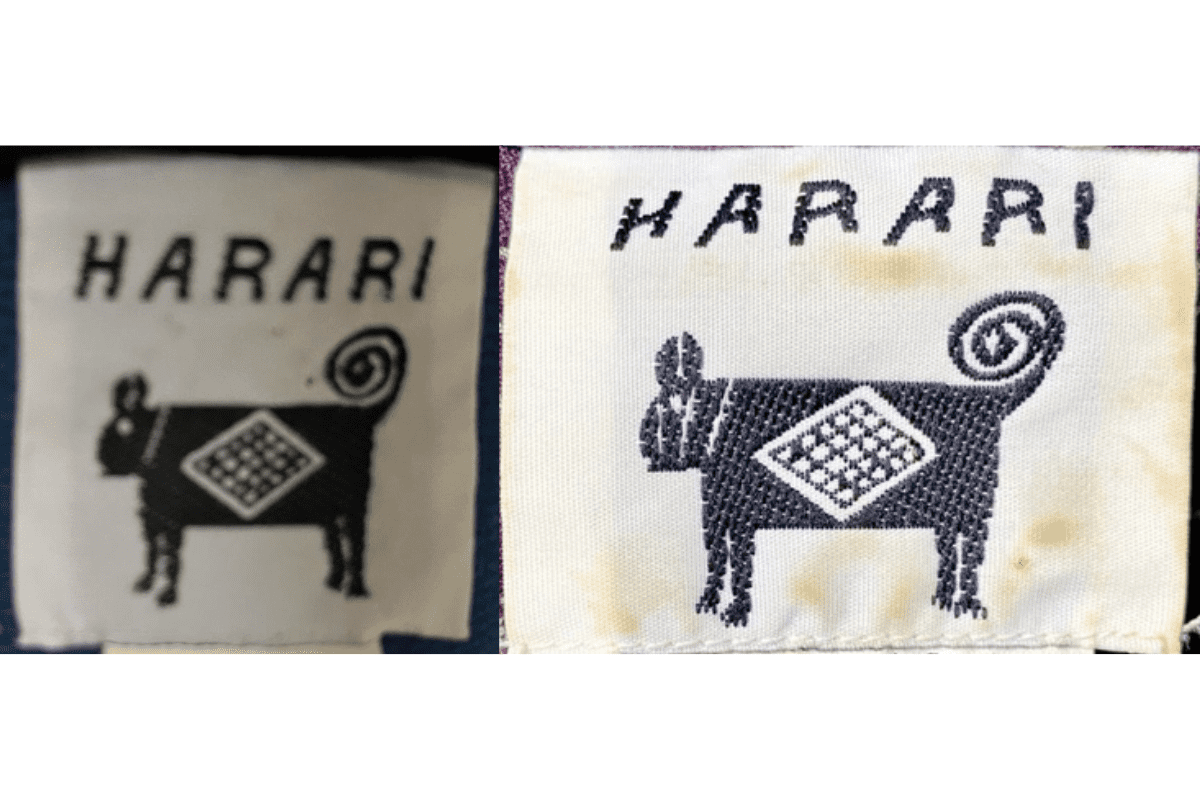
- Bold “HARARI” lettering in an angular font style, characteristic of the era.
- Neutral-colored fabric tags with white and beige backgrounds.
- Often embroidered or stitched lettering, creating a textured look on the tags.
- Simple, minimalist design with no additional symbols or illustrations.
How to spot it
Bold “HARARI” lettering in an angular font style, characteristic of the era — confirms this label era.
Value signal
Moderate collector interest; condition and completeness determine value.
2000–2009
2000s vintage Harari tags
Distinctive bright orange background with contrasting red “HARARI” lettering Material tag includes fiber content (e.g., “100% Silk”) and country of origin (“Made in U.S.A.”).
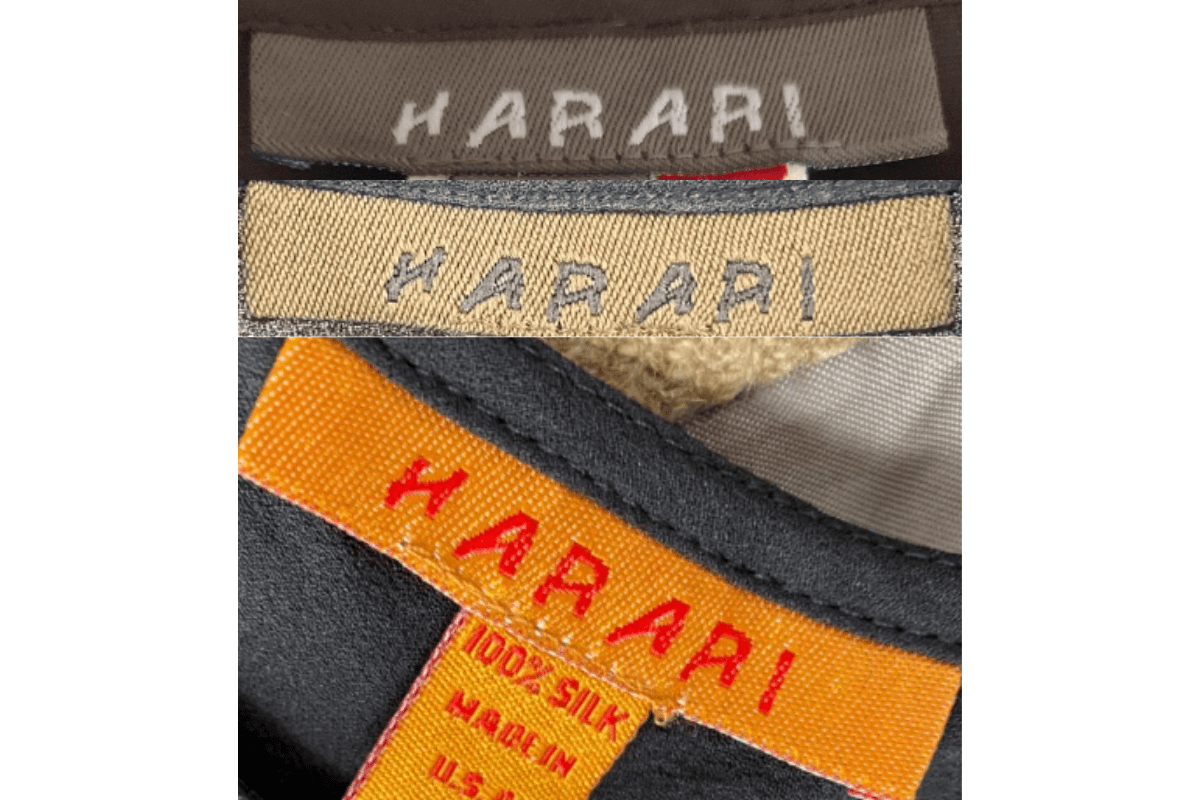
- Distinctive bright orange background with contrasting red “HARARI” lettering.
- Material tag includes fiber content (e.g., “100% Silk”) and country of origin (“Made in U.S.A.”).
- Tag design includes more modern elements, such as bold colors and clean lines.
- Clear focus on product details like material and manufacturing origin, signaling a transition to a more global market.
How to spot it
Distinctive bright orange background with contrasting red “HARARI” lettering — confirms this label era.
Value signal
Entry-level vintage; value driven by brand recognition and condition.