Jean-Charles de Castelbajac
Paris designer known as JC/DC for bold primary-colour graphics and art-world collaborations. 'Jean-Charles de Castelbajac' or 'KO and CO' on rectangular serif tags marks the 1970s; 'J.C. de Castelbajac' with bolder, looser script dates the 1980s–90s.

- Origin
- France
- Founded
- 1968
- Category
- High Fashion
- Documented eras
- 4
How Jean-Charles de Castelbajac labels evolved over time. Match the markers below against the tag in hand to place a garment in its era.
1970–1979
1970s vintage Jean-Charles de Castelbajac tags
Features the full name “Jean-Charles de Castelbajac” prominently Tags are usually rectangular with bold serif fonts.
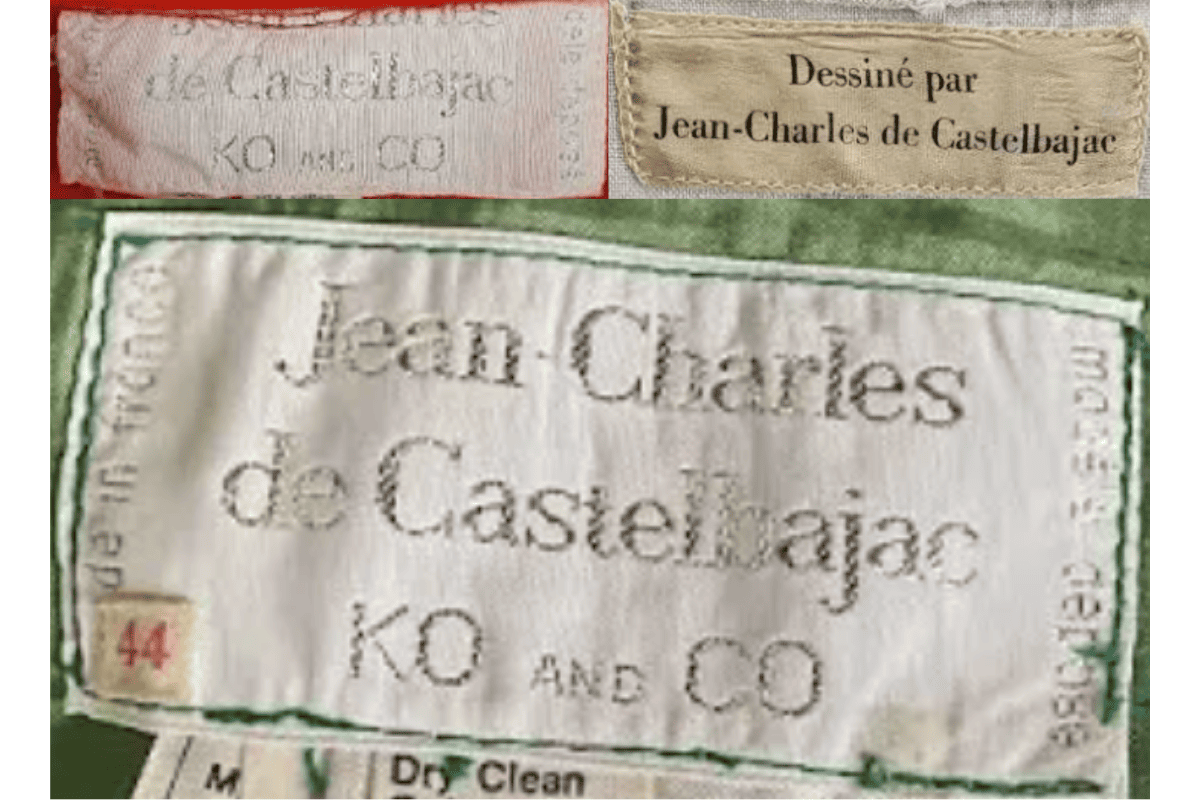
- Features the full name “Jean-Charles de Castelbajac” prominently.
- Tags are usually rectangular with bold serif fonts.
- Some tags include additional branding such as “KO and CO” or “Dessiné par Jean-Charles de Castelbajac.”.
- The fabric tags tend to be simple in design, often with just the text and minimal decoration.
How to spot it
Features the full name “Jean-Charles de Castelbajac” prominently — confirms this label era.
Value signal
Solid vintage interest; 1970s pieces in clean condition attract steady demand.
1980–1989
1980s vintage Jean-Charles de Castelbajac tags
Introduction of the “J.C. de Castelbajac” abbreviation on some tags Tags still prominently feature “Made in Italy” along with the brand name.
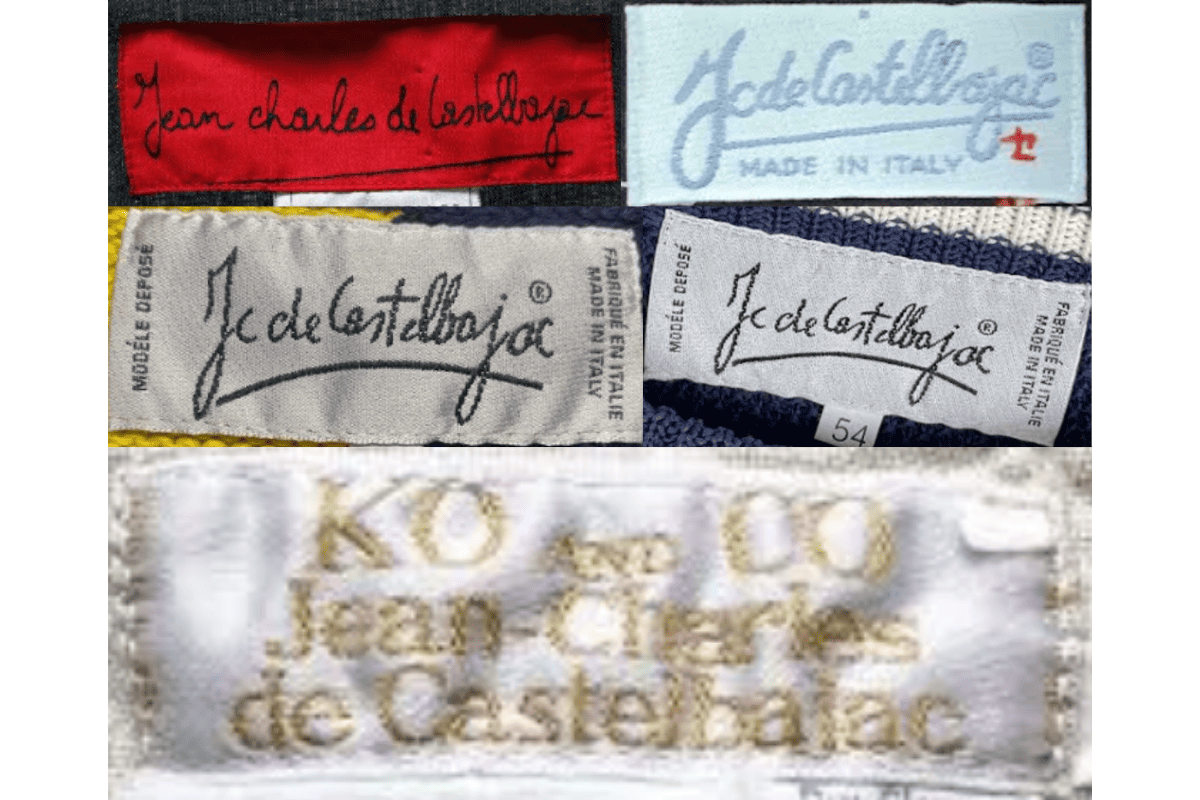
- Introduction of the “J.C. de Castelbajac” abbreviation on some tags.
- Tags still prominently feature “Made in Italy” along with the brand name.
- Typography remains bold but starts to incorporate more script-like fonts, reflecting a blend of formal and casual aesthetics.
- Some tags include additional details like “Modèle Déposé” (Registered Design) to emphasize authenticity.
How to spot it
Introduction of the “J.C. de Castelbajac” abbreviation on some tags — confirms this label era.
Value signal
Good vintage demand; 1980s label detail is a key value driver.
1990–1999
1990s vintage Jean-Charles de Castelbajac tags
Tags often feature a cleaner, more streamlined design with less ornate fonts The use of “J.C. de Castelbajac” continues, with variations in tag shapes from rectangular to smaller square tags.
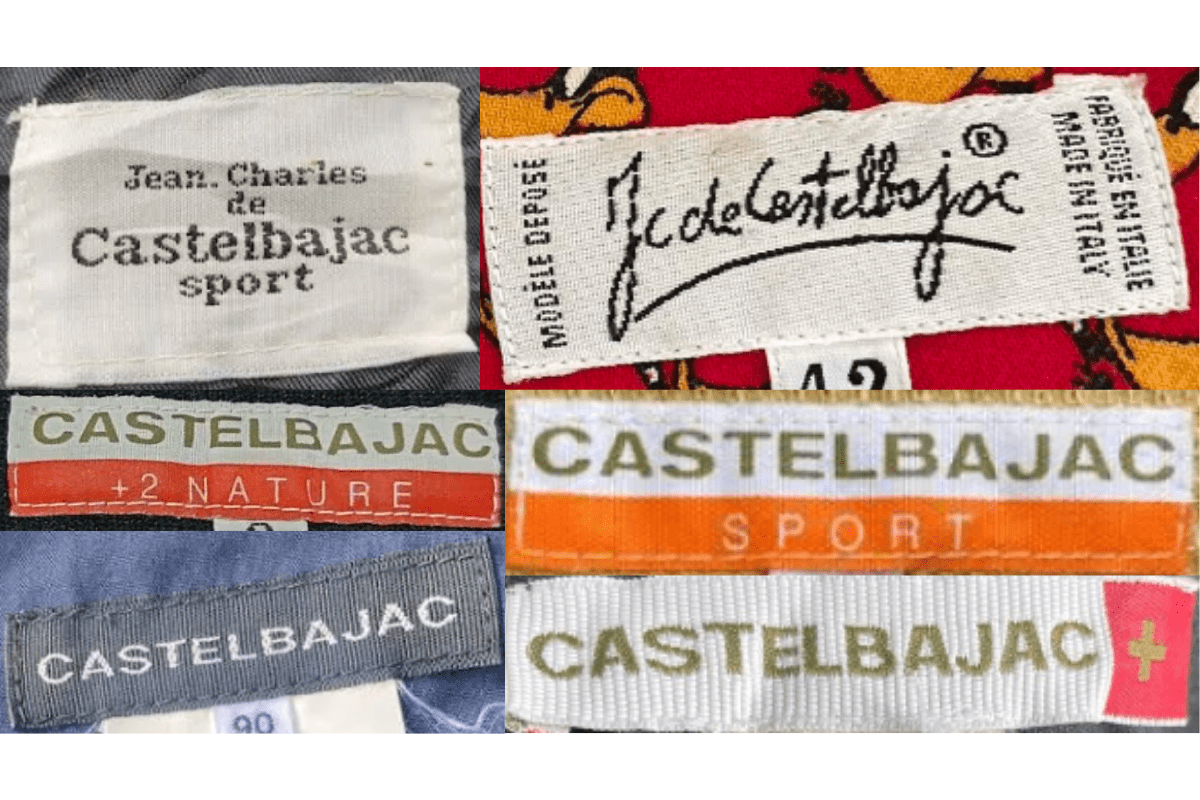
- Tags often feature a cleaner, more streamlined design with less ornate fonts.
- The use of “J.C. de Castelbajac” continues, with variations in tag shapes from rectangular to smaller square tags.
- Consistent inclusion of “Made in Italy” to emphasize the quality and origin of the garments.
- Tags may be found in different materials, including softer fabrics, indicating a shift towards more modern production techniques.
How to spot it
Tags often feature a cleaner, more streamlined design with less ornate fonts — confirms this label era.
Value signal
Moderate collector interest; condition and completeness determine value.
2000–2009
2000s vintage Jean-Charles de Castelbajac tags
Introduction of more contemporary designs with varied colors and materials used for the tags Tags may feature a combination of text and graphic elements, reflecting the brand’s continued embrace of artistic expression.
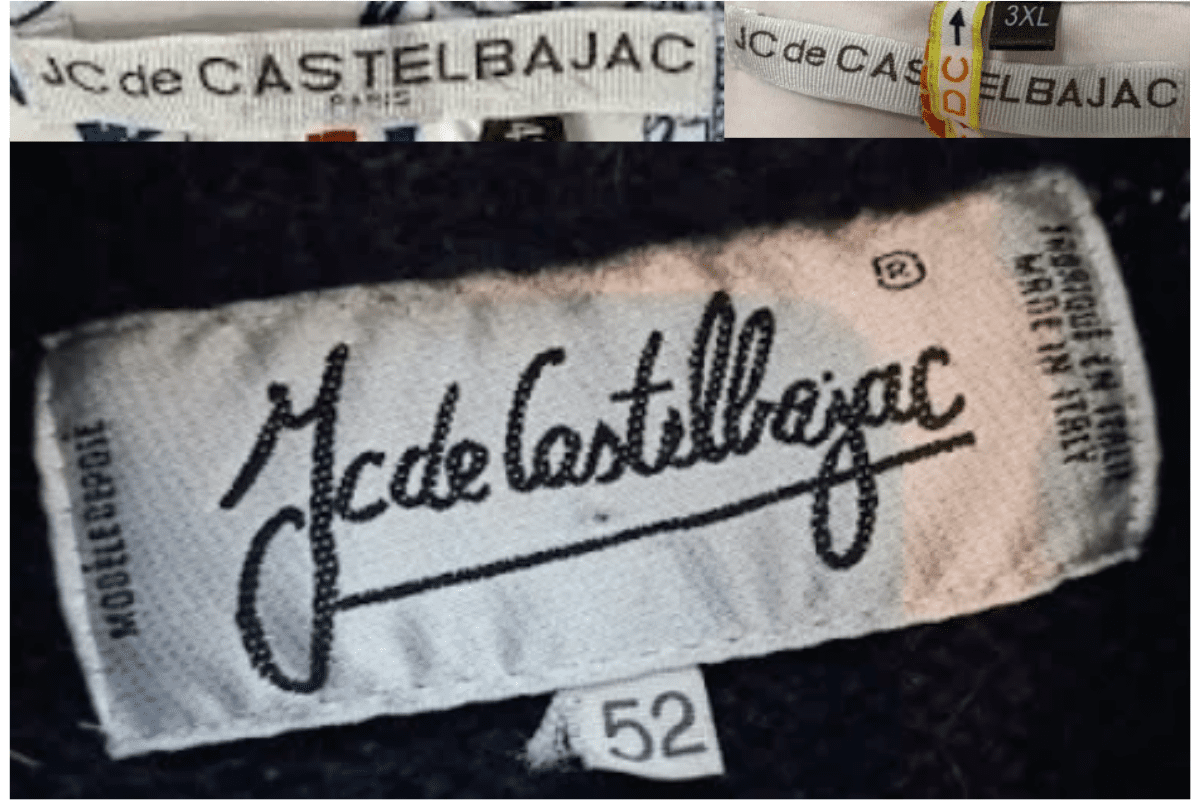
- Introduction of more contemporary designs with varied colors and materials used for the tags.
- Tags may feature a combination of text and graphic elements, reflecting the brand’s continued embrace of artistic expression.
- The “J.C. de Castelbajac” logo remains central, often with additional text like size indicators or fabric care instructions on separate tags.
- Emphasis on the “Made in Italy” branding persists, reinforcing the luxury status of the garments.
How to spot it
Introduction of more contemporary designs with varied colors and materials used for the tags — confirms this label era.
Value signal
Entry-level vintage; value driven by brand recognition and condition.