Wallis
British women's fashion retailer founded in 1923 by Raphael Nat Wallis in Islington, growing into a high-street staple known for tailored coats and dresses. Woven labels with 'Made in England' wording identify pre-1980s production; 'Great Britain' and later offshore manufacture notes track the 1980s–90s shift.

- Origin
- UK
- Founded
- 1923
- Category
- Designer & Casual
- Documented eras
- 5
How Wallis labels evolved over time. Match the markers below against the tag in hand to place a garment in its era.
1970–1979
1970s vintage Wallis tags
Tags often feature a cursive “Wallis Exclusive” in light blue thread, giving a delicate and refined appearance Some tags are rectangular with “Wallis” in a rounded, stylized font, typically with sizing information such as “10” or “12” integrated into the design.
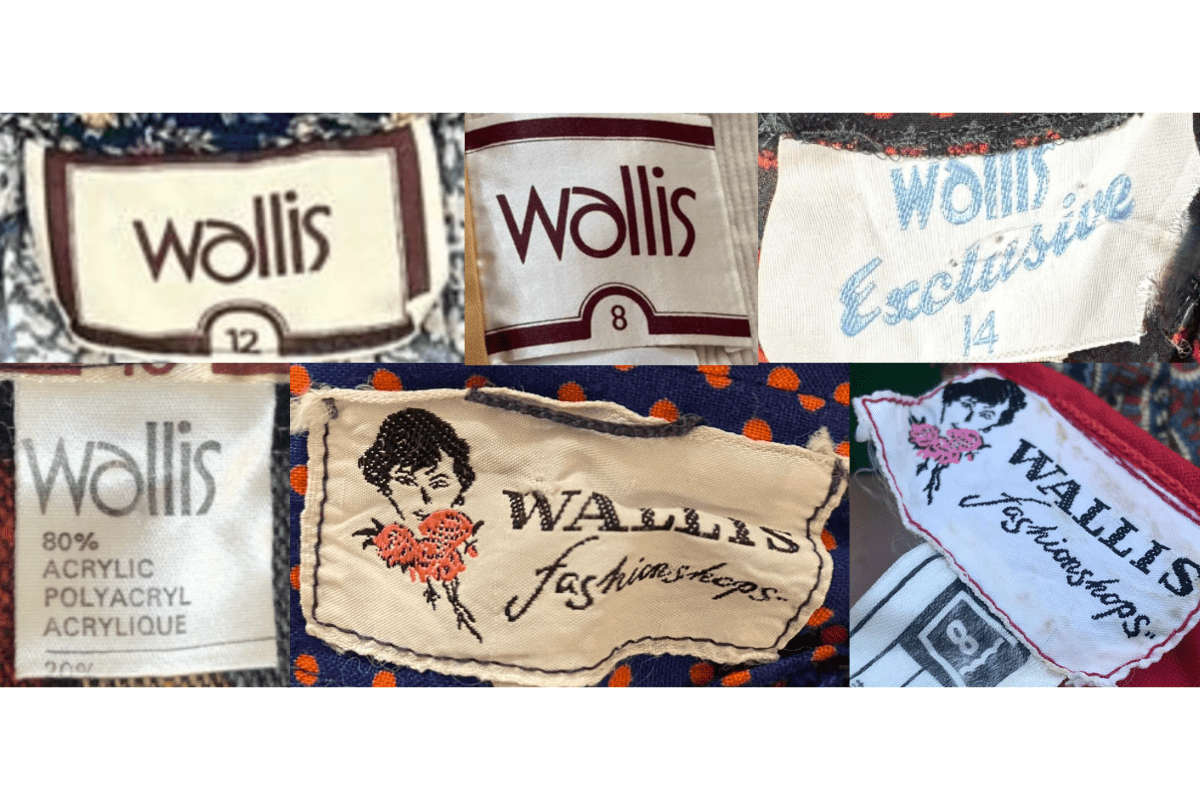
- Tags often feature a cursive “Wallis Exclusive” in light blue thread, giving a delicate and refined appearance.
- Some tags are rectangular with “Wallis” in a rounded, stylized font, typically with sizing information such as “10” or “12” integrated into the design.
- Materials used for the tags are generally soft fabrics, consistent with the era’s focus on quality and detail.
How to spot it
Tags often feature a cursive “Wallis Exclusive” in light blue thread, giving a delicate and refined appearance — confirms this label era.
Value signal
Solid vintage interest; 1970s pieces in clean condition attract steady demand.
1980–1989
1980s vintage Wallis tags
The 1980s tags feature a shift to a more modern, streamlined font, often with “Wallis” in a bold, minimalist design Tags from this era sometimes include additional product information, such as fabric composition (e.g., “80% Acrylic”) on a separate, attached tag.
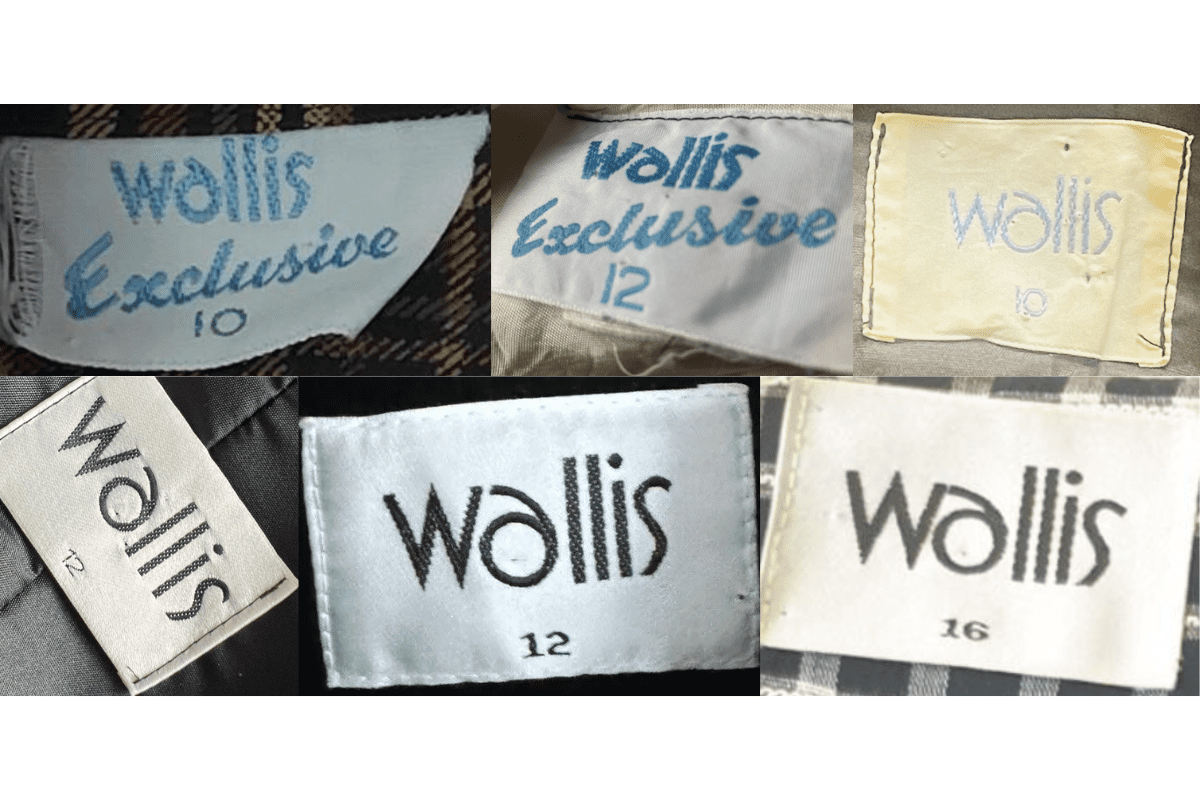
- The 1980s tags feature a shift to a more modern, streamlined font, often with “Wallis” in a bold, minimalist design.
- Tags from this era sometimes include additional product information, such as fabric composition (e.g., “80% Acrylic”) on a separate, attached tag.
- Designs also include tags with a distinctive red and black color scheme, emphasizing the brand’s evolving identity during this period.
How to spot it
The 1980s tags feature a shift to a more modern, streamlined font, often with “Wallis” in a bold, minimalist design — confirms this label era.
Value signal
Good vintage demand; 1980s label detail is a key value driver.
1990–1999
1990s vintage Wallis tags
Wallis tags in the 1990s moved towards a more standardized design with “Wallis” in a clean, bold font, often with clear size indicators Some tags from this decade feature “Wallis petite” in a smaller, refined font, catering to specific garment lines.
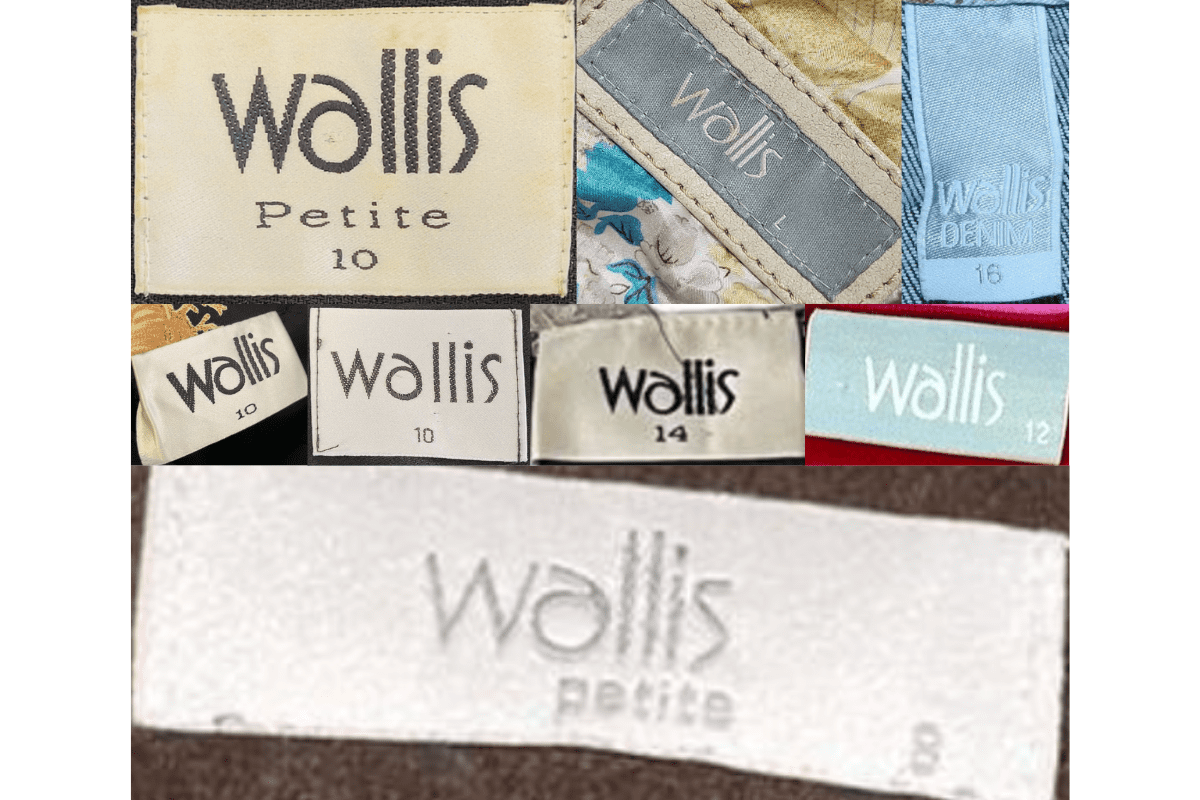
- Wallis tags in the 1990s moved towards a more standardized design with “Wallis” in a clean, bold font, often with clear size indicators.
- Some tags from this decade feature “Wallis petite” in a smaller, refined font, catering to specific garment lines.
- Tags were often found in neutral colors like black or beige, with a strong focus on simplicity and functionality.
How to spot it
Wallis tags in the 1990s moved towards a more standardized design with “Wallis” in a clean, bold font, often with clear size indicators — confirms this label era.
Value signal
Moderate collector interest; condition and completeness determine value.
2000–2009
2000s vintage Wallis tags
In the 2000s, Wallis tags continued to adopt a minimalist approach with “Wallis” in a sleek, sans-serif font, often embroidered onto the fabric Tags from this era might include additional labels for specific lines, such as “Wallis Denim,” indicating the diversification of the brand’s offerings.
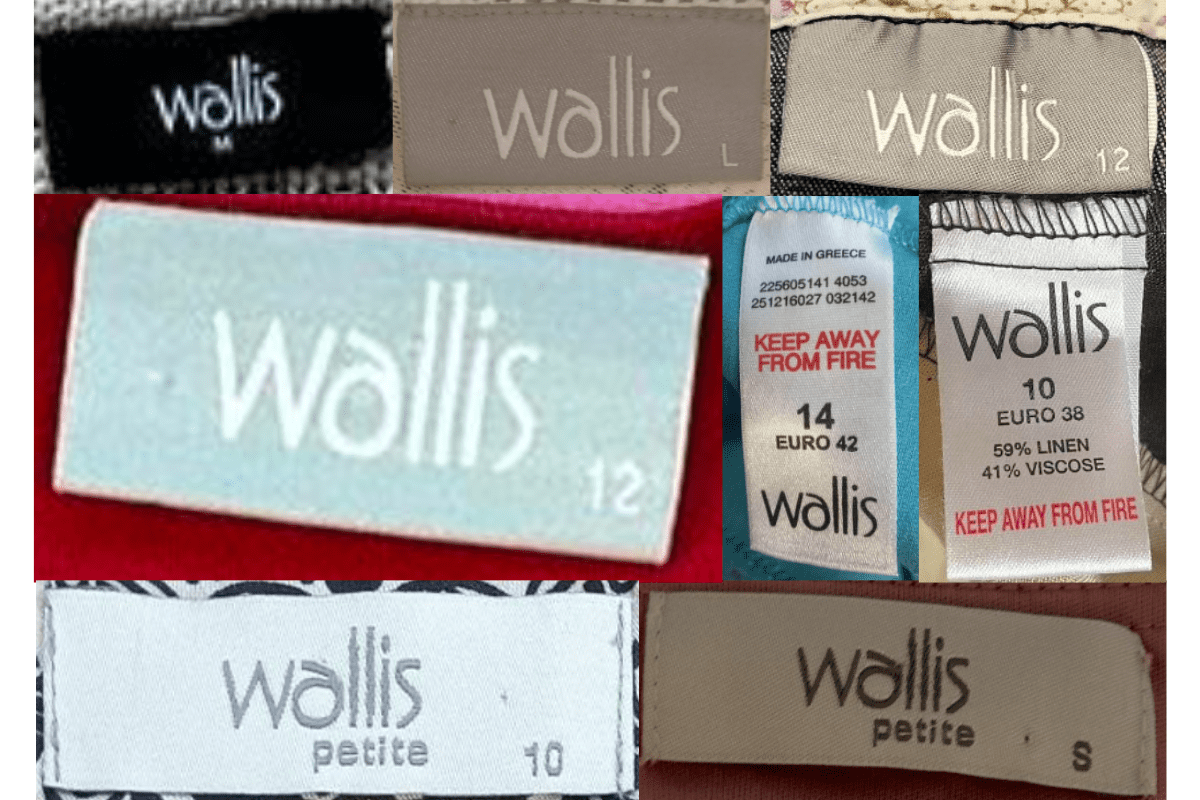
- In the 2000s, Wallis tags continued to adopt a minimalist approach with “Wallis” in a sleek, sans-serif font, often embroidered onto the fabric.
- Tags from this era might include additional labels for specific lines, such as “Wallis Denim,” indicating the diversification of the brand’s offerings.
- Materials used for the tags became more synthetic, reflecting the broader industry trends towards cost-effective production methods.
How to spot it
In the 2000s, Wallis tags continued to adopt a minimalist approach with “Wallis” in a sleek, sans-serif font, often embroidered onto the fabric — confirms this label era.
Value signal
Entry-level vintage; value driven by brand recognition and condition.
2010–2019
2010s vintage Wallis tags
The 2010s saw a further refinement in tag design, with “Wallis” often featured in a modern, streamlined font on a variety of background colors Tags in this decade frequently included additional information, such as care instructions and fabric compositions, printed in a clear, concise format.
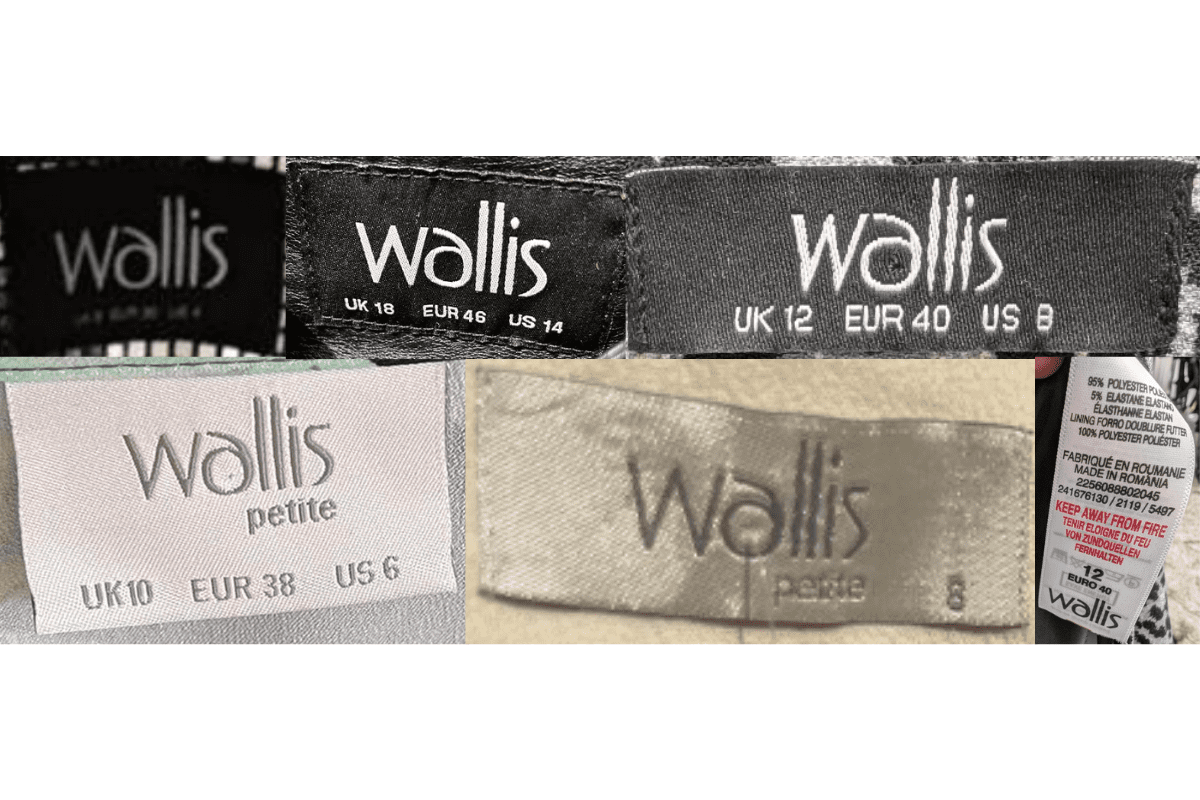
- The 2010s saw a further refinement in tag design, with “Wallis” often featured in a modern, streamlined font on a variety of background colors.
- Tags in this decade frequently included additional information, such as care instructions and fabric compositions, printed in a clear, concise format.
- The use of metallic or reflective materials on the tags became more common, adding a touch of contemporary style to the brand’s identity.
How to spot it
The 2010s saw a further refinement in tag design, with “Wallis” often featured in a modern, streamlined font on a variety of background colors — confirms this label era.
Value signal
Entry-level vintage; value driven by brand recognition and condition.