Isabel Marant
Parisian bohemian chic designer. 1990s founding tags use bold black sans-serif in a minimalist format; 2000s-10s refine the wordmark; the Etoile diffusion line has distinct tags.

- Origin
- France
- Founded
- 1994
- Category
- High Fashion
- Documented eras
- 3
How Isabel Marant labels evolved over time. Match the markers below against the tag in hand to place a garment in its era.
1990–1999
1990s vintage Isabel Marant tags
Feature simple, bold black text on white backgrounds Mostly rectangular tags with minimal design elements.
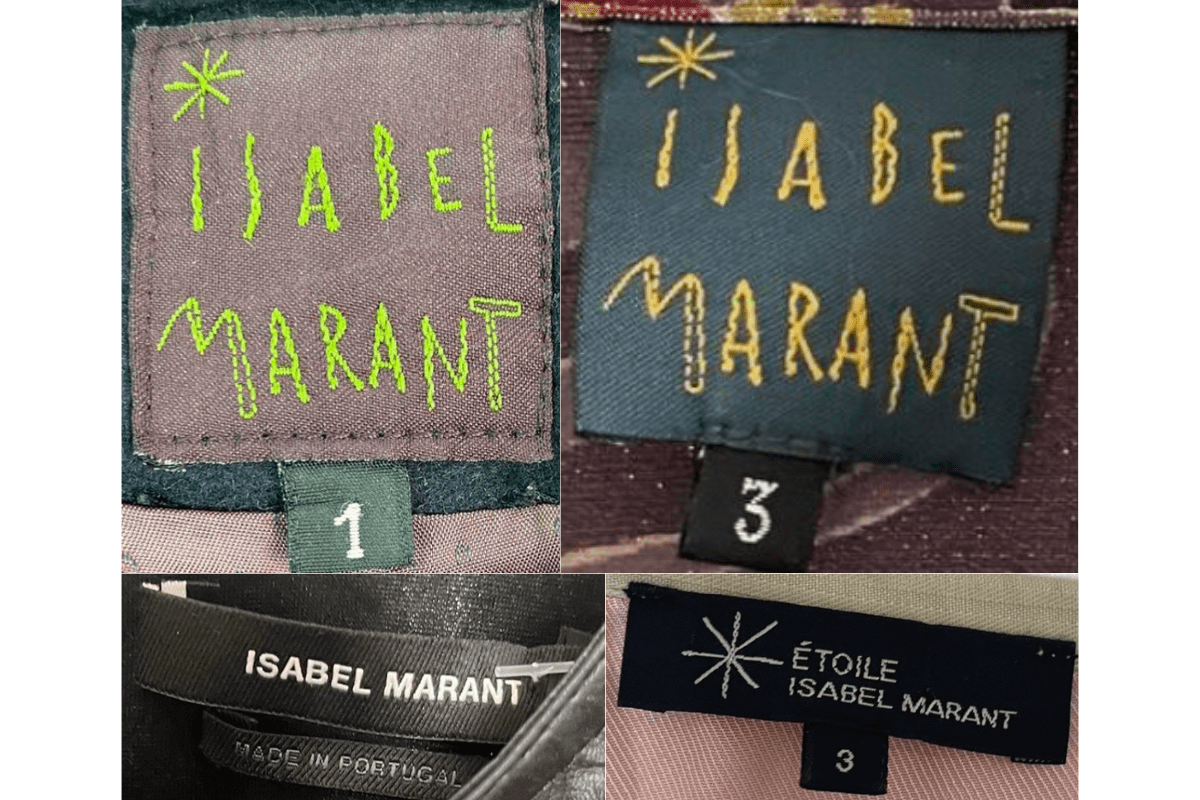
- Feature simple, bold black text on white backgrounds.
- Mostly rectangular tags with minimal design elements.
- Some tags include “Made in France” emphasizing local production.
How to spot it
Feature simple, bold black text on white backgrounds — confirms this label era.
Value signal
Moderate collector interest; condition and completeness determine value.
2000–2009
2000s vintage Isabel Marant tags
Introduction of more varied tag shapes and textures Country of production starts to diversify, with tags marked “Made in India” or “Made in Portugal”.
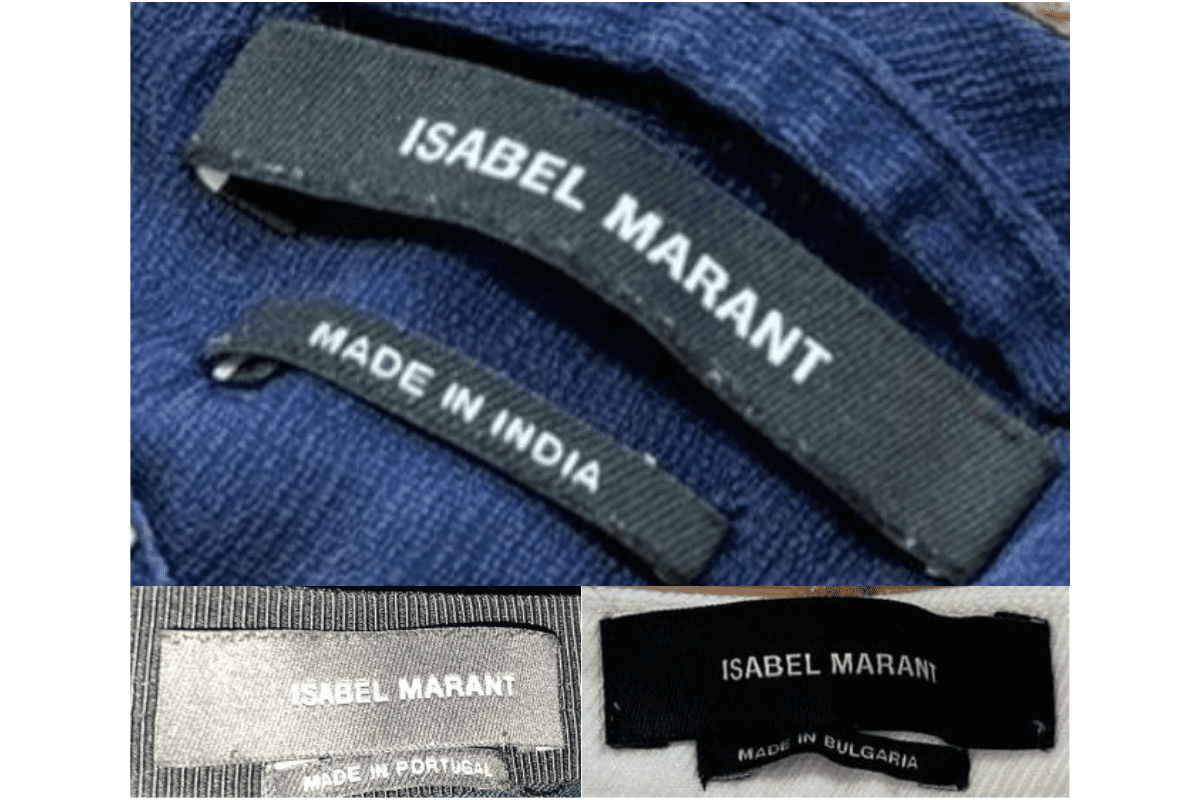
- Introduction of more varied tag shapes and textures.
- Country of production starts to diversify, with tags marked “Made in India” or “Made in Portugal”.
- Tags may include additional care instructions in multiple languages.
How to spot it
Introduction of more varied tag shapes and textures — confirms this label era.
Value signal
Entry-level vintage; value driven by brand recognition and condition.
2010–2019
2010s vintage Isabel Marant tags
Modern and sleek design elements are introduced Usage of black and white colors for a more contemporary look.
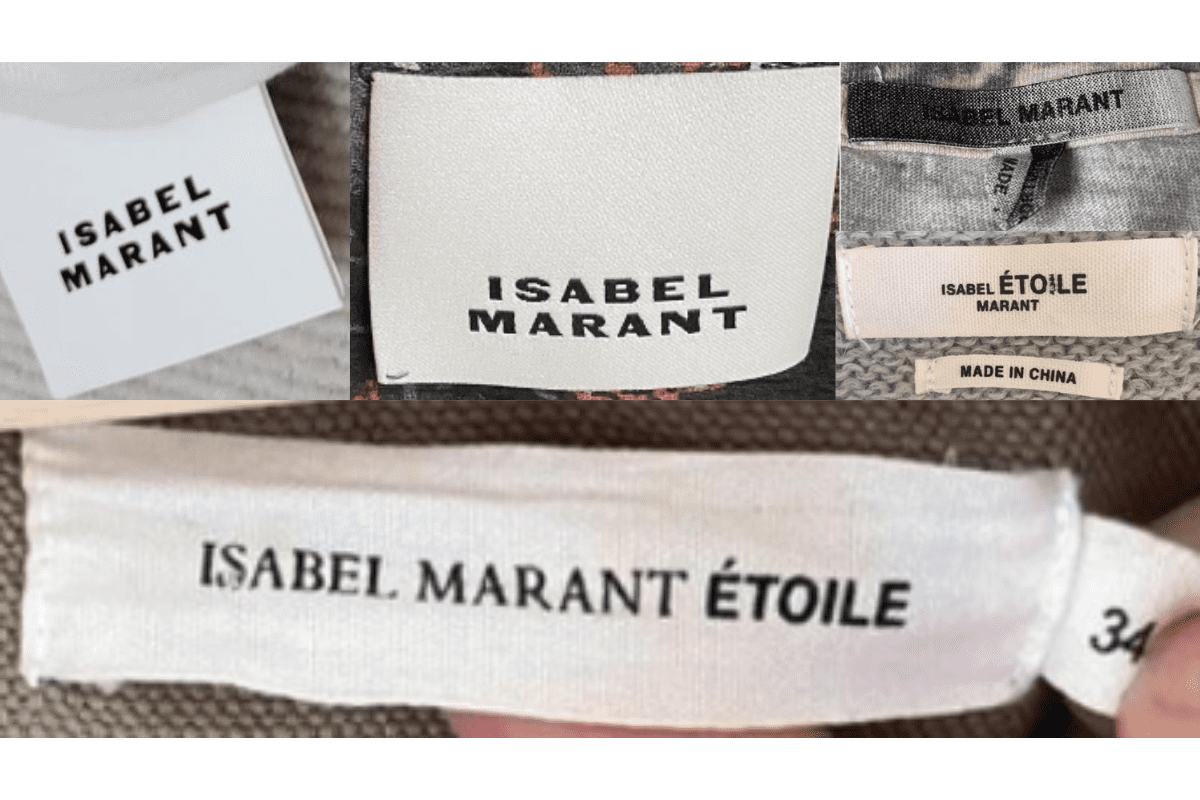
- Modern and sleek design elements are introduced.
- Usage of black and white colors for a more contemporary look.
- Inclusion of the ‘Étoile’ sub-brand on tags, often indicating a more casual line.
How to spot it
Modern and sleek design elements are introduced — confirms this label era.
Value signal
Entry-level vintage; value driven by brand recognition and condition.