Givenchy
Parisian maison founded by Hubert de Givenchy. Tags using the founder's full name, and the emblem added only in 2003, are the clean vintage tells.

- Origin
- France
- Founded
- 1952
- Category
- High Fashion
- Documented eras
- 7
How Givenchy labels evolved over time. Match the markers below against the tag in hand to place a garment in its era.
1950–1959
Founder's-Name Tags
The earliest tags often use the founder's name, Hubert de Givenchy, and reference Paris — white or black rectangles, usually with no sizing.
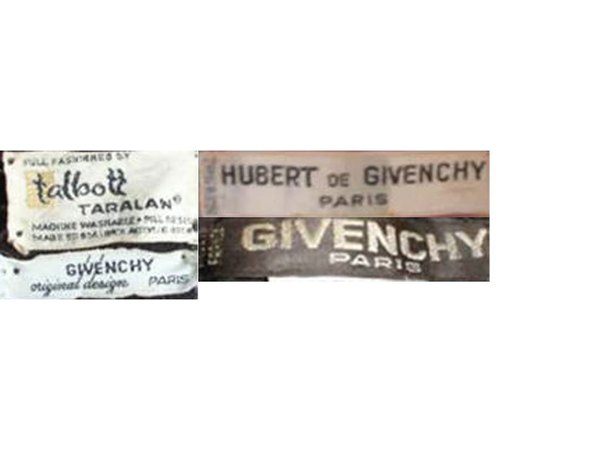
- The earliest tags often used versions of the founder’s name, Hubert de Givenchy
- Like many French luxury brands, the tags also refer to Paris, its founding city
- They are either white or black rectangles
- And usually do not have sizing information on them
How to spot it
The full 'Hubert de Givenchy' name, no sizing.
Value signal
Rare and collector-grade; 1950s couture-era Givenchy.
1960–1969
'Made in France' Tags
Tags generally dropped the full Hubert de Givenchy name, and 'Made in France' became more common.
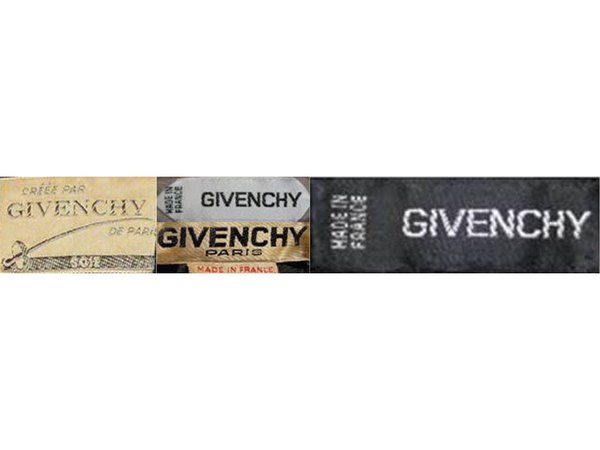
- In the 1960s tags generally stopped using the full name of Hubert de Givenchy
- It also became more common for tags to say ‘Made in France’
How to spot it
'Givenchy' without the full founder name, 'Made in France'.
Value signal
Strong; 60s Givenchy has steady collector demand.
1970–1979
Multi-Line Varied Tags
A wave of new lines meant tag shapes and sizes varied widely, the logo carrying small variations but always styled off the main mark.
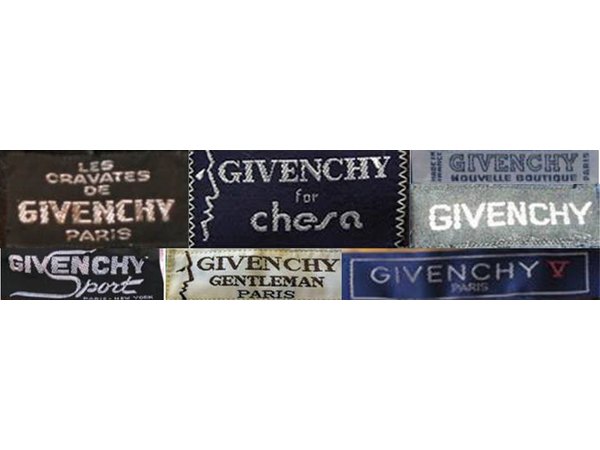
- The 1970s saw a proliferation of new lines from Givenchy, which was reflected across the tags
- The logo has small variations occasionally, but is always styled off the main brand logo
- Due to many lines beginning, the tag design in terms of shape and size varied a lot as shown in the below image
How to spot it
Highly varied tag shapes, the main-style logo.
Value signal
Desirable; 70s Givenchy is a sought era.
1980–1989
Clean White-and-Blue Tags
Tags grew cleaner and more uniform — often large white rectangles with the logo in blue.
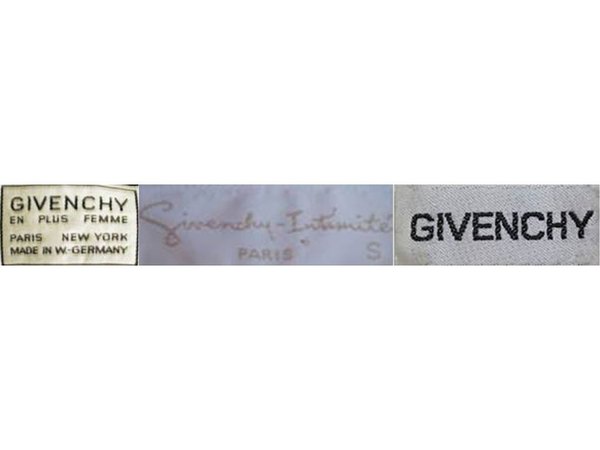
- The look of tags became a lot cleaner and more uniform in the 1980s
- They were often large white rectangles
- With the logo in blue
How to spot it
A large white tag with a blue logo.
Value signal
Solid; condition-driven resale.
1990–1999
Line-Name & Size Tabs
A consistent layout took hold — the logo below a line carrying the clothing line's name, with letter or number sizing on small added tags.
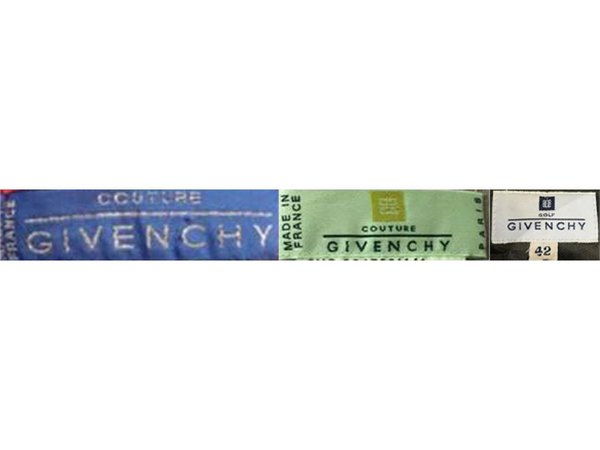
- A consistent approach of the logo below a line with the clothing lines name on it became prevalent
- Sizing either by letter or number was added on small additional tags
How to spot it
Logo over a line-name bar, sizing on a small tab.
Value signal
Solid 90s vintage; value tracks the piece.
2000–2009
Simplified Brand-and-Line Tags
The simplifying trend continued, with little beyond the brand and line name on the tag.
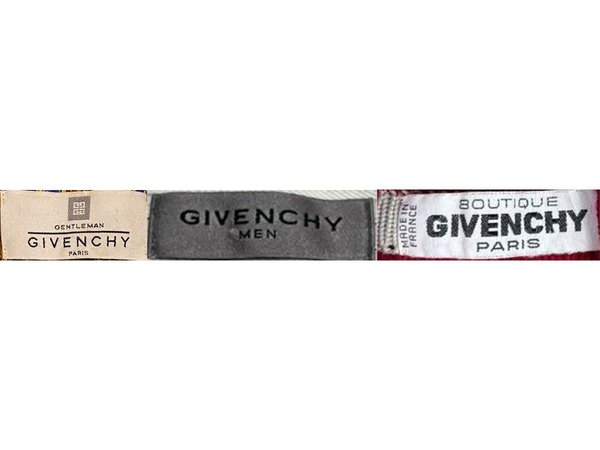
- The trend of simplifying the tags continued, with little information other than the brand and line name
How to spot it
A simplified tag with just brand and line name.
Value signal
Common; the Tisci-era pieces draw demand.
2010–2019
Simple White 'Paris' Tags
Modern tags are simple white rectangles, usually sewn in at the sides, carrying the brand name and 'Paris'.
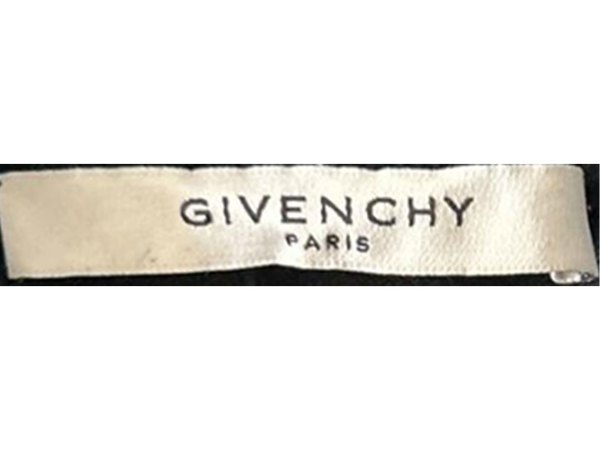
- Modern tags are simple white rectangles sewn in on the sides usually
- They have the brand name and Paris on them
How to spot it
A simple white side-sewn tag with 'Paris'.
Value signal
Modern; priced on the piece.