Waltah Clarke's
Hawaiian-wear label founded by Walter Clarke in Honolulu in the 1940s, celebrated for high-quality aloha shirts and resort wear that brought Polynesian style to the mainland. Vintage 1960s–80s labels feature brown-thread embroidery in a flowing script reading 'Waltah Clarke's' with a Hawaii location line; thread color and script style narrow pieces to that two-decade window.
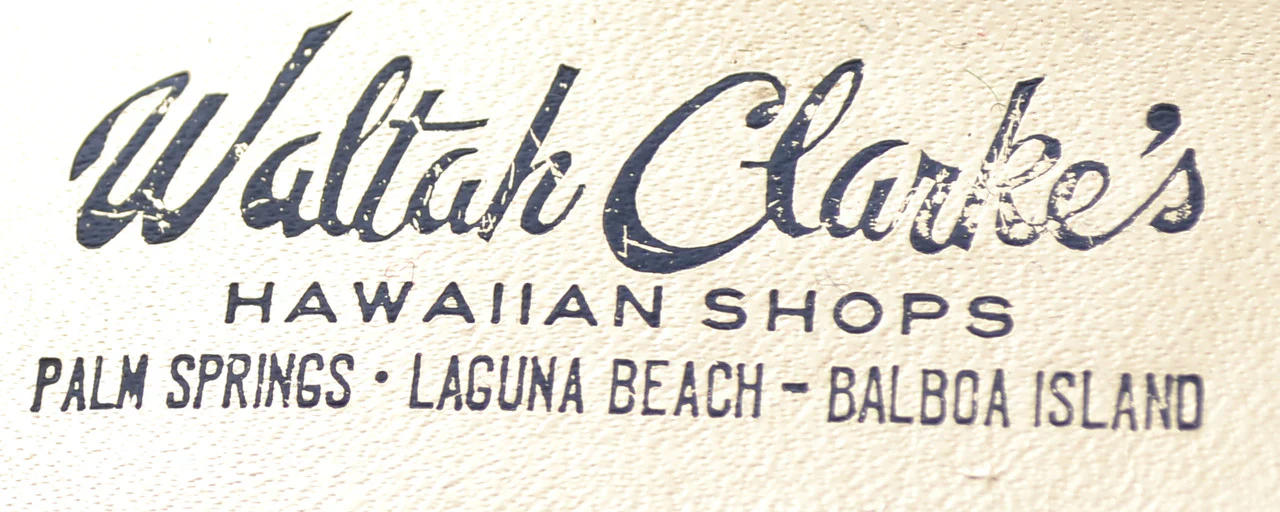
- Origin
- USA
- Founded
- 1940
- Category
- Outdoor & Heritage
- Documented eras
- 3
How Waltah Clarke's labels evolved over time. Match the markers below against the tag in hand to place a garment in its era.
1960–1969
1960s vintage Waltah Clarke’s tags
Bold serif font featuring “Waltah Clarke’s” in a handwritten script, often in contrasting colors Use of floral motifs, especially the hibiscus, indicating the Hawaiian theme.
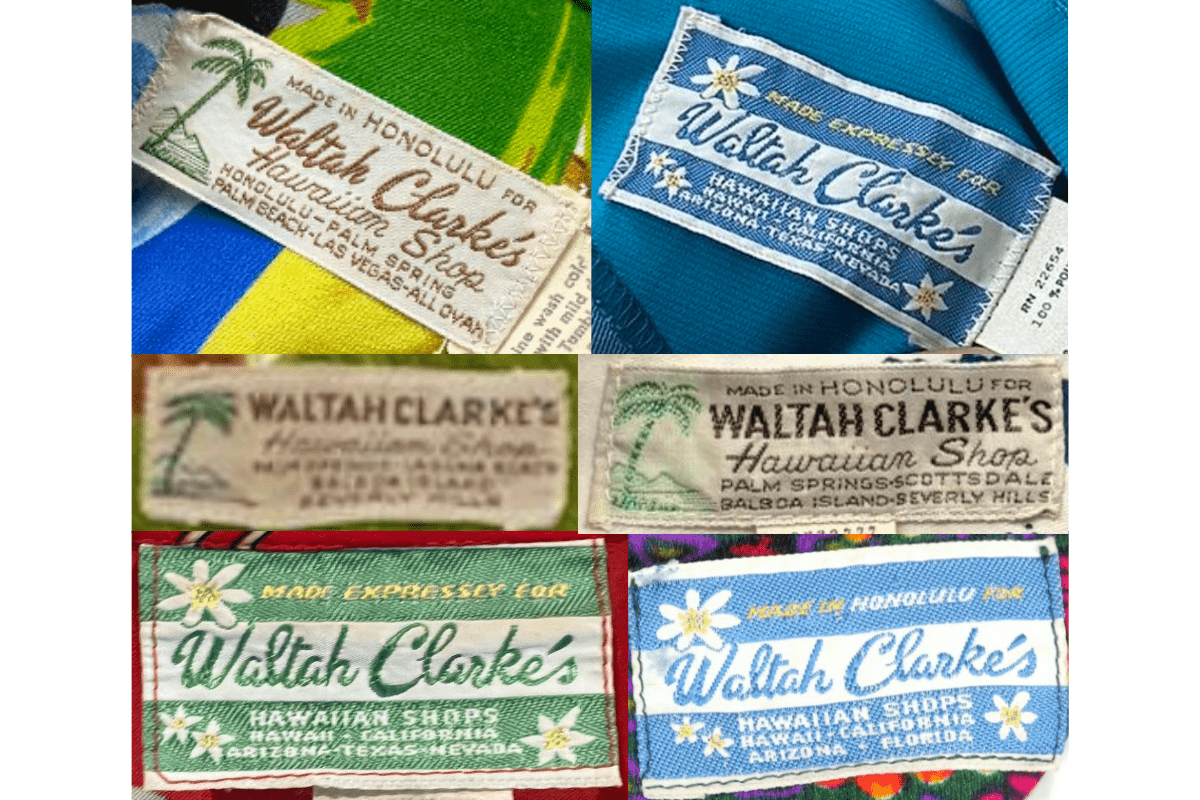
- Bold serif font featuring “Waltah Clarke’s” in a handwritten script, often in contrasting colors.
- Use of floral motifs, especially the hibiscus, indicating the Hawaiian theme.
- Includes “Made in Honolulu for” followed by various store locations, highlighting the brand’s Hawaiian roots.
- Tags often have a simplistic and clear design, with minimal use of colors.
How to spot it
Bold serif font featuring “Waltah Clarke’s” in a handwritten script, often in contrasting colors — confirms this label era.
Value signal
Strong collector demand; 1960s examples command premiums in good condition.
1970–1979
1970s vintage Waltah Clarke’s tags
Introduction of more vibrant colors, including blues and yellows, which reflect the bold fashion trends of the decade The tags often feature “Made Expressly for” or “Made in Honolulu for,” maintaining the brand’s connection to Hawaii.
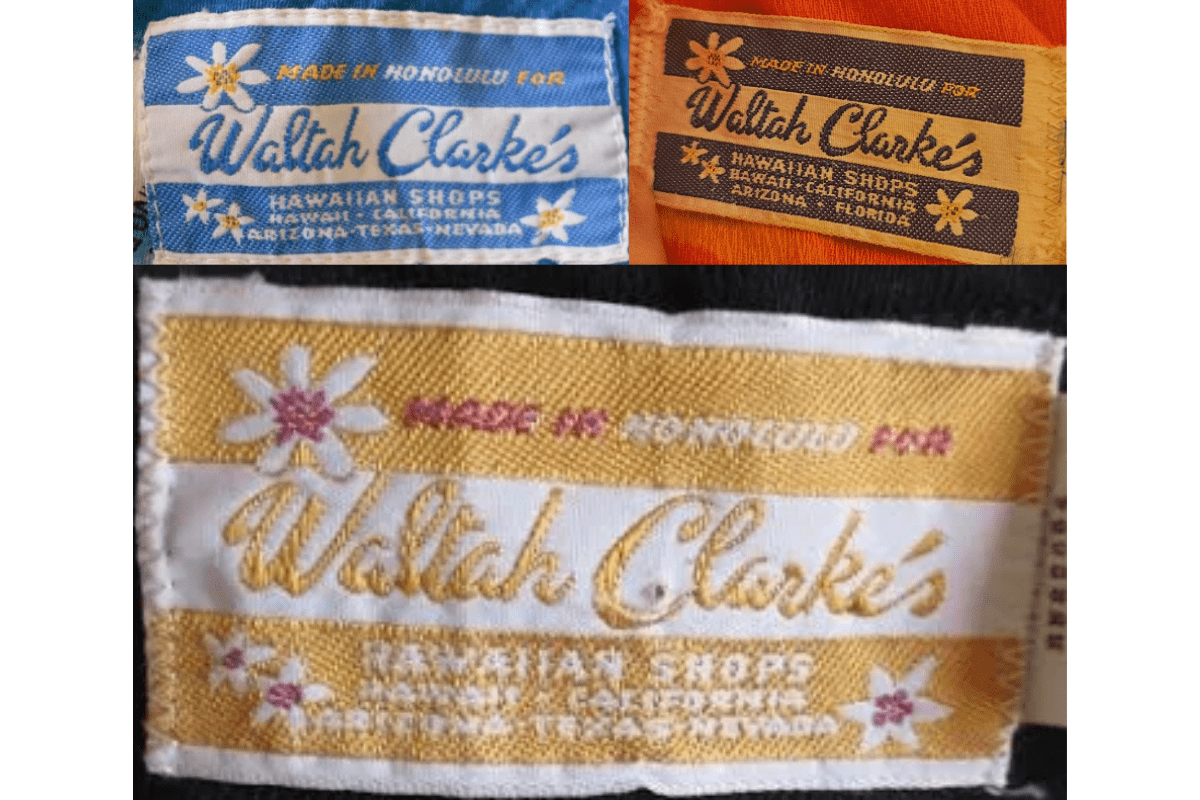
- Introduction of more vibrant colors, including blues and yellows, which reflect the bold fashion trends of the decade.
- The tags often feature “Made Expressly for” or “Made in Honolulu for,” maintaining the brand’s connection to Hawaii.
- Use of floral graphics continues, but with more detailed and colorful designs compared to the 1960s.
- Tags are larger and more elaborate, sometimes incorporating multiple fonts and colors for a striking appearance.
How to spot it
Introduction of more vibrant colors, including blues and yellows, which reflect the bold fashion trends of the decade — confirms this label era.
Value signal
Solid vintage interest; 1970s pieces in clean condition attract steady demand.
1980–1989
1980s vintage Waltah Clarke’s tags
Continued use of vibrant and contrasting colors, with tags often featuring a mix of blue, white, and yellow The font style becomes more playful and varied, reflecting the eclectic fashion sense of the 1980s.
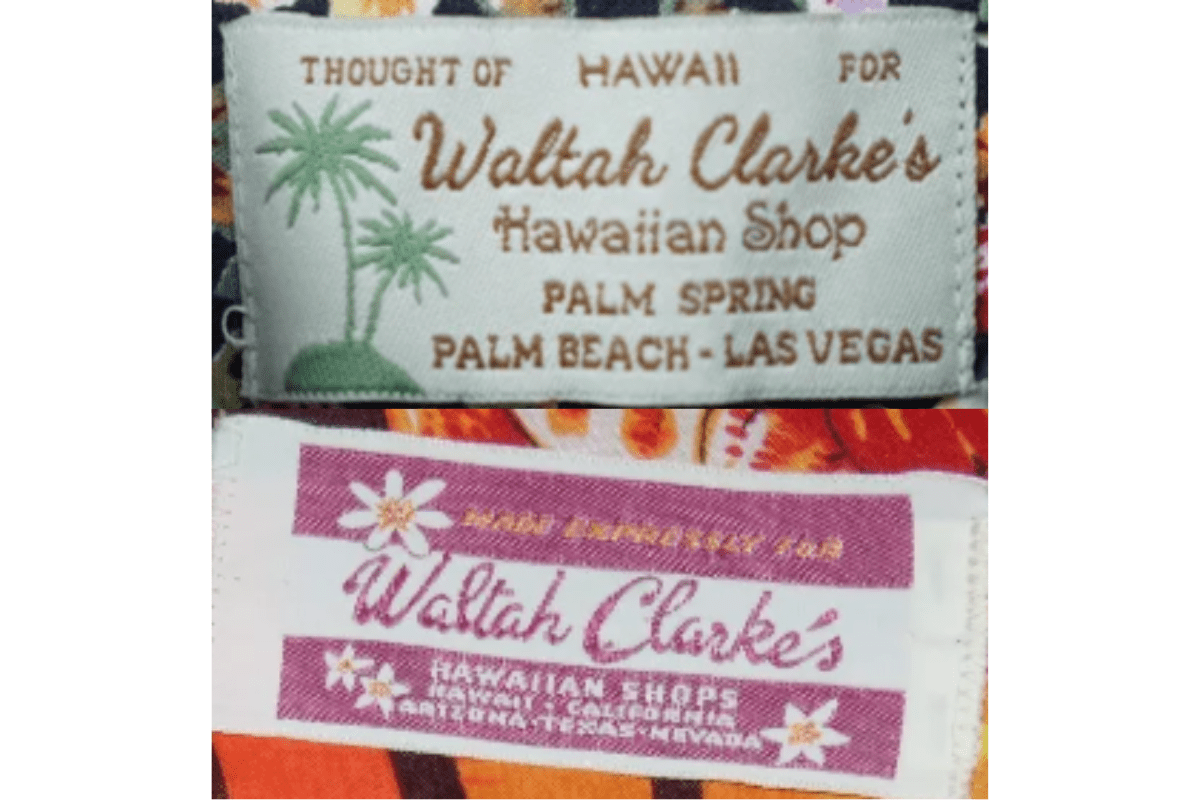
- Continued use of vibrant and contrasting colors, with tags often featuring a mix of blue, white, and yellow.
- The font style becomes more playful and varied, reflecting the eclectic fashion sense of the 1980s.
- Floral designs remain prominent, often with more intricate and larger motifs.
- The text “Made in Honolulu for” remains a staple, reinforcing the brand’s identity and origin.
How to spot it
Continued use of vibrant and contrasting colors, with tags often featuring a mix of blue, white, and yellow — confirms this label era.
Value signal
Good vintage demand; 1980s label detail is a key value driver.