Tu
Sainsbury's in-house fashion label launched in 2004. The square 'TU' logo with a minimalist design marks the 2000s founding era; 'WOMAN', 'KIDS', and 'MAN' sub-descriptors track the evolving 2010s range.
- Origin
- England
- Founded
- 2004
- Category
- Designer & Casual
- Documented eras
- 2
How Tu labels evolved over time. Match the markers below against the tag in hand to place a garment in its era.
2000–2009
2000s vintage Tu tags
Features a square design with the “TU” logo prominently displayed Minimalistic approach with the logo often enclosed in a square or rectangle.
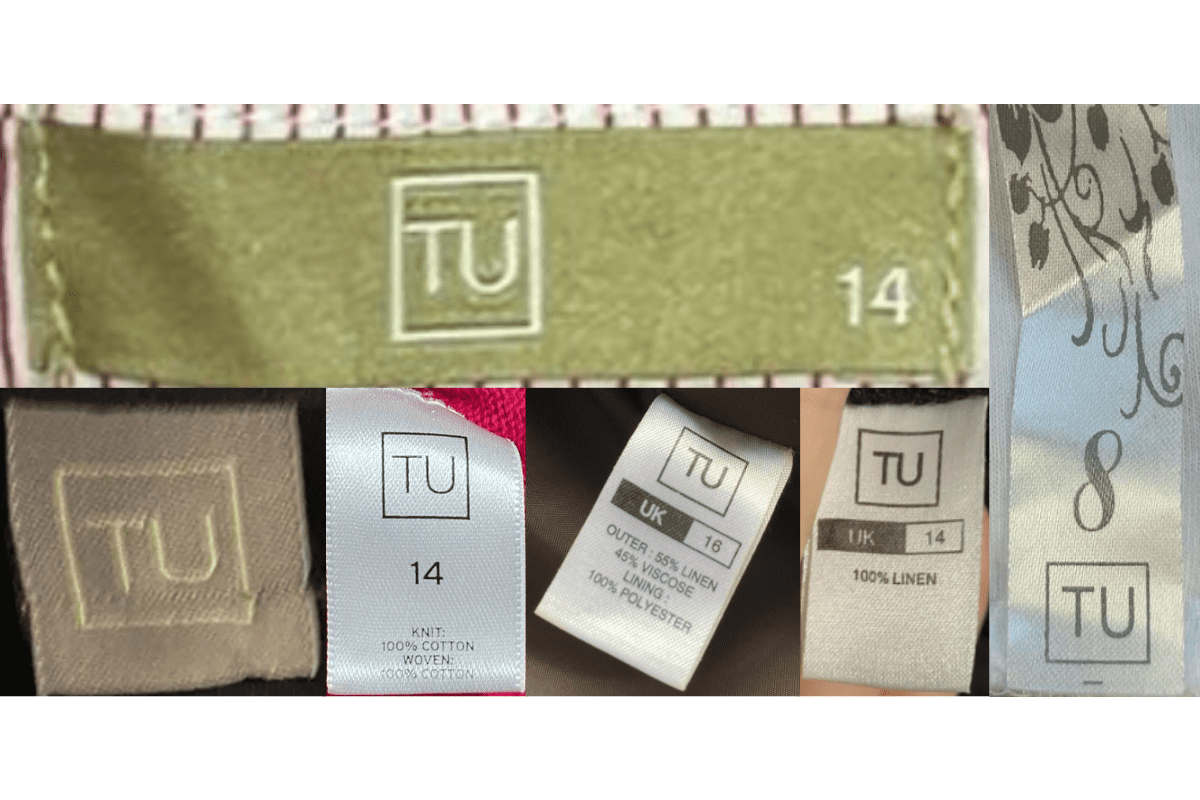
- Features a square design with the “TU” logo prominently displayed.
- Minimalistic approach with the logo often enclosed in a square or rectangle.
- Tags are generally plain, with some showing basic information such as size or material composition directly below the logo.
- Some tags include the logo embossed or printed in a monochrome style, reflecting the minimalist trend of the era.
How to spot it
Features a square design with the “TU” logo prominently displayed — confirms this label era.
Value signal
Entry-level vintage; value driven by brand recognition and condition.
2010–2019
2010s vintage Tu tags
Introduction of more detailed tags with specific descriptors like “WOMAN,” “KIDS,” or “MAN.” Tags often include additional branding elements like “PREMIUM CLOTHING” or phrases highlighting the garment’s comfort and versatility.
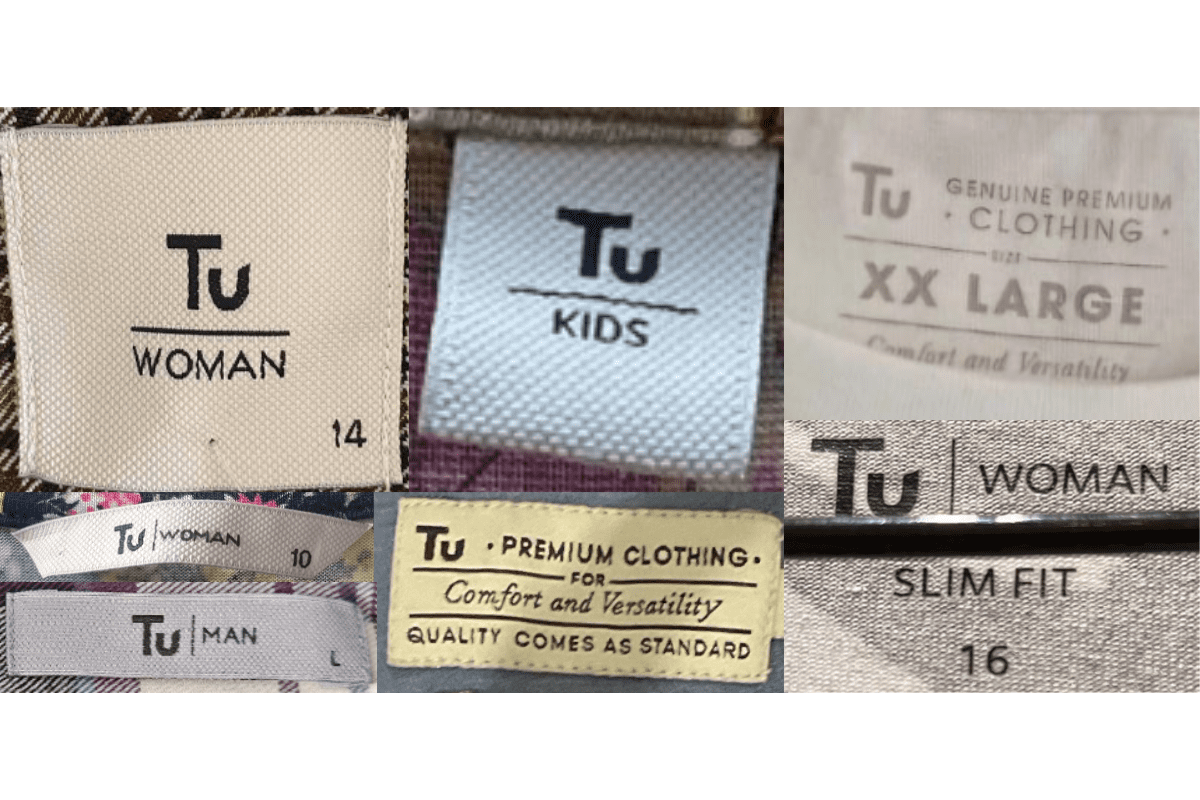
- Introduction of more detailed tags with specific descriptors like “WOMAN,” “KIDS,” or “MAN.”.
- Tags often include additional branding elements like “PREMIUM CLOTHING” or phrases highlighting the garment’s comfort and versatility.
- More variation in tag shapes and sizes, with the logo remaining a central feature but accompanied by more extensive information.
- The use of different materials for tags, including fabric and woven styles, is common in this period, reflecting a more diverse approach to branding.
How to spot it
Introduction of more detailed tags with specific descriptors like “WOMAN,” “KIDS,” or “MAN.” — confirms this label era.
Value signal
Entry-level vintage; value driven by brand recognition and condition.