Lyle & Scott
The Scottish knitwear house, founded 1874, defined by its golden-eagle emblem and its golf-and-terrace heritage.
- Origin
- Scotland
- Founded
- 1874
- Category
- Athletic & Streetwear
- Documented eras
- 7
How Lyle & Scott labels evolved over time. Match the markers below against the tag in hand to place a garment in its era.
1950–1959
Understated Wool Tags
Simple understated tags focused on the brand name and material, in script or cursive fonts, commonly noting '100% Wool' or 'Pure New Wool'.
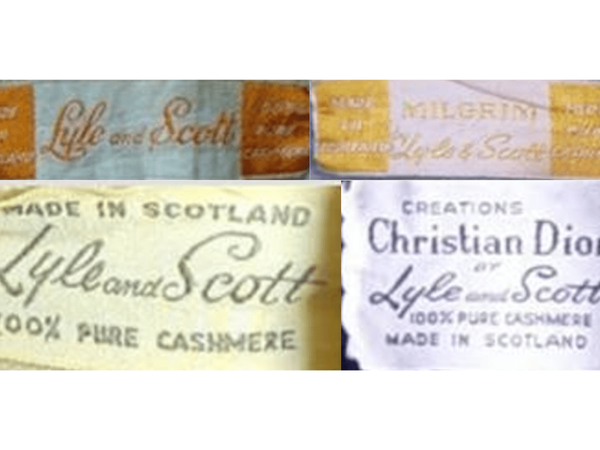
- Often simple and understated with a focus on the brand name and material composition.
- Typically featured in script or cursive fonts to emphasize elegance and high quality.
- Common materials mentioned include “100% Wool” or “Pure New Wool”.
How to spot it
An understated script tag noting pure wool.
Value signal
Rare; 1950s Lyle & Scott is a genuine collector find.
1960–1969
Golden-Eagle Emblem Tags
The golden-eagle emblem — a golf symbol that became the brand's signature — was introduced, on sturdy tags with bolder 1960s colours.
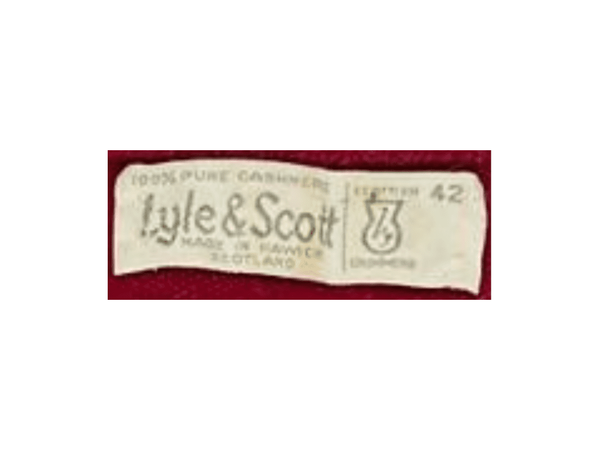
- Introduction of the golden eagle logo, a symbol of golf which later became synonymous with the brand.
- Tags frequently made from sturdy materials to match the durability of the garments.
- Bolder colors in tags start appearing, reflecting the vibrant styles of the 1960s.
How to spot it
The first golden-eagle emblem on the tag.
Value signal
Strong; 60s eagle-emblem Lyle & Scott is sought.
1970–1979
'Made in Scotland' Care Tags
Care instructions and fabric content added, more detailed colourful designs, tags frequently carrying 'Made in Scotland'.
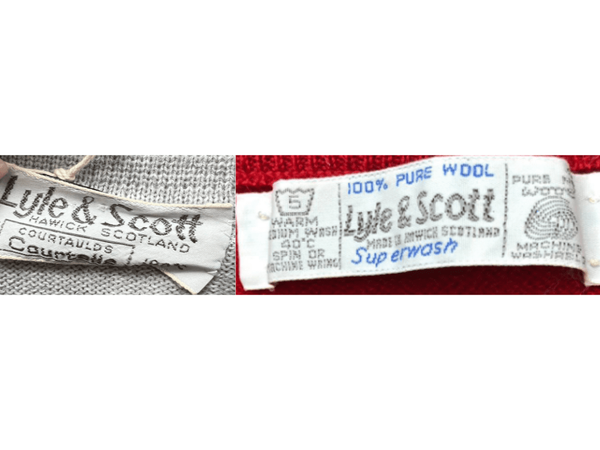
- Inclusion of care instructions and fabric content, reflecting the era’s shift towards garment care awareness.
- More detailed and colorful designs in the tags, aligning with the flamboyant fashion trends of the 1970s.
- Tags often include the text “Made in Scotland”, emphasizing the brand’s proud Scottish heritage.
How to spot it
'Made in Scotland' with the eagle emblem.
Value signal
Desirable; 70s Scottish-made knitwear sells well.
1980–1989
Collaboration & Blend Tags
Tags sometimes note collaborations, multiple fonts and styles on one tag, and synthetic blends like polyester reflecting the textile shifts.
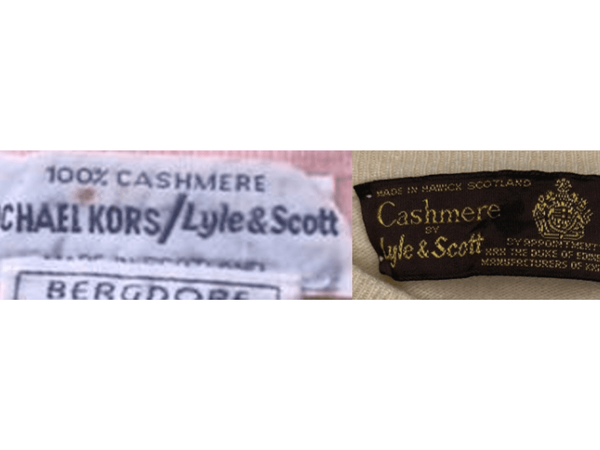
- Tags often feature collaboration details, such as with designer Michael Kors, showcasing the brand’s expansion into broader markets.
- Use of multiple fonts and styles in a single tag to catch the eye and stand out in a competitive market.
- Increased use of synthetic blends mentioned on tags, like “Polyester” mixtures, indicating the textile innovations of the time.
How to spot it
Multi-font tags, sometimes noting collaborations.
Value signal
Solid; condition-driven resale.
1990–1999
Prominent Eagle Tags
Bold clear branding with the eagle logo more prominent, modern minimalist typography, and barcodes appearing.
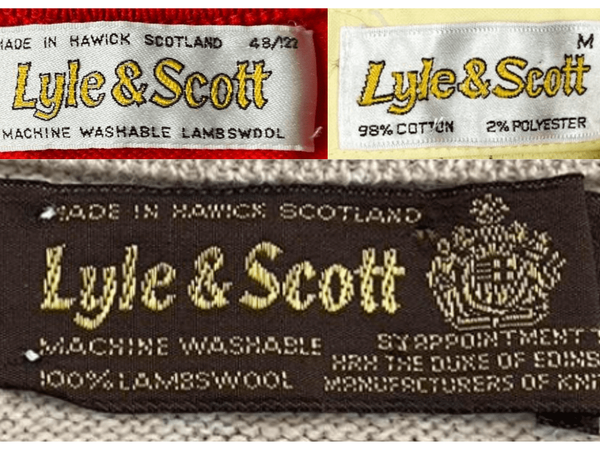
- Bold and clear branding with the iconic eagle logo becoming more prominent.
- Tags incorporate modern typography and designs, with sharp and minimalist aesthetics.
- Introduction of barcodes and other modern identifiers to streamline production and sales processes.
How to spot it
A prominent eagle logo, modern minimalist type.
Value signal
Solid 90s vintage; terrace-culture demand is steady.
2000–2009
Large-Logo Website Tags
Larger logos with the website address added for the digital age, varied paper and fabric tag materials, the 'Made in Scotland' tagline kept.
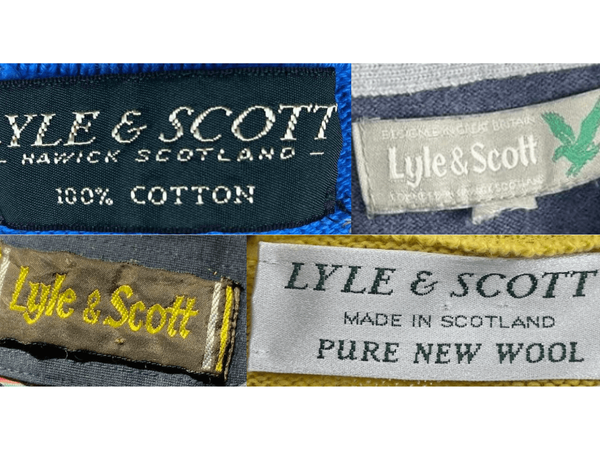
- Emphasis on branding with larger logos and inclusion of the website address, aligning with the digital age.
- Variety in tag materials, including both paper and fabric to cater to diverse garment types.
- Continued use of the “Made in Scotland” tagline, maintaining the heritage while blending traditional and modern styles.
How to spot it
A large eagle logo, sometimes with a website URL.
Value signal
Common; modest resale.
2010–2019
Sleek Minimalist Tags
Sleek minimalist designs with cleaner lines, contemporary materials, tags often highlighting collaborations and special editions.
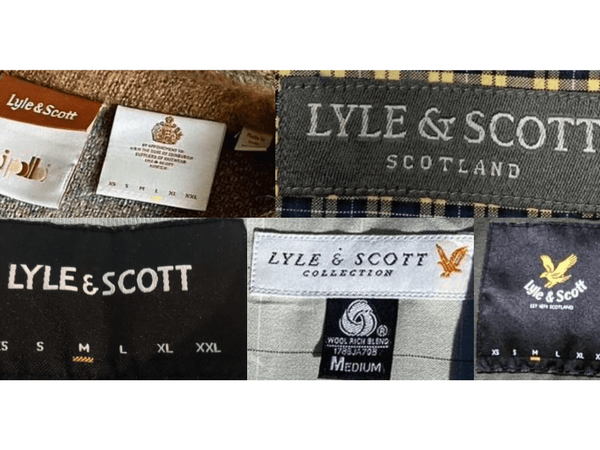
- Modern and sleek designs with minimalistic text and cleaner lines.
- Use of contemporary materials and techniques in tag production for sustainability and innovation.
- Tags often highlight collaborations and special editions, reflecting the brand’s adaptability and appeal to a modern audience.
How to spot it
A sleek minimalist tag, simplified eagle.
Value signal
Modern; priced on the piece.