Uniqlo
Japanese casual-wear chain founded in Hiroshima in 1984 under the 'Unique Clothing Warehouse' banner before shortening to Uniqlo by the early 1990s. Early-era tags from 1984–1991 carry a two-stylized-figure logo and the full 'Unique Clothing Warehouse' wording; later 1990s labels switch to the compact red-box Uniqlo wordmark.
- Origin
- Japan
- Founded
- 1984
- Category
- Designer & Casual
- Documented eras
- 2
How Uniqlo labels evolved over time. Match the markers below against the tag in hand to place a garment in its era.
2000–2009
2000s vintage Uniqlo tags
Features the “UT” branding prominently Square or rectangular tags with bold serif lettering.
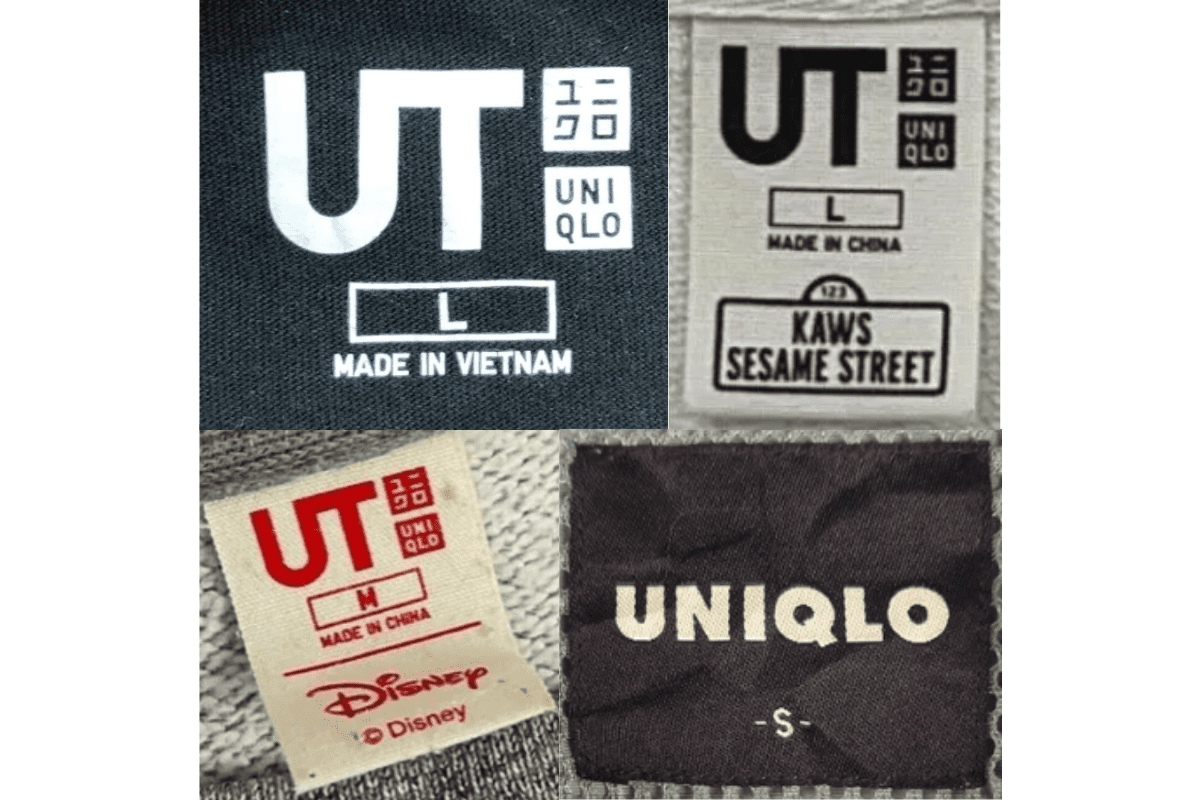
- Features the “UT” branding prominently.
- Square or rectangular tags with bold serif lettering.
- Often includes the country of manufacture such as “Made in Vietnam” or “Made in China.”.
- Collaborations are sometimes mentioned directly on the tags, such as “KAWS Sesame Street” or “Disney.
How to spot it
Features the “UT” branding prominently — confirms this label era.
Value signal
Entry-level vintage; value driven by brand recognition and condition.
2010–2019
2010s vintage Uniqlo tags
Modern layouts with the classic Uniqlo logo Tags feature minimalist designs, often with black and white color schemes.
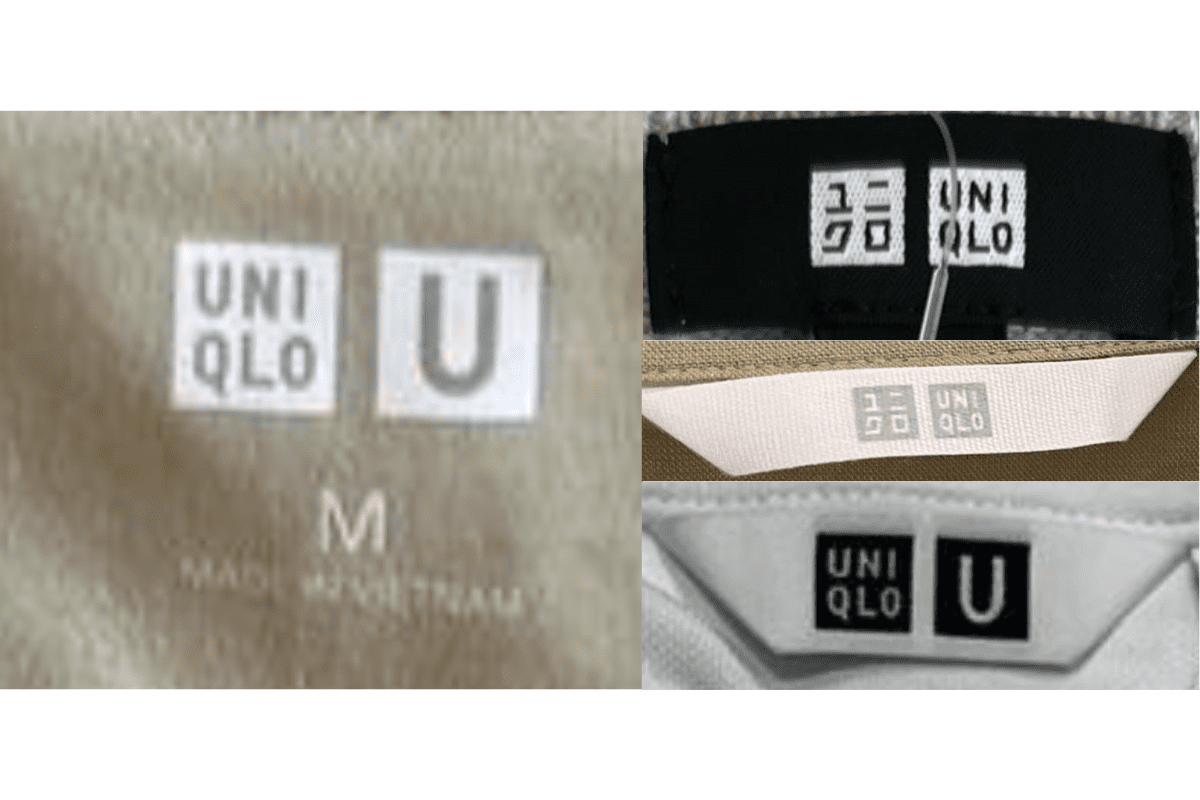
- Modern layouts with the classic Uniqlo logo.
- Tags feature minimalist designs, often with black and white color schemes.
- Introduction of the “Uniqlo U” line with distinctive tags indicating this sub-brand.
- Use of different materials and styles for tags, ranging from fabric to printed labels.
How to spot it
Modern layouts with the classic Uniqlo logo — confirms this label era.
Value signal
Entry-level vintage; value driven by brand recognition and condition.