Bloomingdale's
New York City luxury department store founded in 1861 by brothers Joseph and Lyman Bloomingdale, evolving from a European fashions shop into one of America's most iconic retail institutions. Early 20th-century store labels display an elegant script 'Bloomingdale's'; the mid-century shift to a bolder modernist wordmark with 'New York' location text helps date private-label garments to their decade.

- Origin
- USA
- Founded
- 1861
- Category
- Designer & Casual
- Documented eras
- 6
How Bloomingdale's labels evolved over time. Match the markers below against the tag in hand to place a garment in its era.
1950–1959
1950s vintage Bloomingdale’s tags
Simple and elegant design, often with cursive or serif fonts Tags typically made of woven fabric or satin.
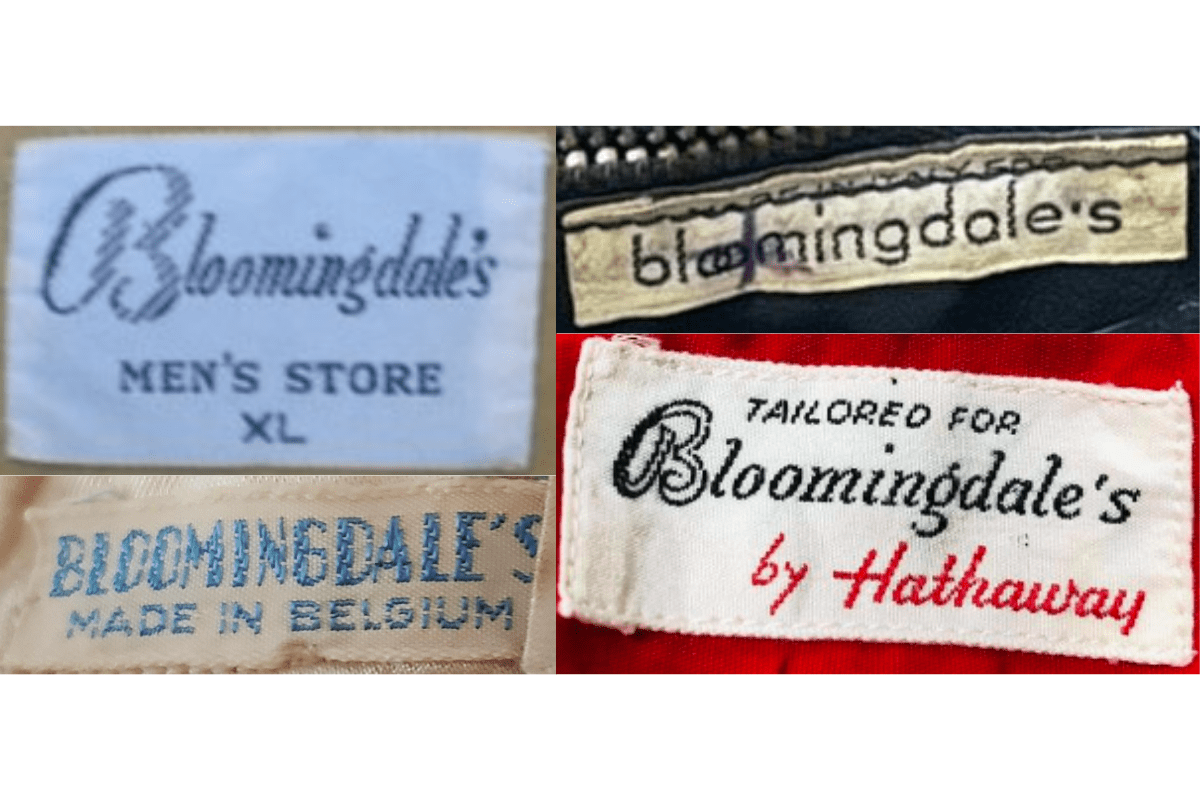
- Simple and elegant design, often with cursive or serif fonts.
- Tags typically made of woven fabric or satin.
- Often includes phrases like “Made Expressly for Bloomingdale’s.
How to spot it
Simple and elegant design, often with cursive or serif fonts — confirms this label era.
Value signal
Rare; pre-1960 examples are collector-grade and seldom surface.
1960–1969
1960s vintage Bloomingdale’s tags
Introduction of more colorful and bold designs Emphasis on the “Sixties East” branding.
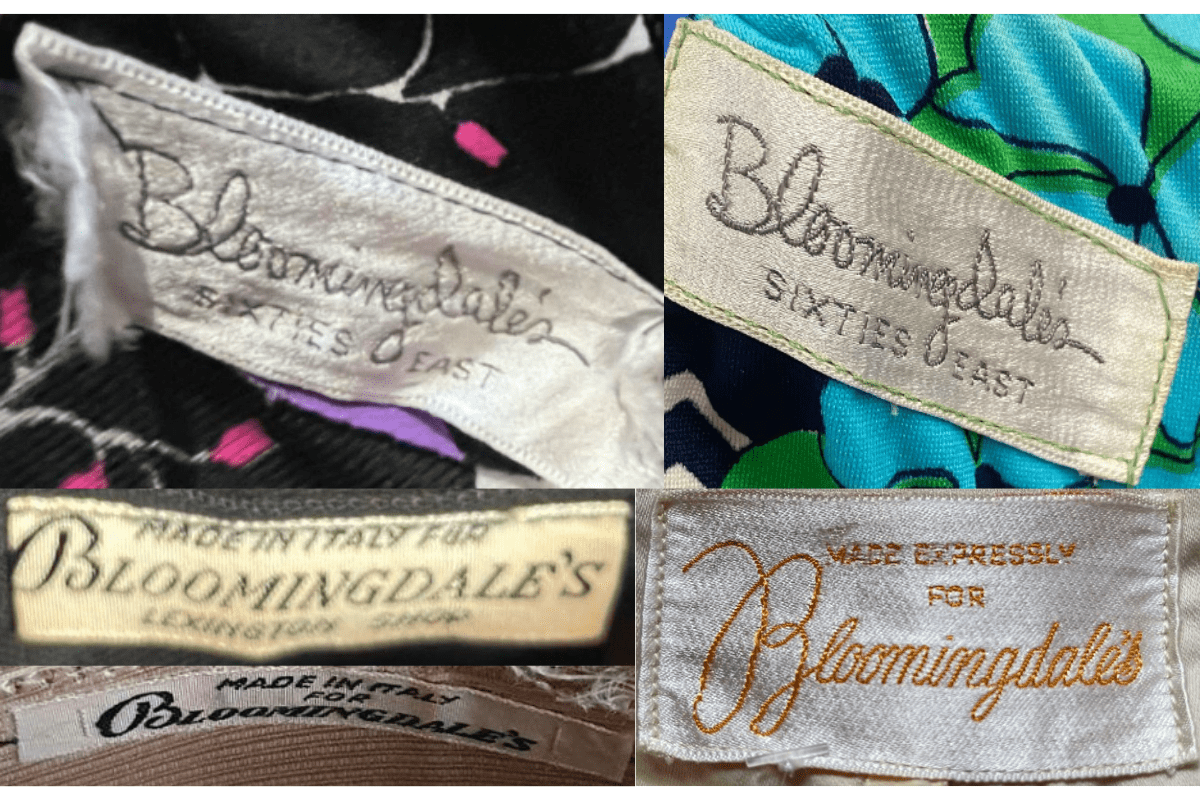
- Introduction of more colorful and bold designs.
- Emphasis on the “Sixties East” branding.
- Tags often feature cursive script and are made from satin or other smooth fabrics.
How to spot it
Introduction of more colorful and bold designs — confirms this label era.
Value signal
Strong collector demand; 1960s examples command premiums in good condition.
1970–1979
1970s vintage Bloomingdale’s tags
Tags showcase bold and vibrant colors, reflecting the fashion trends of the era Typography varies from cursive to bold serif fonts.
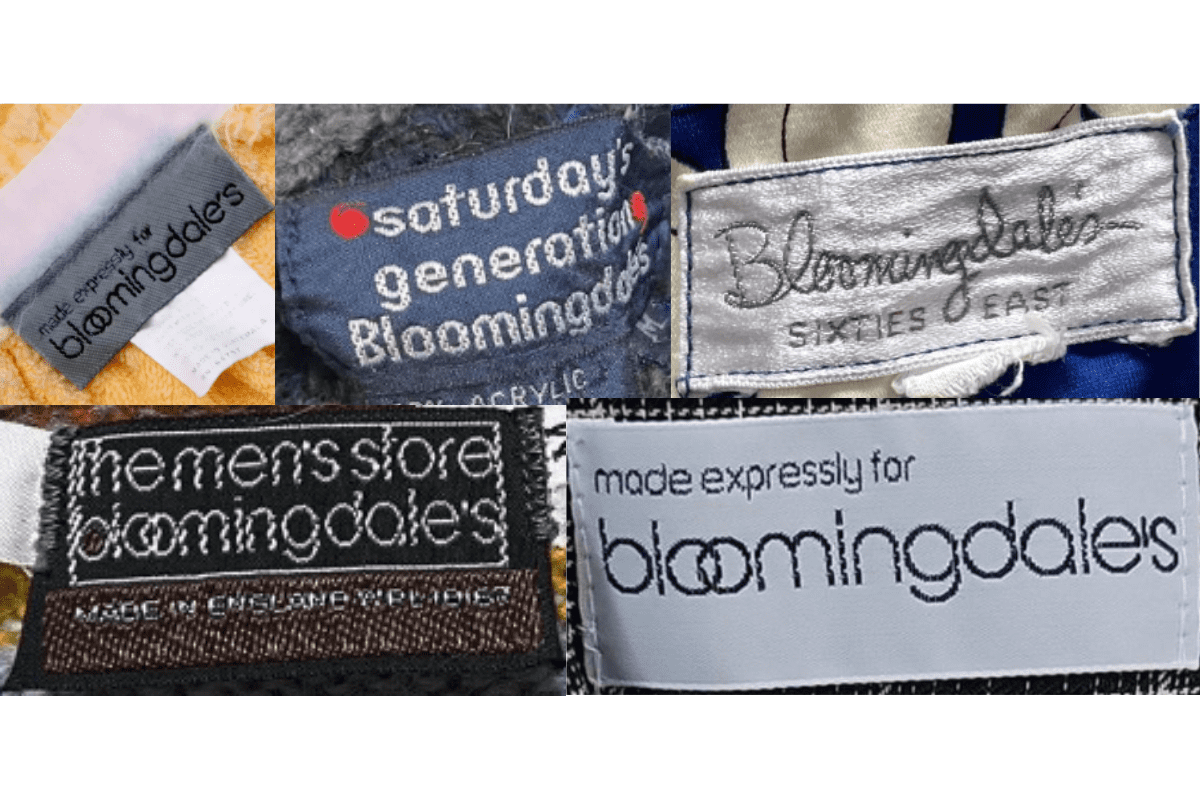
- Tags showcase bold and vibrant colors, reflecting the fashion trends of the era.
- Typography varies from cursive to bold serif fonts.
- Commonly includes specific line names like “Lexington Shop.”.
How to spot it
Tags showcase bold and vibrant colors, reflecting the fashion trends of the era — confirms this label era.
Value signal
Solid vintage interest; 1970s pieces in clean condition attract steady demand.
1980–1989
1980s vintage Bloomingdale’s tags
Tags often use a mix of bold and simple typography Introduction of specific sub-brands such as “The Men’s Store.”.
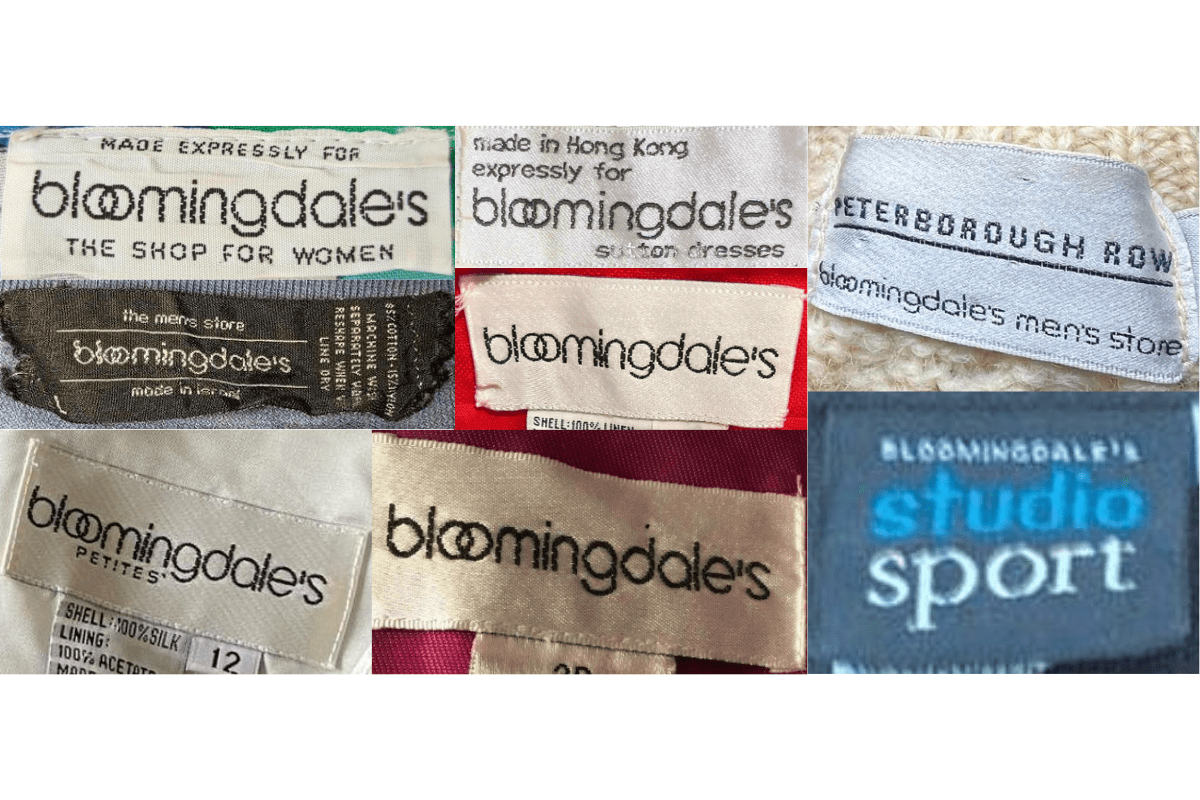
- Tags often use a mix of bold and simple typography.
- Introduction of specific sub-brands such as “The Men’s Store.”.
- Use of high-quality materials, sometimes with intricate woven designs.
How to spot it
Tags often use a mix of bold and simple typography — confirms this label era.
Value signal
Good vintage demand; 1980s label detail is a key value driver.
1990–1999
1990s vintage Bloomingdale’s tags
Modernization of the tag design with cleaner lines and fonts Continued use of sub-brands and exclusive lines like “Sutton Studio.”.
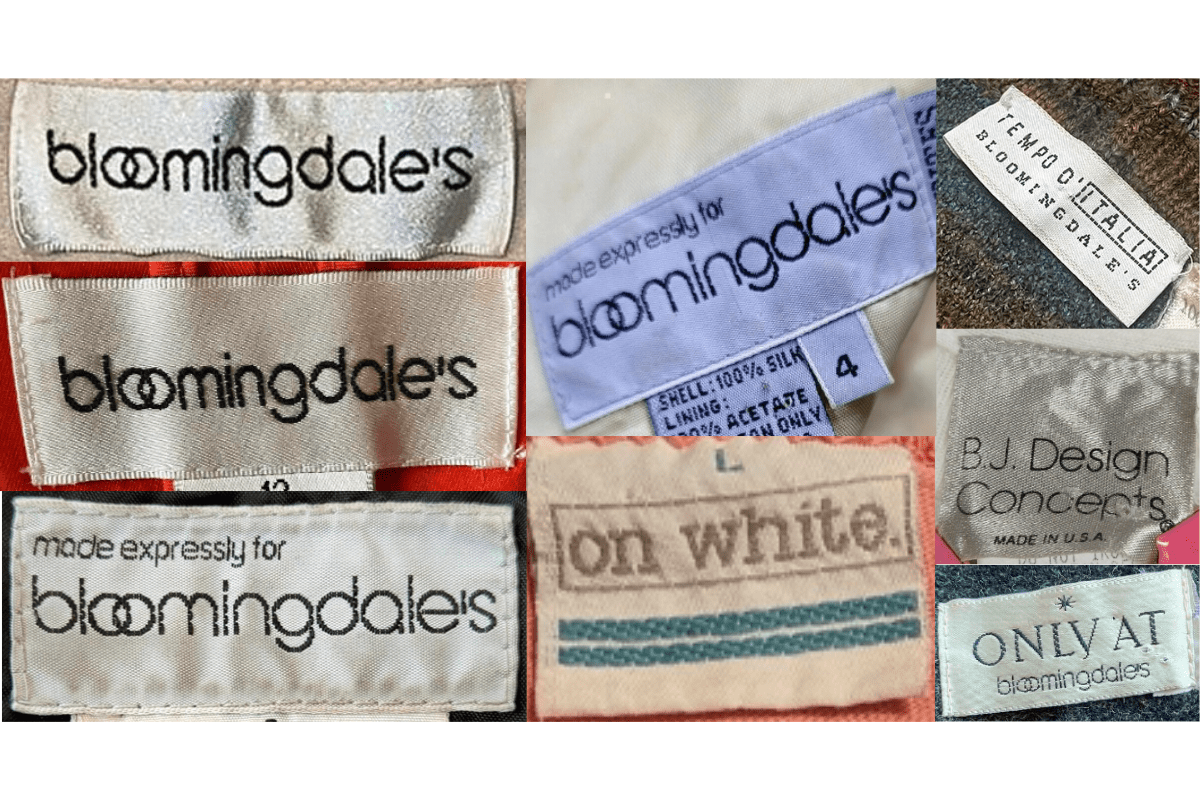
- Modernization of the tag design with cleaner lines and fonts.
- Continued use of sub-brands and exclusive lines like “Sutton Studio.”.
- Tags frequently mention specific fabric details and country of origin.
How to spot it
Modernization of the tag design with cleaner lines and fonts — confirms this label era.
Value signal
Moderate collector interest; condition and completeness determine value.
2000–2009
2000s vintage Bloomingdale’s tags
Introduction of more contemporary and minimalist designs Tags often emphasize exclusivity with phrases like “Exclusively for Bloomingdale’s.
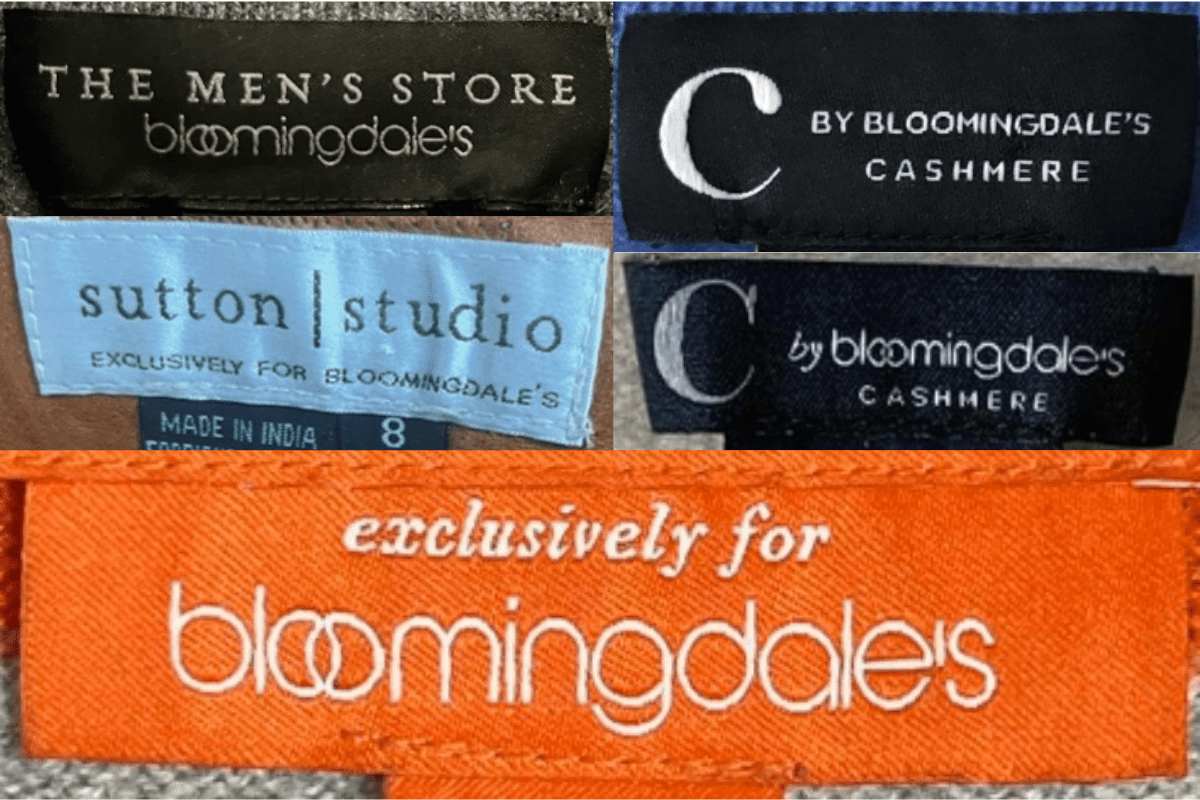
- Introduction of more contemporary and minimalist designs.
- Tags often emphasize exclusivity with phrases like “Exclusively for Bloomingdale’s.
- Use of a variety of materials and colors to distinguish different collections.
How to spot it
Introduction of more contemporary and minimalist designs — confirms this label era.
Value signal
Entry-level vintage; value driven by brand recognition and condition.