Hardy Amies
Savile Row tailoring house, dressmaker to Queen Elizabeth II. 1950s-60s tags carry the Royal Warrant with 'Hardy Amies London'; 1970s-80s add the 'By Appointment' royal cipher; the Royal Warrant cypher is the primary dating and authenticity marker.

- Origin
- England
- Founded
- 1946
- Category
- High Fashion
- Documented eras
- 7
How Hardy Amies labels evolved over time. Match the markers below against the tag in hand to place a garment in its era.
1950–1959
1950s vintage Hardy Amies tags
Elegant script “Hardy Amies” with address “14, Savile Row, London, W.1.” Tags often feature “Made in England.”.
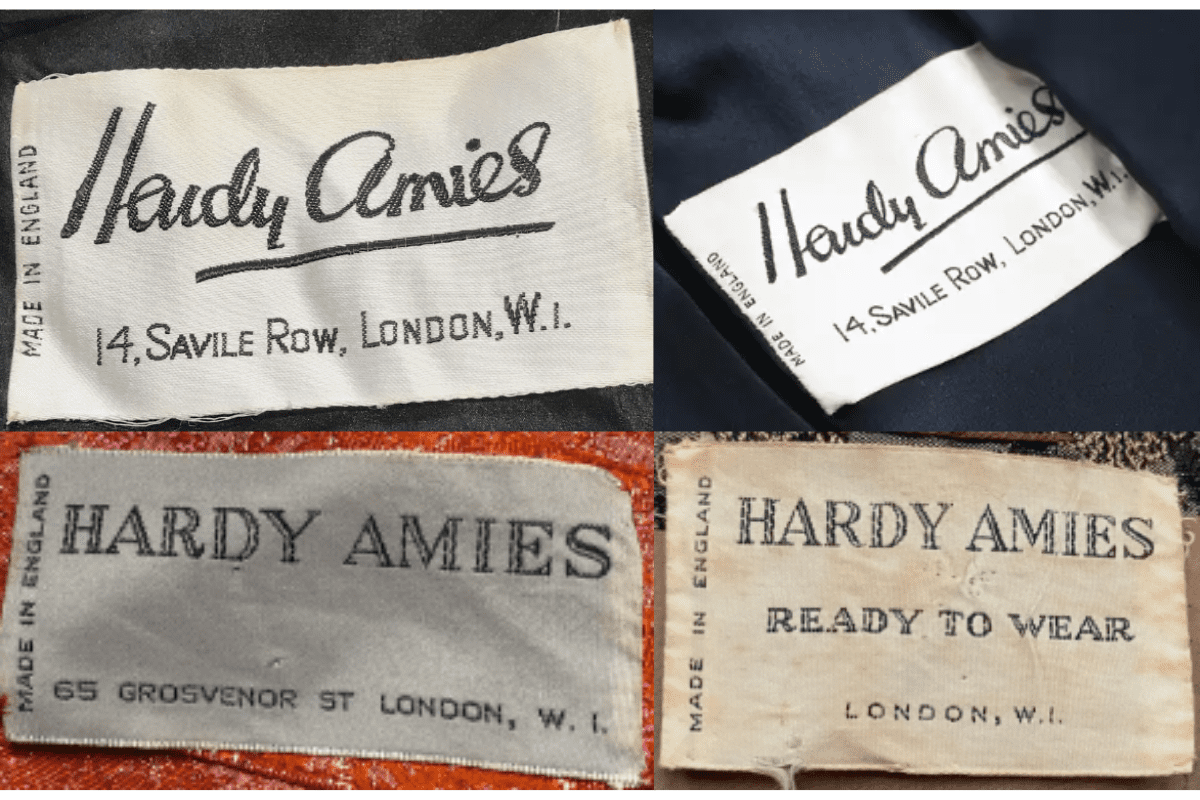
- Elegant script “Hardy Amies” with address “14, Savile Row, London, W.1.”.
- Tags often feature “Made in England.”.
- Simple design, often on a white background.
How to spot it
Elegant script “Hardy Amies” with address “14, Savile Row, London, W.1.” — confirms this label era.
Value signal
Rare; pre-1960 examples are collector-grade and seldom surface.
1960–1969
Rare 1960s Hardy Amies Fashion Show
Label era for Hardy Amies: Rare 1960s Hardy Amies Fashion Show.
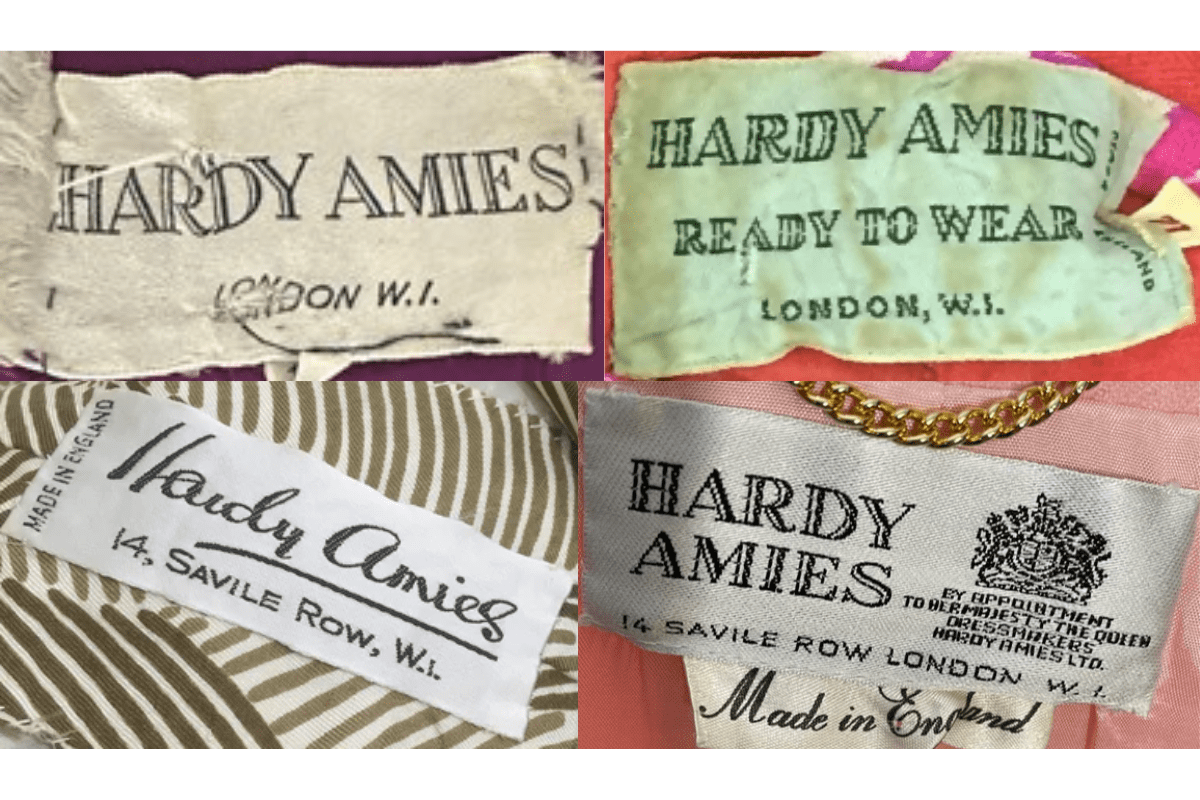
- Hardy Amies label from this era.
How to spot it
Hardy Amies label from this era — confirms this label era.
Value signal
Strong collector demand; 1960s examples command premiums in good condition.
1960–1969
1960s vintage Hardy Amies tags
Classic serif font “HARDY AMIES” with the address “65 Grosvenor St London, W.1.” May include the phrase “Ready to Wear.”.
- Classic serif font “HARDY AMIES” with the address “65 Grosvenor St London, W.1.”.
- May include the phrase “Ready to Wear.”.
- Typically uses a straightforward, minimalistic design.
How to spot it
Classic serif font “HARDY AMIES” with the address “65 Grosvenor St London, W.1.” — confirms this label era.
Value signal
Strong collector demand; 1960s examples command premiums in good condition.
1970–1979
1970s vintage Hardy Amies tags
Introduction of more elaborate fonts and designs Addresses like “14, Savile Row, London, W.1.” prominently displayed.
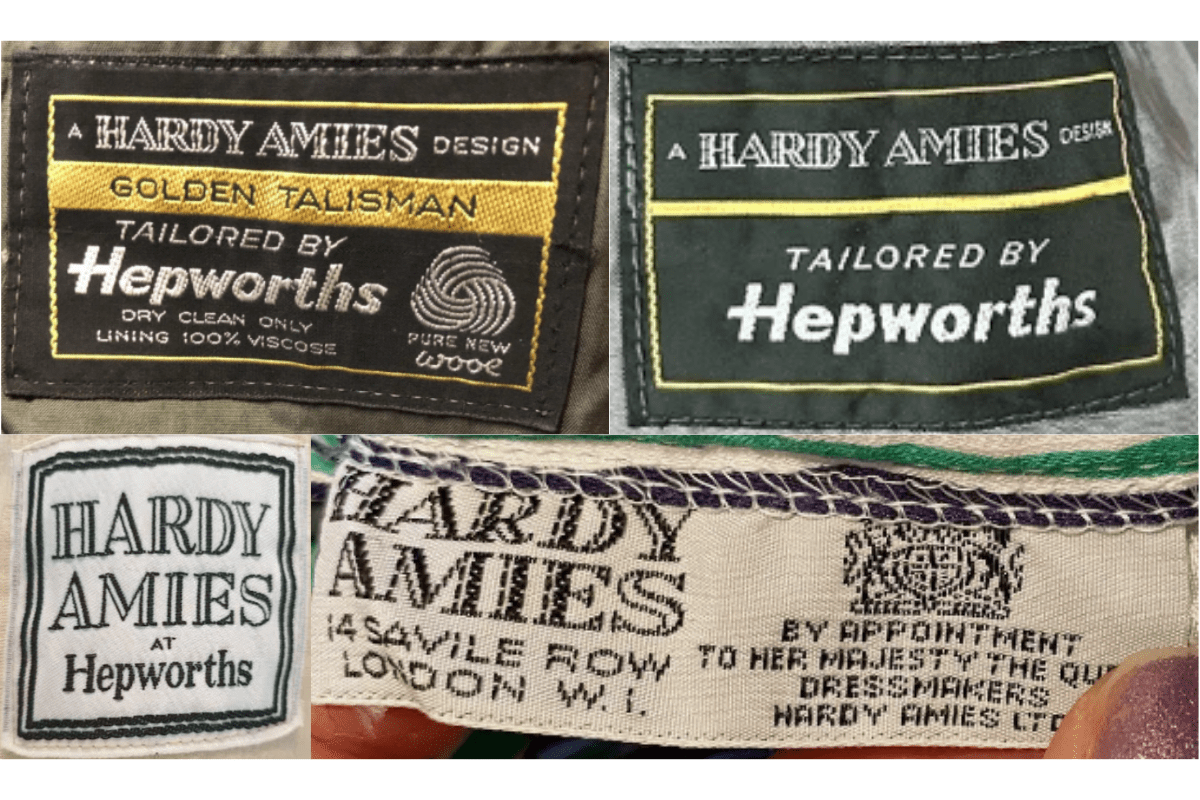
- Introduction of more elaborate fonts and designs.
- Addresses like “14, Savile Row, London, W.1.” prominently displayed.
- Incorporates “Made in England” and sometimes a crown or coat of arms.
How to spot it
Introduction of more elaborate fonts and designs — confirms this label era.
Value signal
Solid vintage interest; 1970s pieces in clean condition attract steady demand.
1980–1989
1980s vintage Hardy Amies tags
Tags often include the royal appointment: “By Appointment to Her Majesty The Queen Dressmakers Hardy Amies Ltd.” Continuation of the serif font, sometimes with additional design elements like borders or frames.
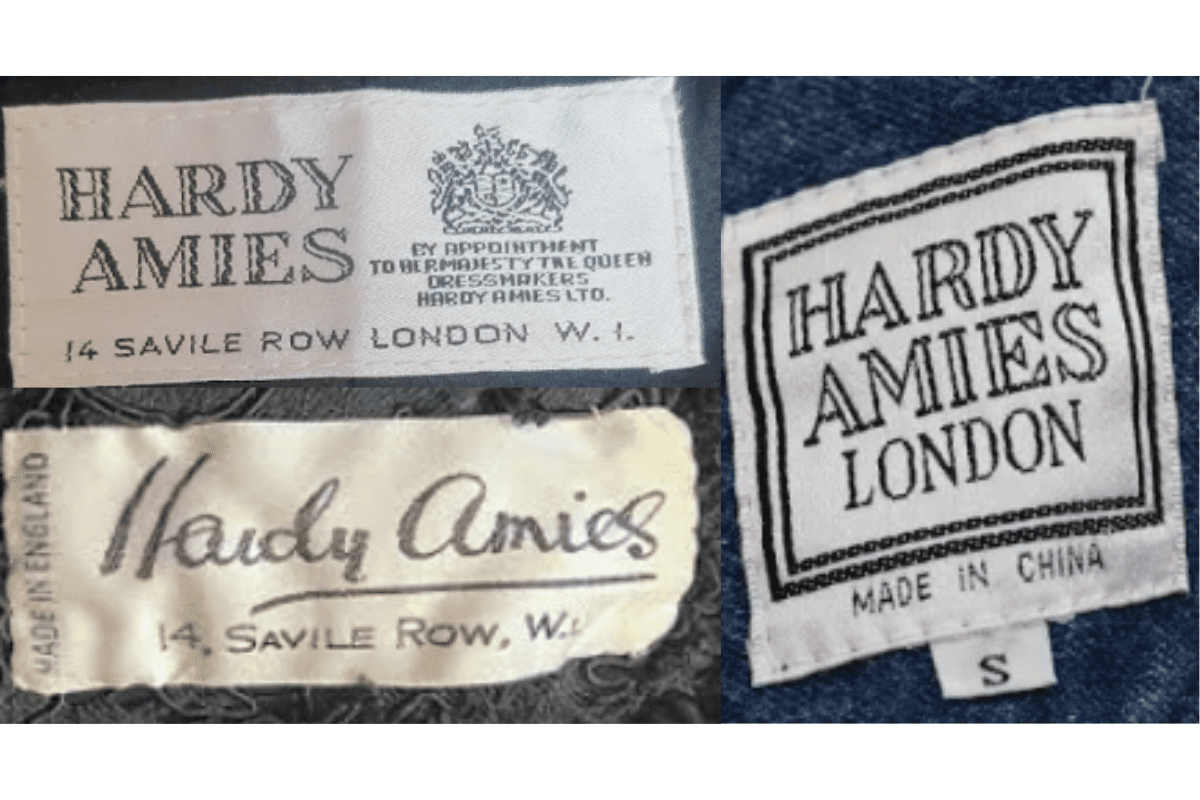
- Tags often include the royal appointment: “By Appointment to Her Majesty The Queen Dressmakers Hardy Amies Ltd.”.
- Continuation of the serif font, sometimes with additional design elements like borders or frames.
- Addresses like “14, Savile Row, London, W.1.” are still common.
How to spot it
Tags often include the royal appointment: “By Appointment to Her Majesty The Queen Dressmakers Hardy Amies Ltd.” — confirms this label era.
Value signal
Good vintage demand; 1980s label detail is a key value driver.
1990–1999
1990s vintage Hardy Amies tags
More modern fonts and simplified designs Introduction of tags made outside the UK, such as “Made in China.”.
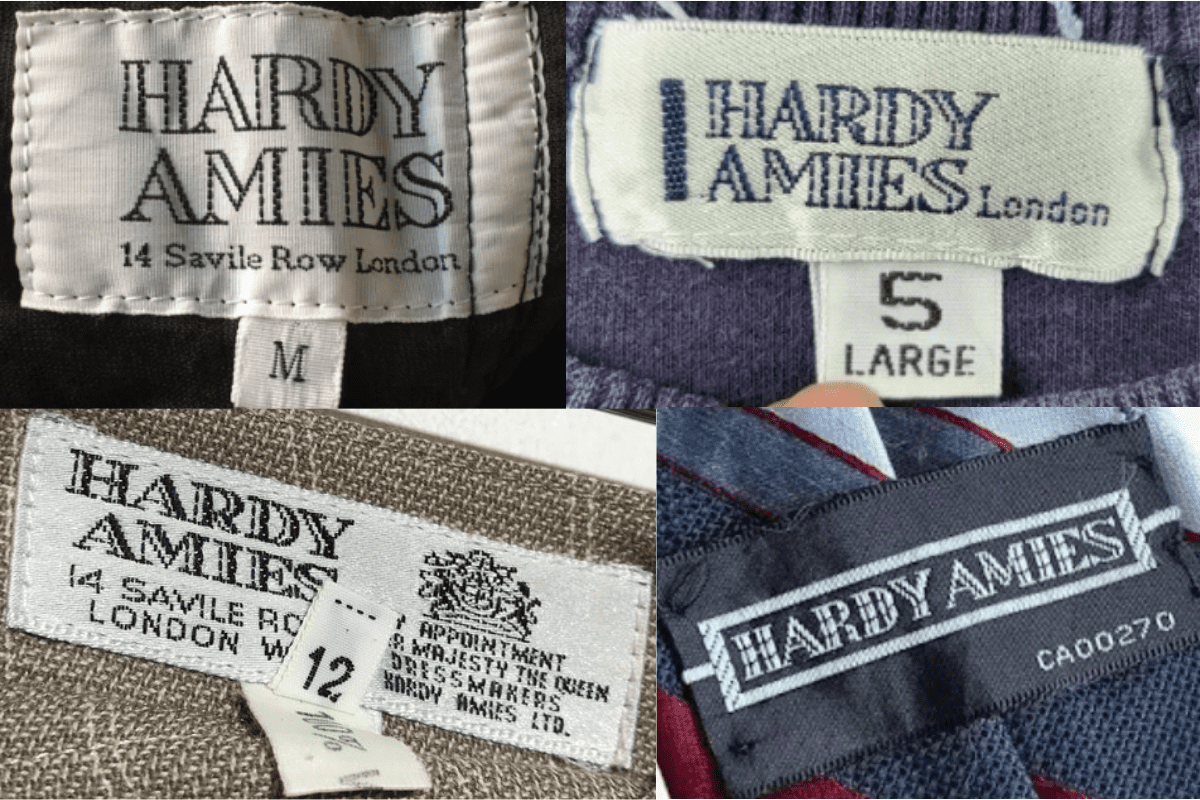
- More modern fonts and simplified designs.
- Introduction of tags made outside the UK, such as “Made in China.”.
- Includes “14 Savile Row London” with less emphasis on elaborate designs.
How to spot it
More modern fonts and simplified designs — confirms this label era.
Value signal
Moderate collector interest; condition and completeness determine value.
2000–2009
2000s vintage Hardy Amies tags
Modern tags with darker colors and bold fonts Some tags may include the address “14 Savile Row, London.”.
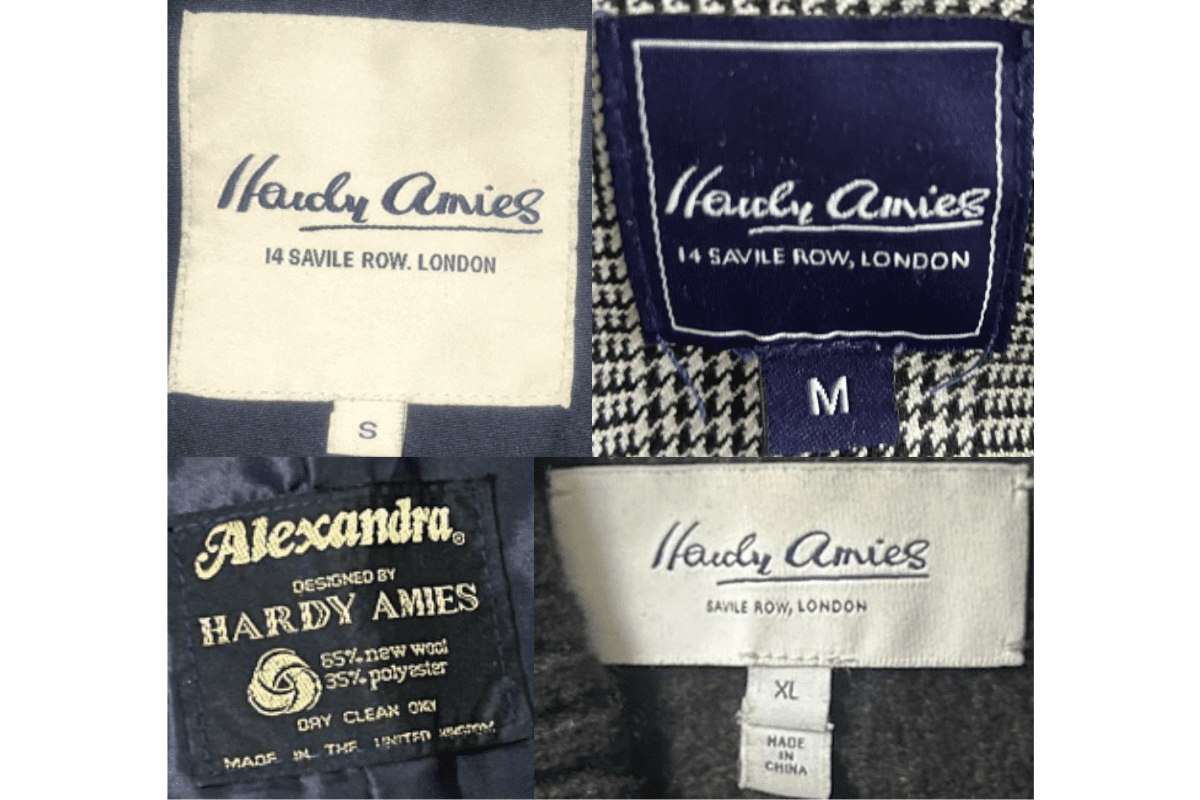
- Modern tags with darker colors and bold fonts.
- Some tags may include the address “14 Savile Row, London.”.
- Introduction of additional labels indicating collaboration, such as “Alexandra designed by Hardy Amies.”.
How to spot it
Modern tags with darker colors and bold fonts — confirms this label era.
Value signal
Entry-level vintage; value driven by brand recognition and condition.