Liu Jo
Italian fashion house founded by the Marchi brothers in Carpi in 1995. Bold 'LIU JO' in uppercase on black-and-white grounds marks the 1990s founding era; colourful textured tags and the introduction of the LJ monogram track the 2000s growth.

- Origin
- Italy
- Founded
- 1995
- Category
- High Fashion
- Documented eras
- 3
How Liu Jo labels evolved over time. Match the markers below against the tag in hand to place a garment in its era.
1990–1999
1990s vintage Liu Jo tags
Simple, bold typography featuring “LIU JO” prominently Basic color schemes, typically black text on a white background.
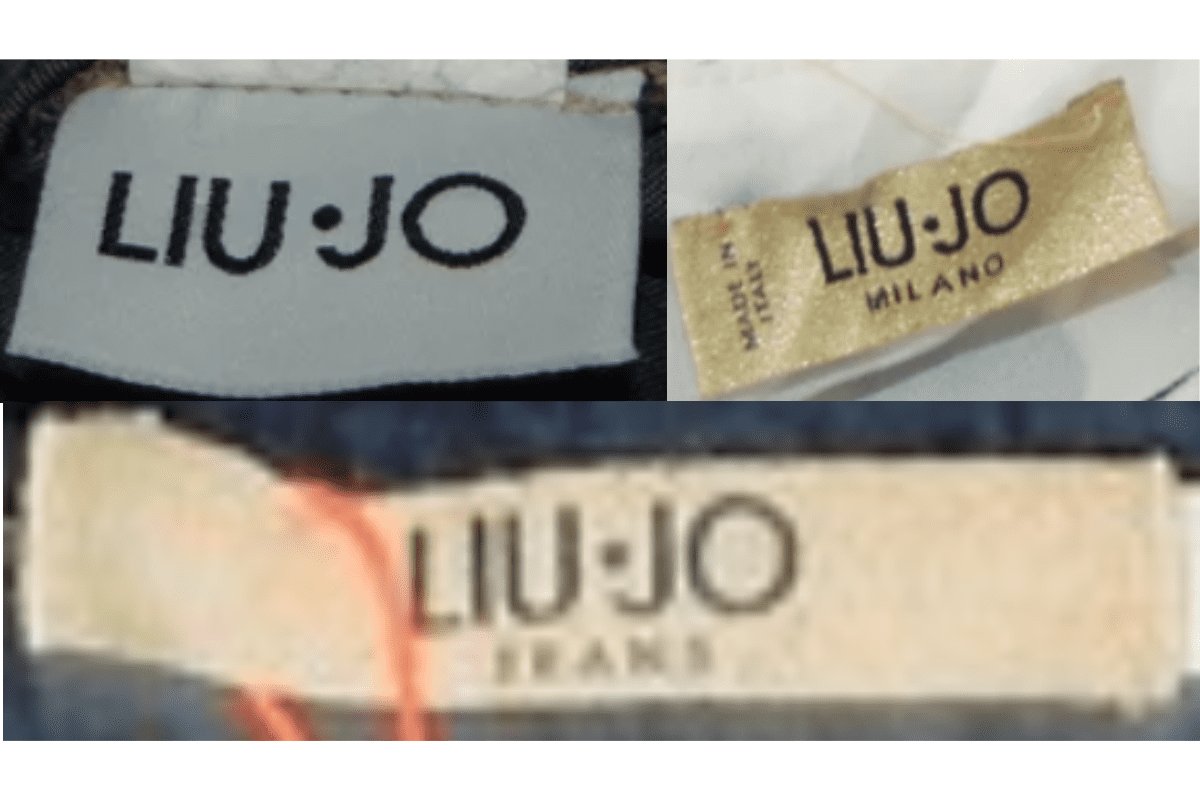
- Simple, bold typography featuring “LIU JO” prominently.
- Basic color schemes, typically black text on a white background.
- Tags often include “Made in Italy” to emphasize the origin.
- Minimalist design with limited use of decorative elements.
How to spot it
Simple, bold typography featuring “LIU JO” prominently — confirms this label era.
Value signal
Moderate collector interest; condition and completeness determine value.
2000–2009
2000s vintage Liu Jo tags
Introduction of more colorful and textured tags, reflecting a more modern brand identity Tag materials varied, including silk-like textures and metallic threads.
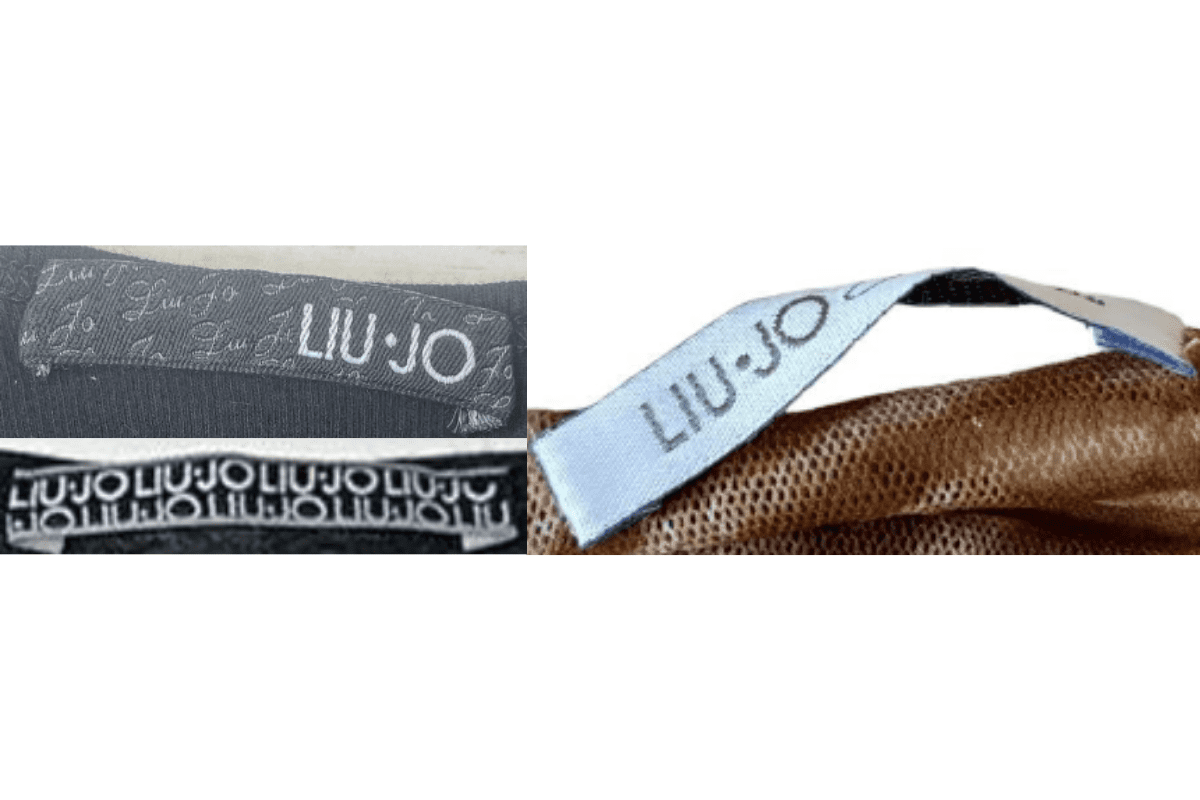
- Introduction of more colorful and textured tags, reflecting a more modern brand identity.
- Tag materials varied, including silk-like textures and metallic threads.
- Logo design remained consistent with bold, clear “LIU JO” lettering.
- Often included more detailed information about fabric composition and care instructions.
How to spot it
Introduction of more colorful and textured tags, reflecting a more modern brand identity — confirms this label era.
Value signal
Entry-level vintage; value driven by brand recognition and condition.
2010–2019
2010s vintage Liu Jo tags
Tags featured more sophisticated layouts and branding elements Use of different materials and colors, including darker tones and metallic accents.
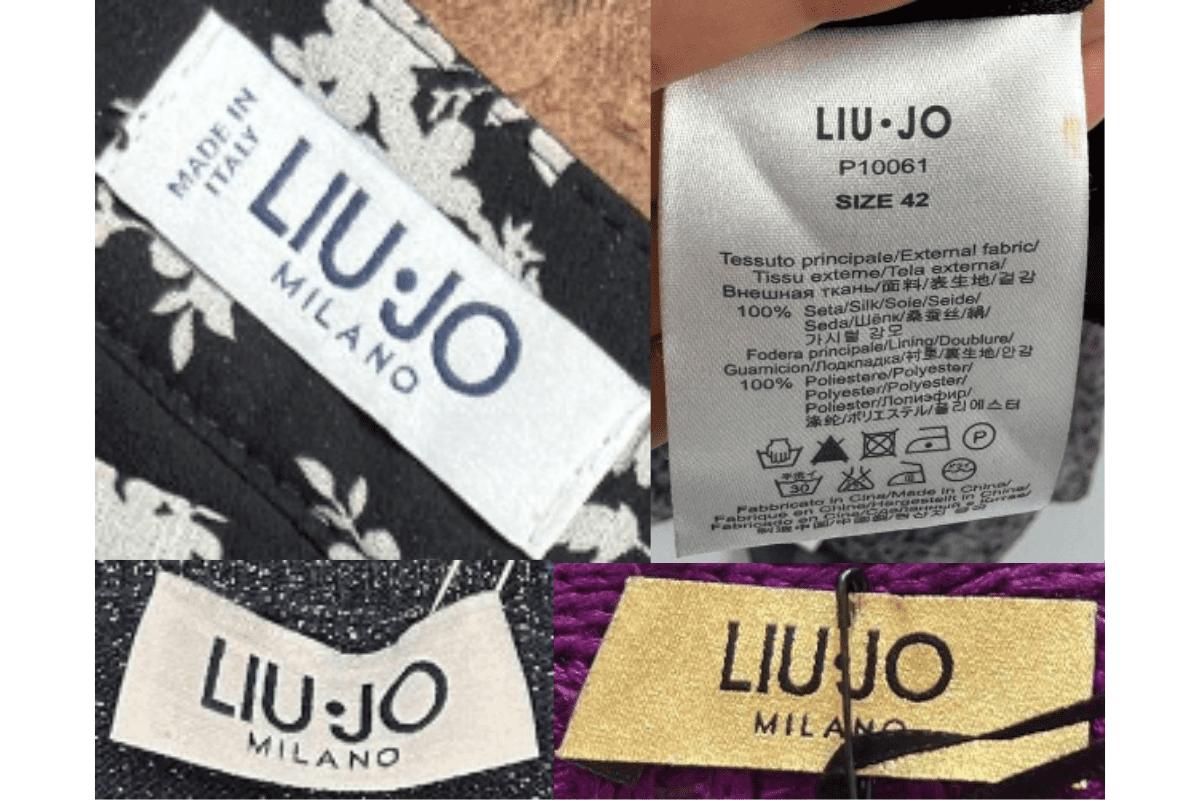
- Tags featured more sophisticated layouts and branding elements.
- Use of different materials and colors, including darker tones and metallic accents.
- Detailed information on care and fabric was often present, along with multilingual instructions.
- Tags may also include the brand’s website or other contact information, reflecting the digital era’s influence.
How to spot it
Tags featured more sophisticated layouts and branding elements — confirms this label era.
Value signal
Entry-level vintage; value driven by brand recognition and condition.