Evisu
The Japanese selvedge-denim brand built on hand-painted pocket seagulls. The 'kamome' gull and 'Evisu Genes' wording date its jeans.
- Origin
- Japan
- Founded
- 1991
- Category
- Denim
- Documented eras
- 3
How Evisu labels evolved over time. Match the markers below against the tag in hand to place a garment in its era.
1991–1999
Hand-Painted Seagull Tags
Tags feature the iconic hand-painted 'seagull' (kamome) logo, on robust materials matching the heavy denim, with care detail in Japanese and English.
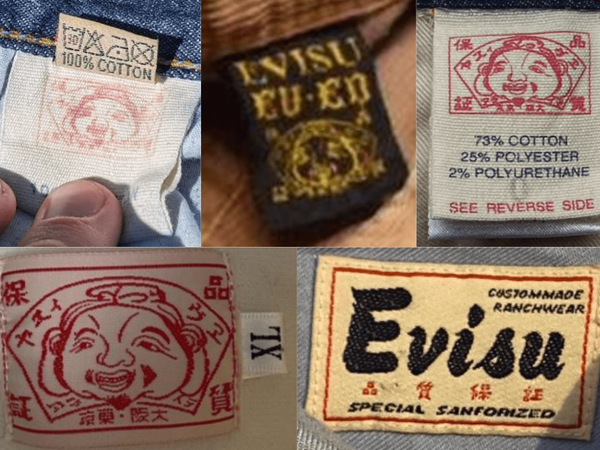
- Feature the iconic hand-painted “seagull” logo prominently.
- Often made of robust materials to match the durable denim.
- Typically include detailed care instructions in both Japanese and English.
How to spot it
The hand-painted seagull logo.
Value signal
Strong; 90s Osaka-made Evisu is highly collectible.
2000–2009
Machine-Embroidered 'Genes' Tags
More refined machine-embroidered logos, darker subdued colours for premium denim, with 'Evisu Genes' branding on special lines.
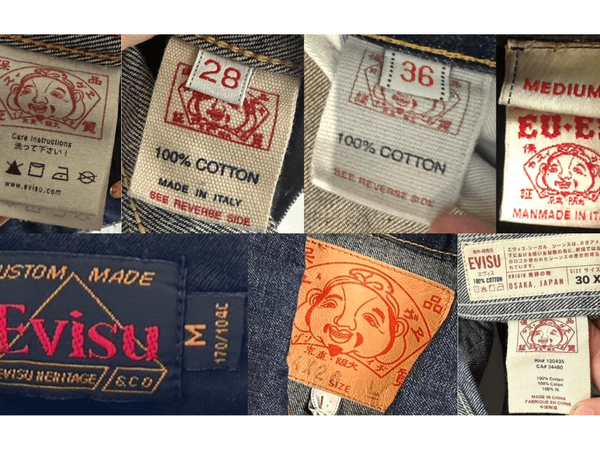
- Introduction of more refined, machine-embroidered logos.
- Use of darker, more subdued colors in the tags to reflect premium denim styles.
- Inclusion of additional branding elements like “Evisu Genes” to denote special lines or collaborations.
How to spot it
Machine-embroidered logo, 'Evisu Genes' wording.
Value signal
Strong; 2000s Evisu rode the premium-denim boom.
2010–2019
Modern Streamlined Tags
Modern sleek designs with bold new fonts, expanded colour and tag-shape experimentation, and more diverse global production.
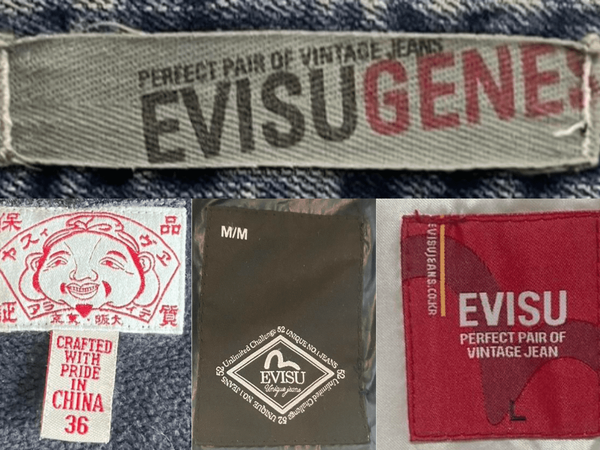
- Modern and sleek designs with bold new fonts and streamlined graphics.
- Expanded use of color and experimentation with tag shapes and materials.
- Tags often reflect global manufacturing shifts, with more diverse production locations.
How to spot it
A modern streamlined Evisu tag.
Value signal
Modern; priced on the piece.