TM Lewin
British Jermyn Street shirtmaker founded by Thomas Mayes Lewin in 1898. Clean bold 'T.M. Lewin' in classic serif on quality-fabric tags marks the 1990s; a slightly modernised aesthetic with Jermyn Street heritage references tracks the 2000s.
- Origin
- England
- Founded
- 1898
- Category
- Designer & Casual
- Documented eras
- 3
How TM Lewin labels evolved over time. Match the markers below against the tag in hand to place a garment in its era.
1990–1999
1990s vintage T.M. Lewin tags
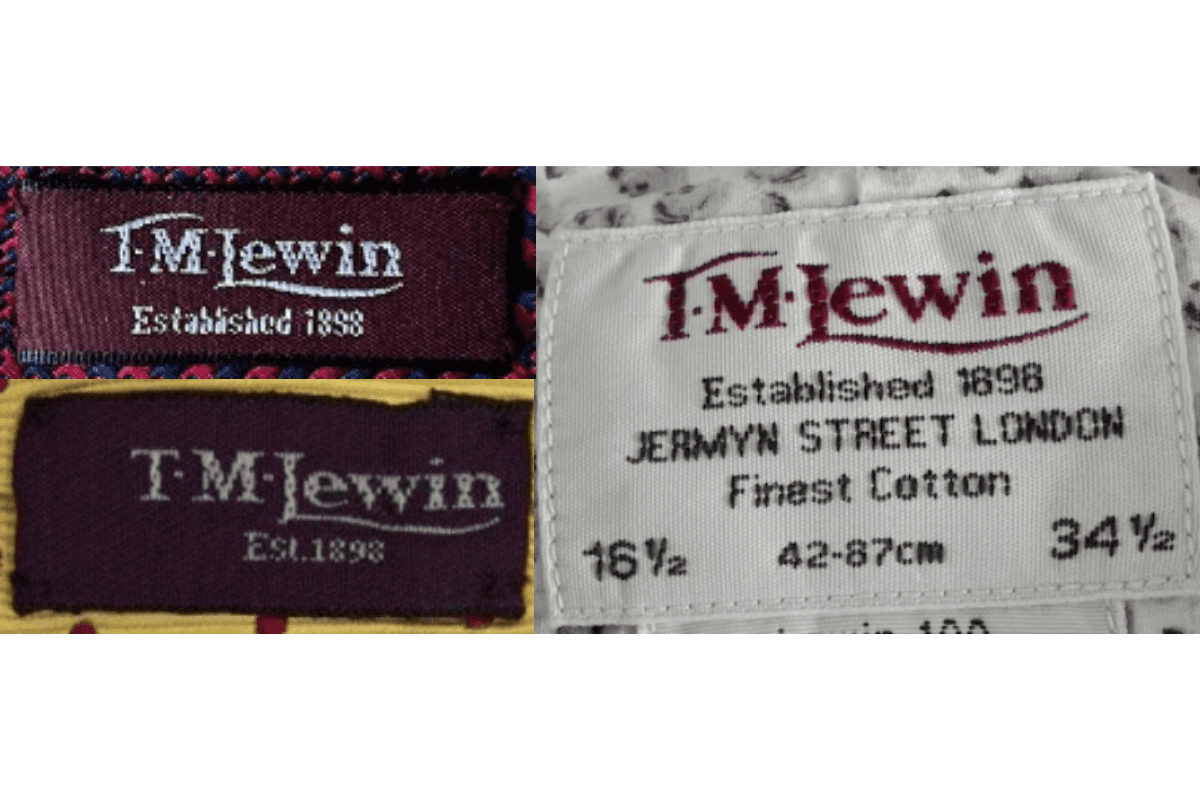
The 1990s tags often feature a clean, simple design with “T.M. Lewin” prominently displayed in bold lettering The brand name is typically followed by “Established 1898” to highlight the brand’s heritage.
- The 1990s tags often feature a clean, simple design with “T.M. Lewin” prominently displayed in bold lettering.
- The brand name is typically followed by “Established 1898” to highlight the brand’s heritage.
- Tags are commonly rectangular with a minimalist approach, focusing on clarity and readability.
- Material is generally a traditional woven fabric, consistent with the brand’s focus on quality.
How to spot it
The 1990s tags often feature a clean, simple design with “T.M. Lewin” prominently displayed in bold lettering — confirms this label era.
Value signal
Moderate collector interest; condition and completeness determine value.
2000–2009
2000s vintage T.M. Lewin tags
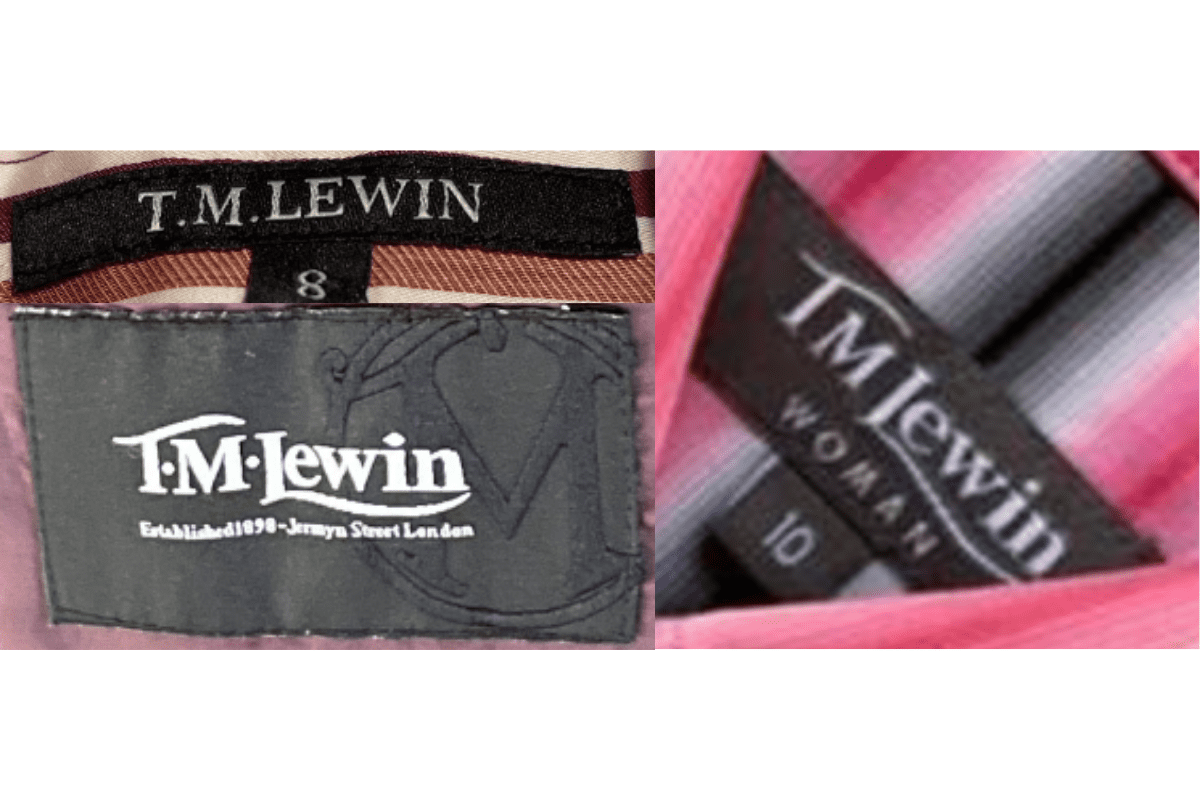
The tags from the 2000s introduced a more modern aesthetic, while still retaining the classic “T.M. Lewin” logo “Established 1898 – Jermyn Street, London” is often featured on the tags, emphasizing the brand’s London roots.
- The tags from the 2000s introduced a more modern aesthetic, while still retaining the classic “T.M. Lewin” logo.
- “Established 1898 – Jermyn Street, London” is often featured on the tags, emphasizing the brand’s London roots.
- The color palette tends to be darker, with black and maroon being common background colors.
- Tags in this era may also include additional branding elements, such as subtle patterns or motifs related to the brand’s identity.
How to spot it
The tags from the 2000s introduced a more modern aesthetic, while still retaining the classic “T.M. Lewin” logo — confirms this label era.
Value signal
Entry-level vintage; value driven by brand recognition and condition.
2010–2019
2010s vintage T.M. Lewin tags
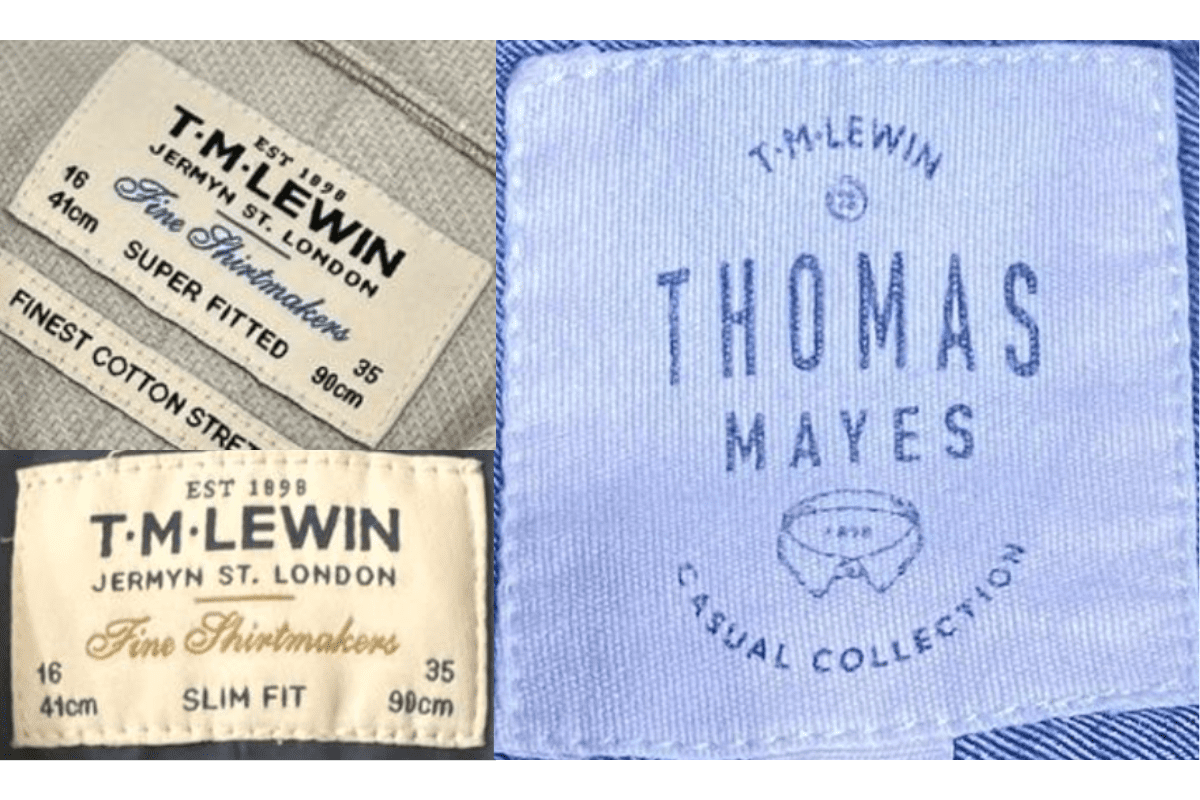
In the 2010s, T.M. Lewin tags often feature a more varied design, with some using a lighter, more contemporary color scheme The logo remains consistent but may be paired with additional text or graphics, such as “Thomas Mayes,” a reference to the brand’s founder.
- In the 2010s, T.M. Lewin tags often feature a more varied design, with some using a lighter, more contemporary color scheme.
- The logo remains consistent but may be paired with additional text or graphics, such as “Thomas Mayes,” a reference to the brand’s founder.
- Materials used for the tags might include softer, more modern fabrics, aligning with the brand’s evolution into contemporary fashion.
- Tags may also incorporate slogans or additional collection names, reflecting the diversification of the brand’s offerings.
How to spot it
In the 2010s, T.M. Lewin tags often feature a more varied design, with some using a lighter, more contemporary color scheme — confirms this label era.
Value signal
Entry-level vintage; value driven by brand recognition and condition.