Pierre Cardin
The Italian-born, Paris-based couturier who pioneered Space Age fashion. 'Pierre Cardin Paris' with both Paris and New York wording marks the 1960s; the swirl logo alongside the wordmark is the 1980s identifier; 'Boutique Paris' sub-label wording does the finer era dating.

- Origin
- France
- Founded
- 1950
- Category
- High Fashion
- Documented eras
- 6
How Pierre Cardin labels evolved over time. Match the markers below against the tag in hand to place a garment in its era.
1960–1969
1960s vintage Pierre Cardin tags
Often included both Paris and New York locations Used serif or bold block fonts, featuring “Pierre Cardin” prominently.
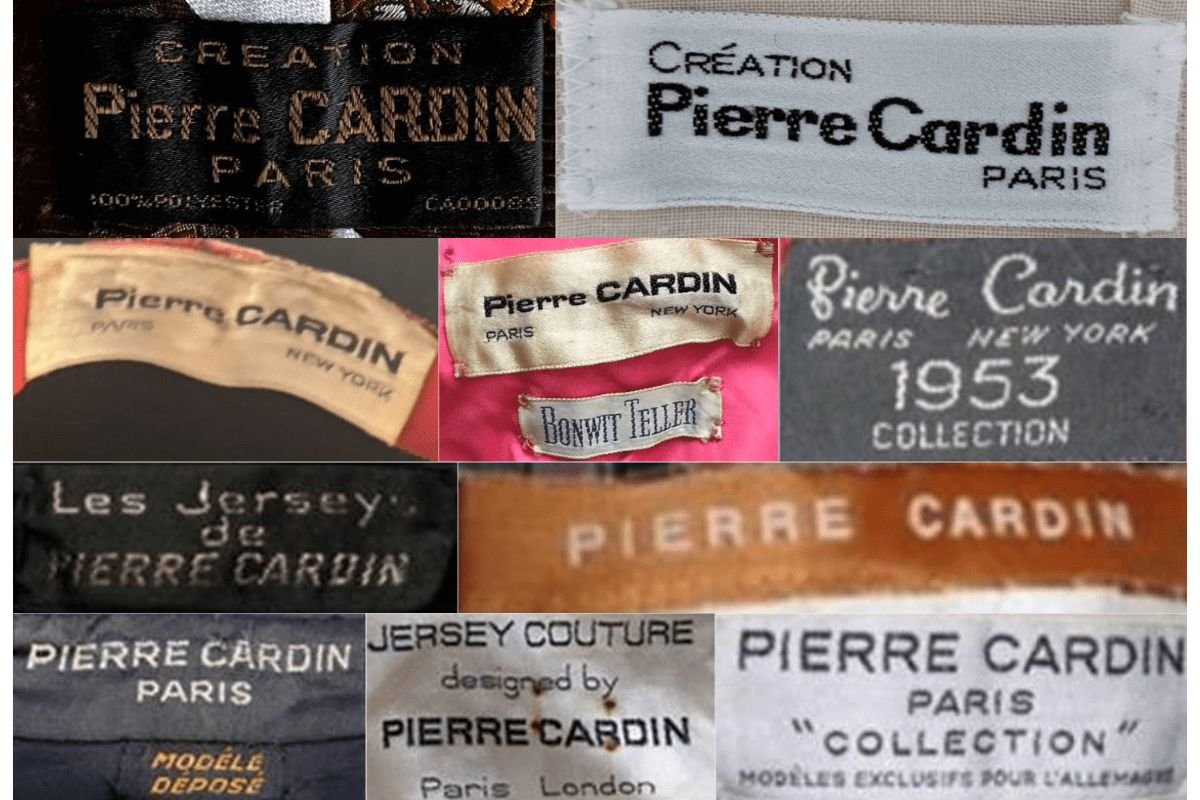
- Often included both Paris and New York locations.
- Used serif or bold block fonts, featuring “Pierre Cardin” prominently.
- Sometimes included a unique swirl-like logo alongside the brand name.
How to spot it
Often included both Paris and New York locations — confirms this label era.
Value signal
Strong collector demand; 1960s examples command premiums in good condition.
1970–1979
1970s vintage Pierre Cardin tags
Bold “Pierre Cardin” lettering often paired with “Paris.” Commonly rectangular or square tags, often with production location.
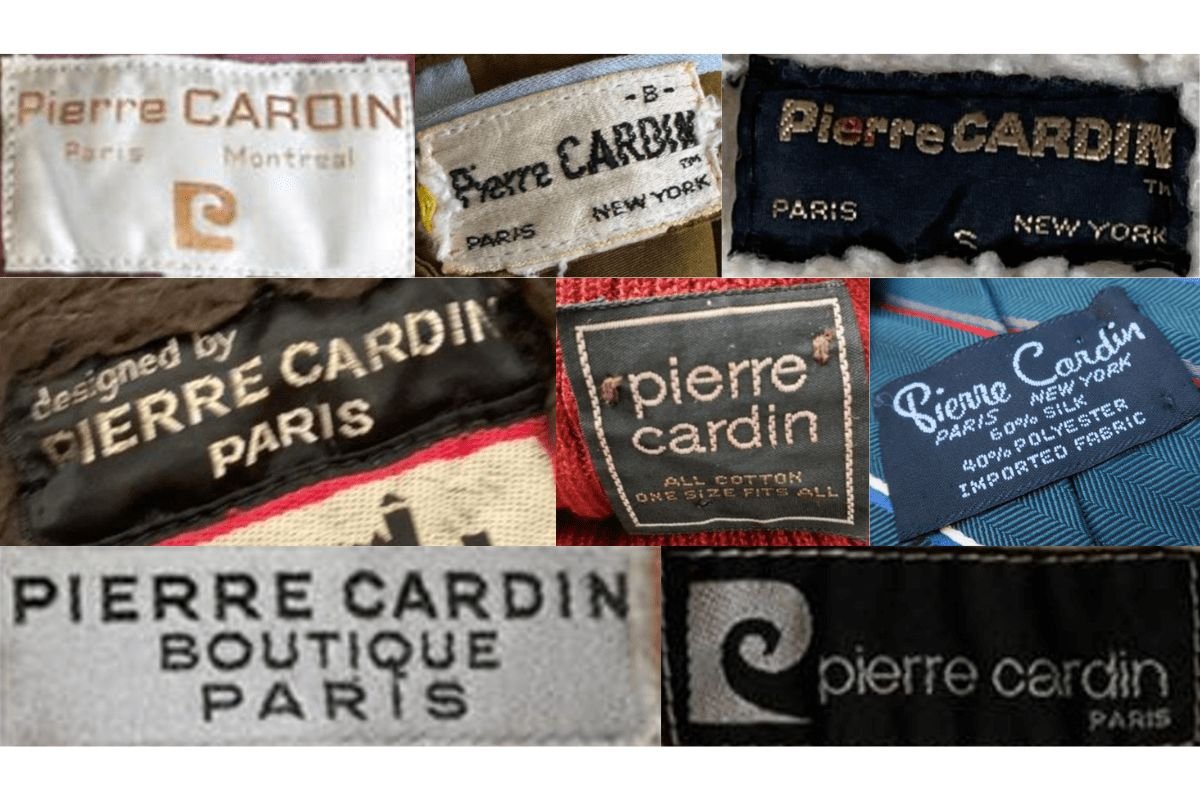
- Bold “Pierre Cardin” lettering often paired with “Paris.”.
- Commonly rectangular or square tags, often with production location.
- Introduction of “Les Jersey de Pierre Cardin” tags for jersey couture collections.
How to spot it
Bold “Pierre Cardin” lettering often paired with “Paris.” — confirms this label era.
Value signal
Solid vintage interest; 1970s pieces in clean condition attract steady demand.
1980–1989
1980s vintage Pierre Cardin tags
Featured the brand’s swirl logo next to “Pierre Cardin.” Some included “Boutique Paris” or “Paris New York.”.
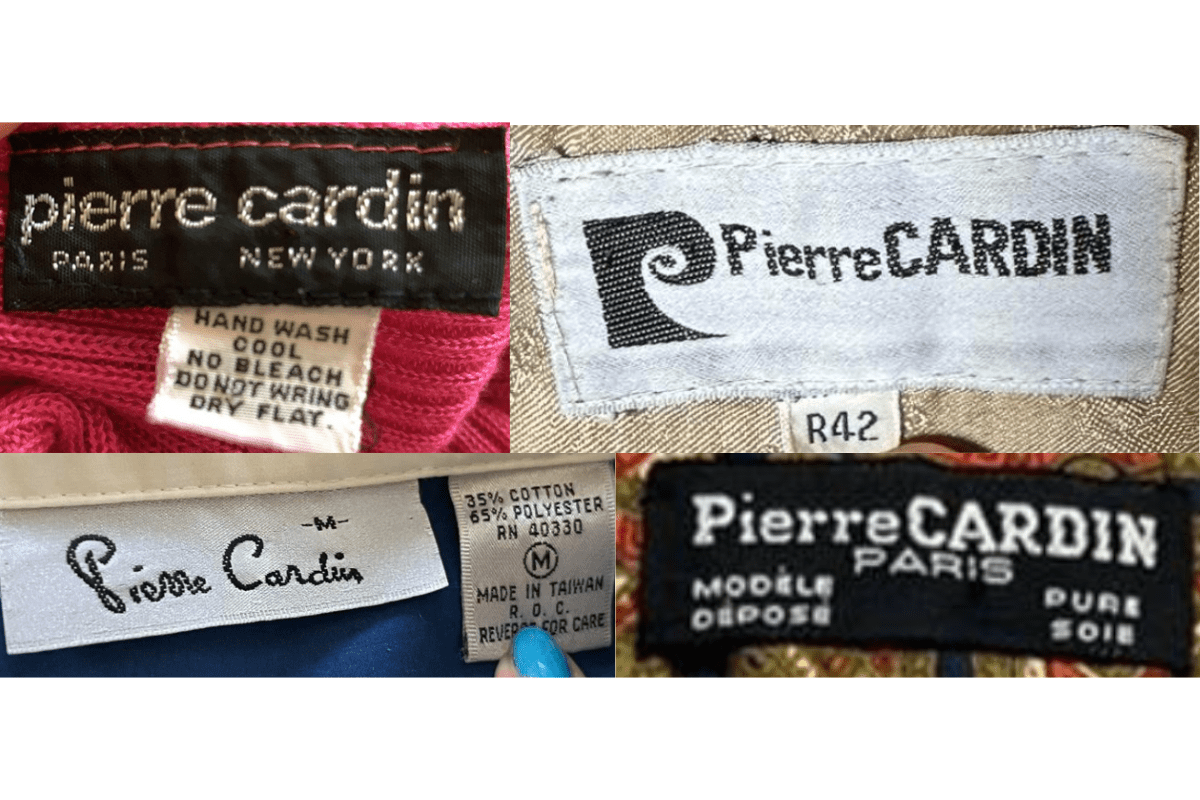
- Featured the brand’s swirl logo next to “Pierre Cardin.”.
- Some included “Boutique Paris” or “Paris New York.”.
- Some had “designed by Pierre Cardin” or “Jersey Couture.”.
How to spot it
Featured the brand’s swirl logo next to “Pierre Cardin.” — confirms this label era.
Value signal
Good vintage demand; 1980s label detail is a key value driver.
1990–1999
1990s vintage Pierre Cardin tags
Transition to more minimalist designs, with “Pierre Cardin” in prominent black or white fonts Continued use of “Boutique Paris” or “Paris New York.”.
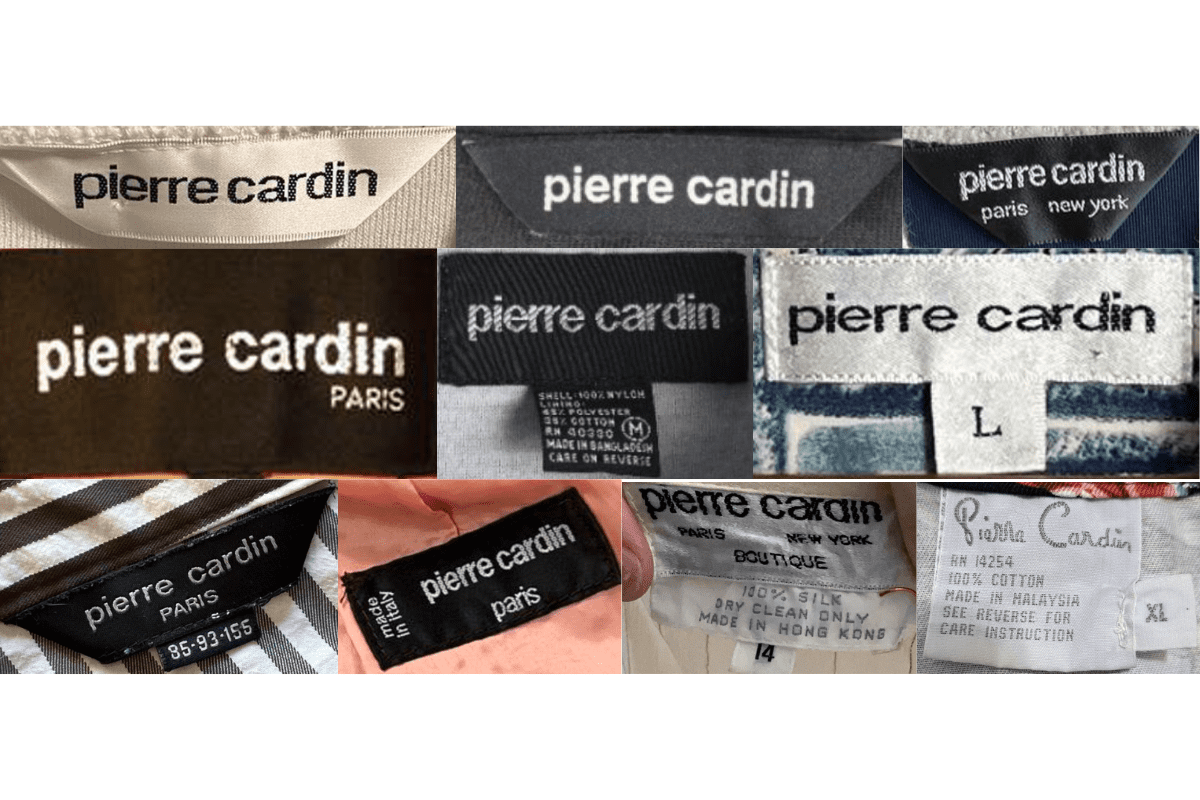
- Transition to more minimalist designs, with “Pierre Cardin” in prominent black or white fonts.
- Continued use of “Boutique Paris” or “Paris New York.”.
- Tags reflected varied manufacturing locations, such as Hong Kong and Taiwan.
How to spot it
Transition to more minimalist designs, with “Pierre Cardin” in prominent black or white fonts — confirms this label era.
Value signal
Moderate collector interest; condition and completeness determine value.
2000–2009
2000s vintage Pierre Cardin tags
More modernized tags often using darker colors with a clean “Pierre Cardin.” Simplified, sometimes loop tags featuring the brand name and care instructions.
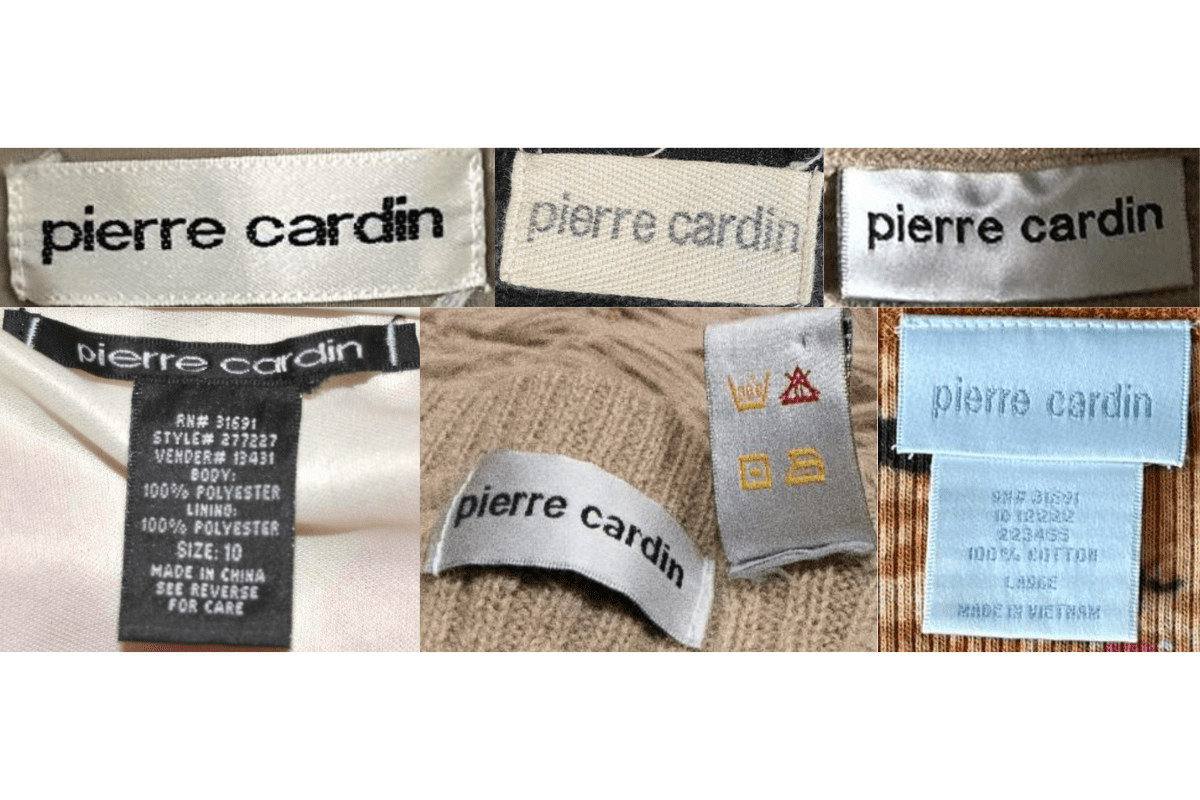
- More modernized tags often using darker colors with a clean “Pierre Cardin.”.
- Simplified, sometimes loop tags featuring the brand name and care instructions.
- Different materials used to complement specific designs.
How to spot it
More modernized tags often using darker colors with a clean “Pierre Cardin.” — confirms this label era.
Value signal
Entry-level vintage; value driven by brand recognition and condition.
2010–2019
2010s Pierre Cardin Tags
Streamlined tags to align with contemporary styles Employed a consistent “Pierre Cardin” logo in minimalist fonts.
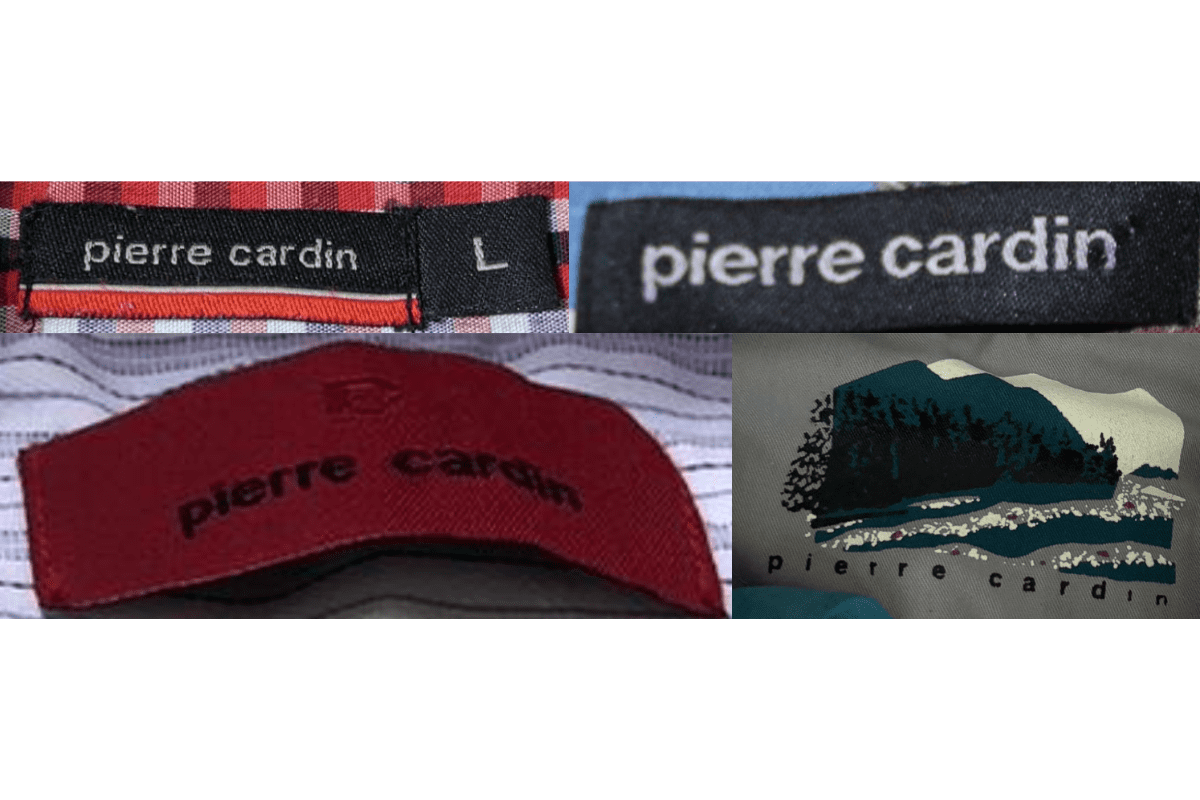
- Streamlined tags to align with contemporary styles.
- Employed a consistent “Pierre Cardin” logo in minimalist fonts.
- Utilized unique colors and shapes for individual product lines.
- By analyzing the tags from each era, collectors and fashion enthusiasts can date and authenticate Pierre Cardin garments while gaining insight into the evolution of this iconic fashion house.
How to spot it
Streamlined tags to align with contemporary styles — confirms this label era.
Value signal
Entry-level vintage; value driven by brand recognition and condition.