Converse
American sneaker institution behind the Chuck Taylor All Star. The licence shifts — and the move of production out of the USA in the 2000s — anchor its tag timeline.

- Origin
- USA
- Founded
- 1908
- Category
- Athletic & Streetwear
- Documented eras
- 4
How Converse labels evolved over time. Match the markers below against the tag in hand to place a garment in its era.
1980–1989
Chuck Taylor Endorsement Tags
Tags pair the star with the 'Chuck Taylor' name and a red, white and blue scheme that nods to the American origin.
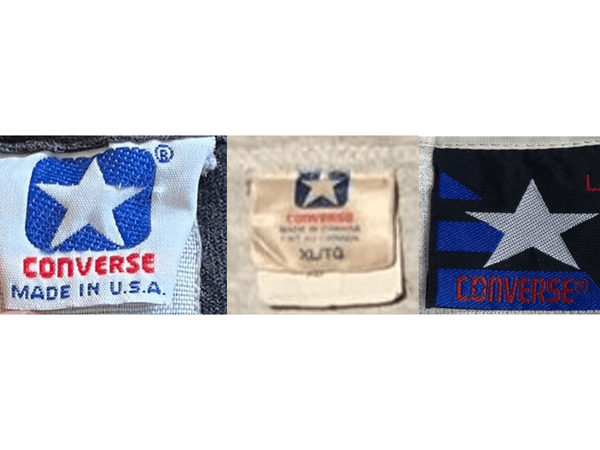
- Introduction of the “Chuck Taylor” name alongside the star, emphasizing the endorsement.
- Tags often contain a red, white, and blue color scheme reflecting American origins.
- Material tags are simple and functional with increased use of care symbols.
How to spot it
The 'Chuck Taylor' name beside the star, US-flag colours.
Value signal
Desirable; USA-era Converse apparel has a steady following.
1990–1999
Corporate Branding, Barcodes
Tags gained fuller corporate branding and care detail, with barcode tags and separate fabric/care labels appearing.
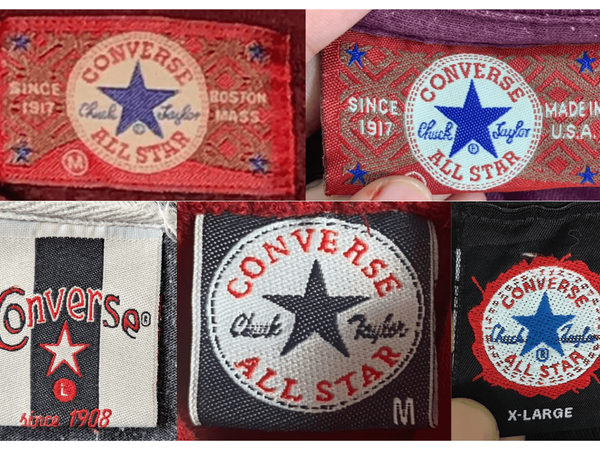
- Began to feature more detailed corporate branding and care instructions.
- Introduction of barcode tags, with some tags showing global sizing standards.
- Fabric and care tags are more detailed, often separate from the brand logo tag.
How to spot it
Barcode tags and a care label split from the logo tag.
Value signal
Solid 90s vintage; value tracks the graphic.
2000–2009
Offshore Production
Tags grew more colourful and varied, often in plastic or synthetic fabric, with manufacturing shifting outside the USA.
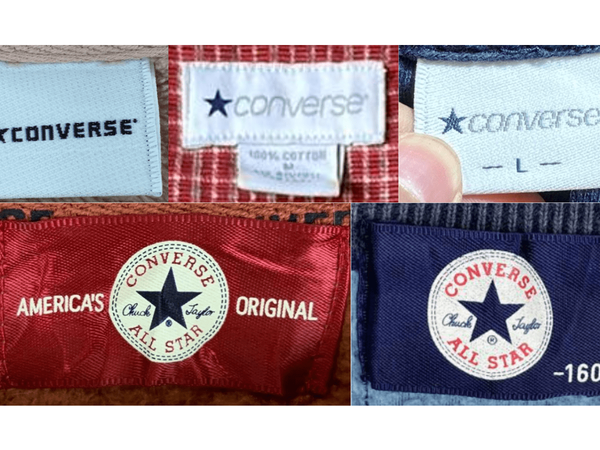
- Tags become more colorful and varied in design, reflecting broader product lines.
- Use of different materials for tags, like plastic or synthetic fabrics.
- Manufacturing tags often show a shift to production outside the USA.
How to spot it
Synthetic, colourful tags and non-USA country of make.
Value signal
Common; modest resale value.
2010–2019
Multilingual Modern Tags
Sleek modern typography, multiple languages reflecting a global market, and recycled-material tags.
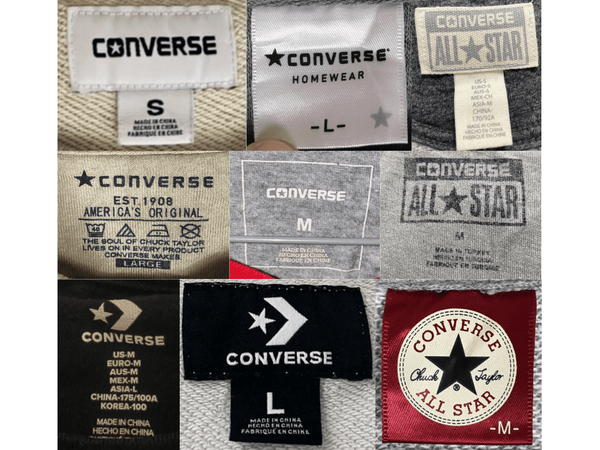
- Modern, sleek designs with clearer typography and contemporary branding.
- Tags often include multiple languages, reflecting a global market presence.
- Increased emphasis on material information and care instructions, often using recycled materials for the tags themselves.
How to spot it
Clean modern type with multilingual care text.
Value signal
Modern; priced on the piece.