Gunne Sax
San Francisco romantic prairie-style brand by Jessica McClintock. 1970s-80s tags use a highly decorative ornate serif font matching the lace-and-ruffle Victorian aesthetic; 1990s-2000s simplify as popularity waned.
- Origin
- USA
- Founded
- 1967
- Category
- Designer & Casual
- Documented eras
- 4
How Gunne Sax labels evolved over time. Match the markers below against the tag in hand to place a garment in its era.
1967–1979
1970s Founding Prairie Era Tags
Gunne Sax launched in 1967 with Jessica McClintock's Victorian-inspired prairie aesthetic. 1970s tags use a highly ornate decorative serif font matching the lace-and-ruffle designs.
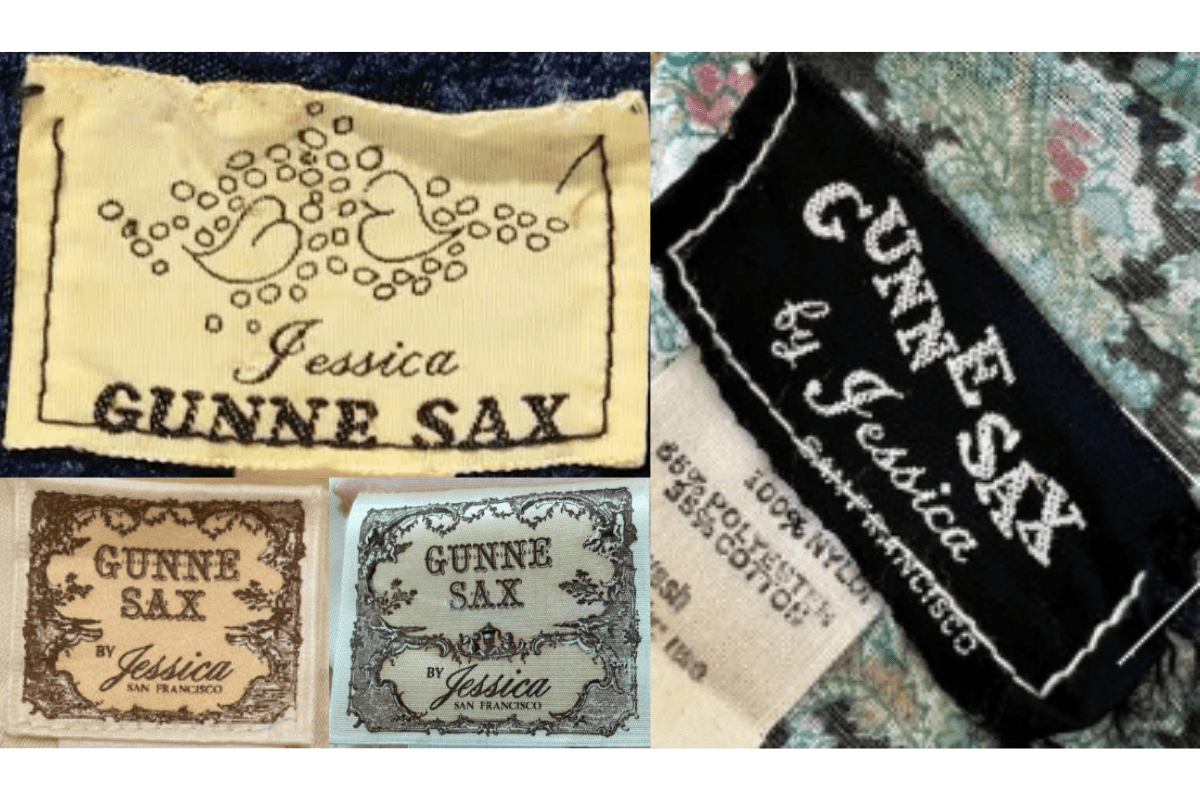
- Highly decorative ornate serif font.
- Flourishes and embellishments on letters.
- Victorian and Renaissance aesthetic branding.
How to spot it
Ornate decorated Gunne Sax serif = 1970s prairie founding era.
Value signal
Very high — 1970s Gunne Sax prairie dresses are premier vintage collectibles.
1980–1989
1980s Peak Prom Era Tags
The 1980s were Gunne Sax's commercial peak for prom and bridal wear. Tags retain the ornate font but with updated 1980s style.
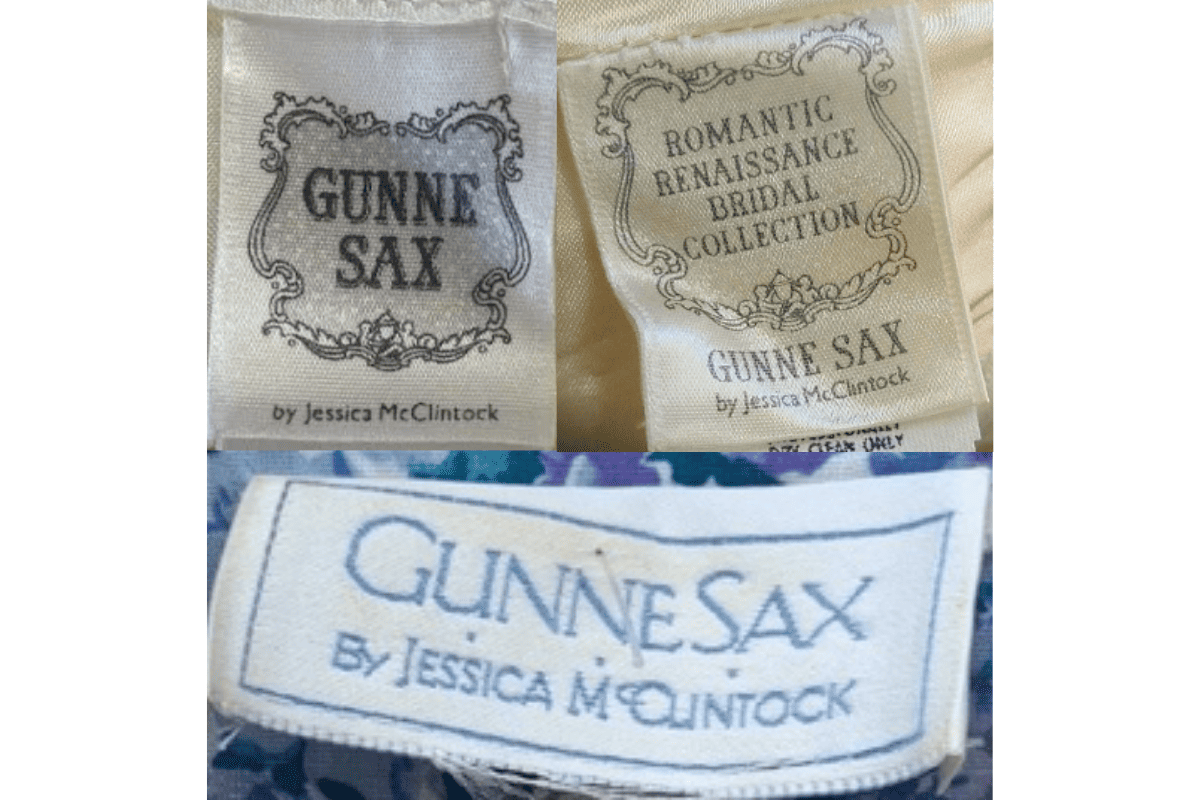
- Retained ornate font with 1980s updates.
- Prom and formal occasion focus.
- Peak commercial production.
How to spot it
Ornate Gunne Sax tag + 1980s prom styling = peak commercial era.
Value signal
High — 1980s prom-era Gunne Sax is heavily collected.
1990–1999
1990s Declining Era Tags
As prairie-style popularity waned, Gunne Sax simplified its branding. Tags are less ornate than the founding era.
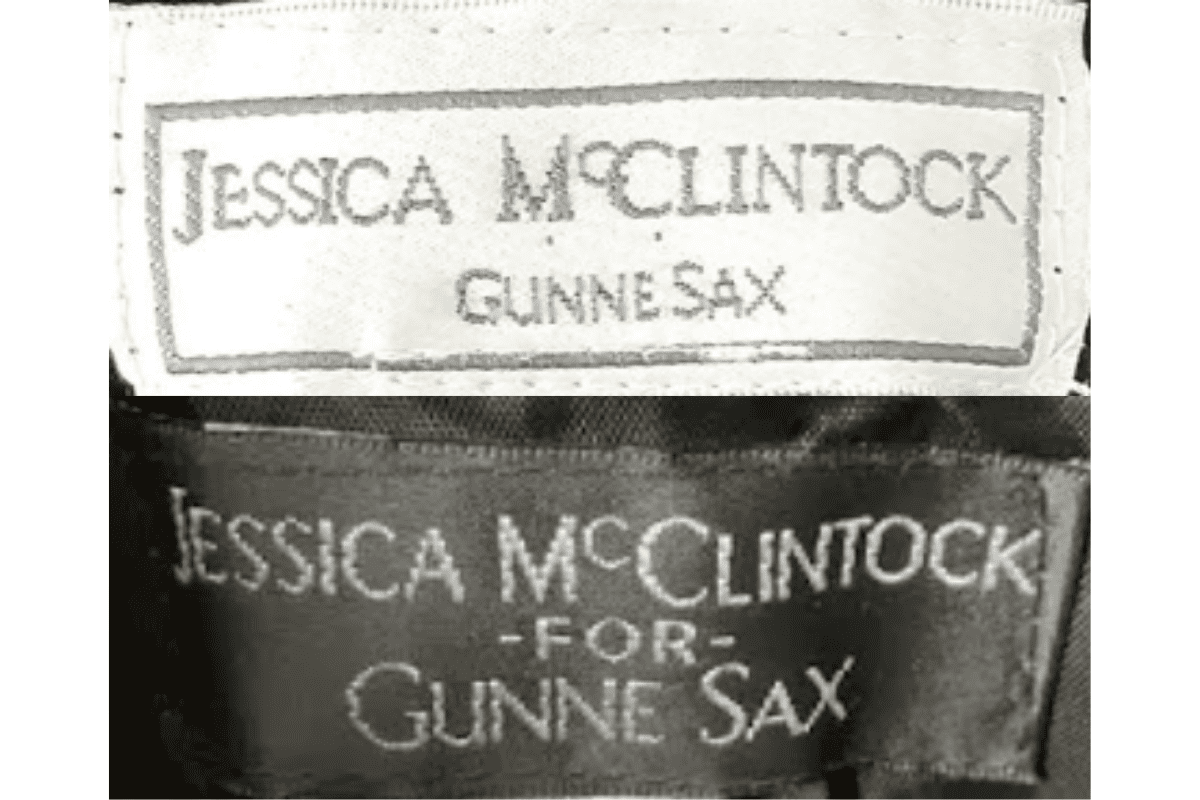
- Simplified Gunne Sax lettering.
- Less ornate than 1970s-80s tags.
- Declining production era.
How to spot it
Simplified Gunne Sax tag = 1990s post-peak era.
Value signal
Moderate.
2000–2010
2000s Final Era Tags
Gunne Sax continued in a diminished form through the 2000s. These are the final pieces under the brand name.
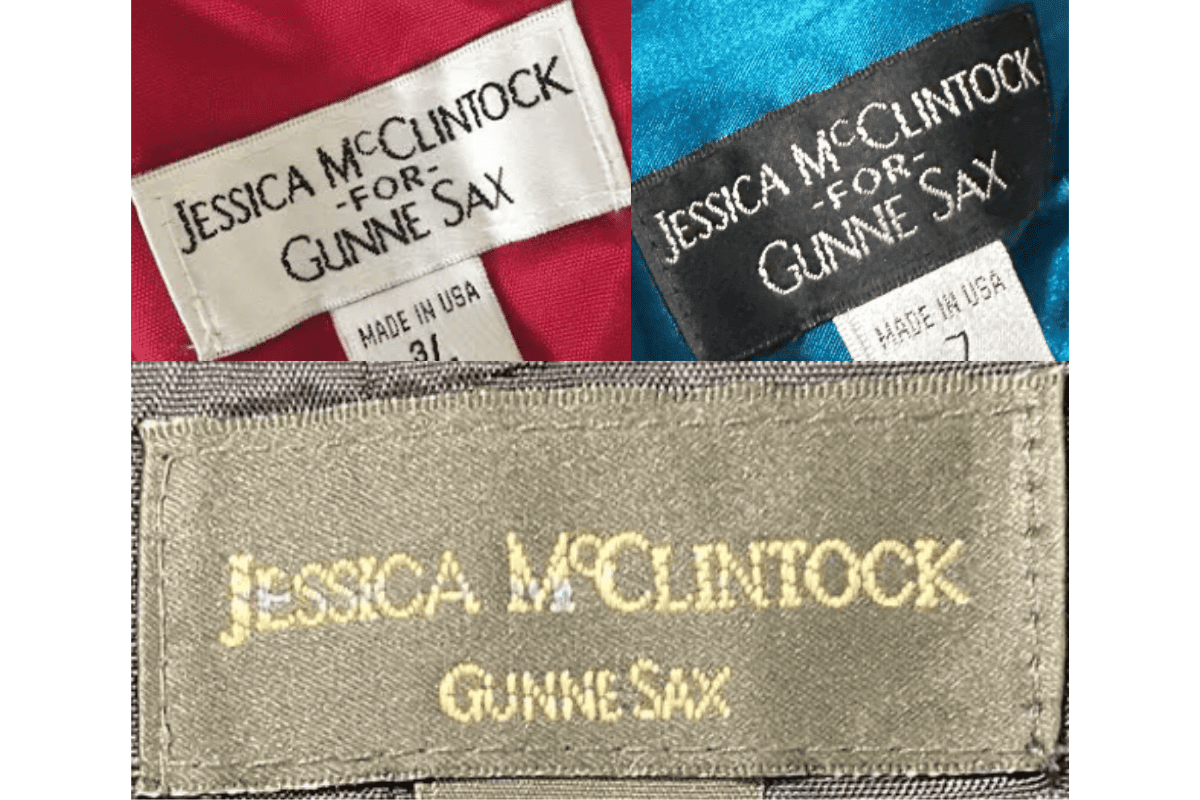
- Minimal modern Gunne Sax tag.
- Final production era.
- Contemporary care label format.
How to spot it
Minimal tag = 2000s final era.
Value signal
Low to moderate.