Valentino
Roman haute couture house founded in 1960 by Valentino Garavani and business partner Giancarlo Giammetti, synonymous with opulent gowns and a signature red palette. Pre-1980 labels read 'Valentino Garavani' in serif caps with a V-in-oval emblem; the simplified standalone 'Valentino' mark and 'Made in Italy' wording track 1980s–90s production.

- Origin
- Italy
- Founded
- 1960
- Category
- High Fashion
- Documented eras
- 6
How Valentino labels evolved over time. Match the markers below against the tag in hand to place a garment in its era.
1960–1969
1960s vintage Valentino tags
The very earliest Valentino tags were white squares They had a big V for Valentino in a back square.
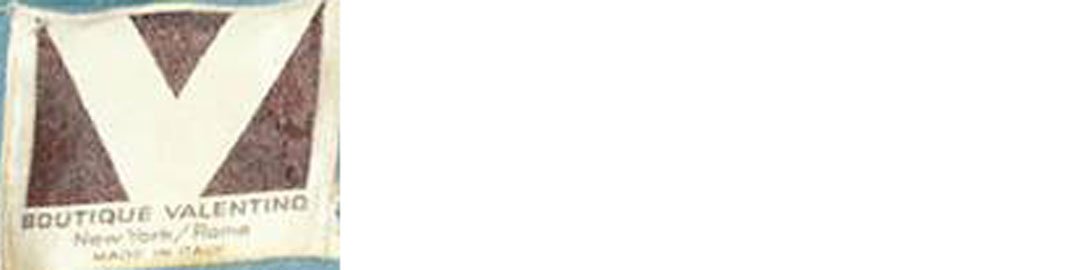
- The very earliest Valentino tags were white squares.
- They had a big V for Valentino in a back square.
- And said ‘Boutique Valentino’ across the bottom.
How to spot it
The very earliest Valentino tags were white squares — confirms this label era.
Value signal
Strong collector demand; 1960s examples command premiums in good condition.
1970–1979
1970s vintage Valentino tags
The tags became wider rectangles They started to include the commonly known logos, some with just text and others with the emblem as well.
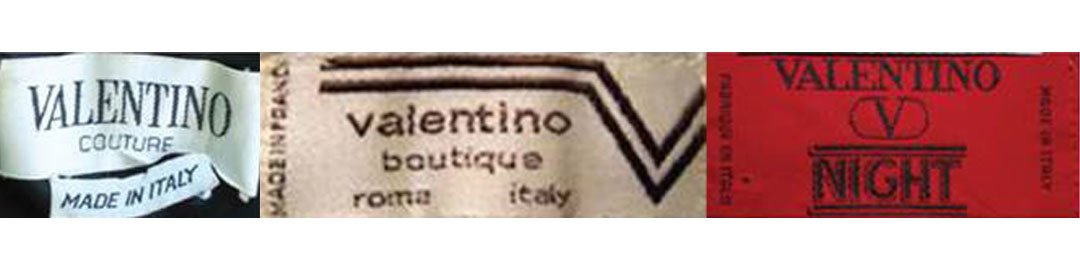
- The tags became wider rectangles.
- They started to include the commonly known logos, some with just text and others with the emblem as well.
- The vast majority of Valentino from this time will have been from its Boutique or Couture lines.
How to spot it
The tags became wider rectangles — confirms this label era.
Value signal
Solid vintage interest; 1970s pieces in clean condition attract steady demand.
1980–1989
1980s vintage Valentino tags
At this time the tags would become a more standardized format With the text and emblem logo in the middle.
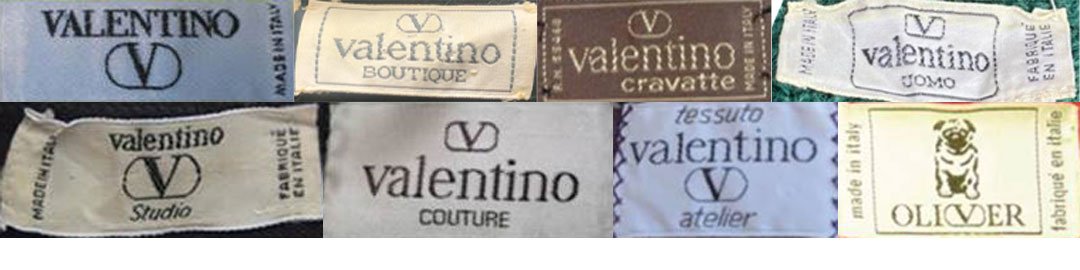
- At this time the tags would become a more standardized format.
- With the text and emblem logo in the middle.
- The country of manufacture on one of the sides.
- And the product line often beneath the logo, which became a common structure for future tags.
How to spot it
At this time the tags would become a more standardized format — confirms this label era.
Value signal
Good vintage demand; 1980s label detail is a key value driver.
1990–1999
1990s vintage Valentino tags
Whilst jeans had previously been launched by Valentino, a dedicated Jeans line was launched in the 1990s which was a collection of more casual Valentino style clothing Many of these and the Miss V tags are completely sewn in.
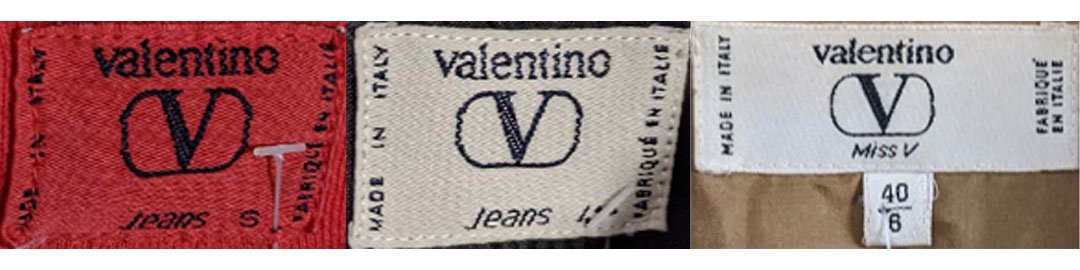
- Whilst jeans had previously been launched by Valentino, a dedicated Jeans line was launched in the 1990s which was a collection of more casual Valentino style clothing.
- Many of these and the Miss V tags are completely sewn in.
- Boutique and Couture tags were big thick bits of fabric usually found on dresses and gowns.
- Valentino Roma was launched that focused on women’s wear like skirts, blouses, and jackets.
How to spot it
Whilst jeans had previously been launched by Valentino, a dedicated Jeans line was launched in the 1990s which was a collection of more casual Valentino style clothing — confirms this label era.
Value signal
Moderate collector interest; condition and completeness determine value.
2000–2009
2000s vintage Valentino tags
In the 2000s Valentino more aggressively expanded into menswear, launching the Chemise line which would create men’s shirts It became common practice for the country of manufacture to be on the right side of the tag.
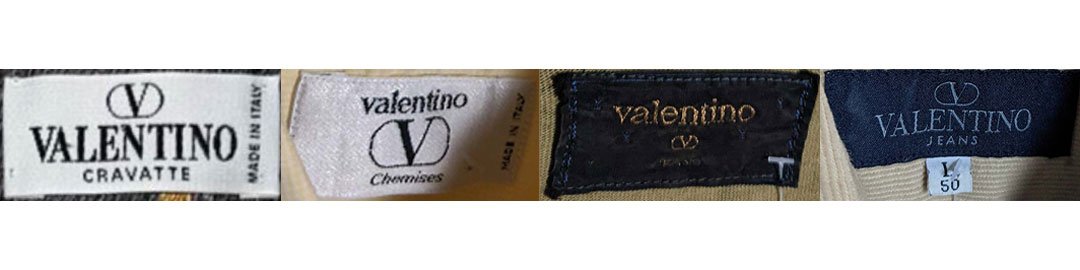
- In the 2000s Valentino more aggressively expanded into menswear, launching the Chemise line which would create men’s shirts.
- It became common practice for the country of manufacture to be on the right side of the tag.
- Tags were often fully sewn in.
How to spot it
In the 2000s Valentino more aggressively expanded into menswear, launching the Chemise line which would create men’s shirts — confirms this label era.
Value signal
Entry-level vintage; value driven by brand recognition and condition.
2010–2019
2010s vintage Valentino tags
Many of the tags transitioned to being fabric loop tags instead of being sewn in They say the sub-brand in very small writing at the bottom of the tag.
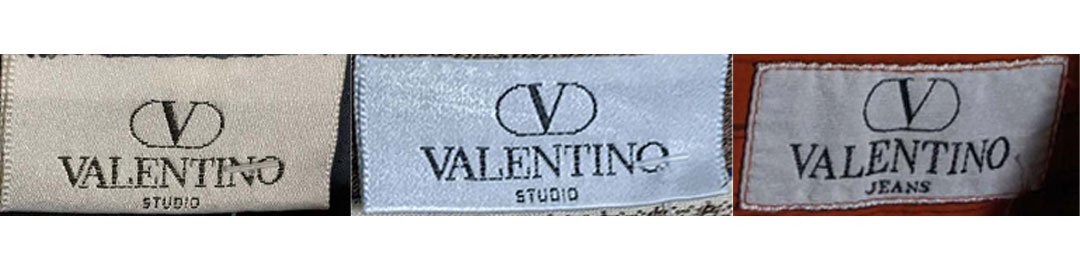
- Many of the tags transitioned to being fabric loop tags instead of being sewn in.
- They say the sub-brand in very small writing at the bottom of the tag.
- Pieces from this era usually have wash tags that include a lot of extra information in multiple languages.
How to spot it
Many of the tags transitioned to being fabric loop tags instead of being sewn in — confirms this label era.
Value signal
Entry-level vintage; value driven by brand recognition and condition.