Dressbarn
Connecticut-based women's workwear retailer. 1980s tags are simple and utilitarian; 1990s tags add color and bolder lettering consistent with chain retail branding; 2000s modernize with a cleaner simplified logo.

- Origin
- USA
- Founded
- 1962
- Category
- Designer & Casual
- Documented eras
- 3
How Dressbarn labels evolved over time. Match the markers below against the tag in hand to place a garment in its era.
1980–1989
1980s Utilitarian Tags
Roslyn Jaffe's Dressbarn grew rapidly through the 1980s on NASDAQ. Tags were simple and functional, reflecting the brand's no-frills value positioning.
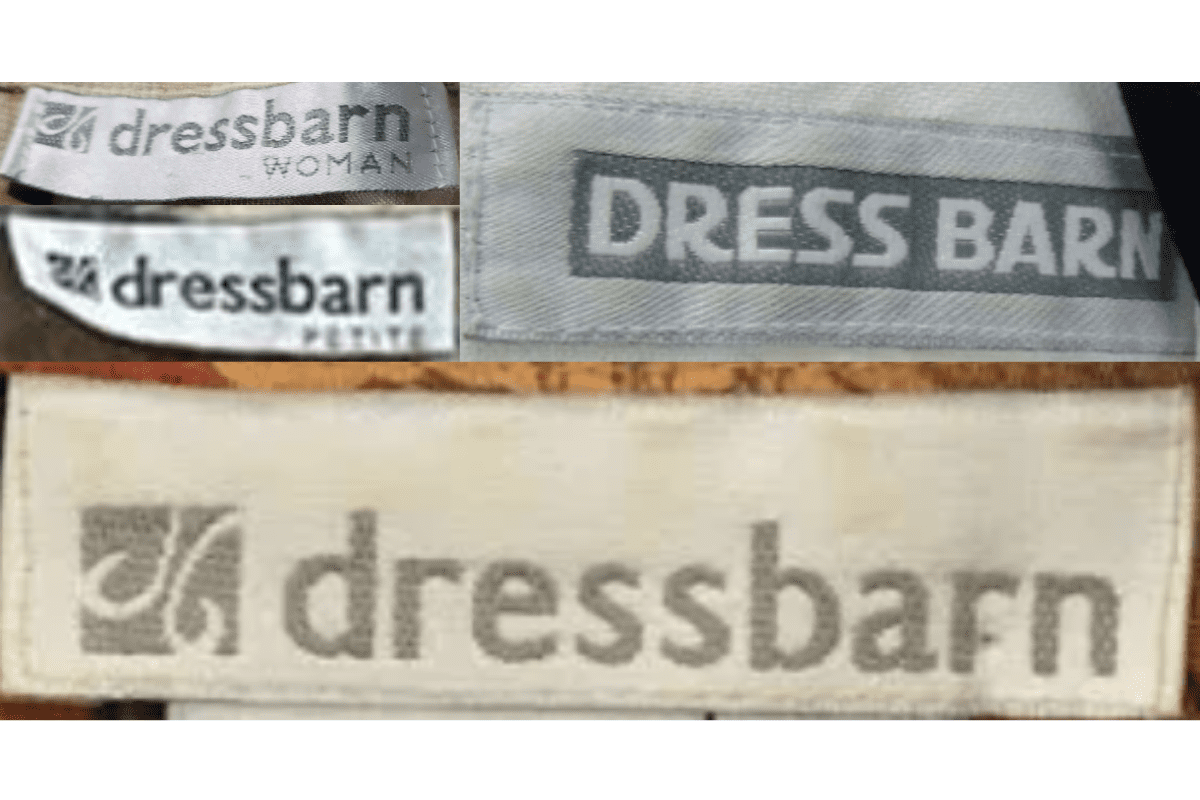
- Simple, utilitarian tag format.
- Minimal graphic design.
- Focus on care instructions and sizing.
How to spot it
Plain 'Dressbarn' lettering with minimal styling = 1980s rapid-growth era.
Value signal
Low — common affordable workwear.
1990–1999
1990s Bolder Retail Tags
1990s Dressbarn tags became bolder and more colorful as the chain modernized its visual identity for the growing working-women market.
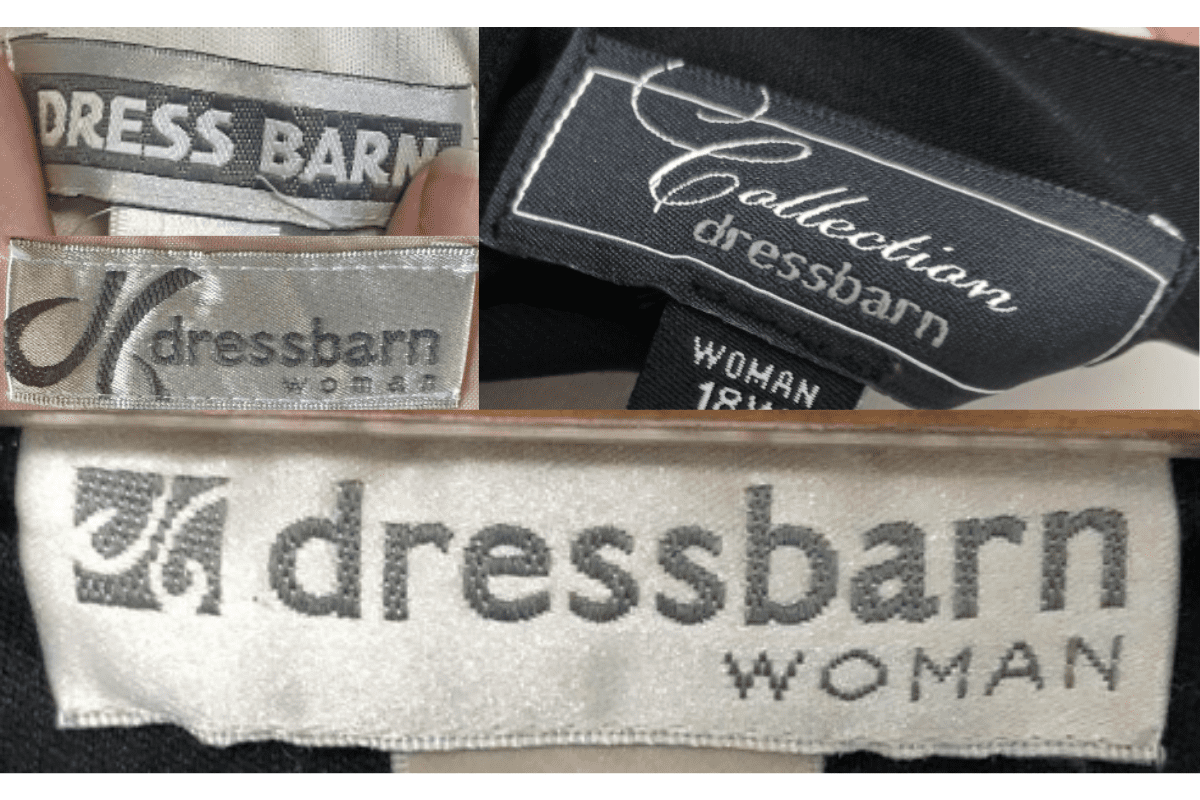
- Bolder lettering with color accents.
- Updated typography consistent with 1990s retail.
- Chain store standardized tag format.
How to spot it
Bold colorful 'Dressbarn' = 1990s chain-store era.
Value signal
Low — mass-market retail pieces.
2000–2019
2000s–2010s Modern Logo
The 2000s through to store closure in 2019 featured a cleaner, simplified Dressbarn logo. All physical stores closed in 2019 before brand relaunch as e-commerce.
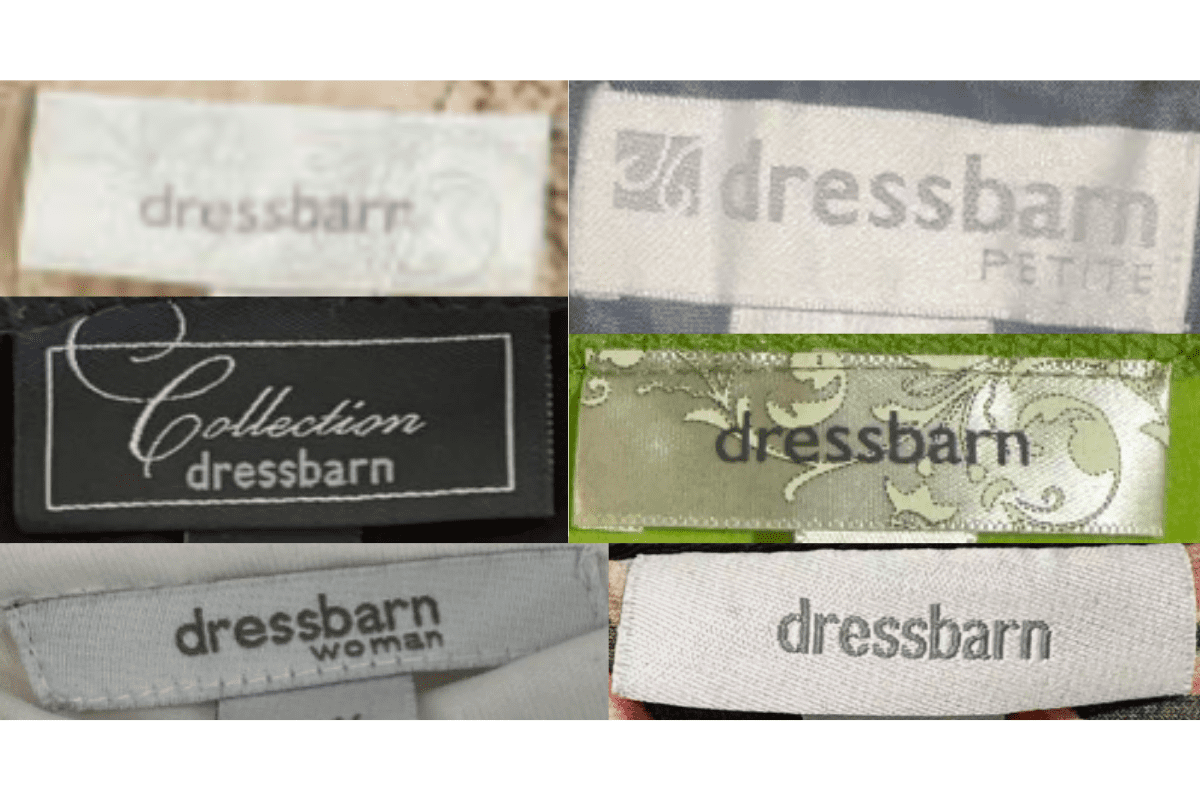
- Simplified clean logo format.
- Reduced color scheme.
- Modern retail tag with full care information.
How to spot it
Simplified 'Dressbarn' logo = 2000s–2010s pre-closure era.
Value signal
Low — recent retail era.