Hermes
Parisian house born in saddlery, marked by the horse-and-carriage. The logo barely changes, so 'Fabriqué en France' wording and tag materials do the dating.
- Origin
- France
- Founded
- 1837
- Category
- High Fashion
- Documented eras
- 6
How Hermes labels evolved over time. Match the markers below against the tag in hand to place a garment in its era.
1960–1969
Carriage-Motif French Tags
The classic 'Hermes Paris' logo with the equestrian carriage, typically with 'Fabrique en France' or 'Made in France' in a traditional serif font.
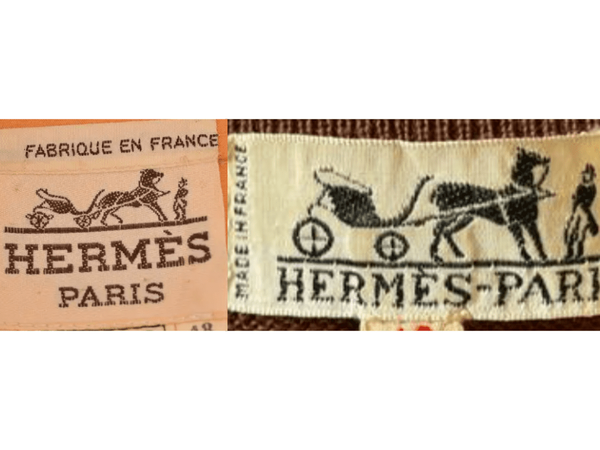
- Classic “Hermes Paris” logo featuring the equestrian carriage illustration.
- Typically has “Fabrique en France” or “Made in France” printed, emphasizing French craftsmanship.
- Detailed and intricate horse-and-carriage design with a traditional serif font for “Hermes Paris.”
How to spot it
The horse-and-carriage motif with 'Fabrique en France'.
Value signal
Rare and collector-grade; mid-century Hermes is scarce.
1970–1979
Bold Serif Carriage Tags
Continued use of the horse-and-carriage illustration, 'Made in France' wording, the 'Hermes Paris' font appearing bolder and more structured.
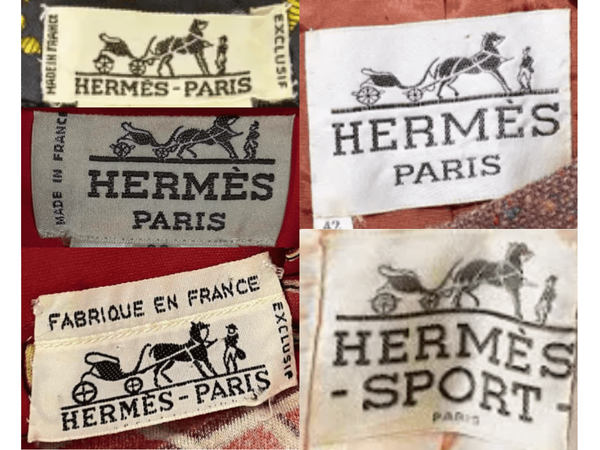
- Continued use of the iconic horse-and-carriage illustration, reflecting the brand’s heritage.
- Tags often say “Made in France” to emphasize the brand’s dedication to French manufacturing.
- Font for “Hermes Paris” appears bold with a slightly more refined, structured layout.
How to spot it
A bold serif 'Hermes Paris' with the carriage.
Value signal
Highly sought; 70s Hermes is strong collector territory.
1980–1989
Varied-Colour Carriage Tags
The classic carriage motif on a range of grounds — cream and darker shades — with 'Made in France' printed vertically on the side, in an elegant serif.
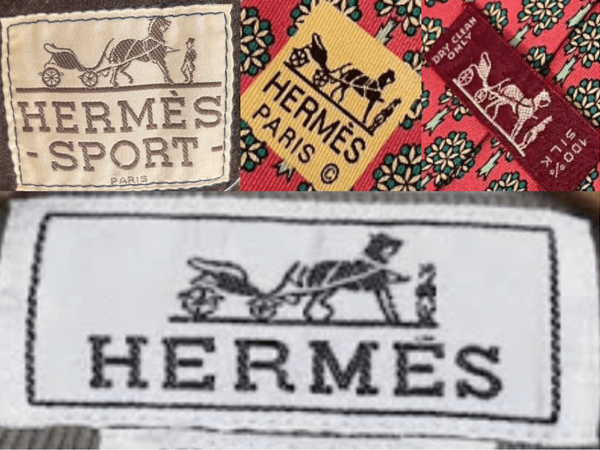
- Features the classic “Hermes Paris” text paired with the iconic horse-and-carriage motif.
- Tags may appear on a variety of colors, including cream and dark shades, with “Made in France” printed vertically on the side.
- Elegant serif font with a highly detailed illustration, emphasizing Hermes’ luxurious image.
How to spot it
A coloured tag, carriage motif, vertical 'Made in France'.
Value signal
Strong; 80s Hermes commands serious money.
1990–1999
Embroidered Carriage Tags
The carriage motif remains central, often with an embroidered look on fabric tags, the bold serif 'Hermes Paris' consistent, still emphasising 'Made in France'.
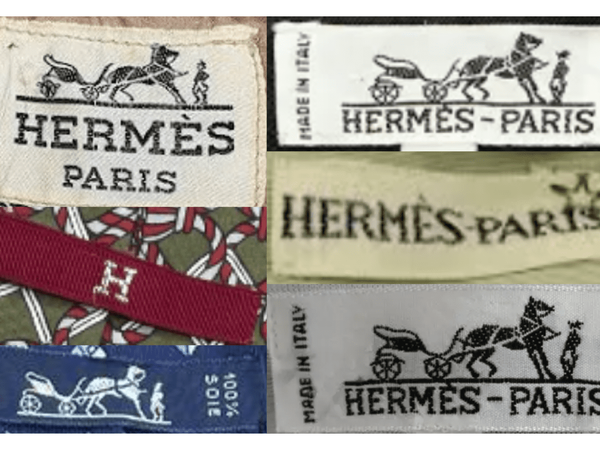
- Horse-and-carriage motif remains central, often with an embroidered look on fabric tags.
- Text style for “Hermes Paris” maintains the bold serif font, consistent with previous decades.
- Tags still emphasize “Made in France,” indicating the product’s French origins and high-quality craftsmanship.
How to spot it
An embroidered carriage-motif fabric tag.
Value signal
Strong; authentication essential given the brand.
2000–2009
Modernised Neutral Tags
Tags modernised with softer neutral colours, retaining 'Hermes Paris' branding and a slightly simplified carriage illustration.
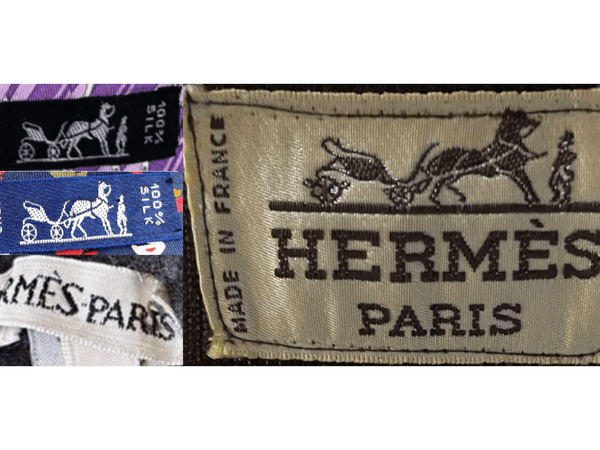
- Tags evolve with more modernized layouts, retaining the “Hermes Paris” branding.
- Horse-and-carriage illustration continues to be present, though with slightly simplified lines.
- Tags use softer, neutral colors, aligning with contemporary aesthetics of the decade.
How to spot it
A neutral-toned tag with a simplified carriage.
Value signal
Solid; condition- and authentication-driven.
2010–2019
Streamlined Minimal Tags
Further refined tags in varied materials with a minimalist approach, the carriage logo often simplified for a cleaner look.
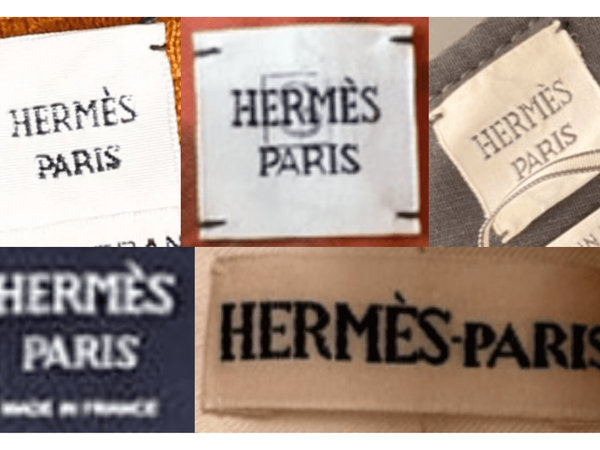
- Further refined tag designs with various materials and more minimalistic approaches.
- The horse-and-carriage logo is often simplified, with some tags omitting detailed elements for a cleaner look.
- Font style remains consistent, but the overall tag design is streamlined to reflect modern luxury trends.
How to spot it
A streamlined minimal tag, simplified carriage.
Value signal
Modern; priced on the piece, authentication essential.