Lilly Daché
New York millinery queen who dressed Hollywood royalty from Marlene Dietrich to Carmen Miranda. The address '78 East 56th Street' on simple elegant-font tags marks the peak 1940s decade; the flowing cursive 'Lilly Daché' script with 'New York' is the constant marker.
- Origin
- USA
- Founded
- 1924
- Category
- High Fashion
- Documented eras
- 4
How Lilly Daché labels evolved over time. Match the markers below against the tag in hand to place a garment in its era.
1940–1949
1940s vintage Lilly Daché tags
Tags often feature a simple and elegant font, emphasizing a classic and refined look Some tags include the address “78 EAST 56TH STREET, N.Y.” below the Lilly Daché name, indicative of her New York presence during this time.
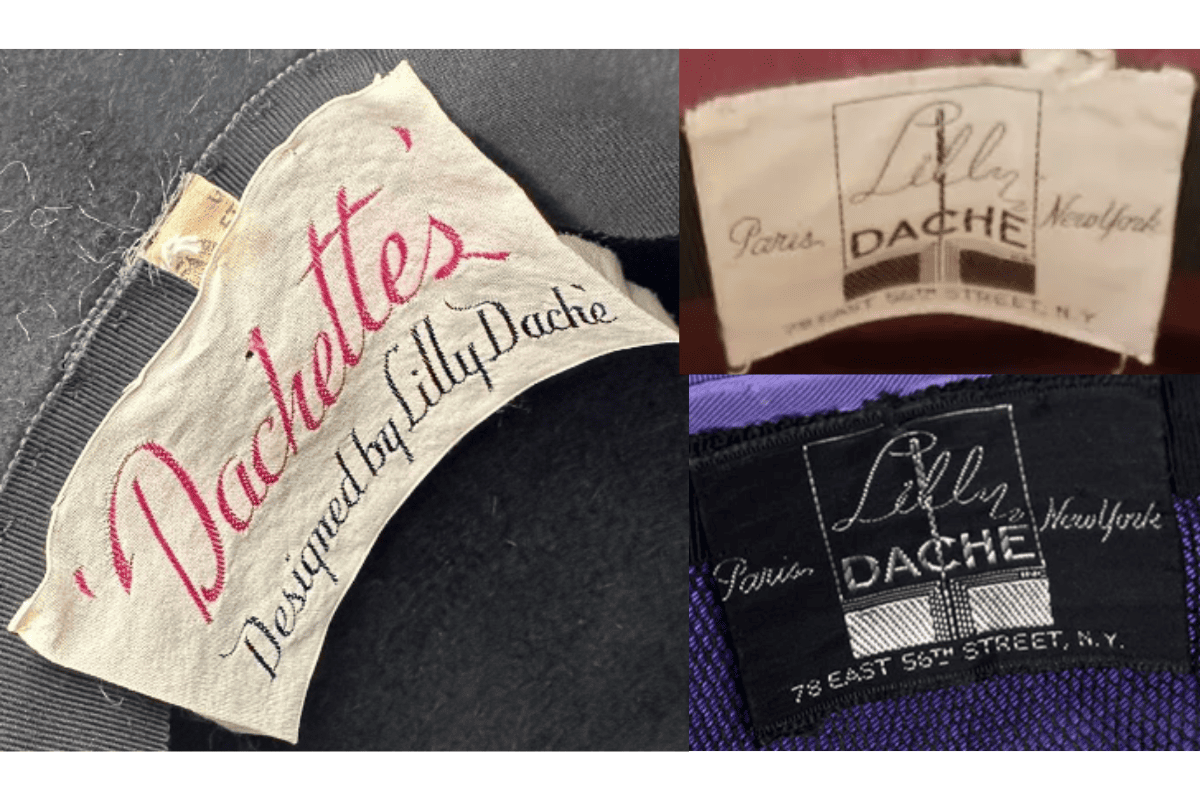
- Tags often feature a simple and elegant font, emphasizing a classic and refined look.
- Some tags include the address “78 EAST 56TH STREET, N.Y.” below the Lilly Daché name, indicative of her New York presence during this time.
- The design is minimalistic, often using a black or dark-colored background with white or light-colored lettering.
How to spot it
Tags often feature a simple and elegant font, emphasizing a classic and refined look — confirms this label era.
Value signal
Rare; pre-1960 examples are collector-grade and seldom surface.
1950–1959
1950s vintage Lilly Daché tags
Tags begin to incorporate more decorative fonts, with the “Lilly Daché” name often styled in a more cursive, flowing script Locations such as “Paris” and “New York” are prominently featured on the tags, highlighting the brand’s international presence.
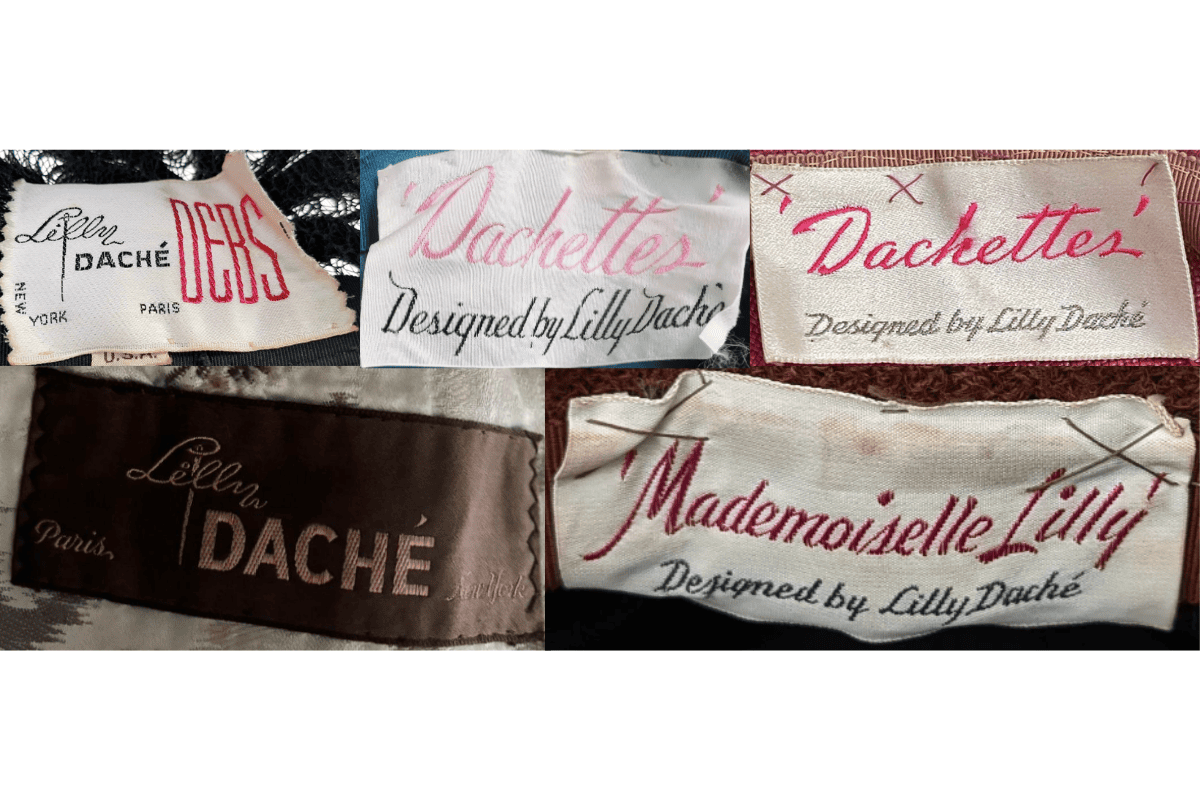
- Tags begin to incorporate more decorative fonts, with the “Lilly Daché” name often styled in a more cursive, flowing script.
- Locations such as “Paris” and “New York” are prominently featured on the tags, highlighting the brand’s international presence.
- Some tags include additional branding such as “Daché DEBS” or “Dachettes,” indicating different lines under the Lilly Daché brand.
How to spot it
Tags begin to incorporate more decorative fonts, with the “Lilly Daché” name often styled in a more cursive, flowing script — confirms this label era.
Value signal
Rare; pre-1960 examples are collector-grade and seldom surface.
1960–1969
1960s vintage Lilly Daché tags
The tags from this era continue to use cursive fonts but with a more modern twist, often in a bolder and more stylized form Multiple city names like “PARIS-NEW YORK-CALIFORNIA” appear on the tags, showcasing the brand’s expansion to the West Coast.
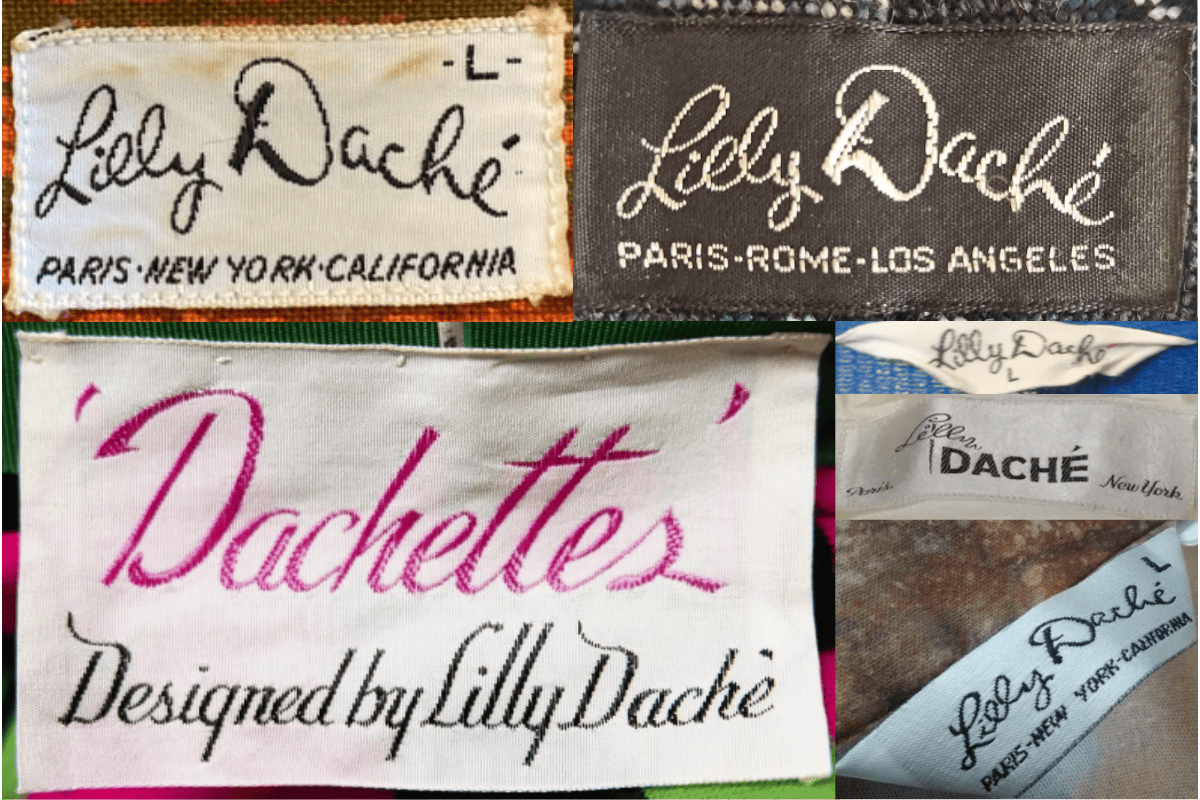
- The tags from this era continue to use cursive fonts but with a more modern twist, often in a bolder and more stylized form.
- Multiple city names like “PARIS-NEW YORK-CALIFORNIA” appear on the tags, showcasing the brand’s expansion to the West Coast.
- Tags during this period might also include size indicators, reflecting the growing ready-to-wear market.
How to spot it
The tags from this era continue to use cursive fonts but with a more modern twist, often in a bolder and more stylized form — confirms this label era.
Value signal
Strong collector demand; 1960s examples command premiums in good condition.
1970–1979
1970s vintage Lilly Daché tags
Tags from the 1970s maintain the cursive script but in a more relaxed, casual style compared to earlier decades The city names on the tags sometimes expand to include “LOS ANGELES,” indicating further brand growth.
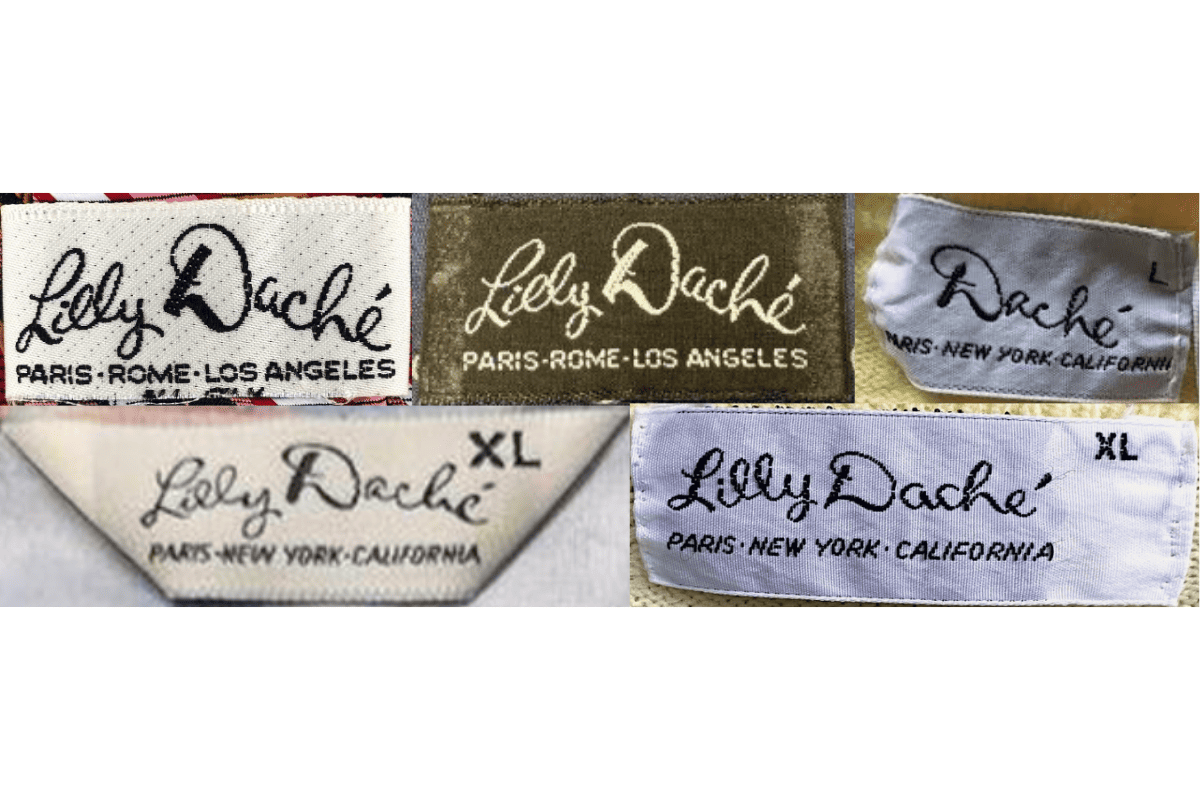
- Tags from the 1970s maintain the cursive script but in a more relaxed, casual style compared to earlier decades.
- The city names on the tags sometimes expand to include “LOS ANGELES,” indicating further brand growth.
- Some tags feature more vibrant colors and contrasting materials, aligning with the bold fashion trends of the 1970s.
How to spot it
Tags from the 1970s maintain the cursive script but in a more relaxed, casual style compared to earlier decades — confirms this label era.
Value signal
Solid vintage interest; 1970s pieces in clean condition attract steady demand.