Patagonia
Ventura outdoor brand with a cult following. Subtle shifts in the mountain-skyline label — outline, fill, font weight — and the Synchilla line date its fleeces and shells.
- Origin
- USA
- Founded
- 1973
- Category
- Outdoor & Heritage
- Documented eras
- 5
How Patagonia labels evolved over time. Match the markers below against the tag in hand to place a garment in its era.
1970–1979
Outlined-Text Sewn-In Tags
Lower-quality white fabric rectangles with the legacy emblem, the text carrying a white outline, sewn in all the way round with no other detail.
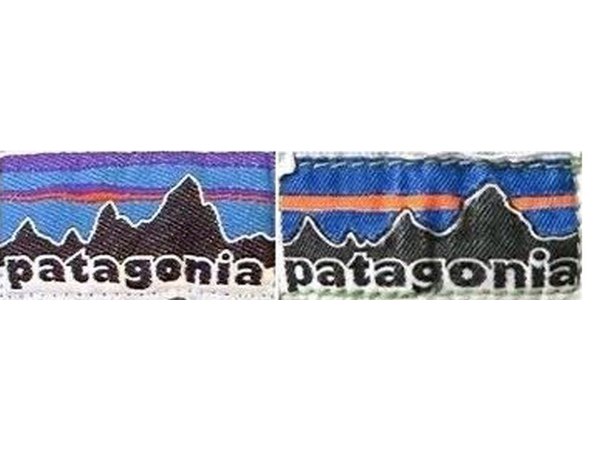
- Like most tags from the 70s, these Patagonia tags are generally lower in quality
- They are white fabric rectangles
- They use the legacy emblem and logo
- The text has a white outline around it
- Tags from this time were also fully sewn in all the way round
- No information other than the brand was included on these tags
How to spot it
White-outlined text, fully sewn-in, brand only.
Value signal
Rare; 70s Patagonia is genuine collector territory.
1980–1989
Longer Tags, Loop Introduced
Tags lengthened and the loop tag arrived; the font is thicker with no outline (now solid white), a few naming the country of make.
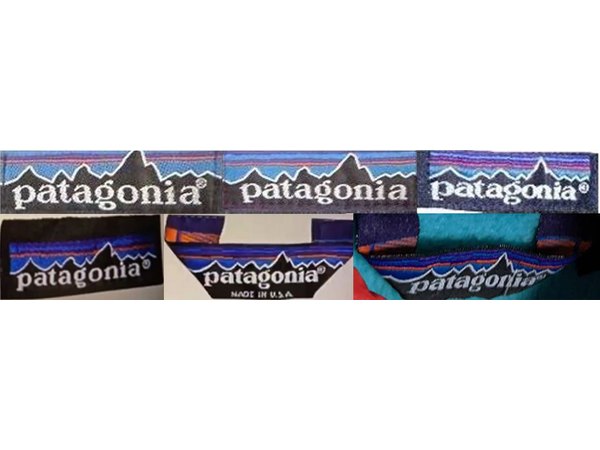
- The shape of the tags became longer in the 1980s, and the loop tag was introduced
- The usual emblem and logo is used
- The font is slightly thicker than previous iterations and no longer has an outline, instead it is white
- A few of these tags included the country of manufacture information, but mostly they only included the brand logo
How to spot it
A longer loop tag, thicker outline-free white text.
Value signal
Strong; 80s Patagonia is highly sought after.
1990–1999
Synchilla & Wave Tags
Subtle background and font shifts; the Synchilla line launched with its own label, and a limited surf-market tag swapped mountains for waves.
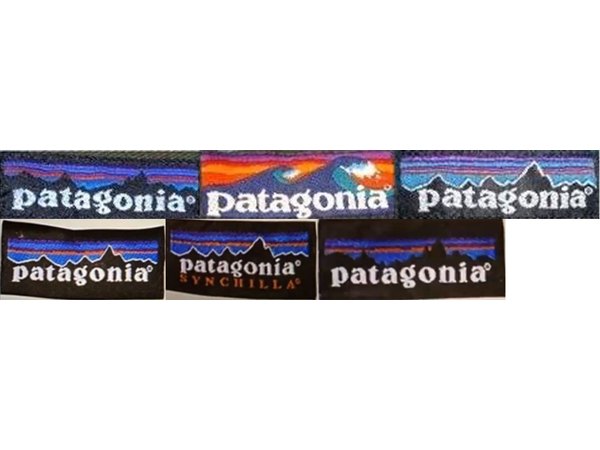
- The main features of these tags remained very similar, with subtle changes to the background and font thickness and placement, carefully observe these to compare tags
- The Patagonia Synchilla was introduced in the 1990s, and this is an example of its original label
- To appeal to its growing surfer market, it also created a limited edition tag that used a background of waves instead of mountains
- More of the tags became tabs instead of being completely sewn in
How to spot it
An original Synchilla label, or the wave-background tag.
Value signal
Strong; 90s Patagonia, especially Synchilla, sells very well.
2000–2009
Bigger Tags, Smaller Logo
Patagonia's biggest recent change — the logo shrank on a larger tag; a white-background remake appeared, the common black tag sometimes paired with a white info tag.
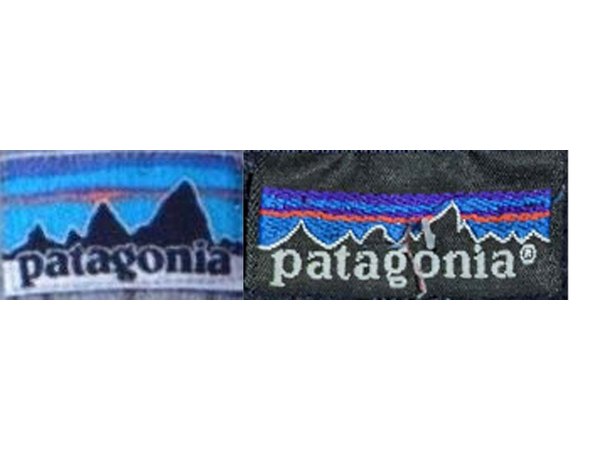
- This transition was probably Patagonia’s biggest change in recent times, with the logo becoming a smaller feature on a bigger tag
- A remake of an older tag with the white background was created, with the white outline around the text
- The more common black tag would sometimes be accompanied by a white tag to its left that included sizing and care information
How to spot it
A larger tag with a small logo, often a paired white tag.
Value signal
Common; modest resale, condition-driven.
2010–2019
Sewn-In With Info Tag
Most tags are fully sewn in with an attached white info tag; mass production made the logo and emblem far more consistent.

- Many of the tags from this era are completely sewn in, and have a white tag attached to them with more information about the item
- Due to its global deals for mass production, the logo and emblem became more consistent, with fewer subtle variations between tags
How to spot it
A fully sewn-in tag with an attached white info tag.
Value signal
Modern; priced on the piece.