Talbots
Classic American women's clothing brand founded by Rudolf and Nancy Talbot in Hingham, Massachusetts in 1947. Minimalist text marks the 1960s early tags; the red underline beneath the 'T' in 'Talbots', introduced in the 1970s, is the hallmark dating marker.

- Origin
- USA
- Founded
- 1947
- Category
- Designer & Casual
- Documented eras
- 5
How Talbots labels evolved over time. Match the markers below against the tag in hand to place a garment in its era.
1960–1969
1960s vintage Talbots tags
Simple, elegant design reflecting the brand’s early years Tags typically feature minimalist text, often just the brand name “Talbots.
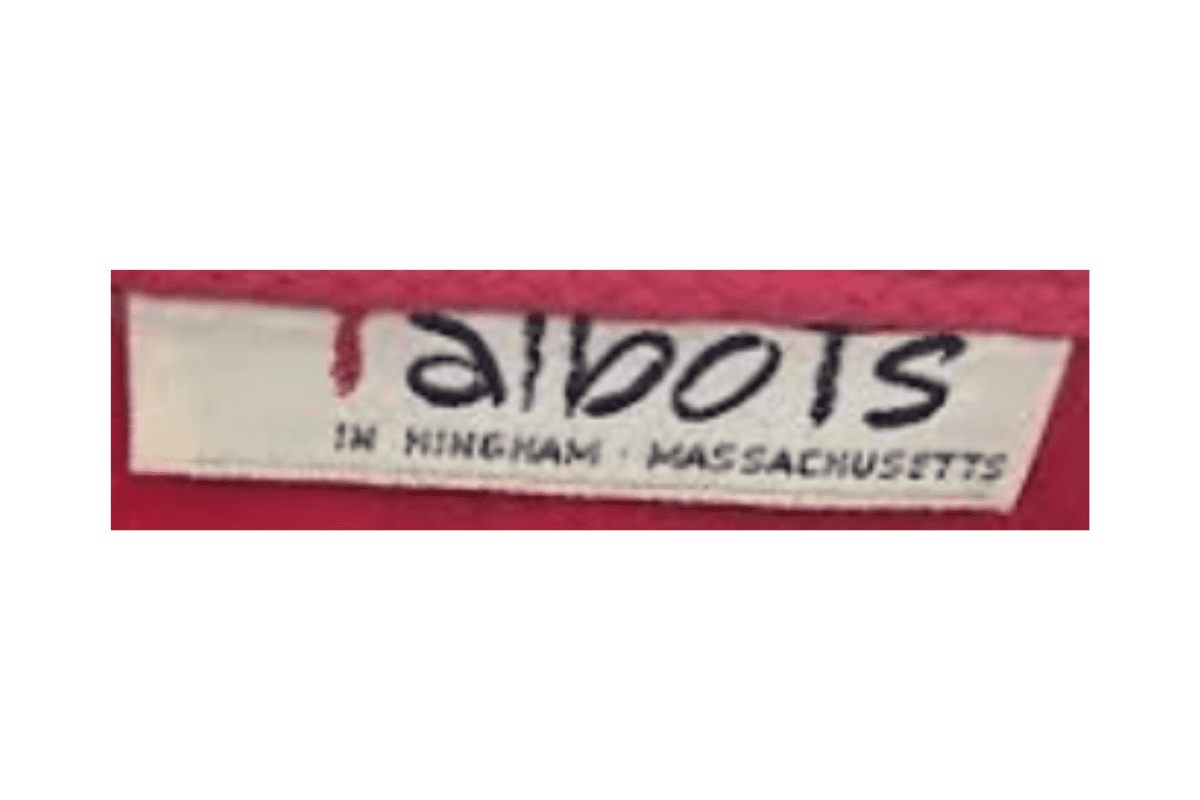
- Simple, elegant design reflecting the brand’s early years.
- Tags typically feature minimalist text, often just the brand name “Talbots.
- Made with a straightforward black-and-white color scheme.
- Small tags, often sewn into the back of the neck or waistline.
- Sometimes includes additional details like “in Hingham, Massachusetts,” indicating the brand’s roots.
How to spot it
Simple, elegant design reflecting the brand’s early years — confirms this label era.
Value signal
Strong collector demand; 1960s examples command premiums in good condition.
1970–1979
1970s vintage Talbots tags
Introduction of a more stylized logo with a red underline beneath the “T” in “Talbots Some tags include “Petites” or other sizing information below the main logo.
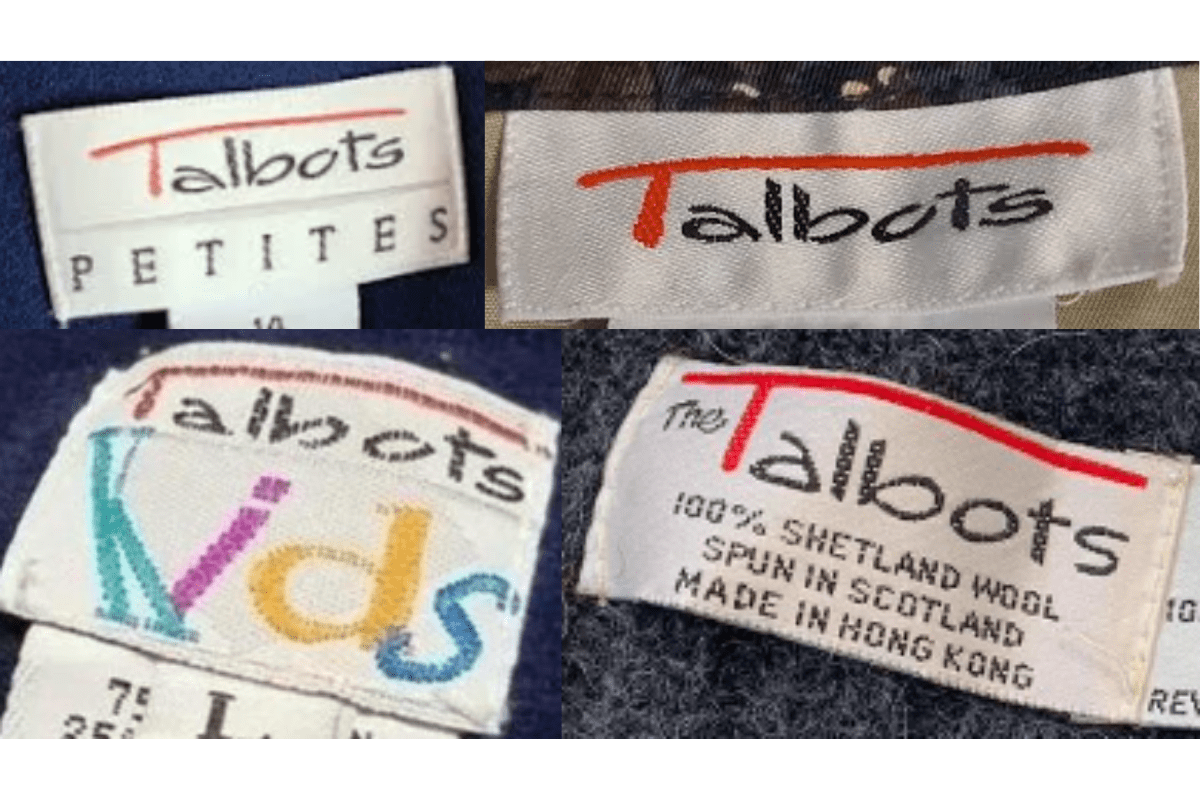
- Introduction of a more stylized logo with a red underline beneath the “T” in “Talbots.
- Some tags include “Petites” or other sizing information below the main logo.
- Use of a simple serif font, often in black or dark colors.
- Tags are still fairly small, usually with a clean, uncluttered design.
How to spot it
Introduction of a more stylized logo with a red underline beneath the “T” in “Talbots — confirms this label era.
Value signal
Solid vintage interest; 1970s pieces in clean condition attract steady demand.
1980–1989
1980s vintage Talbots tags
Refinement of the logo, with a bolder, more modern font Introduction of oval-shaped tags with a beige background and red underline, giving a distinctive look.
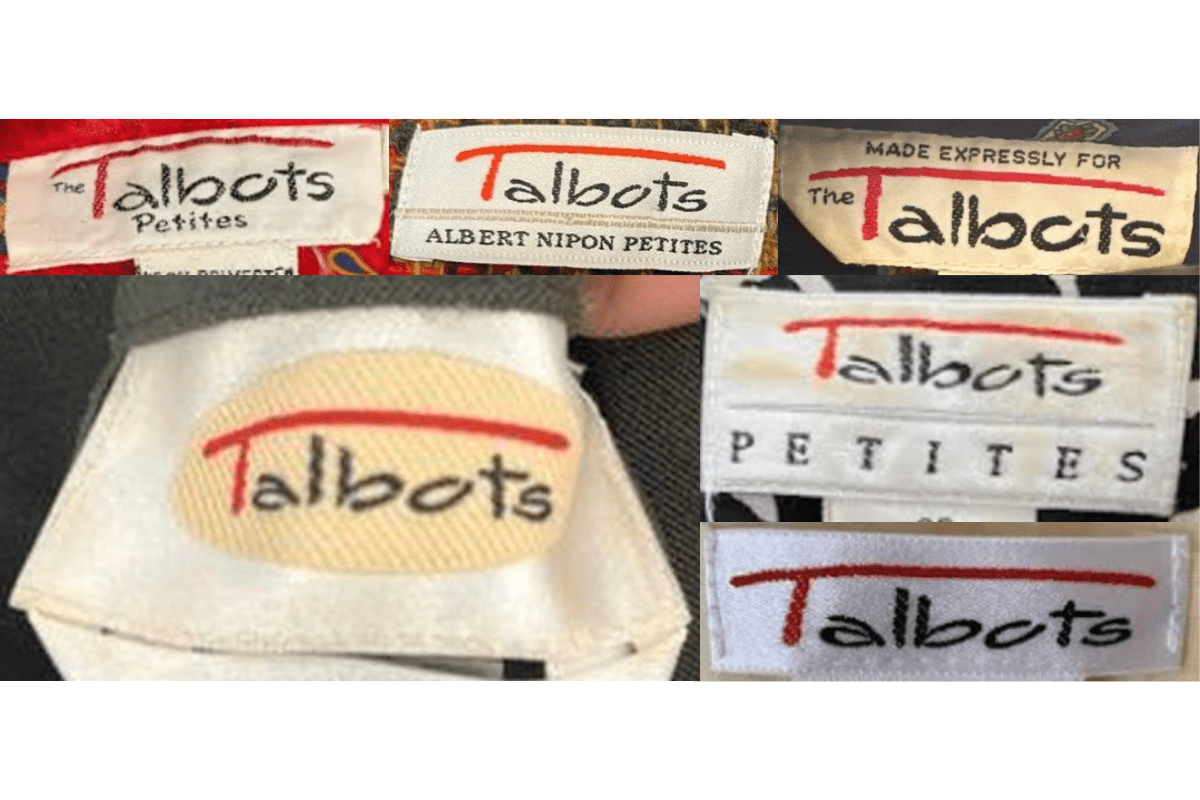
- Refinement of the logo, with a bolder, more modern font.
- Introduction of oval-shaped tags with a beige background and red underline, giving a distinctive look.
- Tags often include additional text like “Petites” or collaboration details like “Albert Nipon Petites.
- Increased use of color and more complex tag designs, reflecting the fashion trends of the era.
How to spot it
Refinement of the logo, with a bolder, more modern font — confirms this label era.
Value signal
Good vintage demand; 1980s label detail is a key value driver.
1990–1999
1990s vintage Talbots tags
Continued use of the iconic red underline beneath the “T” in “Talbots Tags start to incorporate more detailed information, such as fabric content and country of origin.
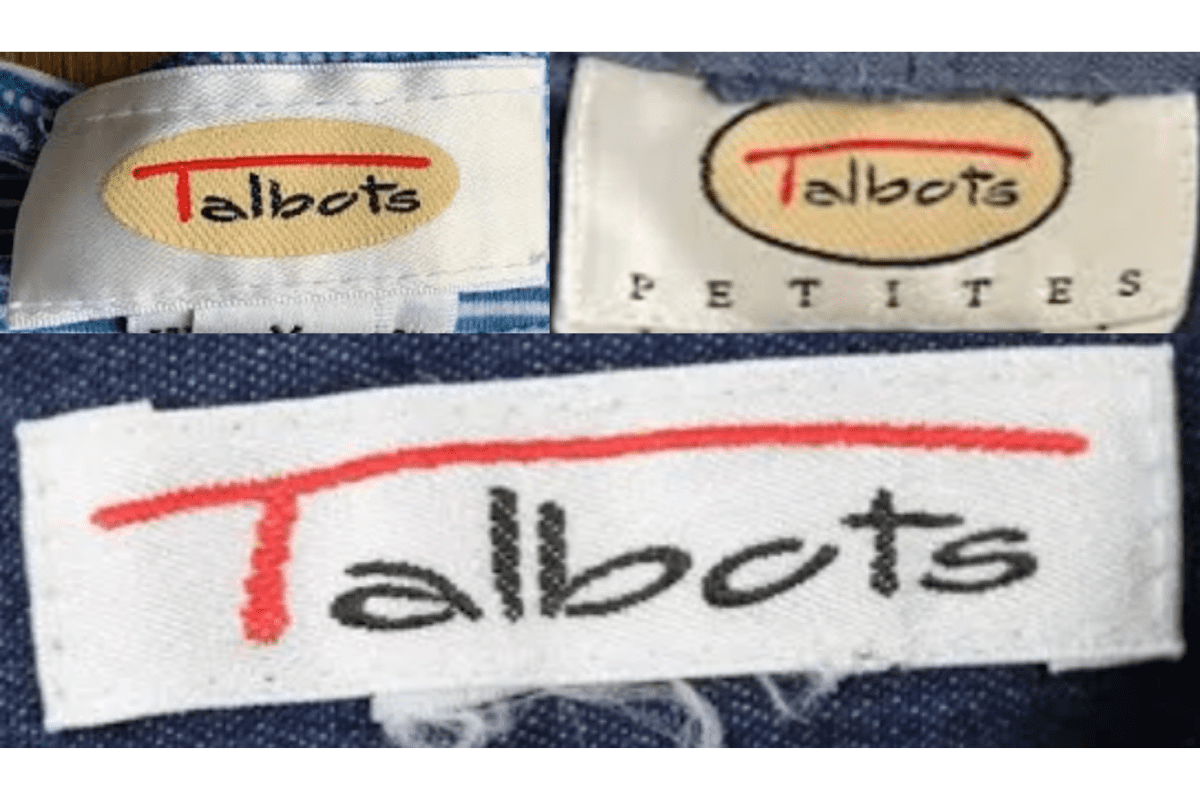
- Continued use of the iconic red underline beneath the “T” in “Talbots.
- Tags start to incorporate more detailed information, such as fabric content and country of origin.
- Introduction of the “Collection” line, with tags featuring more sophisticated typography and a higher-end look.
- More diversity in tag shapes and sizes, with some tags adopting a black-and-white color scheme.
How to spot it
Continued use of the iconic red underline beneath the “T” in “Talbots — confirms this label era.
Value signal
Moderate collector interest; condition and completeness determine value.
2000–2009
2000s vintage Talbots tags
Modernization of the logo with cleaner, more streamlined designs Use of different materials and textures for the tags, moving towards a more luxurious feel.
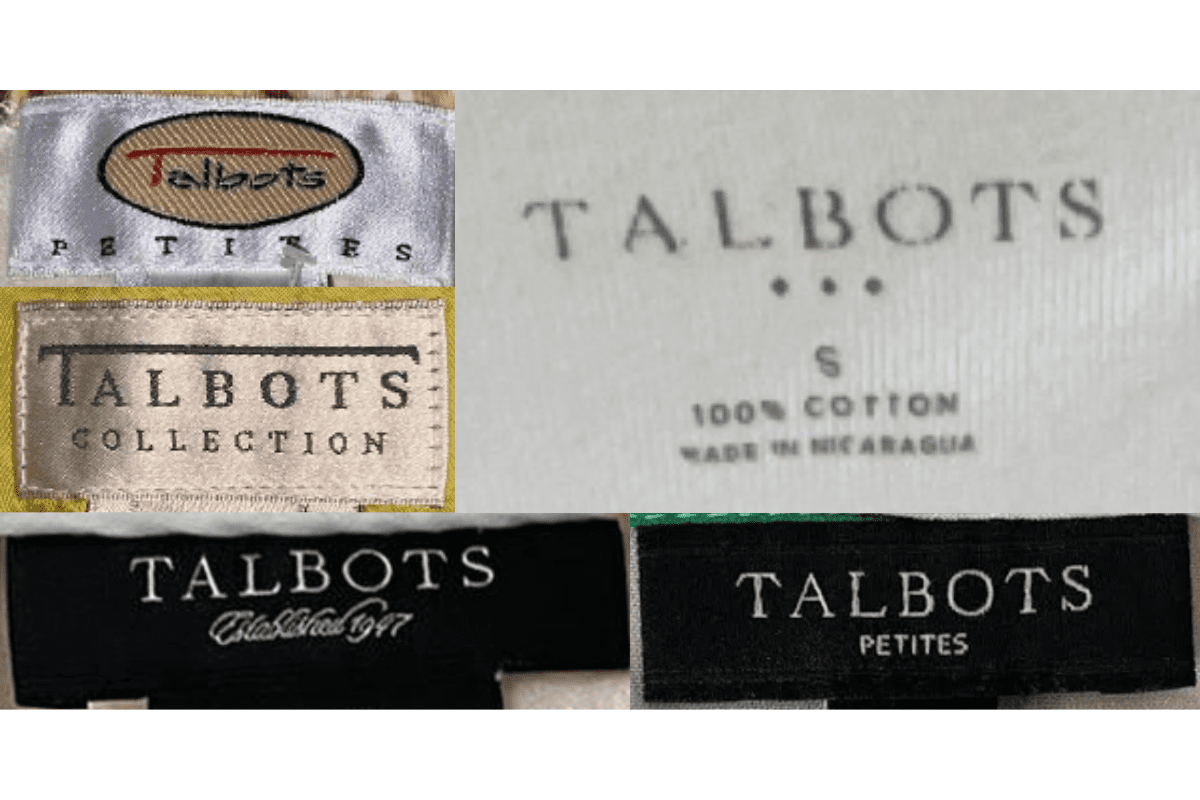
- Modernization of the logo with cleaner, more streamlined designs.
- Use of different materials and textures for the tags, moving towards a more luxurious feel.
- Introduction of special collections, with tags reflecting the particular line (e.g., “Collection” or “Petites”).
- More emphasis on branding consistency, with the red underline beneath the “T” becoming a staple across different tag designs.
How to spot it
Modernization of the logo with cleaner, more streamlined designs — confirms this label era.
Value signal
Entry-level vintage; value driven by brand recognition and condition.