Anthony Muto
Mid-century American womenswear designer, often partnered with Maurice Marciano. The 'A.M./P.M' boxed label is the unmistakable signature of his 70s work.

- Origin
- USA
- Founded
- 1965
- Category
- Designer & Casual
- Documented eras
- 3
How Anthony Muto labels evolved over time. Match the markers below against the tag in hand to place a garment in its era.
1960–1969
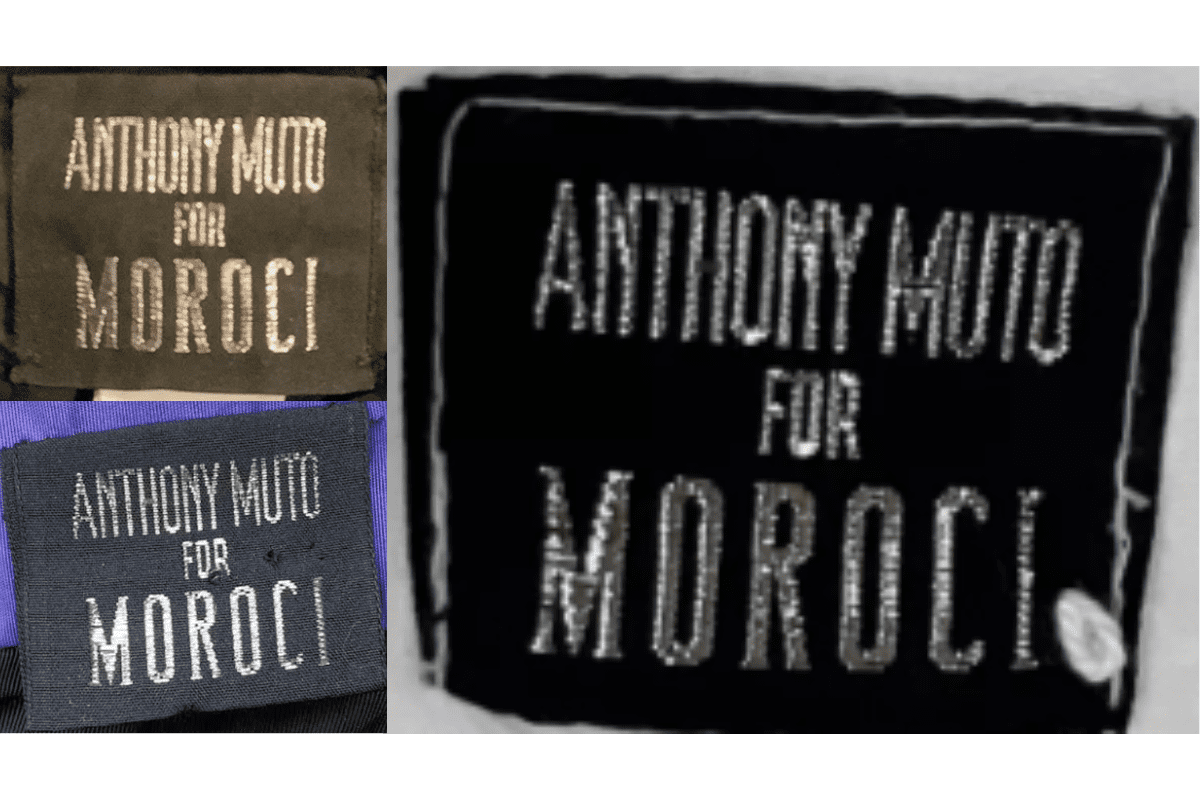
Black-Ground 'For Moroci' Tags
Bold lettering, often black tags with white or silver text, descriptors like 'FOR MOROCI' marking specific collaborations and collections.
- Tags from this era prominently feature “Anthony Muto” in bold lettering.
- Often showcases a clean, monochrome design with minimal embellishments.
- Some labels include additional descriptors such as “FOR MOROCI” indicating collaborations or specific collections.
- The use of black backgrounds with white or silver text was common.
How to spot it
Black tag with 'FOR MOROCI' or similar.
Value signal
Strong; 60s Anthony Muto is collector-grade.
1970–1979
'A.M./P.M' Box-Logo Tags
Boxed 'A.M./P.M' wording becomes the central identifier, sometimes with sub-labels like 'Marita by Anthony Muto', simple black-and-white scheme.
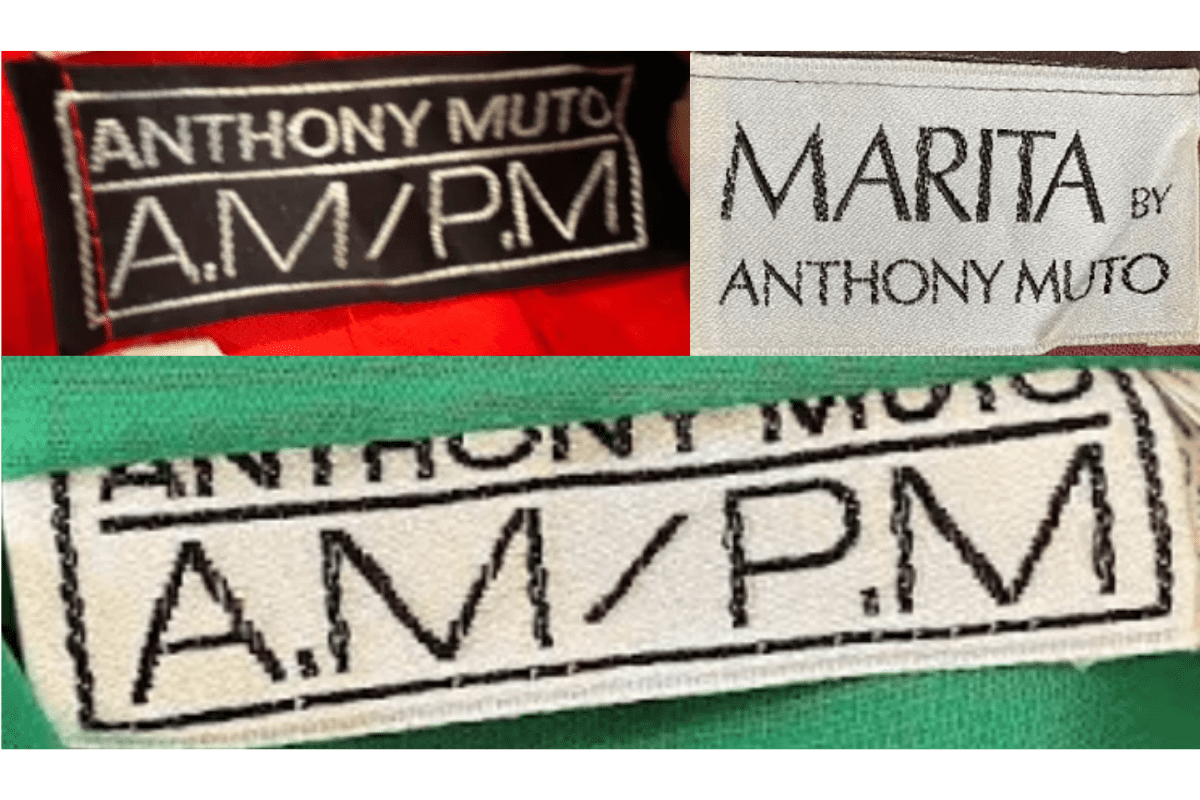
- The “Anthony Muto A.M./P.M” label becomes a central identifier during this period.
- Tags often feature a box-like layout with “A.M./P.M” in a prominent, stylized font underneath the designer’s name.
- Labels also introduced a more stylized font for the name “Anthony Muto,” while maintaining a simple black-and-white color scheme.
- Occasional use of sub-labels like “Marita by Anthony Muto” shows the expansion of his lines.
How to spot it
The boxed 'A.M./P.M' label.
Value signal
Strong; 70s 'A.M./P.M' Anthony Muto is sought.
1980–1989
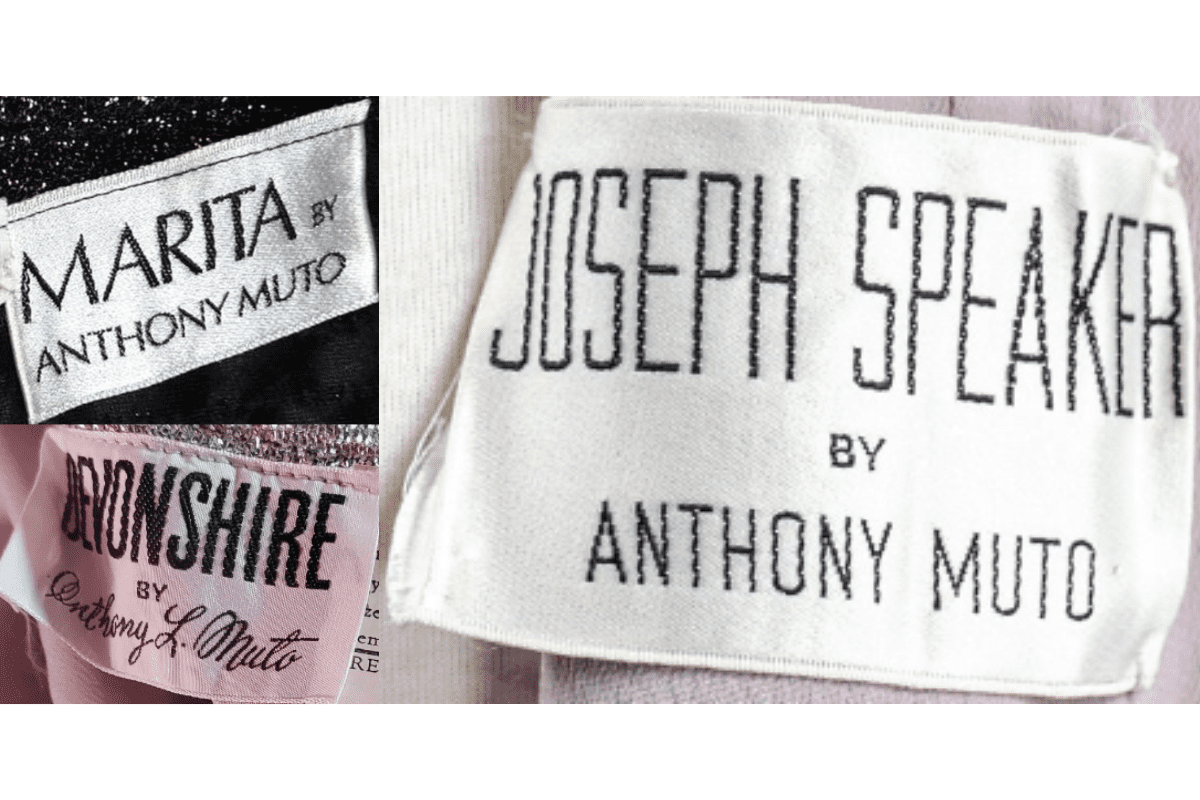
Satin Collab-Line Tags
The 'A.M./P.M' wording kept with sharper fonts, collaboration labels like 'Joseph Speaker by Anthony Muto' and 'Devonshire by Anthony L. Muto', satin grounds.
- Continued use of “A.M./P.M” labels, but with more variation in the layout, including more detailed borders and sharper fonts.
- Introduction of collaborations or special collection names such as “Joseph Speaker by Anthony Muto” and “Devonshire by Anthony L. Muto” on the tags.
- The tags in this era become more refined and sophisticated, with greater use of satin fabrics for a more luxurious look.
- Tag designs were still monochromatic, often favoring white backgrounds with black lettering or vice versa.
How to spot it
Satin tag with a collaborator's name.
Value signal
Solid; 80s Anthony Muto has a niche following.