Arrow
The American dress-shirt maker behind the early-20th-century 'Arrow Collar Man'. The arrow-and-text logo and 'Sanforized'/'Perma-Iron' wording date its shirts.
- Origin
- USA
- Founded
- 1851
- Category
- Designer & Casual
- Documented eras
- 7
How Arrow labels evolved over time. Match the markers below against the tag in hand to place a garment in its era.
1950–1959
'Sanforized' Bold-Letter Tags
Simple bold-lettered tags, often with 'Perma-Iron' or 'Sanforized' wording, on rectangular grounds with clean straightforward layouts.
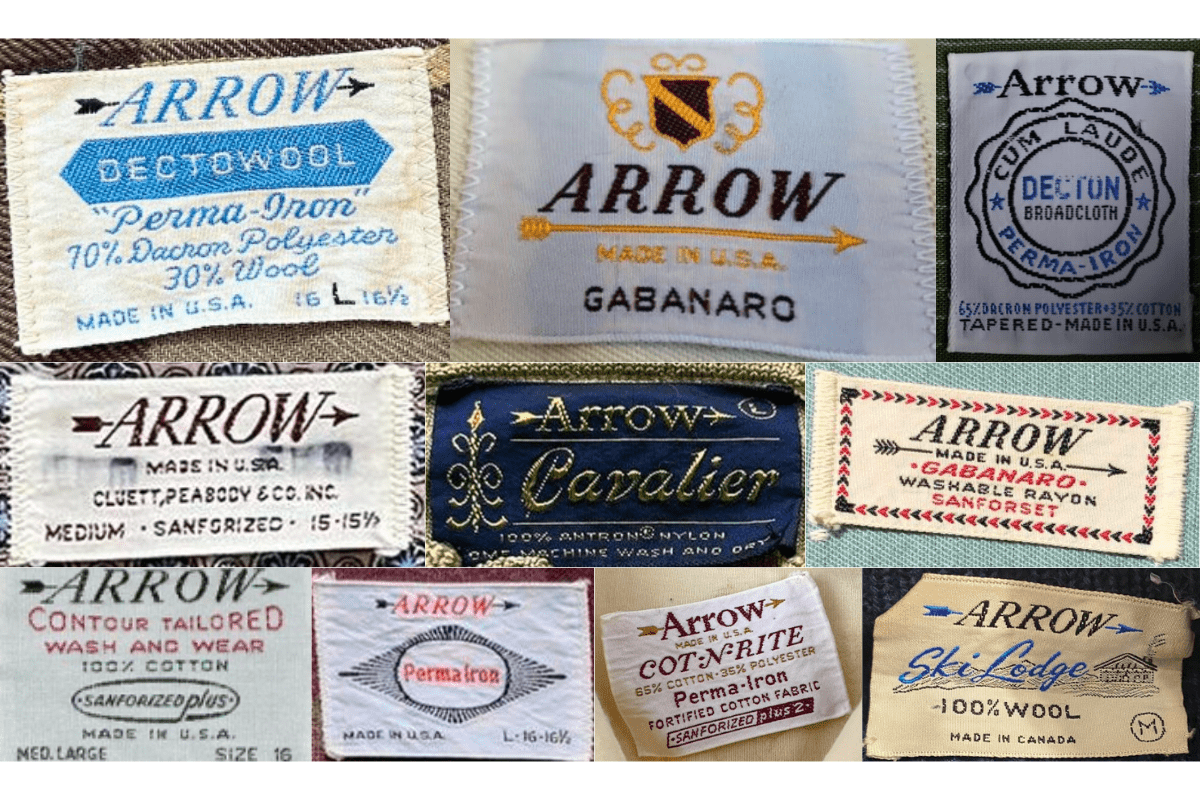
- Tags often featured simple designs with bold lettering.
- Commonly used phrases like “Perma-Iron” or “Sanforized.”
- Tags were usually rectangular with a clean and straightforward layout.
How to spot it
'Sanforized' or 'Perma-Iron' on the tag.
Value signal
Strong; 50s Arrow dress shirts are a sought era.
1960–1969
Arrow-Symbol Border Tags
More elaborate designs with the arrow symbol prominent, decorative borders and additional branding elements, synthetic blends starting to appear.
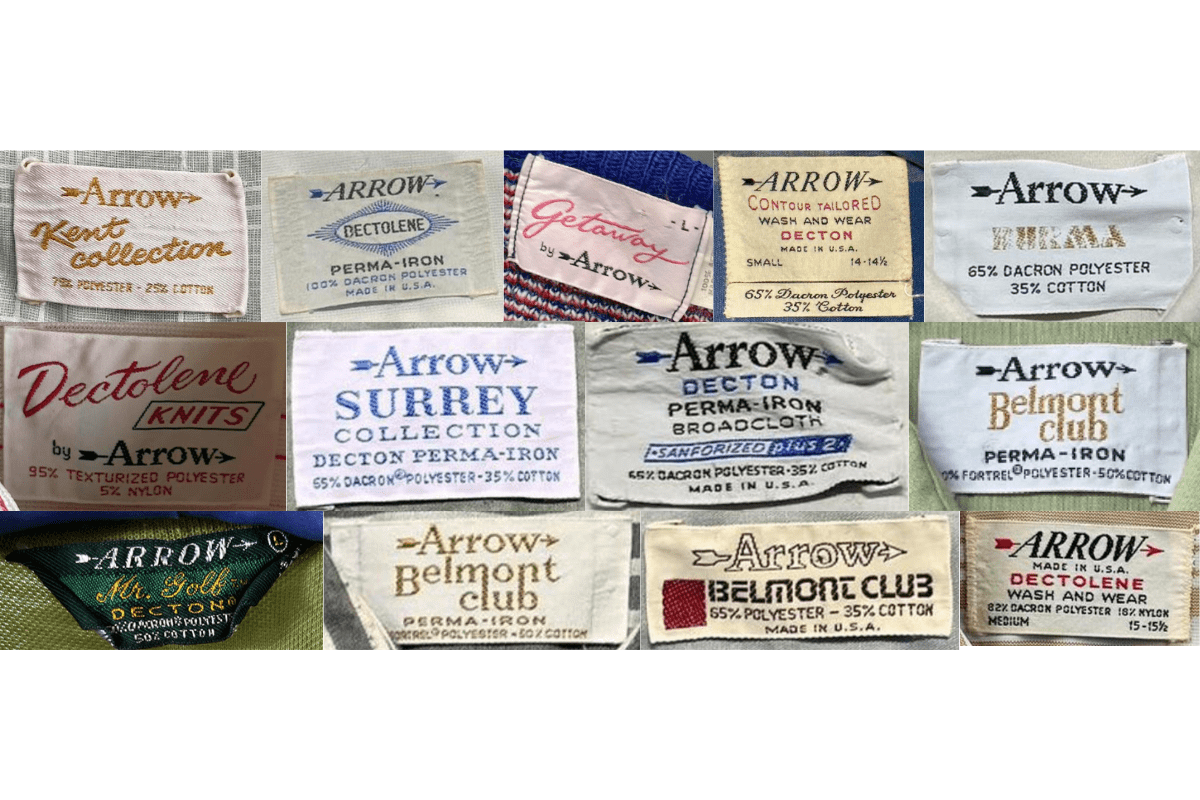
- Introduction of more elaborate designs and use of logos like the arrow symbol.
- Tags often had decorative borders and additional branding elements.
- Materials began to diversify, with more use of synthetic blends mentioned on the tags.
How to spot it
Arrow symbol on a bordered tag.
Value signal
Strong; 60s Arrow shirts hold steady demand.
1970–1979
Mixed-Font Bright Tags
A mix of serif and sans-serif fonts, bolder designs with brighter colours and larger tag sizes, fuller fabric and care detail.
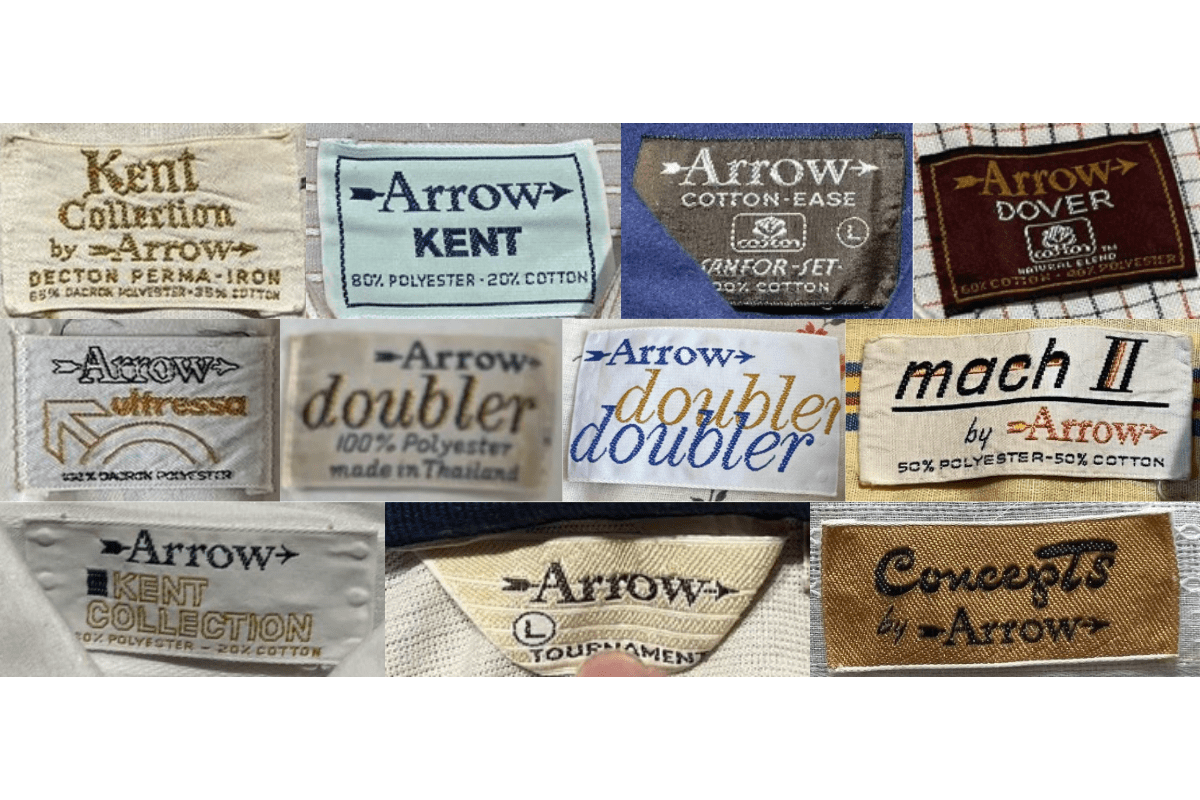
- Tags featured a mix of serif and sans-serif fonts.
- Bold designs with bright colors and larger tag sizes were common.
- Often included detailed product information, such as fabric content and care instructions.
How to spot it
Bright mixed-font 70s Arrow tag.
Value signal
Solid; 70s Arrow sells consistently.
1980–1989
'Kent Collection' Modern Tags
Rectangular tags with bold modern fonts, 'Made in U.S.A.' or specific line names like 'Kent Collection' on the tag.
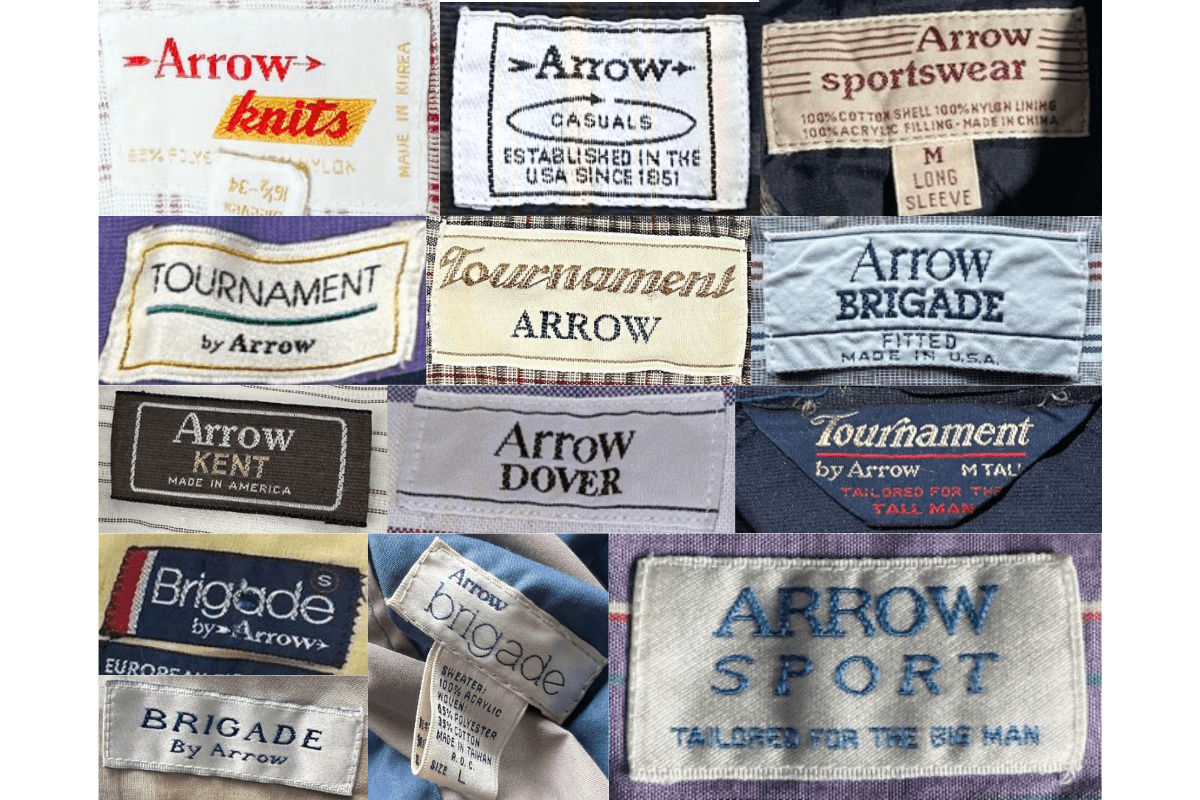
- Use of distinctive logos and branding, often with an arrow motif.
- Rectangular tags with bold, modern fonts became popular.
- Additional text like “Made in U.S.A.” or “Kent Collection” indicated origin and specific lines.
How to spot it
'Kent Collection' or 'Made in U.S.A.'.
Value signal
Solid; condition-driven resale.
1990–1999
Minimalist 90s Tags
More minimalist sleek tag designs, new fabric blends highlighted, modern logos and less text-heavy layouts.
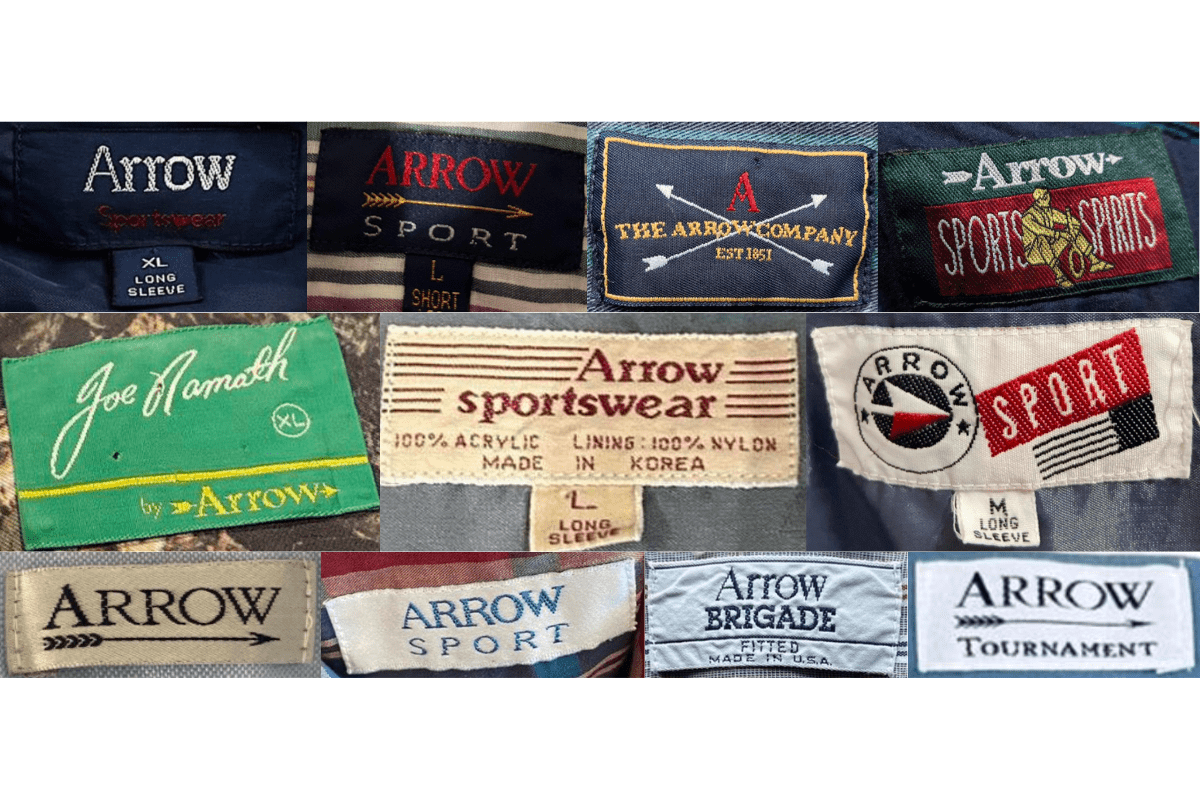
- Shift towards more minimalist and sleek tag designs.
- Introduction of new materials and blends, often highlighted on the tags.
- Incorporation of modern logos and less text-heavy designs.
How to spot it
A minimalist 90s Arrow tag.
Value signal
Common; modest resale.
2000–2009
Logo-Forward Modern Tags
Modern aesthetic with focus on branding and logo prominence, detailed size and fabric info, varied colours and tag shapes.
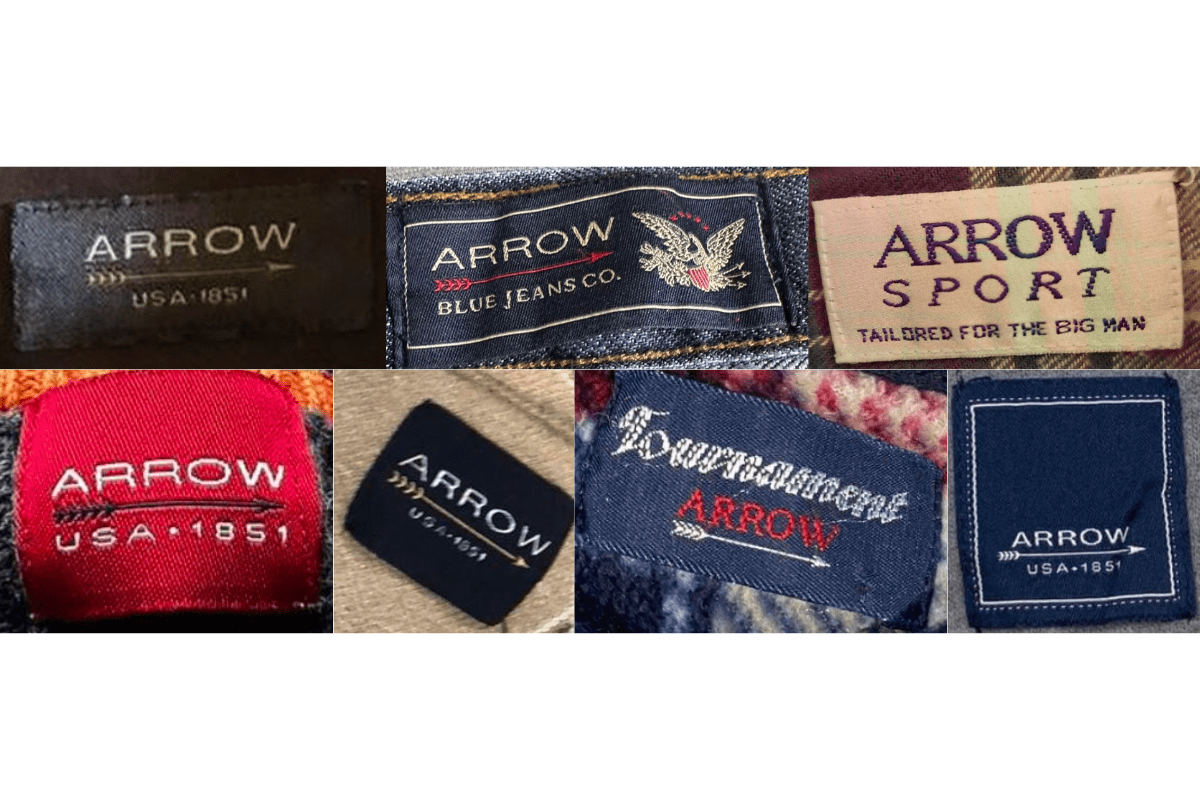
- Modern aesthetic with a focus on branding and logo prominence.
- Tags often included detailed size and fabric information.
- Variety of colors and tag shapes, reflecting contemporary trends.
How to spot it
Logo-forward modern Arrow tag.
Value signal
Common; modest resale.
2010–2019
'USA • 1851' Heritage Tags
Sleek modern designs with updated logos, often paired with 'USA • 1851' wording highlighting the heritage, high-quality printing.
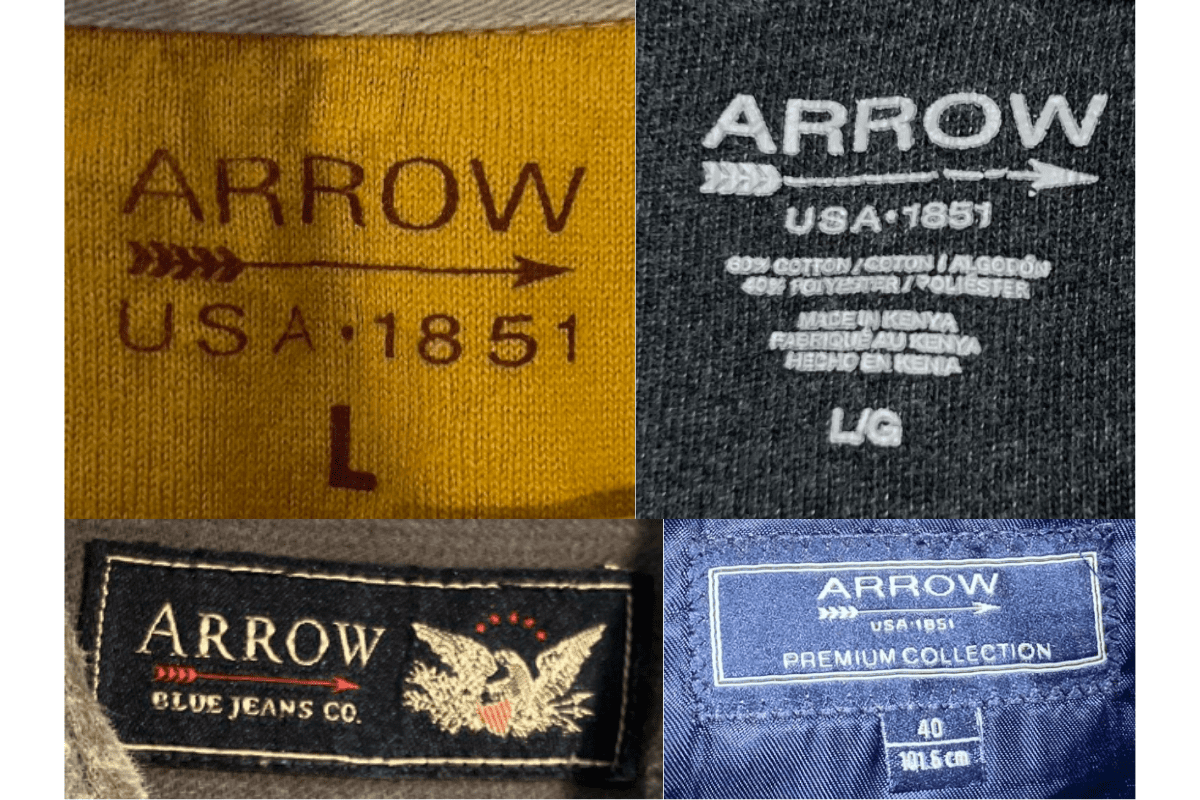
- Continued use of modern, sleek designs with updated logos.
- Emphasis on minimalism with clear, concise information.
- Tags often used high-quality materials and printing techniques.
How to spot it
Modern logo with 'USA • 1851'.
Value signal
Modern; priced on the piece.