Koret of California
San Francisco sportswear innovator founded by Joe and Stephanie Koret in 1939. The elegant script 'Koret of California' with the bow illustration is the 1940s–50s hallmark; 'Pair-Offs' and 'Koratron' technology wording track the 1950s–60s modernisation.
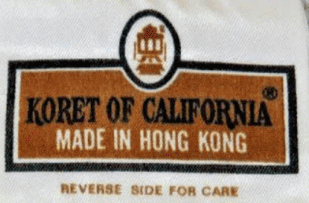
- Origin
- USA
- Founded
- 1939
- Category
- Designer & Casual
- Documented eras
- 7
How Koret of California labels evolved over time. Match the markers below against the tag in hand to place a garment in its era.
1940–1949
1940s vintage Koret of California tags
Features elegant script handwriting with “Koret of California” prominently displayed Tags often include mentions of patented designs, such as “Press-Free” or “Never Needs Pressing.”.
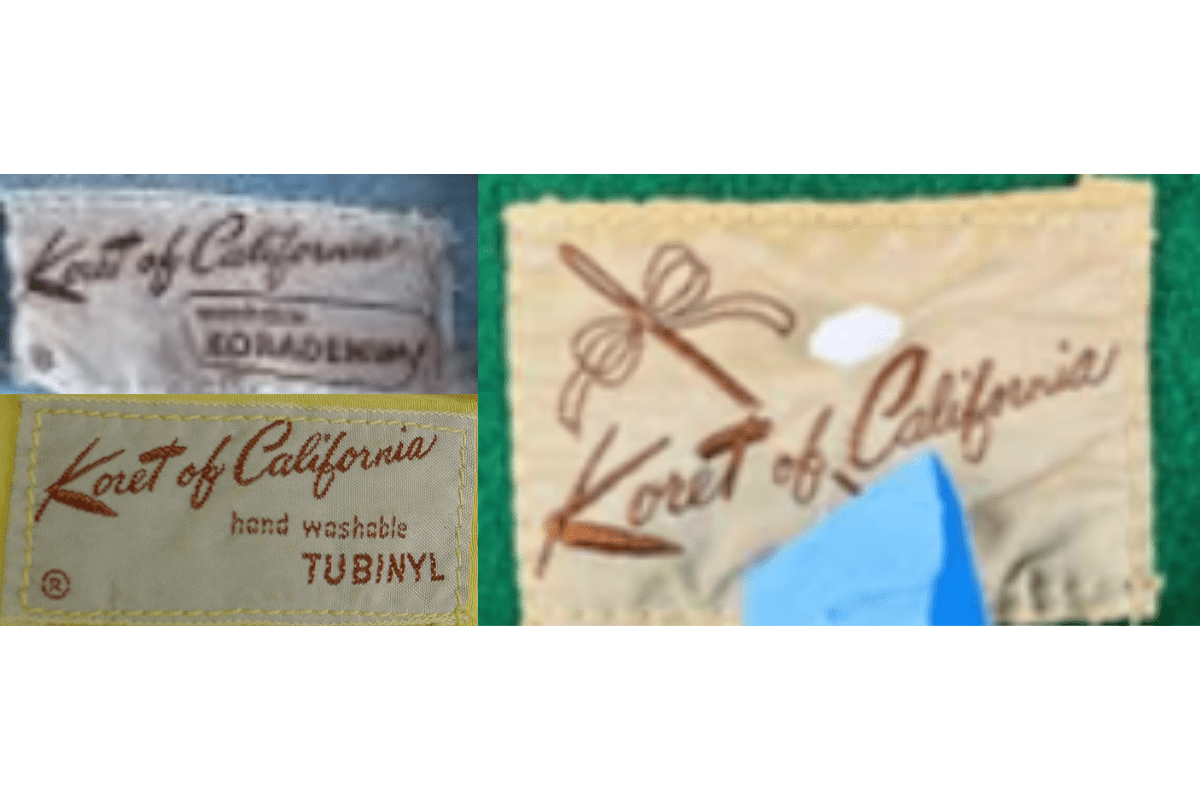
- Features elegant script handwriting with “Koret of California” prominently displayed.
- Tags often include mentions of patented designs, such as “Press-Free” or “Never Needs Pressing.”.
- Soft, muted tones for the background, with emphasis on a refined and sophisticated presentation.
How to spot it
Features elegant script handwriting with “Koret of California” prominently displayed — confirms this label era.
Value signal
Rare; pre-1960 examples are collector-grade and seldom surface.
1950–1959
1950s vintage Koret of California tags
Introduction of “Pair-Offs” branding, emphasizing the versatility of Koret clothing Tags commonly incorporate the signature bow illustration, symbolizing femininity and elegance.
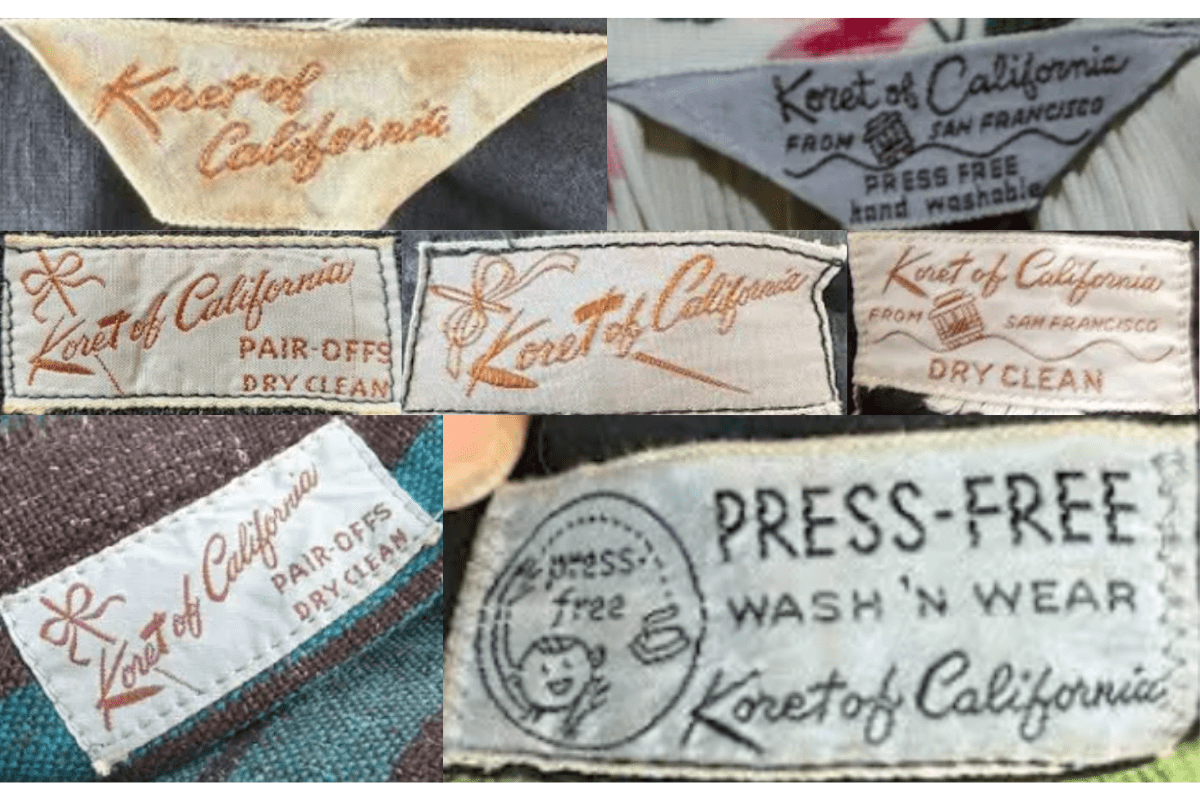
- Introduction of “Pair-Offs” branding, emphasizing the versatility of Koret clothing.
- Tags commonly incorporate the signature bow illustration, symbolizing femininity and elegance.
- Clean, structured lettering combined with simple layouts for easy readability.
How to spot it
Introduction of “Pair-Offs” branding, emphasizing the versatility of Koret clothing — confirms this label era.
Value signal
Rare; pre-1960 examples are collector-grade and seldom surface.
1960–1969
1960s vintage Koret of California tags
Classic “Koret of California” script remains, with the addition of “Koratron” technology branding on some tags Some tags showcase bold, geometric designs with bright colors to reflect mid-century modern aesthetics.
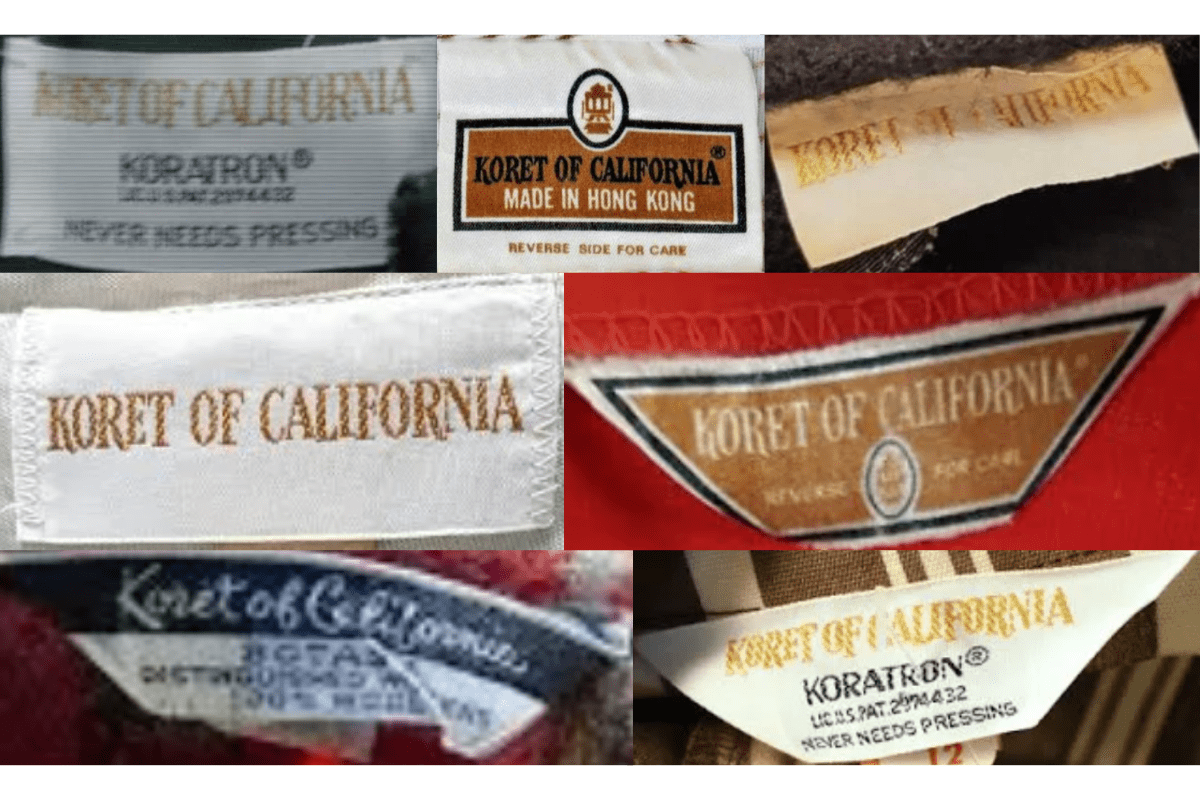
- Classic “Koret of California” script remains, with the addition of “Koratron” technology branding on some tags.
- Some tags showcase bold, geometric designs with bright colors to reflect mid-century modern aesthetics.
- “Dry Clean Only” or “Hand Washable” care instructions often included.
How to spot it
Classic “Koret of California” script remains, with the addition of “Koratron” technology branding on some tags — confirms this label era.
Value signal
Strong collector demand; 1960s examples command premiums in good condition.
1970–1979
1970s vintage Koret of California tags
Modernized font styles while retaining the signature bow illustration Introduction of fabric-specific tags, such as “Tubinyl” or “Press-Free,” highlighting the material used in the garments.
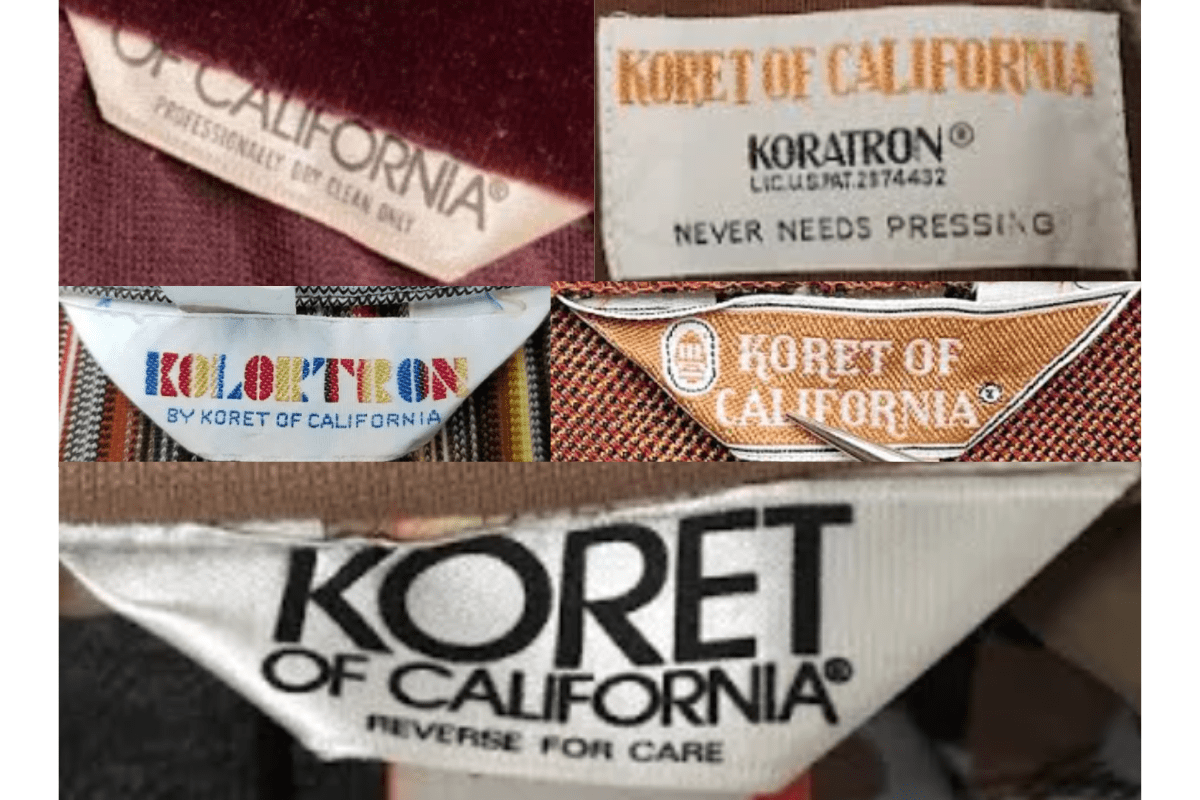
- Modernized font styles while retaining the signature bow illustration.
- Introduction of fabric-specific tags, such as “Tubinyl” or “Press-Free,” highlighting the material used in the garments.
- Tags often carry a more minimalist look compared to previous decades.
How to spot it
Modernized font styles while retaining the signature bow illustration — confirms this label era.
Value signal
Solid vintage interest; 1970s pieces in clean condition attract steady demand.
1980–1989
1980s vintage Koret of California tags
Bold, sans-serif fonts become more prevalent, reflecting the era’s emphasis on simplicity and function Incorporation of brand sublines like “City Blues” or “Francisca” to distinguish specific collections.
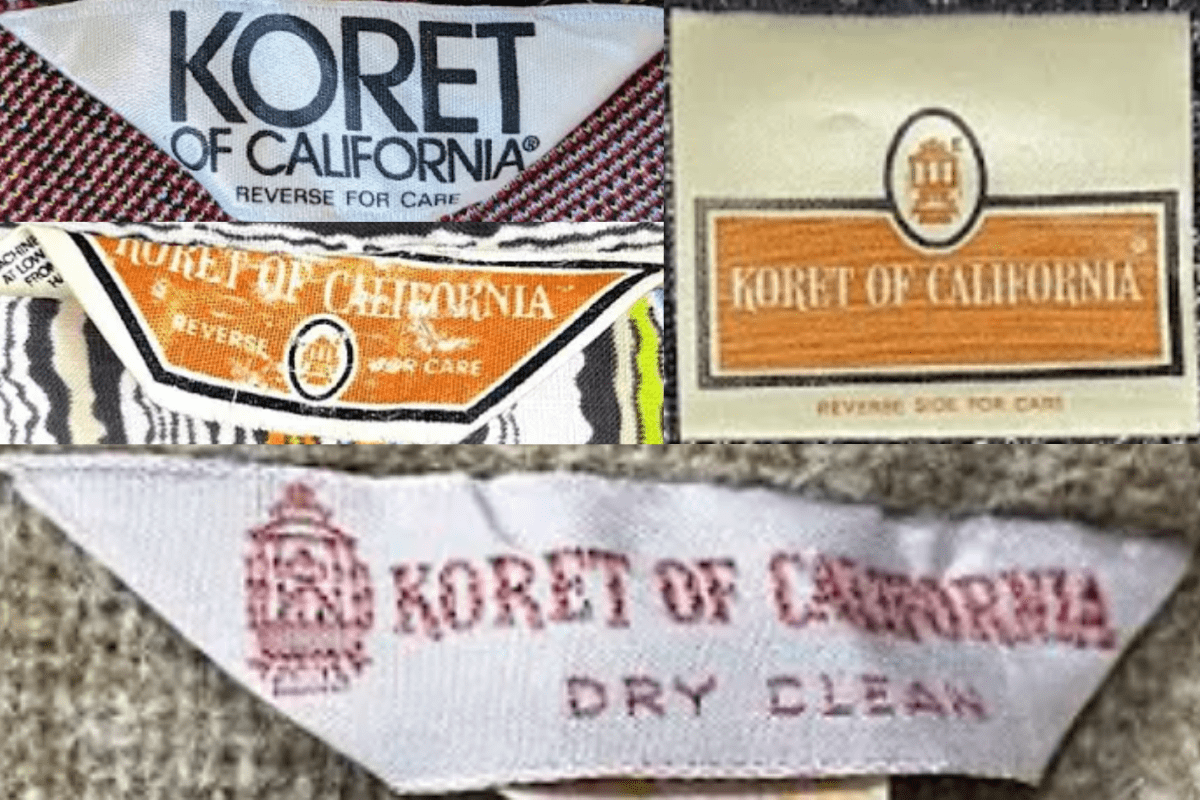
- Bold, sans-serif fonts become more prevalent, reflecting the era’s emphasis on simplicity and function.
- Incorporation of brand sublines like “City Blues” or “Francisca” to distinguish specific collections.
- Tags include country of manufacture and care instructions in larger text formats.
How to spot it
Bold, sans-serif fonts become more prevalent, reflecting the era’s emphasis on simplicity and function — confirms this label era.
Value signal
Good vintage demand; 1980s label detail is a key value driver.
1990–1999
1990s vintage Koret of California tags
Shift towards a more modern, minimalist logo with cleaner lines and bolder typefaces Tags often feature “Made in U.S.A.” prominently as a mark of quality and origin.
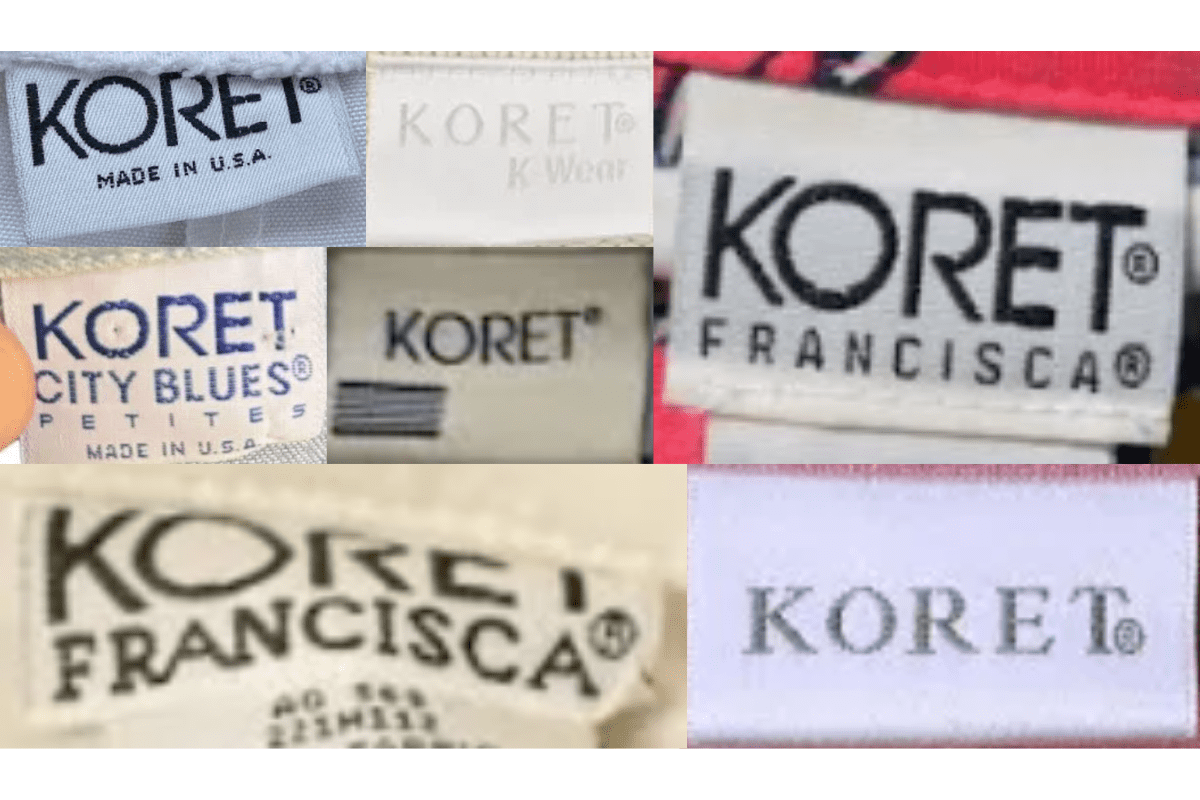
- Shift towards a more modern, minimalist logo with cleaner lines and bolder typefaces.
- Tags often feature “Made in U.S.A.” prominently as a mark of quality and origin.
- Sub-brands like “City Blues” remain but are presented with more streamlined designs.
How to spot it
Shift towards a more modern, minimalist logo with cleaner lines and bolder typefaces — confirms this label era.
Value signal
Moderate collector interest; condition and completeness determine value.
2000–2009
2000s vintage Koret of California tags
Tags adopt contemporary aesthetics, with sleek, monochromatic fonts and minimalistic layouts Care instructions and fabric composition are more detailed and standardized across garments.
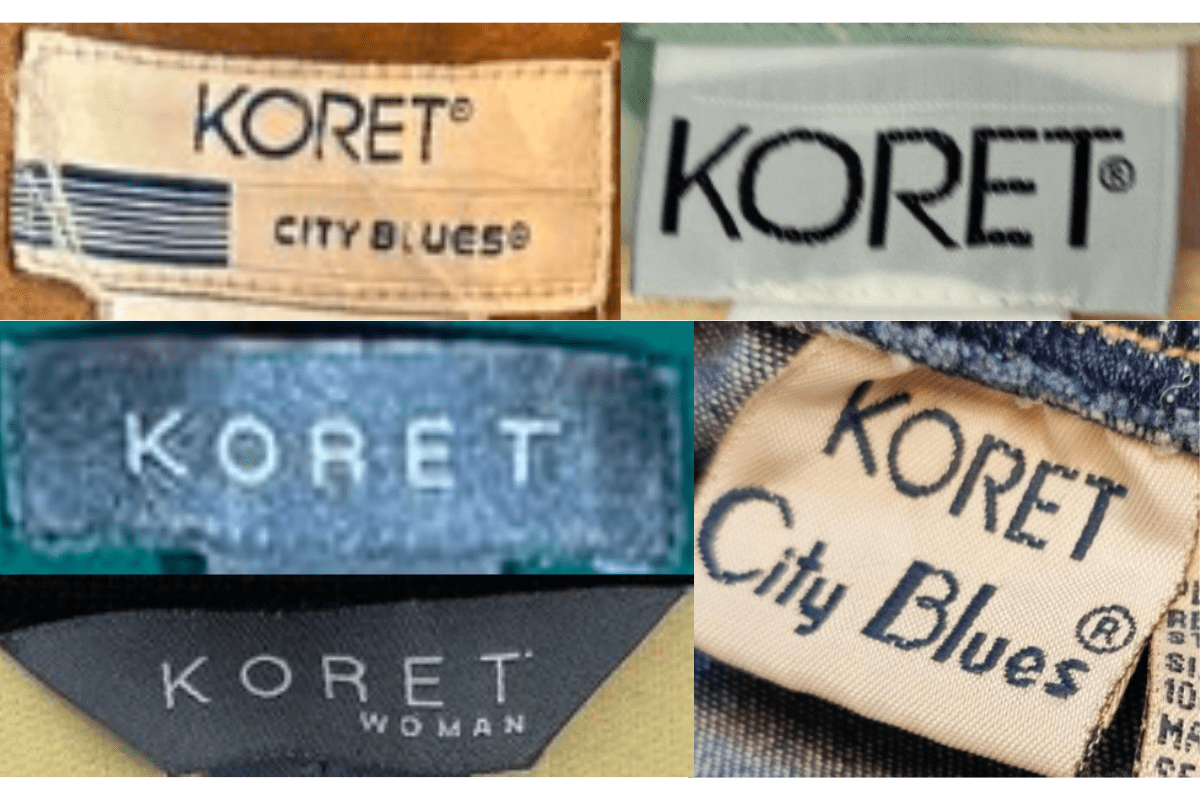
- Tags adopt contemporary aesthetics, with sleek, monochromatic fonts and minimalistic layouts.
- Care instructions and fabric composition are more detailed and standardized across garments.
- Branding focuses on practicality, with a strong emphasis on easy-care fabrics.
How to spot it
Tags adopt contemporary aesthetics, with sleek, monochromatic fonts and minimalistic layouts — confirms this label era.
Value signal
Entry-level vintage; value driven by brand recognition and condition.